Skip to content

Baby & kids · ecommerce growth

Educational toy marketing agency

The person searching for a science kit for an eight year old is often a grandparent who has never met a microcontroller, and the parent behind them wants to know what the child will actually do with it, whether it needs a screen and how much adult help it takes. Educational toys are sold on outcomes nobody can promise and on gifting occasions the brand does not control. We build skill-led catalogs that rank for what the child learns, gift paths for the buyer who is not the parent, ads that describe the kit rather than the child's future, and subscription programs that survive the third box.

The buyer, in brief

Consideration
Longer than for a play toy, with kits compared by subject and level, then a rush in the two weeks before a birthday or the holidays
Purchase frequency
A kit or two a year per child for one-off buyers; monthly for subscription boxes, with churn concentrated in the first few deliveries
Seasonality
Fourth quarter first, birthdays all year, a summer lift from parents planning screen-free weeks, and back to school for teacher purchases
Price band
Mid to premium, above general toys, with subscriptions priced per box and an annual prepay at a saving
Return risk
Low, mostly missing pieces or a kit that was too advanced; a level guide and a spare-parts service prevent most of them
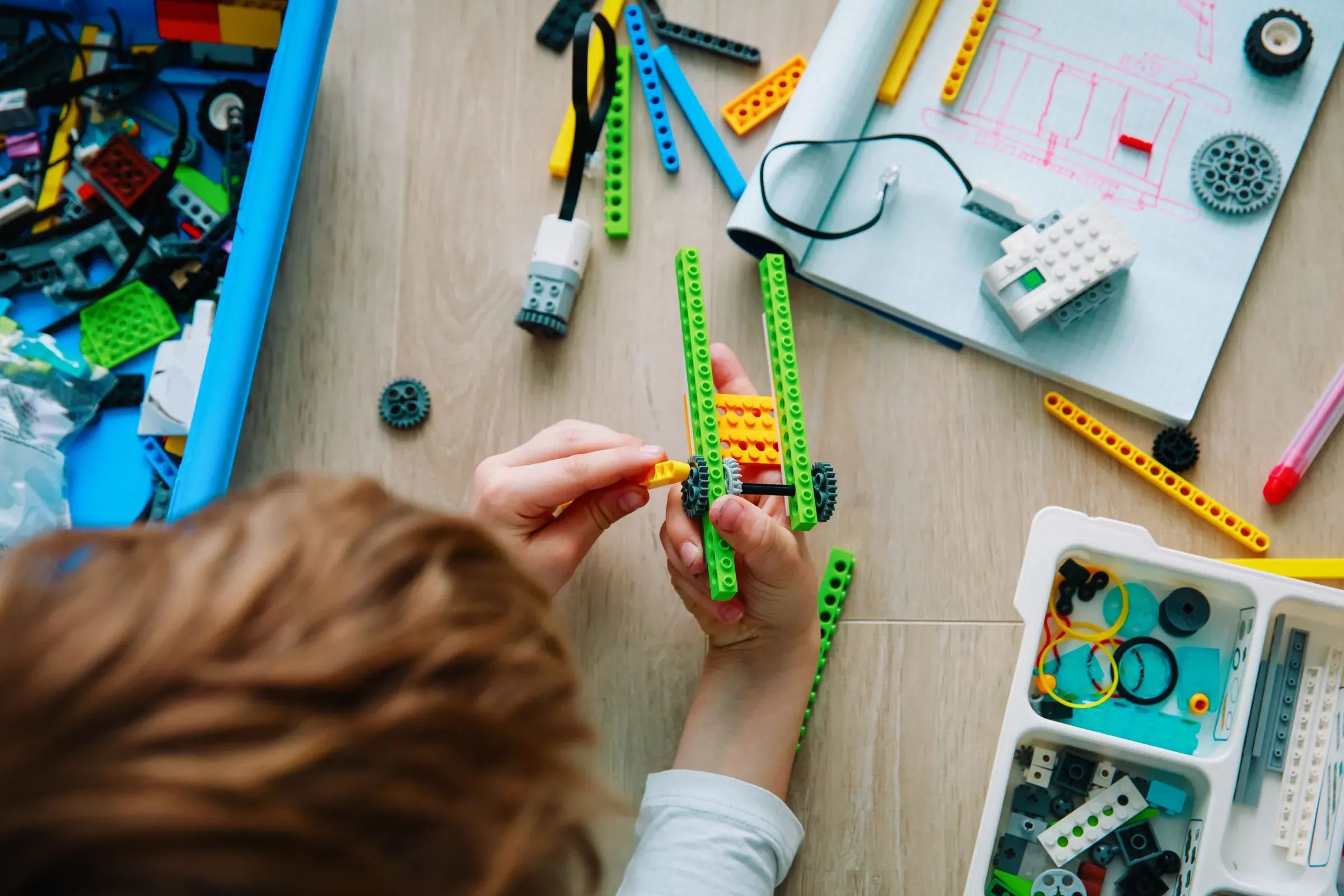
Child building robot at robotic technology school lesson, educational & stem toys ecommerce
Educational & STEM toysParents who research learning value and screen involvement, grandparents and relatives searching by age and interest for a gift, and teachers or homeschoolers buying for a group. They check the age range, the skills the kit builds, whether it needs an app or batteries, how much adult supervision it takes, and whether the pieces are reusable after the first build.

How educational & stem toys makes money

Four levers, and what limits each one here

Revenue is traffic times conversion rate times order value times purchase frequency. In this niche each lever has its own ceiling.

Traffic

Traffic: subject and skill pages, and the gift giver's age query

Demand arrives by subject (coding kit for kids, chemistry set for a ten year old), by skill (fine motor toys, logic games), by approach (open-ended, Montessori-inspired, screen-free) and by gift phrasing (gifts for a kid who likes science). A store with one Educational collection catches none of it precisely. We build subject collections with copy about what the subject looks like at each age, skill collections, level guides that place kits on a beginner-to-advanced scale, and a permanent gift page per interest and age. Product pages describe what the child does with the kit, step by step, which is the text that ranks and the text a gift giver needs.

Conversion

Conversion: what they learn, what it needs and how much help

The parent will not buy a promise, so the page describes the activity honestly: what the child builds or tests, which skills that exercises, and what a session looks like. Then the practical questions in one block: the age and level, whether an app or screen is required, optional or absent, which batteries, how much adult time the first session takes, what is in the box and whether it can be rebuilt. A which-kit finder that takes the child's age and experience as inputs suits the buyer who is not the parent, and a gift path with a receipt that hides prices finishes the job. Missing-piece replacement stated plainly removes the last hesitation.

Order value

Order value: the next level and the expansion pack

Kits that come in levels sell the next level from the product page, and expansion packs and refills for consumable kits belong there too, presented as what comes after this one rather than as an upsell. Class packs for teachers turn a single kit into a ten-unit order and deserve their own page and a quote path. For subscriptions, the annual prepay at a saving lifts the first order and lowers churn at the same time, and a sibling add-on at a reduced per-box price is the cleanest way to grow the value of a household that is already sold.

Frequency

Frequency: the box after the third box

Subscriptions in this niche fail quietly when the boxes stop matching the child. The kit gets too easy or too hard, the parent runs out of evenings, and the cancel button gets pressed after the third delivery. Frequency is protected by capturing the child's age and experience at onboarding, previewing each box before it ships so the parent can skip, checking the level every third box, and offering a pause before a cancel. For one-off buyers, the kit one step up the level scale tied to the birthday and the holiday early access do the same work, and both depend on the store knowing which kit the child finished.

Search visibility

Search: subjects, skills and gifts for a kid who likes science

The category queries pair a subject with an age (coding robot for a seven year old, chemistry set for kids age ten), a skill with a stage (fine motor toys for toddlers), an approach with a category (screen-free educational toys), or a gift with an interest. Subject collections need copy that explains what the subject looks like at each age and which kits fit. Skill collections need the same for the skill. Level guides place every kit on one scale so a parent can pick the next one. The subscription gets its own page with sample box contents, the cadence and the terms.

Teacher and homeschool pages carry class packs and the quote path, and they rank for the group-purchase queries that a consumer page never will. A page per subject that describes what a child at each age can reasonably do, without promising results, earns links from parenting and education sites and feeds authority to the kits.

Technically, kits sold in levels are separate products linked as a series, subscriptions have one canonical page with plan lengths as variants rather than a URL per plan, the gift subscription is its own page, quiz result URLs are kept out of the index, and Product structured data describes the physical kit with the age range in its description.

Queries that matter

  • coding robot for 7 year old
  • stem toys for 4 year olds
  • chemistry set for kids age 10
  • screen free educational toys
  • stem subscription box for kids
  • gifts for kids who like science

Subject and skill collections with copy about what a child does at each age, level guides and a permanent gift page per interest rank here. Product pages that lead with learning outcomes nobody can measure do not, and neither do subscription pages that hide the box contents.

AI answers

AI answers: what a parent asks about a learning kit

Assistants are asked what a kit teaches, whether it needs a tablet, whether it is too hard for a six year old, and what to buy next for a child who finished a particular kit. Stores that get cited state the skills in plain terms, answer the app question in one sentence, give the age and level, say how much adult time the first session takes, list the box contents and name the next kit in the series. Subscription pages need the cadence, sample contents and the pause and cancel terms as text. The age on the page, in the structured data and in the feed agree, and the level guide is plain HTML.

Does this coding kit need a tablet or an app?
Is this chemistry set too advanced for a six year old?
What does a child actually do with this kit?
What should I buy next for a child who finished the starter robot?

Questions shoppers put to assistants. A store gets named when its pages answer them in plain text.

Google Shopping and Merchant Center

Google Shopping and Merchant Center for educational toys

age_group is mapped from the kit's age range, google_product_category sits at the educational toys node rather than the top of the toys branch, and branded kits carry their GTIN. product_highlight is the right place for the skills the kit exercises, product_detail for the app requirement and the piece count, is_bundle for kits that combine separately sold products, and custom_label for the level so campaigns can bid beginner and advanced kits differently.

Two policy lines matter more here than in general toys. The first is misrepresentation: a title or description claiming a kit makes a child smarter, or advances them ahead of their class, is an unsubstantiated claim and gets flagged. Describe the activity and the skill instead. The second is recurring billing: Shopping wants a single price for a physical item, so a subscription box is either listed as its first box at that price with the recurring terms disclosed clearly on the landing page, or kept out of Shopping and sold through search and social instead. A first-box promotional price that differs from the feed is a price mismatch.

Campaigns split kits by margin and level, keep subscriptions in their own campaign measured on retained value rather than the first box, and leave free listings on for the full catalog.

Feed attributes that decide eligibility

  • age_group
  • google_product_category at the educational toys node
  • product_highlight for the skills exercised
  • product_detail for app requirement and piece count
  • is_bundle
  • custom_label for level

Disapprovals we see in this niche

  • Unsubstantiated learning or intelligence claims under the misrepresentation policy
  • Subscription boxes listed without the recurring terms disclosed on the landing page
  • Missing GTIN on branded kits
  • Price mismatch between the feed and a first-box promotional price

Meta and social ads

Meta and social ads: the build, the failure and the second try

The strongest creative in this niche shows the kit being built by a child with the mistakes left in, because that is what a parent believes. The screen question answered on camera, the box opened from box one to box six for a subscription, a parent's account of what their child did with it (with written rights), and the teacher's class pack with ten kids at one table all work. Polished lab-coat footage does not.

Policy has two hard lines. Subscription ads must disclose recurring billing clearly, in the ad and on the landing page. Claims about intelligence, grades or getting ahead of peers are out. Children appear only in appropriate play and the audience is always the adult. Audiences start with customers and subject page readers, then broad prospecting; catalog ads carry the age and the app requirement in the title.

  • The build with the mistakes left in
  • No screen: the whole kit works without a tablet
  • Box one to box six, what changed
  • A parent's what-they-did-with-it review with rights secured
  • The teacher's class pack: ten kids, one afternoon

Policy line

Recurring billing must be disclosed in the ad and on the landing page, no claims about making a child smarter or advancing them ahead of peers, no targeting of minors, and children shown only in appropriate play.

Conversion and the store

The store: honest learning claims that still convert

The page has to answer what the child will do and learn, whether the kit is too hard or too easy, whether it needs a screen, how much of the parent's time it takes, what happens if a piece is missing, and for subscriptions whether they can pause, skip or choose. The template is a product page with a plain-language skills block, a level indicator on one scale used across the catalog, an app-and-batteries block, the adult time needed, the contents, and the which-kit finder for the buyer who is not the parent. The subscription page shows sample boxes, the cadence, and the pause, skip and cancel terms next to the price rather than in a modal.

On mobile the finder is three taps, the level scale is visible on the collection grid, and the subscription terms stay on the page when the plan is selected.

Objections the page must answer

  • “What will my child actually learn from this”
  • “Is it too hard or too easy for their age”
  • “Does it need an app or a screen”
  • “How much of my time does it need”
  • “Can I pause or cancel the subscription, and can I pick the boxes”

Email, SMS and retention

Email and SMS: level capture, the third box and the gift that ends

Onboarding captures the child's age and experience, and the first email after delivery is build help: the common mistakes for that kit and where to get a missing piece. For one-off buyers the kit one step up the scale follows in a few weeks and the birthday and holiday flows carry the rest. For subscribers the program is built around the third box: a preview before each shipment with a skip option, a how-did-it-go message after, a level check every third box that can move the child up or down, and a pause offer that appears before the cancel link does.

Gift subscriptions have two people in them. The giver gets the receipt and an end-of-gift reminder; the recipient is onboarded like a subscriber and told, two weeks before the last box, how to continue. SMS is for shipping and for the gift ending.

  1. Build help and troubleshooting

    Three days after delivery

  2. Next level

    Four to six weeks after a one-off kit

  3. Box preview and how did it go

    Before and after each subscription shipment

  4. Level check

    Every third box

  5. Gift subscription ending

    Two weeks before the last box, to the giver and the recipient

Where revenue leaks

The leaks we find in educational & stem toys stores

The Growth Analysis ranks these against your own numbers and says which to close first.

Get a Growth Analysis for your educational toy brand
  • Subscribers who leave when the boxes outgrow the child

    Nobody asked whether the level still fit, so the parent cancels after a box that sat unopened, and the store reads it as price sensitivity.

  • Learning claims that parents and reviewers both distrust

    A page that promises outcomes loses the parent who wanted a description of the activity and draws a misrepresentation flag from the ad platforms.

  • The gift subscription that ends in silence

    The last box ships, neither the giver nor the recipient is told, and a household that liked six boxes never becomes a paying subscriber.

  • Subject and skill demand served by one Educational collection

    The coding, chemistry and fine motor queries all land on the same grid with no copy, and the marketplace's subject pages take them.

Platform notes

Where the platform changes the work

Shopify

Shopify Subscriptions or a subscription app runs the box, with sequencing by level handled in the app. Skills, level, app requirement and adult time live in metafields that feed the page and product_highlight. The gift subscription is its own product with recipient fields at checkout, and the which-kit finder is a small vanilla script reading the metafields.

WooCommerce

WooCommerce Subscriptions with a variable subscription product carries the plan lengths on one URL. Subject and skill are global attributes with indexable archives, and the level scale is a custom field the feed plugin maps into custom_label.

Headless

The finder and the level scale need server-rendered output so the skill and level text exists in the HTML, and subscription state comes from the subscription platform's API rather than being duplicated in the front end.

Questions

Educational & STEM toys owners ask us

By CartKernel · Last reviewed

How do we describe what a kit teaches without making claims we cannot support?

Describe the activity and the skill it exercises rather than the result. A child who builds this robot follows a wiring diagram and debugs a sequence is a true sentence; this kit improves problem-solving scores is a claim. The first sells to parents and passes policy review, the second does neither. We rewrite the catalog on that principle.

Should our subscription box be in Google Shopping?

Usually the individual kits should be and the box should not. Shopping expects a single price for a physical item, and a recurring box has to be presented as its first box with the recurring terms disclosed clearly on the landing page. Search and social explain a subscription better, and Shopping does its best work on the one-off kits and the gift demand.

Our subscription churn spikes around the third box. What helps?

Level mismatch and time are the usual reasons, not price. A preview before each box with a skip option, a level check every third box that can move the child up or down, and a pause offered before the cancel link keep the parent in control. Capturing age and experience at onboarding makes all three possible.

Can we sell to teachers and homeschoolers from the same store?

Yes. A teacher page with class packs, a quote or purchase order path, tax exemption handling where it applies, and a school shipping option covers most of it without a separate store. The page ranks for the group-purchase queries, and the class pack turns one kit into a ten-unit order without a discount on the consumer catalog.

Do gift givers need a different experience from parents?

They do. A gift giver needs the which-kit finder with age and interest as the only inputs, gift wrap, a receipt without prices, and a message for the recipient. The parent who receives the gift then needs the build help and the step-up email, so the post-purchase flow has to know which of the two it is talking to.

Which searches should an educational toy brand try to own first?

Subject plus age, because that is how parents phrase the need and the pages are specific enough to rank within a few months. Then the skill collections, then the gift page per interest. The broad educational toys phrase is the last to move and the least likely to convert on its own.

Grow your educational & stem toys store.

A free Growth Analysis ranks what your store should fix first, by revenue at stake, in about a week.