Skip to content

Store types & business models · ecommerce growth

Print on demand marketing agency

In print on demand the blank product and the print are billed before you see any margin, so the contribution on a single item is small and fixed by somebody else's price list. Everything after that depends on being found for the design and on selling more than one item at a time. We build the catalog structure, the feed and the campaigns around that margin, which usually means fixing how thousands of near identical pages behave before touching an ad account.

The buyer, in brief

Consideration
Minutes, because the design either lands or it does not, with the size chart as the only real research step
Purchase frequency
Occasional and event driven, repeating around the same interest, occupation or occasion rather than around the product itself
Seasonality
Fourth quarter gifting, plus sharp spikes tied to events, seasons, graduations and whatever a community is talking about that month
Price band
Set by the blank plus the print, leaving a narrow band where the design has to justify the gap from an unprinted item
Return risk
Sizing above everything else, since the item is made after the order and most print partners do not accept a change of mind
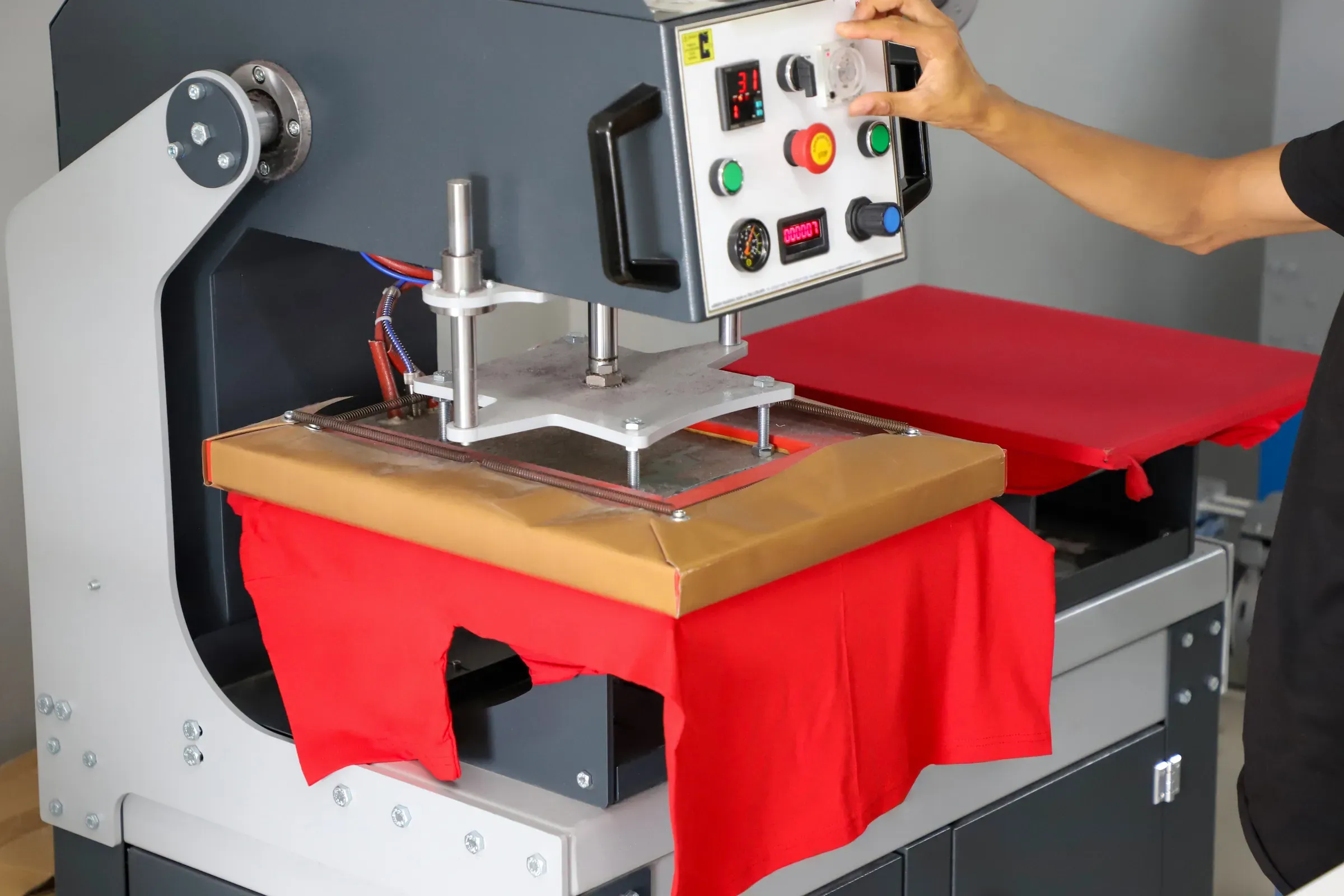
Press printing on colored t-shirts, press for printing images on fabric. Large industrial textile printing, print-on-demand ecommerce
Print-on-demandSomeone shopping for a design rather than a garment, buying for a hobby, a job, a team or a gift, who checks the size chart, the print position and the delivery date before deciding the design is worth paying for.

How print-on-demand makes money

Four levers, and what limits each one here

Revenue is traffic times conversion rate times order value times purchase frequency. In this niche each lever has its own ceiling.

Traffic

Traffic: the long tail is the entire business

Nobody searches for a print on demand store by name. They search a phrase, an interest, an occupation, a breed, a team or an occasion with a product type attached, and the winner is whoever has a page that matches. A catalog of thousands of designs is therefore a catalog of thousands of potential landing pages, but only where each one carries real text about the design, who it is for and what the joke or reference means. The structure that makes this work is a layer of theme, occasion and recipient collections above the designs, so demand can be met at the level people actually search rather than one product at a time.

Conversion

Conversion: a flat mockup has to answer a fit question

The images in this model are renders, and the shopper knows it. What they cannot tell from a render is how the garment fits, how large the print sits on the chest, how heavy the fabric is and whether the colour will look like the screen. Every one of those has a fix that belongs on the page: measurements in centimetres and inches rather than letters alone, the print dimensions stated, the fabric weight given, at least one photograph of a real printed item, and a colour note. Production time and shipping time need to appear as a single delivery date, because a customer who calculates it wrong returns an item that cannot be resold.

Order value

Order value: a second item is where the margin actually appears

The first item in a print on demand basket pays for the pick, the pack and most of the shipping. The second one is close to pure contribution, which makes basket size the most valuable lever in the model. The ways to earn it are specific: the same design offered on a different product, a matching design for a partner, child or teammate, a set for a group, and quantity breaks the print partner already supports. All of it has to be visible before the cart, because a shopper who came for one design and left with one design is the outcome that keeps this model unprofitable.

Frequency

Frequency: sell the interest rather than the shirt

Repeat purchases here come from the community a design belongs to, not from the garment. Somebody who bought a design about their job, their dog breed or their hobby will buy again from the same interest, often for a different person. That makes segmentation by theme the most valuable thing the email platform does, and new design drops the most valuable message. Occasion reminders work the same way, since the buyer who ordered a graduation gift last May is a candidate this May. The catalog itself becomes the retention asset once it can be sliced by interest rather than by product type.

Search visibility

Search: thousands of designs and the duplication problem underneath them

The demand is unmistakably long tail. People type funny nurse t shirt, personalized dog mom mug, gift for a fly fishing dad, and each of those phrases has low volume and high intent. A store with a large catalog is well placed to meet it, but only if the pages that answer those phrases exist as something more than a product variant. Theme, occasion and recipient collections with genuine copy are the pages that rank, and the individual designs sit beneath them.

The structural problem is duplication at a scale few other models face. One design across eight products, six colours and six sizes can generate hundreds of URLs carrying the same sentence of automatically generated text. Search engines respond by crawling a fraction and indexing less, which is why discovered but not indexed is the usual diagnosis on these stores. The work is consolidating variants under one product, writing real copy for the designs and collections worth ranking, and removing or noindexing the pages that exist only because a template produced them.

After that it becomes a question of what to publish. Not every design deserves a page. Pruning the catalog to the designs with genuine demand, then giving those pages description, print detail, sizing and the reason the design exists, produces better results than adding another thousand items on top of a structure that already cannot be crawled properly.
Queries that matter

  • funny nurse t shirt
  • personalized dog mom mug
  • gift for a fly fishing dad
  • custom team hoodie
  • matching family christmas shirts
  • plus size funny t shirts
  • retirement gift for a teacher

Theme, occasion and recipient collections with real copy rank in this model, along with design pages that describe the design rather than the blank. Automatically generated variant URLs mostly never get indexed.

AI answers

AI answers: gift questions are the way in

Almost every assistant conversation that could send business to a print on demand store starts as a gift question. What do I get someone who loves birdwatching, where can I get matching shirts for a small team, will a personalized mug arrive before a date. Being cited depends on collections that say plainly who the design is for, what it is printed on, how the sizing runs, how the print is applied and how long production takes before shipping starts. We write that into the collection pages as text, publish sizing in real measurements, and state production time separately from delivery so an assistant can answer a deadline question correctly.

What is a good gift for someone who loves birdwatching?
Where can I get matching shirts printed for a small team?
How long does a personalized mug take to make and arrive?
Do these shirts run true to size?

Questions shoppers put to assistants. A store gets named when its pages answer them in plain text.

Google Shopping and Merchant Center

Google Shopping for a catalog with no barcodes and generated images

Printed items made to order have no manufacturer barcode, so identifier_exists is set to false and the brand and mpn attributes carry identity. Item_group_id has to tie every colour and size of a design together, or the same design competes against itself across dozens of offers and none of them build any history. Colour, size and size_type need populating properly, since these are the attributes shoppers filter on in this category.

Images are where this model most often gets stopped. A generated mockup is acceptable, and the design printed on the product is simply the product. What is not acceptable is anything added around it: promotional text, price flashes, watermarks, borders, or a collage of several items with marketing copy over the top. The other image risk is artwork itself, because a design containing somebody else's trademark or copyrighted character can have items removed and can put the account under review.

Production time has to be reflected in the shipping settings as handling time, so the delivery estimate a shopper sees includes the days the item spends being made. Custom labels are essential at this scale, grouping designs by demonstrated performance, by product type and by season, because bidding item by item across thousands of offers is not something a person can do by hand.

Feed attributes that decide eligibility

  • identifier_exists and mpn
  • item_group_id across colour and size
  • colour, size and size_type
  • google_product_category at the specific apparel node
  • custom_label by design performance and product type
  • shipping with handling time covering production

Disapprovals we see in this niche

  • Promotional text, watermarks or borders added to generated mockups
  • Artwork containing another party's trademark or copyrighted character
  • Delivery estimates that leave production days out of the calculation
  • Missing colour and size attributes so variants compete as separate offers
  • Availability left in stock on a blank the print partner has discontinued

Meta and social ads

Meta and paid social: the design does the selling

Creative in this model is unusually cheap to produce and unusually fast to fatigue, because the design is the message and audiences for a niche interest are small. What works is showing the design where it belongs, on a person in the setting the joke or reference comes from, rather than as a flat render on a white square. A scroll through a wall of designs for one interest works as a discovery format, and gift reveal footage carries the fourth quarter. Catalog ads handle retargeting once the mockups are clean.

The binding constraint is intellectual property. Designs have to be work you own or license, and artwork using another party's marks, logos or characters puts both the ad account and the store at risk. The second constraint is how copy is written. Naming a viewer's occupation, condition or beliefs in the ad text falls under the personal attribute rules even when the design itself is doing exactly that, so the wording has to describe the product rather than the person seeing it.

  • The design worn by a real person in the setting it refers to
  • A scroll through every design for one interest or occupation
  • The gift reveal for a specific hobby, job or milestone
  • Print detail and fabric texture filmed close up
  • A team, family or group wearing the matching set

Policy line

Designs must be work you own or license, other parties' marks and characters cannot be used, and ad copy that names a viewer's job, beliefs or condition falls under the personal attribute rules even where the design does the same thing.

Conversion and the store

The store: fit, print size and the date it actually arrives

Four numbers decide conversion on a printed product page and most stores publish none of them clearly. Garment measurements laid flat, the print dimensions, the fabric weight, and a delivery date that already includes production. Adding a photograph of one real printed item alongside the renders does more for conversion than another render angle, because it answers the doubt the render creates. A colour note explaining that screens vary heads off the most common complaint.

Browsing is the other half. These stores are chosen by design, so the grid has to lead with artwork at a readable size, the search has to understand themes and phrases rather than only product names, and related designs need to appear on every page. The second item prompt belongs before the cart, offering the same design on another product or a matching design for somebody else. On mobile, the size chart has to open without leaving the page, since that is where the decision stalls.

Objections the page must answer

  • “Will this fit and does it run true to size”
  • “How large is the print on the front”
  • “Will it arrive before the date I need it”
  • “Will the colour look like it does on my screen”
  • “Can I return it if I ordered the wrong size”

Email, SMS and retention

Email: new drops sent to the people who care about that theme

Segmentation by interest is what makes email work in this model. Somebody who bought a design about nursing, fishing or a dog breed has told you what they will buy next, and a drop announcement sent to that segment performs in a way a store wide newsletter never will. Occasion reminders work on the same logic, with the important detail being the cut off date for ordering in time. Cart recovery needs a size help link rather than a discount, since sizing is the reason most carts stall.

The operational messages carry the most attention. Production and dispatch updates are opened more than any campaign, because the customer is waiting on something being made for them, and they are the natural place to ask for a photograph after delivery. Those photographs then become the creative that runs in ads, which is the closest thing this model has to a compounding asset.

  1. Welcome segmented by first design theme

    Immediately, with more from the same interest

  2. New design drop

    To the matching theme segment whenever designs are added

  3. Gifting cut off reminder

    Ahead of each occasion, with the last order date stated

  4. Production and dispatch updates

    When the item enters production and when it ships

  5. Photograph and review request

    A few days after delivery

Where revenue leaks

The leaks we find in print-on-demand stores

The Growth Analysis ranks these against your own numbers and says which to close first.

Get a Growth Analysis for your print on demand store
  • Thousands of URLs and almost nothing indexed

    Every colour and size generates a page carrying the same automatically written sentence, so crawling is spent on duplicates and the designs with real demand never get picked up.

  • Delivery estimates that ignore production

    The store quotes carrier transit only, the parcel arrives after the occasion it was bought for, and a made to order item comes back as a refund that cannot be resold.

  • Artwork that cannot be advertised

    A protected mark or character inside a design gets items removed, and repeated cases put the whole advertising account under review during the season it was needed.

  • Baskets that never reach a second item

    The entire margin structure depends on multiple items per order, yet nothing on the product page offers the same design on another product or a matching one for somebody else.

  • Blanks that quietly disappear

    The print partner discontinues a colour or a garment, the store keeps selling it, and the order is cancelled after the customer has already been charged.

Platform notes

Where the platform changes the work

Shopify

Partner apps push products automatically, which is the convenience and the risk. Without a template that adds real copy and metafields for design theme, print size and blank details, the store fills with thousands of near identical products that cannot be ranked, fed or segmented.

WooCommerce

Variation counts are the performance ceiling here. A design across several products and sizes multiplies quickly, so object caching, a lean theme and a feed plugin that can handle the volume matter more than any front end change.

BigCommerce

Variant limits and faceted search behaviour both need checking before a large design catalog is loaded, since canonical rules on filtered views decide whether the crawl budget goes to collections or to combinations nobody searches for.

Questions

Print-on-demand owners ask us

By CartKernel · Last reviewed

Can print on demand margins support paid advertising at all?

They can, but only with the basket in mind. Say an item sells for forty dollars and the partner bills you thirty for the blank, the print and the shipping. The contribution on that order will not fund much advertising on its own, while a two item order roughly doubles it because fulfilment is already paid for. We work out your real contribution per order first, then set targets against it.

How do you stop a large design catalog from being ignored by search engines?

By reducing what is indexable and improving what remains. Variants get consolidated under one product, filtered and colour level URLs get canonical treatment or noindex, and the collections and designs with genuine demand get real copy. The goal is a smaller set of pages that are worth crawling rather than a larger set that never gets visited twice.

Are mockups enough or do we need real photographs?

Mockups are fine for scale and are what makes the model possible, but at least one photograph of a genuinely printed item changes how the page reads. It answers the doubt a render creates about print quality and fabric. A small library of real photographs across the main blanks can be reused throughout the catalog.

How do you handle trademark risk in designs?

By reviewing the catalog before the ad platforms do. Designs referencing brands, sports teams, characters or protected phrases get removed or reworked, and licensed artwork gets documented so the license can be produced if it is ever questioned. It is worth doing proactively, because complaints are usually handled at account level rather than item level.

Is it better to run one store for every design or separate niche stores?

One store is usually easier to grow, because the crawling, the reviews, the email list and the ad account all compound in one place. Separate stores make sense when an audience genuinely has nothing in common with the rest, and when there is enough capacity to run each one properly rather than leaving several half built.

How do you manage advertising across thousands of products?

Through feed labels rather than manual work. Custom labels sort items by proven demand, product type and season, campaigns are built on those groups, and rules move designs between tiers as they earn a history. The manual attention goes to the small number of designs that carry most of the revenue and to the collections that rank.

Grow your print-on-demand store.

A free Growth Analysis ranks what your store should fix first, by revenue at stake, in about a week.