Skip to content

Baby & kids · ecommerce growth

Nursery furniture marketing agency

A nursery is bought as a room rather than as a product, months before anyone sleeps in it, and often paid for by a grandparent who was sent a registry link. The pieces have to match a finish, arrive by freight on a date the parent can plan around, and meet the crib regulation before any of the styling matters. We build room-set merchandising and finish pages that rank, feeds that survive freight and backorder checks, and the flows that sell the conversion kit and the big-kid room years later.

The buyer, in brief

Consideration
Weeks, spread across a room plan that starts with the crib and ends with storage, held together by one finish decision
Purchase frequency
Once per child for the crib, again two to four years later for the big-kid bed, with storage and desks after that
Seasonality
Set by due dates rather than the retail calendar, with a lift as nurseries are finished in late pregnancy and around the major sale weekends
Price band
High and considered, usually the largest single line on a registry
Return risk
Rare but expensive: freight in both directions, transit damage on flat-pack boxes, and finish mismatches that only appear under a nursery lamp
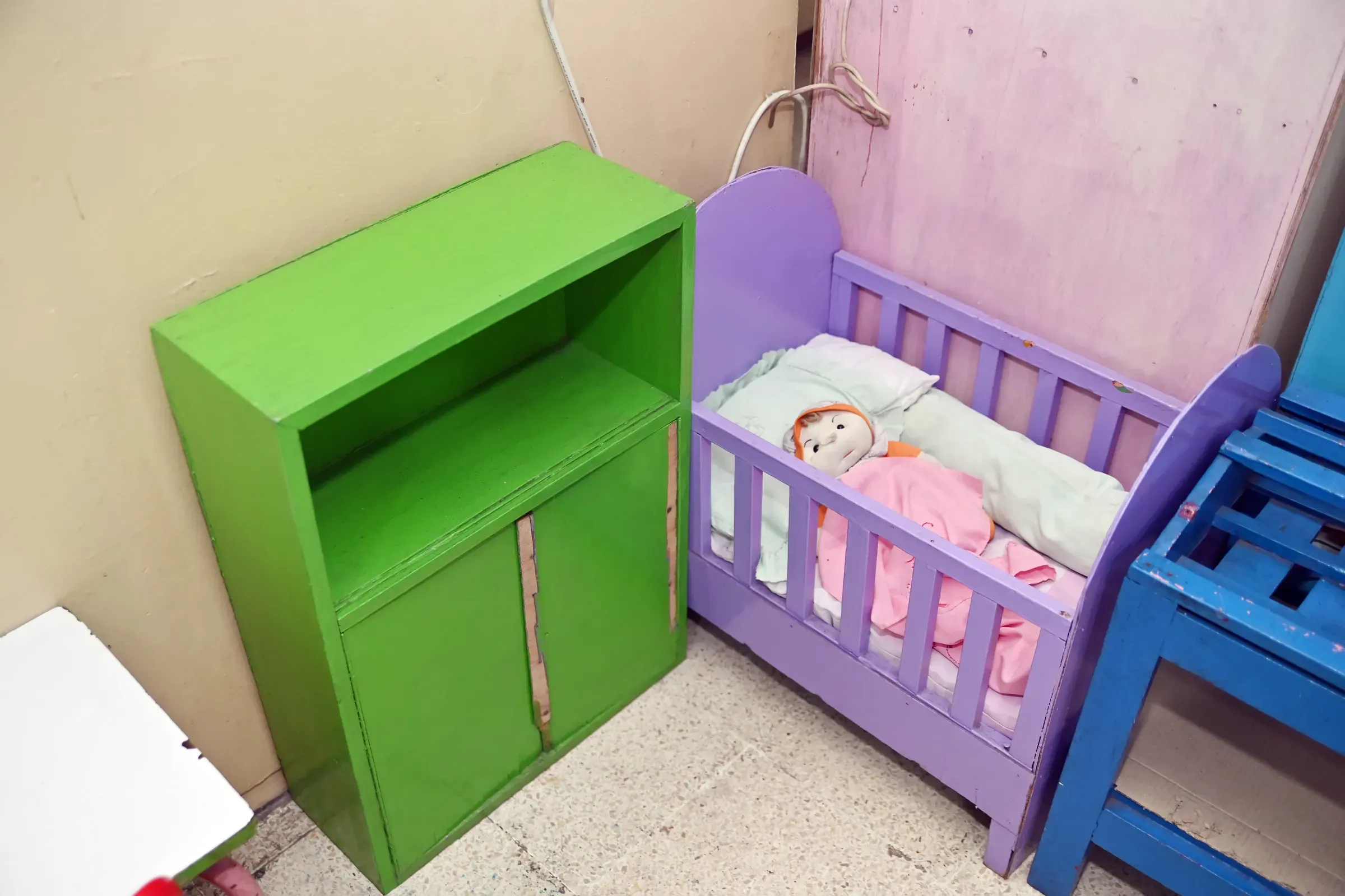
A corner of a playroom or nursery showing a bright green wooden storage cabinet next to a small purple toy, kids furniture & nursery ecommerce
Kids furniture & nurseryExpecting parents furnishing a room in the second trimester, frequently with a relative paying for the largest piece. They check the regulation the crib is built to, the material by component, whether the crib converts and whether the kit is included, the lead time, and whether the carrier delivers to a room or to the curb.

How kids furniture & nursery makes money

Four levers, and what limits each one here

Revenue is traffic times conversion rate times order value times purchase frequency. In this niche each lever has its own ceiling.

Traffic

Traffic: room and conversion searches, not the word furniture

Parents plan a room before they choose a product, so the searches that pay describe the room and the transition: a crib that turns into a toddler bed, a nursery set in light oak, a dresser that takes a changing topper, a glider that fits a narrow room. A catalog split into Cribs, Dressers and Chairs answers none of that. We build room-set collections that show a finish family together, a conversion guide explaining what a crib becomes at each stage and which kit it needs, small-space and shared-room guides, and a page per finish so a parent can match a dresser bought two years ago. Every product links to the room it belongs to.

Conversion

Conversion: the regulation, the finish and the delivery date

Three facts decide this order and most brands bury all three. The first is safety: the regulation the crib is built to, the fixed-side construction, the slat spacing and the mattress size it takes, written where a parent looks rather than inside a manual. The second is the finish: photographs in daylight and under lamp light, a swatch that can be ordered, and the material named honestly as solid wood, veneer or engineered board. The third is delivery: the lead time as a date, whether the carrier brings it to a room or leaves it at the curb, whether assembly is included, and what happens when a panel arrives damaged.

Order value

Order value: the room, the kit and the mattress

The basket in this niche is a room, so the store should sell one. A set page that prices the crib, dresser and glider together in a single finish beats three product pages joined by a related-items carousel, because it matches how the parent is thinking and how they search. The conversion kit belongs on the crib page as a decision rather than as something discovered two years later. The mattress is the strongest attachment in the category and needs a fit statement against the crib's interior dimensions. Storage, a changing topper and a bookcase finish the room, and each set enters the feed as its own item with the bundle attribute set.

Frequency

Frequency: the same finish, four years later

Nursery furniture looks like a single purchase and is not. The crib becomes a toddler bed somewhere around two to three years old, which is a conversion kit sale the store can time from a birth date it already holds. The big-kid bedroom follows, then a desk when school starts, then a bunk when a sibling arrives. Brands that capture this keep finishes available for years and tell customers before a finish is retired, because a parent matching a dresser bought two years ago pays full price and orders immediately. A second child restarts the whole sequence with a household that already trusts the brand.

Search visibility

Search: convertible cribs, room sets and finish matching

Demand splits into room queries, conversion queries and fit queries. Room queries name a style and a finish, such as a modern nursery set in white and natural wood. Conversion queries ask what a crib becomes and how many stages it has. Fit queries ask about the space and the mattress: a crib for a small room, a dresser that takes a changing pad, the mattress size a particular crib needs. Room-set collections carry the first group, a conversion guide carries the second, and the product page carries the third only if the interior dimensions are on it as text.

The finish page is a page type most furniture stores never build. One indexable page per finish, showing every product available in it and photographed in two lighting conditions, ranks for the match queries and solves the real problem of adding to a room years after it was furnished. A safety page that explains the crib regulation in plain language, describes what fixed-side construction means, and shows how to check that a mattress fits, earns links from parenting sites and gives an ad reviewer the substantiation they look for.

Technically, finishes are variants of one product on one URL with images per variant rather than a page each. Interior, assembled and box dimensions belong in structured data and in the feed. Retired finishes keep their pages with availability marked and a link to the closest current match, because the match query arrives long after the finish has gone.
Queries that matter

  • convertible crib to toddler bed
  • nursery furniture set white and natural wood
  • dresser that fits a changing pad
  • what size mattress fits this crib
  • glider for a small nursery
  • crib that converts to a full bed

Room-set collections held to one finish, conversion guides and finish-match pages rank in this niche. Product pages that repeat the manufacturer dimensions block, and inspiration posts with no products in them, do not.

AI answers

AI answers: what assistants are asked about cribs and room sets

Assistants get asked whether a crib converts and whether the kit costs extra, what mattress size fits, what the piece is made of, and how long delivery takes. The stores that get quoted publish interior dimensions, assembled dimensions, the conversion stages, the material by component and the lead time as plain text rather than inside a specification file. The crib regulation is named using the words the regulation itself uses. Delivery is stated as curbside or room of choice, because that is the detail an assistant will repeat and a parent will hold you to. Structured data and the Merchant Center feed carry the same numbers.

Does this crib convert to a toddler bed and is the kit included?
What size mattress fits this crib?
Is this dresser solid wood or engineered board?
Will the delivery carrier bring it into the nursery?

Questions shoppers put to assistants. A store gets named when its pages answer them in plain text.

Google Shopping and Merchant Center

Google Shopping and Merchant Center for nursery furniture

Furniture feeds are decided by dimensions and freight. google_product_category sits at the specific crib, dresser or nursery node rather than at the top of the furniture branch. product_detail carries interior dimensions, assembled dimensions, conversion stages and the material by component. Titles read as type, collection, finish and the dimension that matters. item_group_id ties finishes together so five colours of one dresser compete as one product rather than against each other. Branded pieces carry their barcode, and made-to-order lines without one set identifier_exists to false.

Shipping is the disapproval that costs the most here. A crib moves by freight, checkout may add residential, liftgate or remote-area charges, and Merchant Center has to know about all of them before the listing goes live. Shipping settings should reproduce the checkout logic exactly, shipping weight and dimensions have to be real, and a shipping label lets freight items carry their own rates. Availability is the second trap, because furniture backorders for weeks and a listing showing in stock for a piece that ships in ten weeks earns a mismatch and a cancelled order. Use the backorder value with an availability date instead.

Campaigns split by ticket and role: cribs and room sets bid to margin on their own budget, mattresses and accessories in a second campaign, and free listings left on so the long tail of finishes stays visible.

Feed attributes that decide eligibility

  • google_product_category at the crib or nursery node
  • product_detail for interior and assembled dimensions
  • item_group_id for finishes
  • shipping, shipping_weight and shipping_label
  • availability with an availability date for backorders
  • material
  • gtin or identifier_exists

Disapprovals we see in this niche

  • Shipping cost mismatch when freight or residential fees are added at checkout
  • Availability mismatch on backordered pieces with long lead times
  • Finishes submitted as separate products with no group identifier
  • Room photographs where the product itself is cropped out of frame

Meta and social ads

Meta and social ads: the room, not the product on white

Creative that sells furniture shows the room. An empty space becoming a nursery in one time-lapse, the crib converting to a toddler bed in a single shot, a hand across the finish so the grain reads, a drawer glide tested, and the box opened so the buyer sees how much assembly is coming. Video shot in ordinary household light beats a styled studio set, because the parent is trying to picture their own room and lighting is the thing photographs flatter most.

Policy here is about children and about claims. Ads reach adults, imagery of babies has to sit inside each platform's standards, and nothing in a crib listing may suggest the product reduces a sleep-related risk. Audiences start with site visitors and registry traffic, then broad prospecting, since expectant-parent targeting is imprecise and expensive. Catalog ads work when the feed image shows the piece clearly in the finish selected. Creator content needs written rights and a check that no frame shows loose bedding inside a crib.

  • An empty room becoming a nursery in one time-lapse
  • The crib converting to a toddler bed in a single shot
  • The finish in daylight and under a nursery lamp
  • What arrives in the box and how long assembly takes
  • A parent's room tour with rights secured

Policy line

Ads reach adults only, no suggestion that a crib or sleep product reduces any sleep-related risk, and no imagery showing loose bedding, pillows or bumpers inside a crib.

Conversion and the store

The store: what a nursery set page has to settle

Six things stand between a parent and a room order: whether the crib meets the current regulation, whether the finish will match what they already own, what the piece is actually made of, when it arrives and who carries it in, how much assembly is involved, and what happens if a panel is damaged. The template that carries revenue puts a dimensions and materials block above the fold, swatch photographs in two lighting conditions, a lead time expressed as a date rather than a range, a delivery line naming curbside or room of choice, and an assembly estimate with the tool list. A damaged-panel policy in one sentence closes the gap.

Set pages need a configurator that holds the finish constant across pieces and prices the room live, so removing the glider updates the total instead of starting the choice again. On mobile the swatches have to be tappable at full width, the dimensions table has to be text rather than an image, and any financing option belongs next to the price, where a four-figure total is easier to accept.

Objections the page must answer

  • “Is this crib built to the current regulation”
  • “Will the finish match the dresser I already own”
  • “Is it solid wood, veneer or engineered board”
  • “When does it arrive and will they carry it upstairs”
  • “How long does assembly take and what tools do I need”
  • “What happens if a panel arrives damaged”

Email, SMS and retention

Email and SMS: room planning, then the conversion kit

The calendar starts before the room does. A due-date field on the registry and at checkout lets the store send a room-planning series in the second trimester covering how to measure the space, the order to buy pieces in, and the lead times that decide when to place the order. After delivery, an assembly message with the tool list and a spare-parts request link prevents the support ticket and the poor review that follow a missing dowel.

The rest is timed to the child. A mattress and bedding follow-up goes out a few weeks after the crib. The conversion kit offer keys off the birth date and lands as the child approaches the age the crib is designed to convert. The big-kid room offer follows a year later. A finish-retirement notice sent to everyone who bought that finish is the highest-response message most furniture brands ever send, because it turns a postponed decision into a deadline. SMS is used for freight delivery windows and nothing else.

  1. Room planning by trimester

    From a due date captured on the registry or at checkout

  2. Assembly help and spare parts

    Two days after delivery

  3. Mattress and bedding follow-up

    Three weeks after the crib ships

  4. Conversion kit offer

    Keyed to the birth date and the crib's own conversion stage

  5. Finish retirement notice

    To past buyers of that finish, before the final run sells out

Where revenue leaks

The leaks we find in kids furniture & nursery stores

The Growth Analysis ranks these against your own numbers and says which to close first.

Get a Growth Analysis for your nursery furniture brand
  • Freight charges that appear after the address is entered

    The product page shows a delivery estimate, checkout adds a residential freight fee, and a four-figure basket is abandoned. Merchant Center flags the same gap as a shipping mismatch on the same day.

  • Finishes split across separate product pages

    Five URLs for one dresser divide the ranking signal, and the feed treats them as five products bidding against each other for one query.

  • Conversion kits nobody knows exist

    The crib is sold as a four-stage product and the kit is never mentioned again, so a toddler bed gets bought elsewhere two years later.

  • Backorders presented as stock

    A ten-week lead time hidden until the confirmation email produces cancellations, card disputes and an availability mismatch in the feed at once.

  • Retired finishes deleted from the site

    The match query arrives years after the finish has gone, and a redirect to the collection loses a customer who was ready to buy the current equivalent.

Platform notes

Where the platform changes the work

Shopify

Finishes are variants on one product with variant images, and interior, assembled and box dimensions live in metafields that feed the spec block, the structured data and product_detail. Set pages are built as bundles so a room can be priced live, and freight rates come from carrier-calculated or rate-table logic that Merchant Center shipping settings can be made to match exactly.

WooCommerce

Variable products keep finishes on one URL and shipping classes carry the freight items. The feed plugin has to map dimension attributes into product_detail rather than dropping them, and backorder status needs to reach the feed with a date instead of a generic in-stock value.

BigCommerce

Product options handle finish, custom fields carry the dimensions, and complex shipping rules for freight zones need mirroring in Merchant Center rather than being replaced by a flat rate that checkout ignores.

Questions

Kids furniture & nursery owners ask us

By CartKernel · Last reviewed

Should nursery furniture be sold as sets or as separate pieces?

Both, with the set page doing the selling. Parents shop for a room and a finish, and a set page that prices the crib, dresser and glider together matches that intent and raises the order value with no discount. Individual pages still need to exist for the fit and conversion queries, and each one should link back to the set it belongs to.

Why do our crib listings keep picking up shipping errors in Merchant Center?

Because freight pricing at checkout is more complicated than the rate declared in the feed. Residential delivery, room of choice, liftgate and remote postal codes are usually added later in the flow. Reproduce that logic in Merchant Center shipping settings, apply a shipping label to freight items, and test live checkout against a sample of listings after every carrier rate change.

What should happen to a finish we are discontinuing?

Tell the customers who own it before the last run sells, keep the product pages live with availability marked, and add a line naming the closest current finish with photographs of both together. Parents add to a nursery for years, and a page that quietly disappears hands a ready buyer to a marketplace listing of old stock.

How do you time an offer for the toddler bed conversion kit?

From the child's birth date and the crib's own conversion stage rather than from the order date. A parent who bought at eight months pregnant sits at a different distance from that moment than one who bought for a six-month-old. Capture the birth date in the post-purchase flow, then send the kit offer as the child approaches the age the crib is designed to convert.

Can our ads show a baby sleeping in one of our cribs?

Yes, within each platform's standards for imagery of children, and only if the crib is shown the way safe sleep guidance describes it, with no loose bedding, pillows or bumpers in frame. What you cannot do is suggest the product reduces any sleep-related risk. Describe the construction, the regulation and the materials instead.

Is a page for every finish worth building?

For a catalog with more than a handful of finishes, yes. A finish page reaches match queries that a room-set page cannot, gives an assistant something specific to quote, and answers the question that brings a customer back years later. It also gives merchandising one honest place to show the same colour under two very different lights.

Grow your kids furniture & nursery store.

A free Growth Analysis ranks what your store should fix first, by revenue at stake, in about a week.