Skip to content

Baby & kids · ecommerce growth

Baby skincare marketing agency

Baby skincare gets chosen by a parent reading an ingredient list late at night, often after a rash appeared, and usually on a recommendation from another parent or a clinic. The words that sell the product are also the words that put an ad account into review, because eczema, cradle cap and diaper rash sit close to the line between a cosmetic and a regulated drug. We build ingredient and concern pages that rank without crossing it, feeds and creative that survive policy review, and the replenishment and gift-set work that makes a low-priced category compound.

The buyer, in brief

Consideration
Minutes for a first bottle, considerably longer when a skin concern is involved and several ingredient lists are being compared
Purchase frequency
Fast: bath products and lotions are used daily and finish in weeks, while balms and heavier creams last a season
Seasonality
Steady, with a winter lift for balms, a spring and summer lift for sun care, and a fourth-quarter peak on gift sets
Price band
Value to premium, with a first order usually one bottle and a gift order usually a set
Return risk
Low in volume and delicate in nature, since a reaction is the usual reason, and a patch-test message on delivery prevents most of them
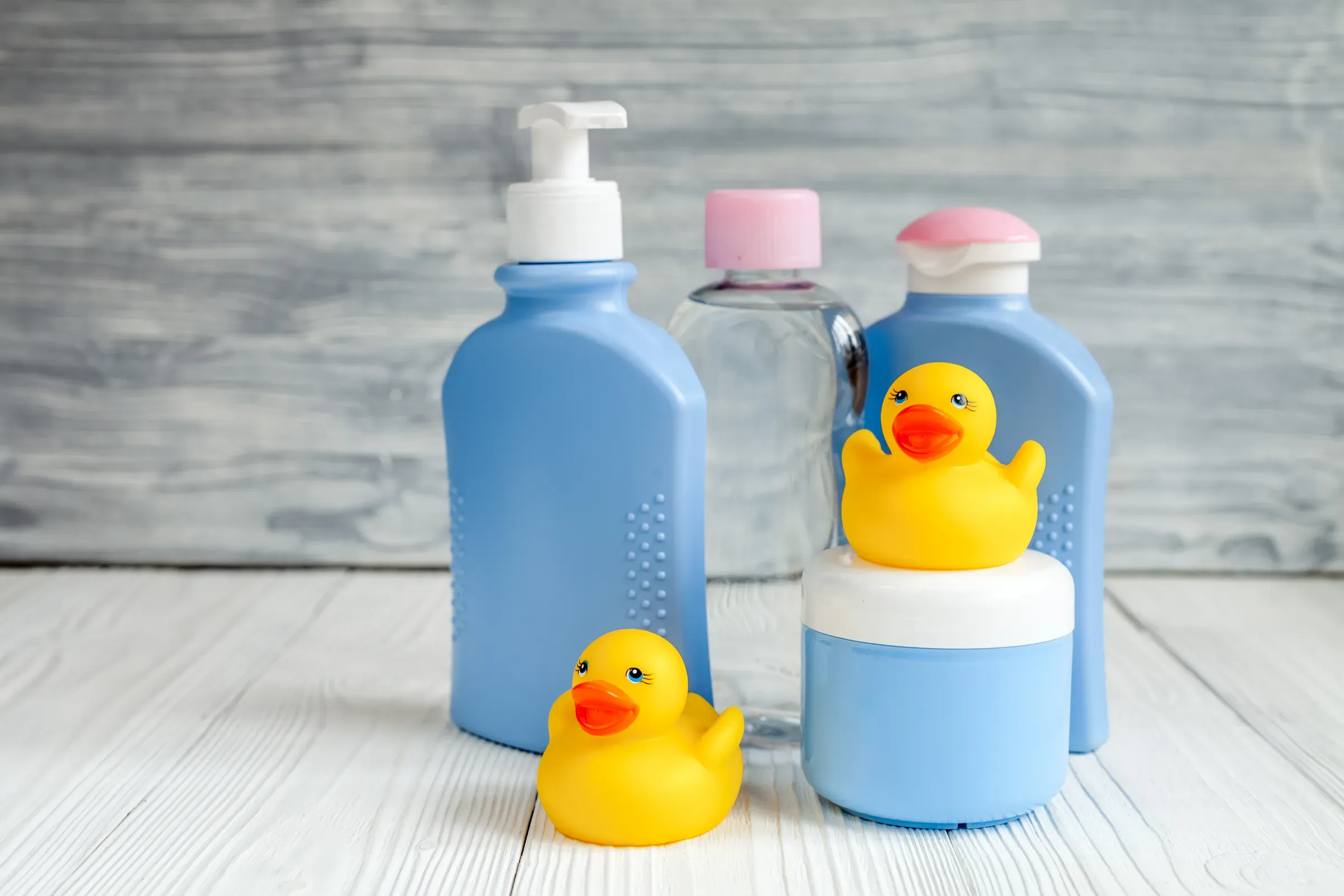
Baby organic cosmetic for bath on wooden bakground, baby skincare ecommerce
Baby skincareNew parents, frequently first-time, reading the whole ingredient list and looking for fragrance-free wording, a recognised seal, and evidence that a pediatrician or dermatologist was involved. Shower gift buyers arrive too, and they buy sets rather than single bottles because a set looks like a present.

How baby skincare makes money

Four levers, and what limits each one here

Revenue is traffic times conversion rate times order value times purchase frequency. In this niche each lever has its own ceiling.

Traffic

Traffic: what is left out, and what brought them here

Parents search for exclusions and for situations: fragrance-free baby lotion, baby wash without sulfates, what to use on cradle cap, mineral sunscreen for a six month old. Those queries are precise and one Baby Skincare collection catches none of them. The traffic lever is a set of free-from and ingredient pages backed by real product data, concern pages that describe the situation and the routine without diagnosing anything, and an age guide covering what suits a newborn against a toddler. Every one of them carries a product grid, and every product page carries the complete ingredient list as text rather than as a photograph of the carton.

Conversion

Conversion: the list, the age and what to do if skin reacts

A parent needs four things before the add to cart: the full ingredient list in text, the free-from statement, the age the product is suitable from, and what to do if the skin reacts. Seals belong beside the price with a one-line explanation worded the way the awarding organization words it. A patch-test instruction, the product's position in a bath routine, and the fragrance question answered directly rather than left inside the ambiguity between unscented and fragrance-free all remove hesitation. Smaller sizes and a travel set let a cautious first-time parent try without committing, and they are the single strongest conversion device in the category.

Order value

Order value: routines and sets, not upsell pressure

Order value comes from routines. A bath-time set pairing the wash, the lotion and the balm at a modest saving sells better than any cart-page upsell, and it is exactly what a shower gift buyer is looking for. Refill pouches lift the second order and suit a customer who already trusts the formula. A change-table bundle and a travel set attach naturally to a first order. Every set needs its own page with contents listed as text, because parents search for a baby bath gift set by name, and every set enters the feed marked as a bundle so Shopping can compete for that query instead of only for a single bottle.

Frequency

Frequency: bottles that empty in weeks

This is a fast replenishment category and most brands run it like a slow one. A wash used every evening is gone within weeks, and the parent does not think about it until the bottle is empty in the bath. Timing the reminder to the size bought and the age of the child beats a monthly newsletter by a wide margin, and a subscription offered after a second purchase rather than a first converts better and cancels less. The other driver is the stage: what a newborn needs is not what a toddler needs, so a store holding a birth date can move a customer along the range instead of waiting to be remembered.

Search visibility

Search: free-from pages, ingredients and careful concern content

Demand splits three ways. Free-from queries name what the parent is avoiding. Concern queries name what is happening to the skin. Age queries ask what is appropriate at a particular point. Free-from collections built from product data rather than from filter parameters carry the first group. Concern pages carry the second and have to be written with discipline: describe the situation, describe the routine, name the products that fit, and leave diagnosis and treatment to a clinician. An age guide carries the third and links out to everything suitable at each stage.

Ingredient pages are the layer that earns links. A page explaining what an ingredient does, why the brand chose it, what it is derived from and which products contain it answers a genuine question and passes authority to the products. Pair those with a plain-language page on how the brand formulates for infant skin, and with an honest explanation of the difference between unscented and fragrance-free, which is one of the most searched distinctions in the category and one of the least clearly answered anywhere.

Technically, sizes are variants of one product on one URL and sets are their own products. The ingredient list must exist as text in the HTML, since a photograph of the carton is invisible to search, to assistants and to a screen reader. Where a product is regulated rather than sold as a cosmetic, the required label content belongs on the page as text too, and the page and the feed have to agree on every word of it.
Queries that matter

  • fragrance free baby lotion
  • baby wash without sulfates
  • what to use for cradle cap
  • mineral sunscreen for babies
  • baby lotion for newborn skin
  • unscented vs fragrance free baby products

Free-from collections, ingredient explainers and carefully written concern pages rank here. Pages that lead with a treatment promise rank unreliably and put the ad account at risk while they do it.

AI answers

AI answers: the ingredient questions parents put to assistants

Parents ask assistants whether a product is fragrance-free, what age it can be used from, whether it contains something they are avoiding, and what to put on dry patches. Stores that get cited publish the full ingredient list as text, state age suitability in one sentence, quote any seal exactly as the organization words it, and answer the fragrance question directly instead of implying it. Concern content that describes a routine and defers to a clinician is quotable in a way a treatment claim never is, because an assistant will not repeat a claim it cannot attribute. The page, the structured data and the feed all have to say the same thing.

Is this baby lotion fragrance-free or only unscented?
What age can this baby wash be used from?
Does this cream contain any of the ingredients I am avoiding?
What should I put on a newborn's dry skin?

Questions shoppers put to assistants. A store gets named when its pages answer them in plain text.

Google Shopping and Merchant Center

Google Shopping and Merchant Center for baby skincare

The feed needs the ingredient and age data the queries depend on. google_product_category sits at the specific baby bath and body node rather than at the top of the health and beauty branch. The age group attribute is set to newborn or infant where that is genuinely accurate. product_detail carries the ingredient highlights, the free-from statement and the age suitability, product_highlight carries the three things a parent would repeat to a friend, and size with item_group_id keeps the bottle sizes together as one product. Sets are marked as bundles and list their contents.

Policy is why listings get pulled here. Anything reading as treating eczema, cradle cap, diaper rash or another condition moves the item under the healthcare policies, and phrases such as clinically proven or dermatologist recommended need substantiation a reviewer can find on the landing page. Sun care and diaper creams are regulated rather than cosmetic in both countries, so the label wording governs what the feed may say and the feed cannot claim more than the label does. Price mismatch after a gift-set promotion and overlays added to packaging shots are the other two that recur every season.

Campaign structure follows the cycle: single bottles in an acquisition campaign with a lower target, sets bid to margin through the gift season, refills grouped separately and measured on repeat rather than on first-order return, and free listings on all year.

Feed attributes that decide eligibility

  • google_product_category at the baby bath and body node
  • age group set to newborn or infant
  • product_detail for ingredients, free-from and age suitability
  • product_highlight
  • size with item_group_id
  • is_bundle for sets
  • gtin or identifier_exists

Disapprovals we see in this niche

  • Healthcare policy flags on wording that reads as treating a skin condition
  • Phrases such as clinically proven with no substantiation on the landing page
  • Price mismatch after a gift-set promotion ends
  • Overlays and badges added to packaging images

Meta and social ads

Meta and social ads: quiet creative and a hard policy line

The creative that works here is quiet. The bottle on a real change table, the texture on the back of a hand, the ingredient list read aloud, the routine after a bath in one unedited take, and a parent describing what they were looking for when they found the brand. Studio gloss underperforms, because a parent is judging whether this looks like something they would keep within reach at seven in the evening.

The policy lines matter more than any creative choice. No before-and-after imagery of a child's skin, nothing implying the viewer's baby has a condition, and no treatment or cure language anywhere in the ad or on the page it points to. Imagery of infants stays inside each platform's standards and the ad reaches adults only. Creator content needs written rights and a review of the caption, because a parent describing how a cream cleared a rash turns your ad into a health claim even though the brand never wrote the words.

  • The bottle on a real change table rather than a studio set
  • The whole ingredient list read out in thirty seconds
  • Bath to bed: the routine in one unedited take
  • What fragrance-free actually means on a label
  • A parent explaining what they were looking for, with rights secured

Policy line

No before-and-after images of a child's skin, no implication that the viewer's baby has a condition, no treatment or cure language, and creator captions reviewed because they become the brand's claim.

Conversion and the store

The store: what a baby skincare page has to put in view

The page has to settle whether the ingredients are acceptable, whether it suits the child's age, what to do if the skin reacts, whether the fragrance-free wording is literal, and whether a smaller size exists. The template that carries this puts the whole ingredient list in view as text with the free-from statement above it, age suitability in a single line, any seal with its one-line meaning, the patch-test instruction, and the product's place in the bath sequence. A trial size on the same page removes the risk from a first order without discounting the full one.

Sets need contents listed as text and a per-item value shown honestly, since a gift buyer is comparing sets against sets rather than bottles against bottles. On mobile the ingredient list should be a scrollable block rather than an accordion nobody opens, the size selector has to show which sizes are actually in stock, and the subscribe option should not appear before a first-time buyer has decided on the product itself.

Objections the page must answer

  • “What exactly is in it and what is deliberately left out”
  • “Is it right for a newborn or only for older babies”
  • “Is it truly fragrance-free or only unscented”
  • “What do I do if my baby's skin reacts”
  • “Can I try a smaller size first”

Email, SMS and retention

Email and SMS: patch test first, then the empty bottle

The first message arrives with the parcel and covers the patch test, where the product sits in a bath routine and how much to use. That one email prevents most reaction returns and opens the relationship with something useful rather than a discount code. A birth date captured at that moment, offered as the way to get age-appropriate suggestions, drives the timing of everything after it.

Replenishment is set by the bottle and the child. A daily-use wash bought in a small size needs a reminder in weeks rather than months, and the reminder should suggest the larger size or a refill instead of repeating the original order. Subscription is introduced after a second purchase, once the parent has decided the product works. Stage messages move the customer along the range as the child grows, gift-set promotion runs before the holidays and through shower season, and SMS is kept for delivery and restock notices only.

  1. Patch test and routine

    On delivery, before the first use

  2. Replenishment by size

    Weeks for daily-use bottles, a season for balms and creams

  3. Refill or larger size offer

    With the second replenishment reminder

  4. Stage suggestions

    Keyed to the birth date as the child leaves the newborn range

  5. Gift set promotion

    Ahead of the holidays and through shower season

Where revenue leaks

The leaks we find in baby skincare stores

The Growth Analysis ranks these against your own numbers and says which to close first.

Get a Growth Analysis for your baby skincare brand
  • Ingredient lists published as a photograph of the carton

    The one thing this shopper came to read cannot be read by search, by an assistant or by a screen reader, so the visit ends on a third-party ingredient database instead.

  • Concern copy written as a treatment promise

    A description saying the product clears eczema puts the feed and the ad account under review and sets an expectation the formula was never meant to meet.

  • Reminders timed like a slow-moving category

    A daily-use bottle is empty long before a ninety-day email arrives, so the reorder happens in whichever shop the parent is standing in that week.

  • Gift sets that exist only as a discount code

    The set has no product page, so the shower gift query lands nowhere and the highest-value order in the category never happens.

  • Sun care described in marketing language

    A regulated product written up in the words of a cosmetic is a policy problem in the feed and a trust problem on the page for a parent who reads labels.

Platform notes

Where the platform changes the work

Shopify

The ingredient list, free-from statement, age suitability and seals live in metafields so they render as text on every product page and map into product_detail. Sizes are variants under one product, sets are bundle products that list their contents, and Shopify Subscriptions handles a refill plan once a customer has ordered twice.

WooCommerce

Global attributes for free-from claims and age suitability produce indexable archive pages, and the feed plugin needs the ingredient field mapped in full rather than truncated at a character limit. Subscriptions handle refills without a second storefront.

Headless

Ingredient and claim text has to be server-rendered so it exists in the HTML for search and assistant crawlers rather than appearing only after the component hydrates.

Questions

Baby skincare owners ask us

By CartKernel · Last reviewed

How do we write about eczema or cradle cap without triggering a policy review?

Describe the situation and the routine rather than the outcome. A page can say what the product is formulated for, what is in it and how parents use it, and can point to a clinician for anything diagnostic. It cannot say the product treats, clears or cures. That distinction keeps the page useful, keeps the listing live, and keeps the parent's expectation honest.

Does the full ingredient list have to be on the product page?

Yes, as text. It is the first thing this buyer looks for, it is what assistants quote, and an image of the carton is invisible to both. Publish it in the order it appears on the label, put the free-from statement above it, and carry the same list in the feed's detail attributes so nothing on the page contradicts anything in the listing.

When should a baby skincare brand introduce a subscription?

After the second order rather than on the first product page. A first-time parent is still deciding whether the formula suits their child, and a recurring plan at that moment adds a decision they are not ready to make. Once they have reordered, a refill plan timed to the size they buy is an easy yes and it cancels far less often.

How do gift sets change the way the catalog is built?

Each set becomes its own product with its own page, its contents listed as text and its own feed item marked as a bundle. Parents and shower guests search for sets by name, and a set that exists only as a cart-level discount cannot rank, cannot be listed in Shopping and cannot be quoted by an assistant.

Can we say dermatologist tested in our listings and ads?

Only if it is true, documented, and the documentation is described on the page a reviewer will land on. Testing claims get checked, and the difference between tested, developed with and recommended is a real one. We keep the exact phrasing identical across the site, the feed and the creative so one version never contradicts another.

What changes when we add sun care to the range?

It stops being a cosmetic. Sun care is a regulated product in both countries, so the label wording governs what the page and the feed may say and the claim language cannot run ahead of the registration. It also carries a sharp season, which changes stock planning and ad pacing inside a range that is otherwise level across the year.

Grow your baby skincare store.

A free Growth Analysis ranks what your store should fix first, by revenue at stake, in about a week.