Skip to content

Books, stationery & paper · ecommerce growth

Comic book store marketing agency

Comics sell against a schedule that never pauses. New issues land every week, a manga run can reach sixty volumes, and a reader who falls two volumes behind usually stops buying the series altogether. We build stores around that rhythm: series pages that hold an entire run in order, feeds that cope with variant covers and weekly allocation changes, and a pull list that turns an occasional visitor into a standing order.

The buyer, in brief

Consideration
Minutes for a new release a reader already follows, longer for starting an unfamiliar run
Purchase frequency
Weekly for pull list customers, monthly to quarterly for volume readers, occasional for gift buyers
Seasonality
Weekly release cadence sets the base, with volume releases, convention season and the gift quarter as the peaks
Price band
Low for single issues, mid for trades and omnibus editions, high for graded and key back issues
Return risk
Low, and almost always about condition on arrival, which packing standards prevent
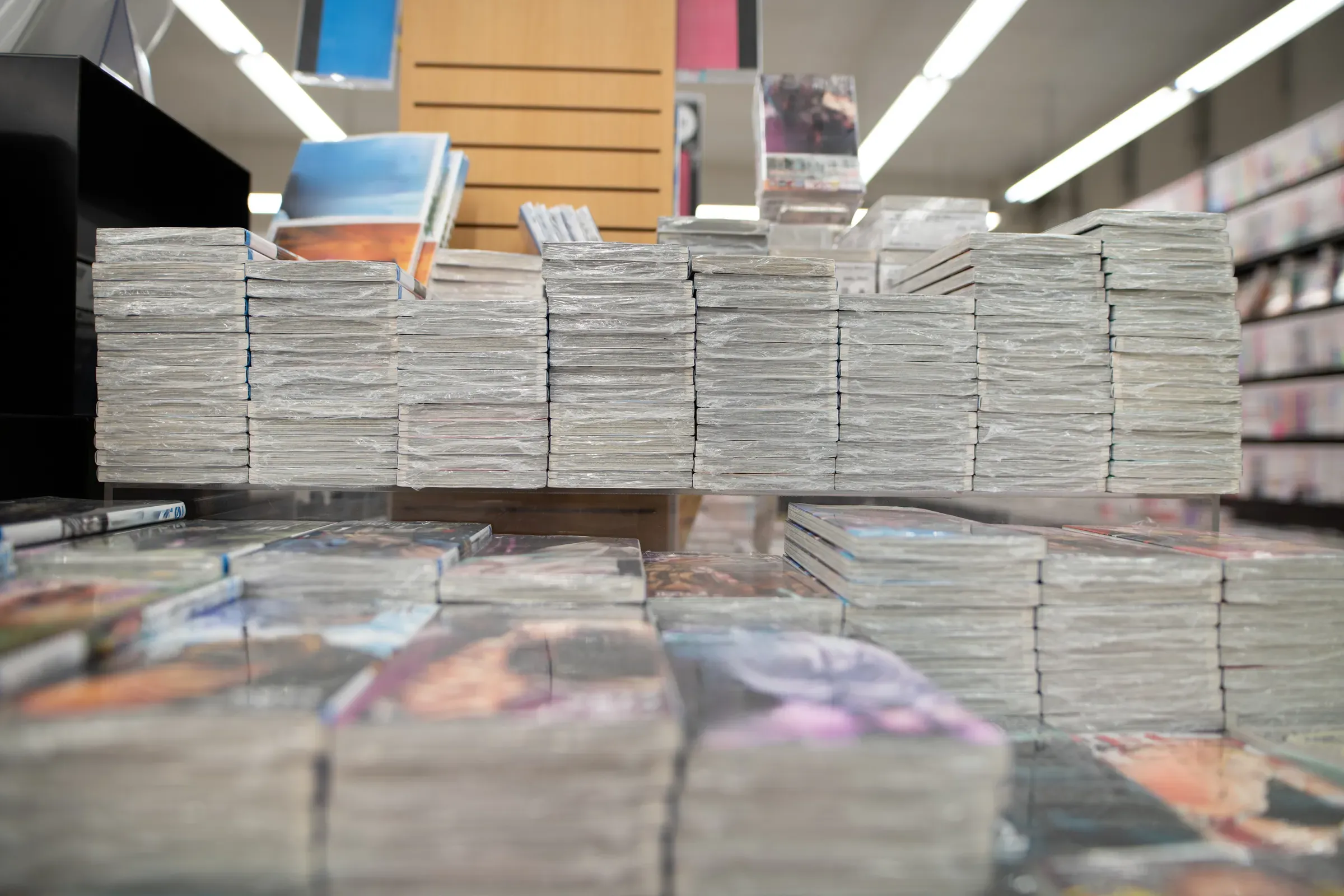
Many manga books stacked in a bookstore, comics & manga ecommerce
Comics & mangaReaders and collectors who track series by volume number, know release dates before the store posts them, understand print runs and variant ratios, and check condition, print and whether back issues ship bagged and boarded.

How comics & manga makes money

Four levers, and what limits each one here

Revenue is traffic times conversion rate times order value times purchase frequency. In this niche each lever has its own ceiling.

Traffic

Traffic: series names, volume numbers and read order

Searches in this niche are exact. A reader types a series name and a volume number, or asks what order a run should be read in, or looks for an omnibus that collects volumes they do not already own. Stores that list stock as a flat catalog of individual products cannot answer any of that, so the query goes to a forum thread or a marketplace. The build is a page per series holding the complete run in order, marking what is in print, what is stocked and what edition each entry is, plus read order guides for the sprawling universes where the question is genuinely hard. Those guides earn links, which is rare and valuable in this category.

Conversion

Conversion: completeness, edition and condition

Three facts close a comics order. Which volumes you actually have, which edition each one is, and what condition a back issue is in. A reader building a run will not order volume four if they cannot see whether five and six exist, and a collector will not buy an older issue without a condition description in the language the hobby uses. Packing is part of the same trust: showing how books are bagged, boarded and protected in transit converts collectors who have received bent corners before. Every one of those is a content problem rather than a design problem, and most stores solve none of them.

Order value

Order value: sell the arc, not the issue

A single issue is close to impossible to ship profitably on its own, so the merchandising job is to make a multi-item order the normal one. Complete story arcs, starter bundles of the first three volumes, box sets, and the missing-volume prompt on a series page all do it without discounting. Supplies belong in the same basket: bags, boards, backing, short boxes and shelf-safe storage are bought by the same people, cost little to add to a parcel and carry decent margin. A store that only lists the books is leaving the accessory half of the hobby to somebody else.

Frequency

Frequency: the pull list is the real product

The pull list is the strongest retention mechanism in any part of this industry: a customer names the series they follow, the shop reserves each issue, and the order recurs without a decision being made every week. Moving that from a paper list behind the counter to an account on the site changes the economics, because it becomes visible, editable, reportable and marketable. Beside it sit series alerts for volume readers, who buy on a slower clock but with the same loyalty, and restock notifications for sold-out runs. Together they mean most of a week's revenue is known before the week begins.

Search visibility

Search: series hubs, read order and the release calendar

Series hubs carry organic revenue here. One page per series, listing every volume in numbered order with edition, format and stock state, gives search engines a structure that matches how readers think and gives the store an internal linking spine that pushes authority to individual volumes. It also solves the most common frustration in the category, which is finding out whether volume eleven exists in paperback.

Read order guides are the link-earning layer. Long-running universes with crossovers, reboots and multiple imprints generate a question that no product page can answer, and a store that answers it honestly, with the editions it stocks noted rather than pushed, becomes the page people share. A weekly new releases page maintained on a real schedule does similar work for return visits, provided it goes up before the week starts rather than after.

The technical decisions are about volumes and variants. Each volume is its own product with the series as a taxonomy, sold-out volumes keep their page with an availability note and a restock signup so the run stays complete, and variant covers stay as variants of one issue unless a specific cover is genuinely collected in its own right. Mature titles need clear labeling on the page for both age gating and ad policy.

Queries that matter

  • manga volume 12 in stock
  • reading order for a comic universe
  • omnibus or single volumes which to buy
  • new comic releases this week
  • complete manga box set english
  • back issue near mint condition
  • deluxe edition versus trade paperback

Series hubs listing a complete run, read order guides and a maintained weekly release page rank here. Individual product pages with a cover image and a publisher blurb rarely rank against marketplaces on their own.

AI answers

AI answers: read order, editions and what is still in print

The questions readers put to assistants in this niche are structural rather than subjective. What order should this be read in, which volumes does that omnibus collect, is volume seven still in print, is the deluxe edition worth it over the paperback, where can I buy a specific volume in stock. A store that publishes complete series listings with volume numbers, edition names, page counts and collected contents in plain text is one of the few sources able to answer accurately, which makes it quotable. We keep the collected-in listing on omnibus pages, mark print status honestly rather than optimistically, and make sure the series hub is reachable as plain HTML rather than assembled by a filter script.

What order should I read this comic series in?
Which volumes does this omnibus collect?
Is volume seven still in print anywhere?
What is the difference between the deluxe and the standard edition?
Which shops have this volume in stock right now?

Questions shoppers put to assistants. A store gets named when its pages answer them in plain text.

Google Shopping and Merchant Center

Merchant Center for weekly releases and variant covers

Identifiers here come in two forms. Trade paperbacks, omnibus editions and manga volumes carry an ISBN that belongs in the gtin attribute for that exact edition. Single issues carry a printed UPC, often with a suffix that distinguishes the cover, and that code should be used where it exists rather than left blank. Back issues and secondhand stock need the condition attribute set honestly, and graded books need the grade described in text rather than implied by a photograph.

Weekly allocation is what breaks comic feeds. Distributor allocations get cut, a variant sells out on the morning of release, and a feed uploading once a day will keep advertising an issue that has been gone for hours. Release weeks need availability syncing on a much shorter cycle, and sold-out items need to leave the feed rather than sit there collecting clicks. Pre-orders for solicited titles use availability preorder with the solicited release date, which moves more often in this category than in most.

Campaigns split by how the product behaves. New releases run hard for a short window in their release week. Backlist volumes and completed runs sit in a steady campaign, because their demand is constant and unhurried. Supplies run separately with their own margin logic. Mature-rated titles need their own group so any policy issue is contained rather than affecting the whole account.

Feed attributes that decide eligibility

  • gtin from the ISBN for trades, omnibus and manga volumes
  • gtin from the printed issue UPC where one exists
  • condition for back issues and secondhand stock
  • product_detail for series, volume number and edition
  • custom_label for release week and for mature titles
  • availability synced on a short cycle during release weeks

Disapprovals we see in this niche

  • Adult content policy flags on mature-rated titles and covers
  • Availability mismatch after a distributor allocation is cut
  • Duplicate items for every variant cover of one issue
  • Missing GTIN on issues and volumes that carry a printed code

Meta and social ads

Meta and social: the week, the shelf and the packing bench

Comics creative has an unusually engaged audience and a short attention window. The formats that work are the weekly haul laid out on a counter, a completed run photographed on a shelf, a slow pan across a variant cover, the packing bench showing exactly how a book is protected, and a short honest reaction to a first read without spoilers. Convention season adds a second seam of content that carries well because the audience is already looking for it.

The policy constraint is imagery. Mature titles frequently carry covers with violence, blood or sexualized art that will not pass ad review even when the book itself is a legitimate product, and repeated rejections put the account at risk. We keep mature stock out of catalog ads, choose creative from the tamer end of the catalog for prospecting, and use the store's own aesthetic rather than publisher cover art where a cover is likely to be flagged. Audiences begin with pull list customers and past buyers, since this is a hobby where retention is worth more than reach.

  • The weekly haul laid out and named on the counter
  • A completed run photographed volume by volume on the shelf
  • The packing bench, showing how a back issue is protected
  • A spoiler-free first reaction to a new release
  • Convention floor and shop tour footage

Policy line

Ad review is unforgiving about violent or sexualized cover art, so mature-rated titles should be kept out of catalog ads and creative selection should favor covers that will pass review rather than testing the account's standing.

Conversion and the store

The store: what a collector checks before ordering

A comics product page is judged on precision. Series and volume number in the title, the edition named, the printing stated where it matters, page count, whether it collects other issues and which ones, and for back issues a condition description written in the terms collectors use. Photographs of the actual copy matter for anything secondhand, and a stock count matters everywhere, because scarcity is real in this category rather than a persuasion tactic.

The series hub does the conversion work that a single product page cannot. Showing a reader the whole run with the volumes they are missing marked as available is the most effective merchandising in this niche, and it works on mobile if the list stays a list rather than becoming a carousel. Pull list signup needs to be one visible action from the homepage and from any series page, with the series added at the point of interest rather than through a separate form nobody finds.

Objections the page must answer

  • “Which volumes of this run do you actually have”
  • “Is this the omnibus, the deluxe or the standard paperback”
  • “What condition is this back issue in and can I see it”
  • “How will it be packed so the corners survive”
  • “Will my pull list hold a copy if it sells out on release day”
  • “Is this a first printing or a later reprint”

Email, SMS and retention

Email and SMS: the weekly rhythm and the unfinished run

This niche has the most natural sending cadence in the industry. A weekly new releases email that goes out before release day, written by someone who reads the books, is both a revenue driver and the reason people stay subscribed. Pull list customers get their own version confirming what has been reserved for them, which doubles as a reminder to collect or to add shipping.

The highest-value flow is the unfinished run. When a customer bought volumes one through nine and stopped, a message naming volume ten outperforms any general promotion, because it addresses a gap the reader already feels. Restock alerts work the same way for sold-out volumes. SMS earns its place for release day drops on limited variants and for collection reminders at a physical shop, where timing is the whole message. Win-back copy should name the series, not the store.

  1. Weekly new releases

    The day before release day, every week

  2. Pull list confirmation

    When the week's reservations are allocated

  3. Continue the run

    Three to six weeks after the last volume bought in a series

  4. Restock alert

    The moment a requested volume returns to stock

  5. Supplies replenishment

    Timed to how fast a collection outgrows its storage

Where revenue leaks

The leaks we find in comics & manga stores

The Growth Analysis ranks these against your own numbers and says which to close first.

Get a Growth Analysis for your comic shop
  • A series with no page holding the run

    Volumes exist as separate products with nothing connecting them, so a reader cannot see what is available and gives up halfway through building a collection they were willing to pay for.

  • Sold-out volumes deleted from the catalog

    Removing a volume breaks the run visually and destroys a page that had search history, when an availability note and a restock signup would have captured the demand instead.

  • A pull list that lives behind the counter

    The most valuable customer relationship in the shop exists only on paper, so it cannot be reported on, emailed to, or grown by anyone who is not standing in the store.

  • Variant covers duplicated as separate products

    One issue becomes six near-identical pages competing with each other in search and in the feed, which splits demand and multiplies the availability errors during release week.

  • Packing standards never shown

    Collectors who have received damaged books before need to see how a store ships, and a shop that never shows its packing loses those orders to one that does.

Platform notes

Where the platform changes the work

Shopify

Series, volume number and edition sit in metafields that build the series hub automatically as stock arrives, subscriptions or selling plans run the pull list, and POS keeps shelf stock and website availability as one number during release week.

WooCommerce

Custom taxonomies for series, publisher and imprint create the hub and archive pages, and scheduled CSV imports handle the weekly receiving list without someone editing hundreds of products by hand.

BigCommerce

Custom fields carry volume and edition data into both the storefront and the feed, and customer groups can separate pull list members from general shoppers for pricing and communication.

Questions

Comics & manga owners ask us

By CartKernel · Last reviewed

How should a comic shop structure its catalog for search?

Around series rather than around suppliers. Each series gets a hub page listing every volume in order with edition and stock state, each volume is a product beneath it, and the hub is linked from every volume. That structure matches how readers search, keeps the internal links sensible and gives a store something no marketplace listing offers.

Should variant covers be separate products in the feed?

Usually not. Keep them as variants of one issue in a single item group, so demand is not split across near-identical listings. The exception is a cover that is collected in its own right and priced accordingly, which deserves its own product because it is a genuinely different purchase with a different buyer.

Can a pull list be run properly through an online store?

Yes, and it usually performs better than a paper list. Customers add series to their own list, the shop sees committed demand before ordering from the distributor, and the weekly reservation can be emailed, shipped or held for collection. It also becomes a reportable retention number rather than an informal arrangement.

What happens to ads when a distributor cuts an allocation?

Without fast feed syncing, spend keeps landing on a page that cannot fulfill the order. During release weeks we sync availability on a short cycle, pull sold-out items from active campaigns rather than leaving them to be disapproved, and set up restock capture on those pages so the traffic is not simply lost.

Do mature-rated titles cause problems with advertising?

They can. Cover art with graphic violence or sexualized imagery is frequently rejected in ad review, and repeated rejections affect account standing. We keep mature stock out of catalog ads and prospecting creative, sell it through organic pages, email and the pull list, and choose safer covers where a campaign needs product imagery.

How do you market back issues and graded books?

With accurate condition language, photographs of the actual copy, and honest scarcity rather than manufactured urgency. Search demand for specific issues is small but highly qualified, so the work is making each listing findable and trustworthy rather than advertising the category broadly. Supplies and storage sell well alongside them.

Grow your comics & manga store.

A free Growth Analysis ranks what your store should fix first, by revenue at stake, in about a week.