Skip to content

Electronics & gadgets · ecommerce growth

Home security brand marketing agency

People shop for a camera after something happened, or just before something they are worried about. They want to know what it sees at night, where the footage is kept, who can look at it, and what it costs every month once the box is opened. We build security brands around those four answers: coverage and placement pages that match the search, product pages that state the storage and privacy position plainly, advertising that stays inside surveillance policy, and subscription retention that survives the first renewal.

The buyer, in brief

Consideration
Days when something has already happened, several weeks when it is precautionary and a whole system is being planned
Purchase frequency
One or two cameras first, then expansion to more angles over the following year, with a subscription running alongside
Seasonality
Lifts through the parcel-heavy weeks before the holidays, before extended travel periods, after seasonal reports of local break-ins, and around the shift to darker evenings
Price band
Low to mid for a single camera, considerably higher for a multi-camera system, with a recurring plan that often exceeds the hardware over time
Return risk
Driven by Wi-Fi signal at the mounting point, battery life falling short of expectations, and buyers discovering the plan cost after purchase
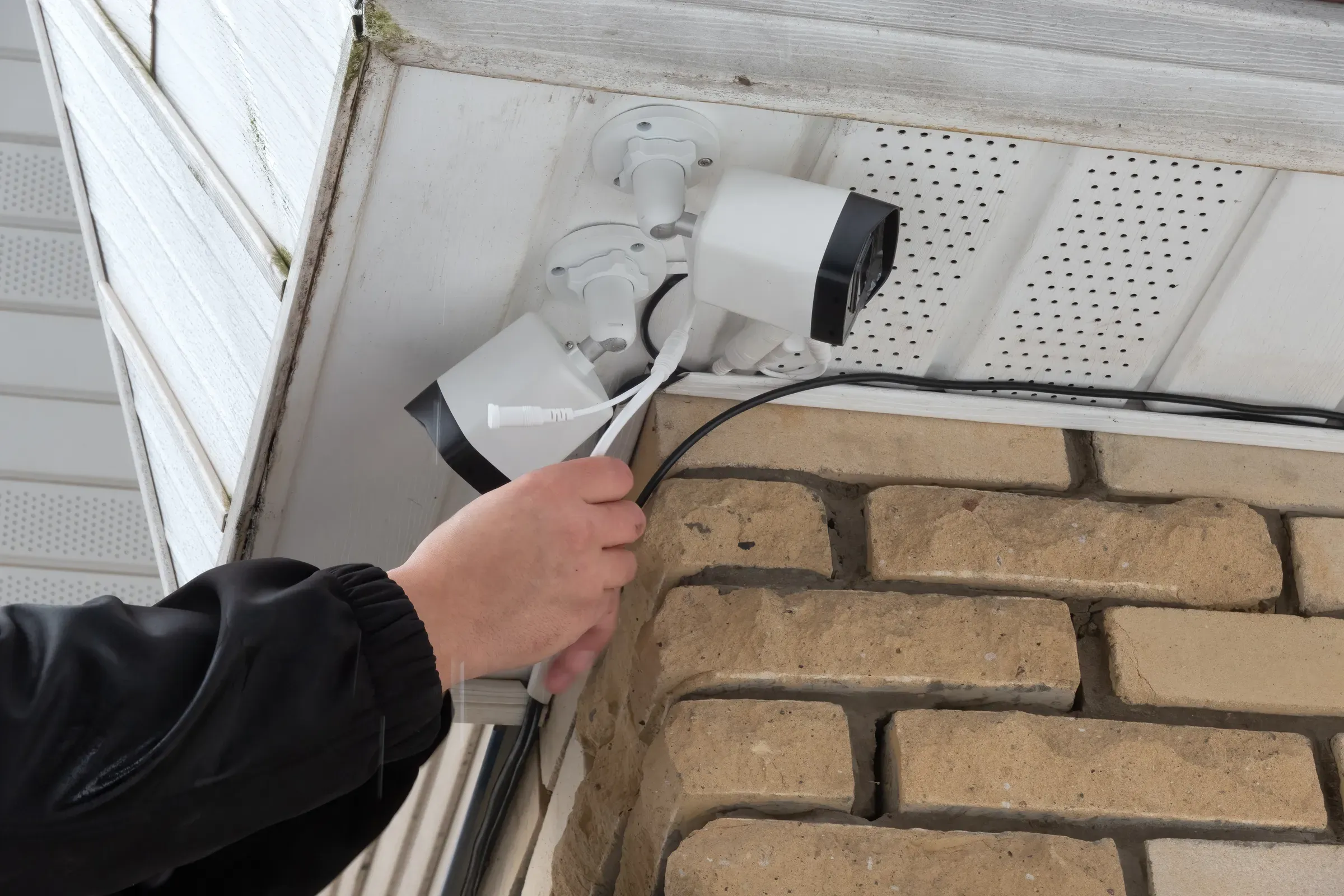
A person's hand connects wires to new security cameras mounted under white building eaves, next to a brick, home security cameras ecommerce
Home security camerasHomeowners and renters solving a specific worry, from a parcel theft to an elderly parent living alone, plus small business owners covering a shopfront. They check night vision quality, whether recording is local or in the cloud, what the plan costs after the trial, who has access to the footage and whether the camera needs wiring.

How home security cameras makes money

Four levers, and what limits each one here

Revenue is traffic times conversion rate times order value times purchase frequency. In this niche each lever has its own ceiling.

Traffic

Traffic: the place being watched and the plan being avoided

Search here is led by location and by cost. People search for a camera for a driveway, a front door, a garage, a nursery or a shopfront, and they search for cameras with no monthly fee more than for almost any feature. Both are underserved by stores whose catalog is organised by product family. Placement pages for each common location, covering what matters there such as field of view, night range, weatherproofing and power, capture the first group. A clear, honest page on what works without a subscription and what a plan adds captures the second, and it converts better than avoiding the question, because the shopper is going to find the answer either way.

Conversion

Conversion: storage, access and the true monthly cost

Three unanswered questions stall this purchase. Where does the footage live, and can it be kept locally. Who besides the owner can see it, and is it encrypted. What does it cost per month once the included period ends, per camera or per household. Stores that answer all three above the fold convert better and get fewer returns, because the buyer who understands the plan before ordering does not cancel in month two. The fourth question is practical rather than philosophical: will the camera hold a connection where it is going to be mounted, which is the most common cause of a camera coming back.

Order value

Order value: coverage is a system, not a camera

Almost nobody who buys one camera is finished. They discover a second angle within a fortnight. Selling coverage from the start raises order value honestly: a front door and driveway pair, a whole-home bundle, or a shop set that covers the till and the entrance. The physical accessories matter too, and they are frequently the difference between a working install and a return. Mounts for the surface being drilled into, solar panels for battery models in awkward positions, extension cables, local storage cards or a base station, and weather covers all belong beside the camera rather than in a separate accessories section nobody visits.

Frequency

Frequency: the plan renewal is the business

Hardware in this niche is often close to a break-even sale, and the recurring plan carries the margin, which makes retention the growth lever rather than a nice extra. The renewal risk is concentrated in customers who never used the features they pay for. Somebody who has never reviewed a clip, set an activity zone or shared access with a family member will cancel at renewal. Onboarding that gets them to use those features in the first fortnight changes that outcome. The other frequency driver is expansion, since each additional camera raises both hardware revenue and the plan tier, and it is triggered by the customer's own experience rather than by a promotion.

Search visibility

Search for home security: places, plans and the wiring question

The pages that earn the most qualified traffic are placement pages rather than product families. A driveway page can talk about vehicle detection distance, headlight glare at night, the width of view needed and power options at that distance from the house. A front door page is about package detection, two-way audio, doorbell chime compatibility and existing wiring. A nursery page is about indoor use, sound alerts and local storage. Each is a different set of concerns, and each is a query somebody types.

The second layer is the money and privacy content: what a subscription covers, what continues working without one, how long footage is kept, where it is stored and who can access it. These pages are read carefully rather than skimmed, and they are the reason a cautious buyer picks one brand over another. They should be written plainly, kept accurate as plans change, and linked from every product page instead of hidden in a help centre.

The third layer is legal and practical guidance. Recording rules differ by jurisdiction, particularly for audio and for anything pointing beyond a property line, and buyers do search for this. Content here has to be careful, general and clearly not legal advice, but a store that acknowledges the question earns trust that a store which ignores it does not. Technically, the main job is keeping resolution, field of view and power source as filterable, indexable attributes rather than as parameters.

Queries that matter

  • security camera with no monthly fee
  • best camera for a driveway at night
  • wired vs battery security camera
  • does a doorbell camera need existing wiring
  • how long is security camera footage stored
  • outdoor camera for cold weather
  • security camera with local storage only

Placement pages written for one location, honest subscription and storage explainers, and careful guidance on recording rules tend to rank here. Product family collections and articles listing every feature without saying where a camera should go do not.

AI answers

AI answers: what assistants are asked before a camera is bought

The questions assistants receive in this category are mostly about cost, storage and law: whether a camera works without a subscription, how long clips are kept, whether footage is encrypted, whether it can point at a shared driveway, and whether audio recording is permitted. These are answerable in a sentence each, and stores get named when they answer them in a sentence each rather than in a plan comparison table. Consistency matters more here than in most niches, because a plan detail stated one way on the product page and another way in the help centre reads as unreliable. Say who operates the service, where data is held and what happens to footage when a plan ends.

Does this camera work without a monthly subscription?
Where is my footage stored and who can access it?
Am I allowed to record audio on my own property?
How long are recordings kept before they are deleted?
Will this camera work if my internet goes down?

Questions shoppers put to assistants. A store gets named when its pages answer them in plain text.

Google Shopping and Merchant Center

Merchant Center for cameras: surveillance policy and the plan disclosure

This category sits under advertising rules that most electronics does not. Google restricts products promoted for covert surveillance, and the distinction that matters is between a home security camera sold for monitoring your own property and anything framed as a way to watch a person without their knowledge. Titles and descriptions that lean on hidden, covert or spy language put the account at risk even when the hardware is ordinary. The feed should describe the product by what it is: resolution, field of view, power source, weather rating, storage type.

The second discipline is the subscription. Where a camera requires or strongly implies a recurring plan, the listing and the landing page have to be honest about it. A price in the feed that represents only the hardware, next to a page where the useful configuration needs a plan, is the kind of mismatch that generates complaints before it generates disapprovals. State it in the description and on the page.

Structure follows the system rather than the unit. Single cameras, multi-camera bundles and accessories behave differently and should be separated, with bundles carrying the item count clearly in the title, since a two-pack listed at a one-pack price is one of the most common errors in this category.

Feed attributes that decide eligibility

  • gtin and mpn on every camera, doorbell and accessory
  • product_detail for resolution, field of view and power source
  • multipack for two-camera and multi-camera bundles
  • weather rating and indoor or outdoor use stated
  • google_product_category at the surveillance camera node
  • custom_label separating hardware, bundles and accessories

Disapprovals we see in this niche

  • Surveillance policy flags for hidden, covert or spy framing
  • Multipack bundles priced as single units without the multipack attribute
  • Price mismatch where a feed price excludes a required plan
  • Images with promotional overlays or comparison badges burned in

Meta and social ads

Social creative that reassures without frightening

Fear-led creative in security performs briefly and costs a lot. It attracts complaints, it runs into personalised advertising rules when it implies something about the viewer's situation, and it produces buyers who cancel once the anxiety passes. The creative that holds up is calm and demonstrative: night footage shown as it actually looks, a package delivery captured clearly, a two-way conversation with a courier, an install shown in real time so the viewer knows what it takes, and an owner explaining how they use it day to day.

Audiences work best broad for prospecting with clear demonstration creative, then tightly segmented for retention: existing customers by camera count for expansion, and plan holders approaching renewal for feature education rather than for offers. Privacy claims are the one thing to be careful with in copy, since a statement about encryption or data location becomes a promise the brand has to keep, and it should be phrased exactly as the technical documentation states it.

  • Real night footage at the actual distance a camera is mounted
  • A delivery captured and answered through two-way audio
  • An install filmed in real time from box to first clip
  • An owner describing one specific way they use the camera
  • Activity zones set up on screen to show what triggers an alert

Policy line

Do not imply anything about the viewer's personal circumstances or neighbourhood, avoid hidden or covert framing entirely, and state privacy and encryption claims exactly as the technical documentation supports them.

Conversion and the store

The page has to price the subscription before the button

The single most valuable change on most security product pages is moving the plan explanation next to the price. What works without a plan, what the plan adds, what it costs per camera or per household, and how long any included period lasts. A buyer who discovers this at checkout abandons, and a buyer who discovers it after delivery returns the camera and leaves a review about it. Stating it plainly loses a few sessions and keeps far more customers.

The second change is a placement and connectivity check. Field of view illustrated at a real mounting distance, night range stated in metres rather than described as excellent, guidance on Wi-Fi signal at the intended spot, and clear power requirements prevent most of the returns in this category. Add the storage and access statement, the warranty, and what happens to footage if a plan lapses. On mobile, the plan comparison has to be readable without horizontal scrolling, which is where most of these tables fail.

Objections the page must answer

  • “What does it cost every month, and per camera or per home”
  • “Does anything still work if I never subscribe”
  • “Who can see my footage and where is it stored”
  • “Will it hold a signal where I want to mount it”
  • “How well does it actually see at night”
  • “What happens to my recordings if I cancel”

Email, SMS and retention

Flows that get the features used before the renewal arrives

Retention in this niche is decided in the first two weeks, long before the renewal notice. A customer who sets up activity zones, reviews a clip, shares access with someone in the household and adjusts their alert settings has made the product part of their routine. One who left it on default settings and now gets an alert every time a car passes will cancel and often return the hardware. The onboarding sequence should walk through one of those setups at a time, spread over the first fortnight rather than crammed into a welcome email.

After that the messages follow the installation. Expansion prompts work best once the customer has seen the first camera's blind spot for themselves, usually a month or two in. Seasonal reminders have a genuine job here, covering battery behaviour in cold weather, lens cleaning and checking mounts after storms. Renewal communication should arrive before the charge, state what the plan covers and offer a lower tier rather than letting a surprise charge turn into a cancellation and a chargeback.

  1. Setup and first clip

    The day the camera is delivered, then two days later

  2. Feature activation series

    Across the first two weeks, one setting at a time

  3. Coverage expansion

    Four to eight weeks after the first camera is installed

  4. Seasonal maintenance

    Before the first cold month and after storm season

  5. Renewal ahead of the charge

    Two to three weeks before a plan renews

Where revenue leaks

The leaks we find in home security cameras stores

The Growth Analysis ranks these against your own numbers and says which to close first.

Get a Growth Analysis for your home security brand
  • The monthly plan revealed after the box is opened

    A buyer who only learns the recurring cost when they open the app returns the camera and says so publicly. Naming the plan on the product page costs a few sessions and saves the returns.

  • Cameras returned because the signal never reached them

    The mounting point is often at the edge of the Wi-Fi network. Without guidance on checking signal before drilling, a working product comes back as faulty.

  • Hidden or covert wording left in old listings

    Legacy product copy that leans on spy or hidden framing puts the whole Merchant Center account under surveillance policy review, usually at the worst possible time of year.

  • Plan holders who never opened a feature

    Subscribers who never set an activity zone or reviewed a clip are the ones who cancel at renewal. Nothing in most stores notices this until the cancellation arrives.

  • Multi-camera kits listed at single-camera prices

    A two-pack submitted without the multipack attribute reads as a price mismatch to Google and as a bait price to the shopper who clicks it.

Platform notes

Where the platform changes the work

Shopify

Resolution, field of view, power source and storage type belong in metafields so placement collections, filters and the feed all draw from one source. Plan billing normally sits outside the store, so the product page and the subscription system need a single agreed source of truth for what each tier costs.

WooCommerce

Suits brands that want placement and power-type attribute archives indexed as landing pages, and it handles bundled kits well as grouped products, provided the feed export sends the item count as a multipack rather than as one line.

Headless

Worth considering when hardware, the subscription account and a support knowledge base need to sit under one experience, and when plan and storage information has to stay identical across the store, the app and the help content.

Questions

Home security cameras owners ask us

By CartKernel · Last reviewed

Will advertising security cameras get our Google account restricted?

Not if the product is presented as monitoring your own property. The restrictions target covert surveillance framing, so hidden, spy and secret wording is what causes problems, including in old listings nobody has read for years. We audit titles, descriptions and ad copy against the current policy text before anything runs.

Should we put the subscription price on the product page?

Yes, and prominently. Hiding it produces cancellations, returns and reviews that cost far more than the sessions you lose by being clear. State what works with no plan, what each tier adds, whether pricing is per camera or per household, and how long any included period lasts before the first charge.

How do we handle questions about recording laws?

Carefully and generally. Acknowledge that rules on audio recording and on cameras pointing beyond a property line vary by jurisdiction, explain the common considerations, point to official sources and state plainly that it is not legal advice. Ignoring the topic does not make it go away, it just sends the buyer somewhere else to ask.

What is the best way to sell a second and third camera?

Wait until the customer has found their own blind spot. Expansion prompts land far better a month or two after install, when they have seen what the first camera misses, than in a post-purchase upsell. Show the specific angle that pairs with what they already own rather than the full range.

Is it worth offering local storage when the plan is where the margin is?

Usually yes. A large group of buyers will not purchase anything with a mandatory subscription, and offering a local option brings them in rather than sending them to a competitor. Many of them subscribe later for clip sharing or longer history once they are using the product.

What should a security brand track beyond hardware sales?

Plan attach rate on hardware orders, activation of key features in the first fourteen days, renewal rate at the first and second renewal, cameras per household over time, and return rate split by cause so signal problems can be separated from plan surprise. Hardware revenue alone hides whether the business is actually compounding.

Grow your home security cameras store.

A free Growth Analysis ranks what your store should fix first, by revenue at stake, in about a week.