Skip to content

Electronics & gadgets · ecommerce growth

Phone accessories marketing agency

A phone case business runs on a calendar it does not set. Each autumn one phone maker announces a new lineup, each winter another does, and the case, the screen protector and the charger for those models need to be live, in stock and in the feed the day pre-orders open. In between, the sale is won on one fact: does this fit my exact phone. We build the store around compatibility and the launch clock: model pages that rank, feeds that name the device, and bundles that make a small basket worth shipping.

The buyer, in brief

Consideration
Minutes to a day; the decision is fast once fit and material are confirmed, and most buyers add a protector in the same order
Purchase frequency
A new case with each phone, roughly every two to three years, plus protectors, cables and chargers between phones
Seasonality
Sharp peaks in the weeks after each major phone launch, with a second wave when the new phones ship; holiday gifting adds chargers and power banks
Price band
Low per item, which makes the free-shipping threshold and the bundle the difference between a loss and a margin
Return risk
Wrong model ordered, a case that blocks the camera or the charger, and protectors that lifted at the edges; almost all preventable with better model selection and fitting guides
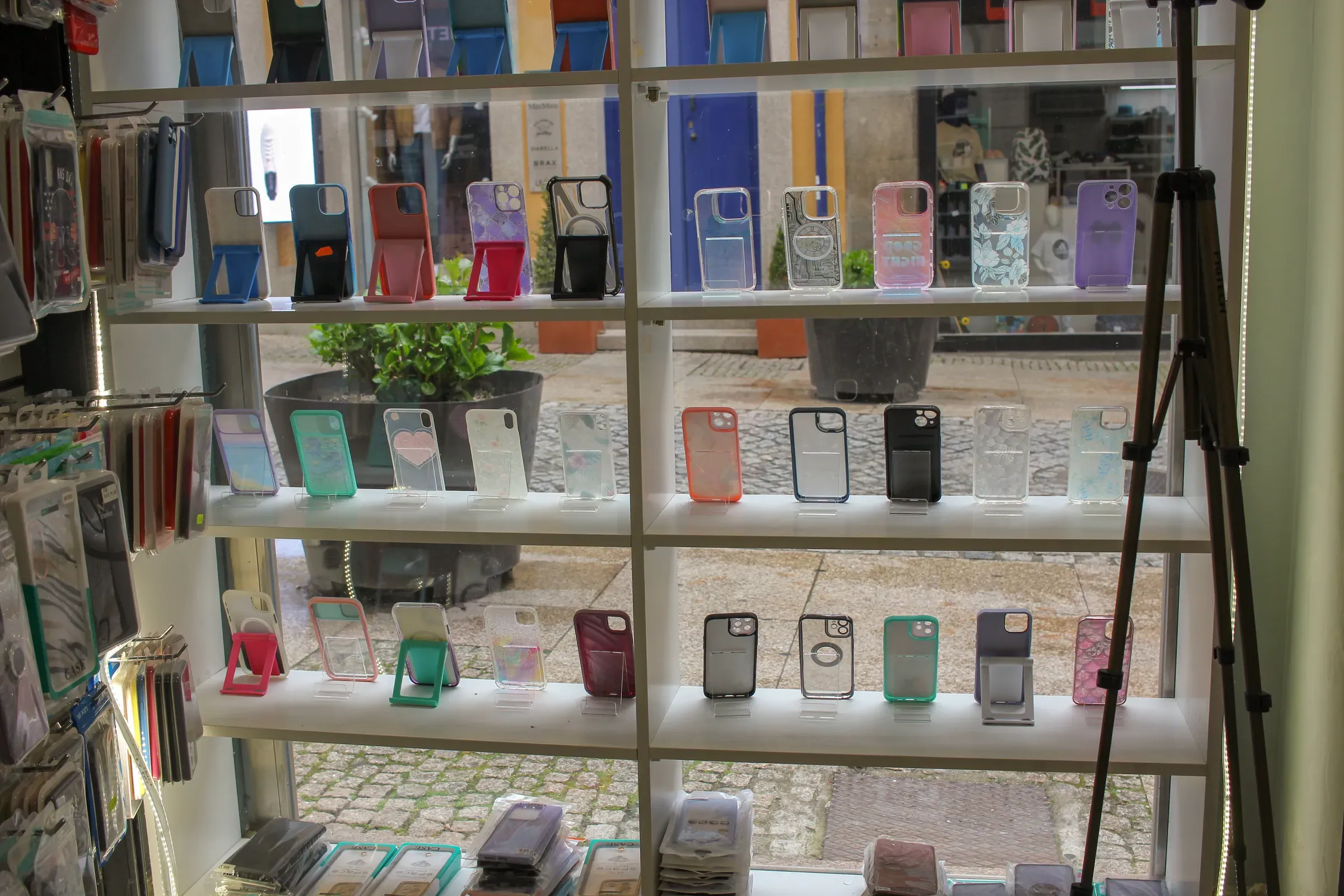
Display window with colorful mobile phone cases and covers in a retail store, phone cases & accessories ecommerce
Phone cases & accessoriesPeople who have just bought or pre-ordered a phone, plus owners replacing a cracked protector or a worn case. They check the exact model name, whether the case works with magnetic charging, and whether the reviews mention the same phone they own.

How phone cases & accessories makes money

Four levers, and what limits each one here

Revenue is traffic times conversion rate times order value times purchase frequency. In this niche each lever has its own ceiling.

Traffic

Traffic: one page per phone model, ready before the phone ships

Phone accessory search is model-led. People type the phone's full name and then the accessory, and each new model creates a whole set of queries that did not exist the week before. The store that has a collection page for every supported phone, with real copy, the cases that fit, the protector and the charger, takes that demand; the store with a Cases collection and a model dropdown does not, because Google never sees the model in a URL it can rank. The launch clock is the second traffic lever. Pages for new models are drafted from the announcement and published the day the names and dimensions are confirmed, so they have indexed by the time the phones ship and the searches peak.

Conversion

Conversion: does it fit my exact phone, and does the charger still work

Almost every objection in this niche is a compatibility question. Is it for the standard, plus or pro model. Does it work with magnetic charging and accessories. Does it block the new camera bar. Will the screen protector fit with the case on. Most stores answer with a model dropdown and a paragraph that says compatible with all models. We put the exact model list on the product page in text, state magnetic charging support plainly, show the case on that specific phone in the images, and add a short fit guide for the protector. A buyer who has the phone in their hand needs to match it to the page in seconds, or they order the wrong one and the return eats the margin.

Order value

Order value: the case alone does not pay for the box

A single case rarely clears the cost of picking, packing and shipping it, so the order has to be larger than one item. The natural bundle is the case plus the screen protector plus the charger or cable for that model, presented at a small saving on the case page and on the model page. A two-pack of protectors, a wallet or stand that attaches to the case, and a car mount for the same magnetic standard extend it. The free-shipping threshold is set just above the average single-case order so the bundle is the easiest way to reach it. Model pages and case pages carry the bundle; the cart drawer offers the protector to anyone who added only a case.

Frequency

Frequency: the protector, the cable and the next phone

A case is bought once per phone, so repeat revenue comes from what wears out and from the next phone. Screen protectors crack and lift and are replaced more than once per device; cables fray; power banks lose capacity. A flow that offers the replacement protector a few months in, and a second cable when the first order had only one, turns a single order into several. The larger event is the next phone: a customer who bought a case for one generation is the most likely buyer for the next, and a launch-week message to that segment, with the new model's case ready, is the highest-return email of the year. We tag every customer by phone owned so that message goes to the right people.

Search visibility

Ranking for a phone model that did not exist last month

The queries in this niche are the phone name plus the accessory, with modifiers for material, protection level, magnetic charging support and color. A new model spawns the whole set at once. The page types that carry them are a collection page per phone model with its own copy and every accessory that fits, product pages that list every compatible model in text, and feature collections for magnetic charging, clear, rugged, wallet and thin cases. Model pages link to the products; product pages link back to every model page they belong on.

The launch cycle sets the publishing schedule. Model pages are built from the announcement and go live with confirmed names and dimensions, so they are indexed before the first shipments. Previous-generation pages stay live, because a large part of the market is still buying for a phone from two or three years ago and those queries are cheaper to win.

Technical work is about the variant explosion. One case design across a dozen phones and several colors can produce hundreds of URLs; the rule is one product per design per phone with color as a variant, model pages built as real collections rather than filters, and canonical rules that stop filtered and sorted URLs from being indexed by the thousand.

Queries that matter

  • phone model name case with magnetic charging
  • clear case for the new phone model
  • screen protector that works with a case
  • rugged case for the pro model
  • wallet case for a two year old phone model
  • does this case block the camera on the plus model

Per-model collection pages with real copy and a complete accessory set rank, and they rank fastest when they exist before the phone ships. A generic Cases page with a dropdown does not, and neither do product pages that list compatible models only in a select menu.

AI answers

Compatibility questions assistants get about phone accessories

The questions put to assistants are almost all fit questions: will this case work with the pro model, does it support magnetic charging, will a protector sit under it, does the camera bar clear. Stores get cited when the product page states the exact model list, magnetic charging support and camera clearance as plain sentences, when the model page explains what changed between generations in words an engine can quote, and when the feed, the page and the packaging agree about compatibility. We write model pages answer-first with a short paragraph on what is new about the phone's dimensions and which accessories carried over, and keep compatibility claims identical in every place they appear.

Will a case made for last year's model fit the new one?
Does this case work with magnetic chargers and wallets?
Can I use a screen protector with this case without it lifting?
Which case material protects best from drops without adding bulk?

Questions shoppers put to assistants. A store gets named when its pages answer them in plain text.

Google Shopping and Merchant Center

Model-exact feeds for cases, protectors and chargers

The feed attribute that decides eligibility here is the one Google uses to understand which phone the product fits, and it lives in the title, in product_detail and in the description together. Titles carry the accessory type, the exact phone model and the defining feature, in that order. The brand attribute is the case maker, never the phone maker; putting the phone brand in the brand field is a misrepresentation issue and a common cause of disapproval. Own-brand cases usually have no manufacturer GTIN, so identifier_exists is set to false rather than a code being invented, and MPN carries the maker's own part number.

Each case design across many phones is one item_group_id with a variant per model and color, so Shopping shows the right variant for the right query. Multipacks of protectors set the multipack attribute. Prices on low-cost items are stable but shipping is not, and shipping set wrong in Merchant Center on a low-priced item is a disapproval that takes the whole product group with it.

Campaigns are split by margin: bundles and chargers in a campaign bid to margin, single cases in a campaign that accepts a lower return because it acquires a customer for the next phone, and free listings switched on and reported separately, because for model-plus-accessory queries they carry meaningful volume.

Feed attributes that decide eligibility

  • title with accessory type and exact phone model
  • brand set to the accessory maker, not the phone maker
  • identifier_exists false where there is no GTIN, with mpn
  • item_group_id per design with model and color variants
  • product_detail for compatible models and magnetic charging
  • multipack for protector packs

Disapprovals we see in this niche

  • Misrepresentation for using the phone maker as the brand attribute
  • Invented or reused GTINs on own-brand cases
  • Shipping cost mismatch on low-priced single items
  • Image policy for cases shown on a phone with visible third-party branding

Meta and social ads

Creative for a product everyone already owns one of

Everybody has a case, so the creative has to give a reason to want a different one. The angles that work show the case on the specific phone people just bought, a drop or scratch test filmed plainly and described honestly, the magnetic accessory ecosystem clicking on and off, the protector applied without bubbles using the included tool, and the design range shown as a wall of colors. Launch weeks call for creative built around the new phone by name, ready before it ships.

Audiences begin with past buyers segmented by phone and with site visitors, then broad prospecting during launch windows when the whole market is shopping at once. Catalog ads retarget by the model the visitor looked at. Drop-test claims must match what was actually tested, comparative language about other cases is avoided, and creator content needs written rights and a check that the phone shown is the model the ad names.

  • The case on the exact phone people just bought, by name
  • Drop and scratch test filmed plainly and described honestly
  • Magnetic accessories snapping on and off the case
  • Protector applied bubble-free with the alignment tool
  • The color wall: the whole range in one frame

Policy line

Protection claims must reflect actual testing; phone maker trademarks are used only to state compatibility, never as the brand; no misleading before-and-after of damaged phones.

Conversion and the store

The model selector is the whole checkout

In this niche the moment of truth is choosing the model, and most stores make it hard. Dropdowns list thirty phones in no useful order, names differ from what is printed on the phone's settings screen, and the images never change to show the selected phone. We rebuild the selector so it groups by phone family and generation, names models the way the phone names itself, swaps the images to the chosen model, and states magnetic charging support beside the price. The screen protector fit note and the returns policy for wrong-model orders sit next to the add-to-cart button.

The model page is the second template that carries revenue: everything that fits one phone, with a bundle builder that starts with the case and adds the protector and charger at a small saving. On mobile, most of these buyers are shopping on the phone they are buying for, so a detect-and-suggest prompt that offers the matching model page, used carefully and always overridable, removes the biggest source of wrong orders.

Objections the page must answer

  • “Is this for my exact model, standard, plus or pro”
  • “Does it still work with magnetic charging and my wallet attachment”
  • “Will a screen protector fit under it without lifting”
  • “Does it cover the camera bar and the buttons properly”
  • “Will it turn yellow or get loose after a few months”

Email, SMS and retention

Flows keyed to the phone the customer owns

Every customer is tagged with the phone model from their first order, and every flow after that uses it. The delivery message covers fitting the protector and installing the case without trapping dust. A few weeks later a check-in asks whether the fit is right and offers the accessory that was not in the order, usually the charger or the second cable. Several months in, the protector replacement flow arrives, because protectors are consumables and the customer will buy one somewhere.

The launch flow is the most valuable send of the year. When a new generation is announced, owners of the previous generation receive the new model's case range the day it goes live, with a small loyalty consideration for returning. SMS is used for launch-day stock notices and for restock alerts on a color the customer waitlisted, and for nothing else. Win-back messages name the phone the customer bought for and ask, in effect, whether they still have it.

  1. Fitting and installation

    On delivery

  2. Fit check and the missing accessory

    Three weeks after delivery

  3. Protector replacement

    Four to six months after the first protector order

  4. New generation launch

    The day the new model's accessories go live, to previous-generation owners

  5. Still have that phone?

    Eighteen months after the first order

Where revenue leaks

The leaks we find in phone cases & accessories stores

The Growth Analysis ranks these against your own numbers and says which to close first.

Get a Growth Analysis for your phone accessory brand
  • Model pages that go live after the phone has shipped

    The store waits for the phone to arrive before building the page, so the searches peak while the page is still unindexed and the demand goes to marketplaces that listed on announcement day.

  • Single cases shipped below cost

    No bundle, no threshold and no cart-drawer offer, so the average order is one case and the postage costs more than the margin.

  • The phone maker in the brand attribute

    The feed lists the phone brand as the product's brand to catch more queries, and the account collects misrepresentation disapprovals across the whole catalog.

  • Compatibility stated only in a dropdown

    The model list exists as select options, invisible to search engines and assistants, so the exact-model queries the store depends on land elsewhere.

  • Previous-generation customers never told about the new case

    The launch-week email goes to the whole list or to nobody, and the customers most likely to buy again hear about the new range from a marketplace first.

Platform notes

Where the platform changes the work

Shopify

Compatible models live in a metafield list that renders as text on the product page, drives the model collections through tags or automated collections, and maps to product_detail in the feed. Variant limits matter when one design spans many phones and colors; the design is split into one product per phone family where the limit bites.

WooCommerce

A global attribute for phone model powers the variable products, the model archive pages set to index and the feed mapping. Variation counts get large fast, so the attribute set has to be planned before the catalog is imported.

BigCommerce

Option sets carry model and color, and the faceted navigation needs canonical rules so model and color filters do not produce indexable duplicates of every case page.

Questions

Phone cases & accessories owners ask us

By CartKernel · Last reviewed

How early can we build pages for a phone that has not been announced yet?

Drafts can be prepared from the expected model names and last year's structure, and published the day the names and dimensions are confirmed. Publishing on rumors risks wrong model names in URLs that are hard to change later, so we hold the pages until the announcement and then go live within hours. That is still well ahead of the first shipments and the search peak.

Is it a problem to use the phone maker's name in our product titles and feed?

Using the phone's name to state compatibility is expected and necessary. Using the phone maker as the brand attribute, or implying the accessory is made or endorsed by them, is not. We keep the brand attribute as your company, put the phone model in the title as a compatibility statement, and avoid the phone maker's logos and product renders in images unless you hold a license for them.

How do we make money on a single case order?

Usually you do not, and the fix is the order composition rather than the case price. A bundle of case, protector and cable at a small saving, a free-shipping threshold just above the single-case price and a cart-drawer offer for the protector shift most orders to two or three items. We also track the single-case customer's second order, because acquiring them for the next phone is part of the return.

Should we keep pages for phones that are three or four years old?

Yes, while they still get searches and you still stock the cases. A large share of the market buys for older phones, those queries are less competitive, and the pages are already indexed. Remove a model page only when the stock is gone for good, and redirect it to the nearest model still sold rather than to the home page.

What is the best way to reduce wrong-model returns?

Fix the selector. Group phones by family and generation, name them the way the phone names itself in its settings screen, change the images to the chosen model and state magnetic charging support beside the price. On mobile, a careful prompt that suggests the model the visitor is shopping on removes most mistakes. A clear fit note for the protector handles the rest.

Do Performance Max campaigns cope with a catalog that changes every launch?

They cope well when the feed is model-exact and the asset groups are organized by phone family, so new models slot into an existing structure. What we watch is that the previous generation's groups are not starved of budget the week a new phone launches, since those customers keep buying. Brand exclusions and a Standard Shopping campaign alongside keep the reporting honest.

Grow your phone cases & accessories store.

A free Growth Analysis ranks what your store should fix first, by revenue at stake, in about a week.