Skip to content

Garden & outdoor living · ecommerce growth

Outdoor lighting marketing agency

Landscape lighting is bought as a scheme and sold as a fixture, and that gap is where most of the revenue disappears. Somebody planning to light a path, a tree and a set of steps needs to know how many lumens, what colour temperature, what beam angle, how much cable and which transformer will carry the load, and they will buy the whole system from whoever answers those questions. Sell them one bollard light and they assemble the rest of the scheme somewhere else.

The buyer, in brief

Consideration
An evening for festoon and solar lighting, several weeks for a wired landscape scheme
Purchase frequency
A project, then annual additions, replacement lamps and fixtures that fail after a few winters
Seasonality
Installation projects in spring and early summer, a demand lift as evenings draw in, and a distinct festive lighting peak
Price band
Low for solar and string lighting, high for specification grade brass and stainless fixtures with transformers
Return risk
Driven by light that is brighter, dimmer or a different colour than expected, and by voltage or fitting incompatibility
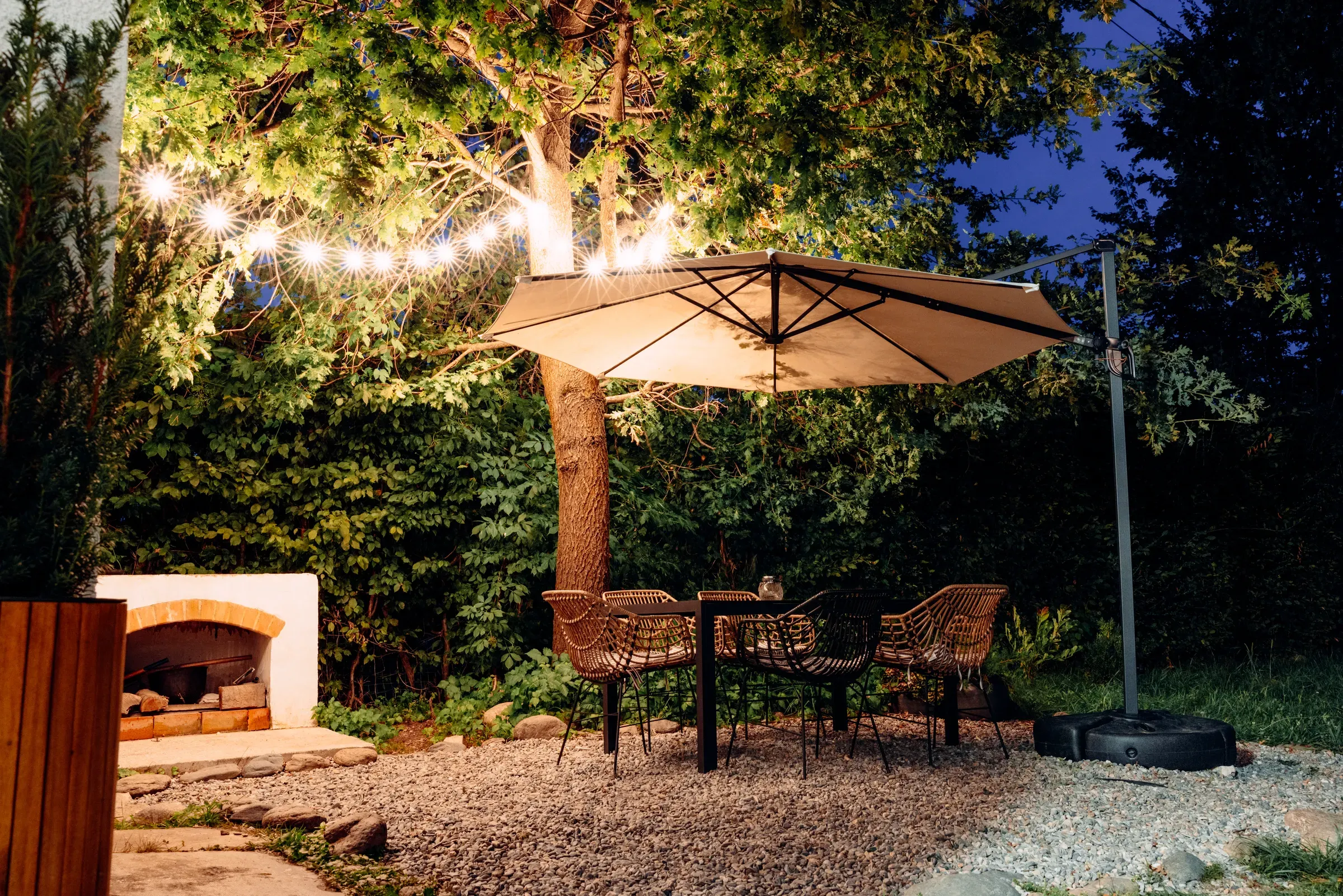
Outdoor patio with table, chairs, and umbrella illuminated by string lights, outdoor lighting ecommerce
Outdoor lightingHomeowners planning a lighting scheme and contractors specifying one, both filtering on lumen output, beam angle, colour temperature, ingress protection rating and whether the system runs at low voltage or line voltage.

How outdoor lighting makes money

Four levers, and what limits each one here

Revenue is traffic times conversion rate times order value times purchase frequency. In this niche each lever has its own ceiling.

Traffic

Traffic: two vocabularies, specification and project

Half the demand arrives in specification language: IP65 wall lights, 2700K path lighting, twelve volt spike spotlights, a beam angle for uplighting a tree. The other half arrives as a project: how to light a driveway, lighting a deck safely, what to put along a garden path. Most lighting catalogs are organised by fixture type, which serves neither. We build spec led collections that match how people filter, project guides that lead into the fixtures they require, and the technical explainers that sit underneath both, covering colour temperature, beam spread, transformer sizing and voltage drop over a long cable run. The technical content earns links and it also does the selling, because a shopper who understands the numbers buys with confidence.

Conversion

Conversion: photograph the light, not the fitting

A fixture photographed on a white background in daylight tells the buyer almost nothing about the product they are purchasing, which is an effect after dark. The pages that convert show the fixture lit, at night, in a real garden, at a stated distance, with the beam spread visible and the colour temperature identified. Where a fixture is offered in more than one colour temperature, showing the same scene in each removes the most common cause of returns in the category. Alongside the imagery, lumens, beam angle in degrees, ingress protection rating, body material and operating voltage all need to be readable on the page rather than parked in a specification download, because that is the comparison the shopper is running across three tabs.

Order value

Order value: a scheme is a system, not a fixture

A twelve volt landscape scheme needs a transformer sized to the total load with headroom, the right gauge of cable for the run length, connectors, spikes or mounts, and often a timer or photocell. Sell the fixtures alone and the customer either buys the rest elsewhere or, worse, undersizes the transformer and blames the lights. A scheme builder that takes the fixtures somebody has chosen and returns the transformer, cable length and connector count they need is the single highest value tool this kind of store can build. It raises the basket substantially, it removes the reason people call before ordering, and it produces a working installation rather than a support ticket.

Frequency

Frequency: gardens get lit one zone at a time

Very few people light a whole garden at once. They do the path this year, the patio next year and the trees when the budget allows, which makes this a category with unusually good expansion potential if the store keeps a record of what was installed. Knowing the transformer someone bought and the load already on it lets you tell them exactly how many more fixtures it will carry, which is a genuinely useful message and an easy order. Beyond expansion, lamps fail, seals perish, connectors corrode and festive lighting is replaced regularly. A store that stocks and surfaces replacement parts for the systems it sold keeps that revenue rather than sending it to a general retailer.

Search visibility

Specification collections and the project guides above them

The most productive structure in this niche has three levels. At the top are project guides, written for the job rather than the product: lighting a garden path, uplighting mature trees, deck and step lighting, lighting a driveway entrance. These carry substantial demand, they earn links because they are useful, and they naturally introduce every component a scheme needs.

Beneath them sit specification collections that mirror how people filter: by ingress protection rating for exposed positions, by colour temperature, by voltage, by finish and material for coastal sites where brass and stainless behave very differently from painted aluminium. These are built as indexable pages with genuine copy rather than as filter parameter results, which otherwise either get ignored by search or flood the index.

The third level is the technical reference: what colour temperature actually looks like outdoors, how to size a transformer, why voltage drops over a long run and what to do about it, what an ingress rating covers. This content is quoted, linked and increasingly summarised by assistants, and it converts because the reader ends it knowing what to buy. Product pages then need the specification in text and variants for finish and colour temperature consolidated onto one URL.

Queries that matter

  • how many lumens for path lighting
  • 2700k vs 3000k outdoor lighting
  • how to size a low voltage transformer
  • ip65 vs ip67 outdoor light rating
  • uplighting trees beam angle
  • 12v garden lighting cable run length
  • dark sky friendly outdoor lights

Project guides and technical explainers carry the demand, and specification collections convert it. Fixture pages built on a manufacturer paragraph rank for the model name and take no part in the decision that came before it.

AI answers

Where assistants answer the lumen and voltage questions

Assistants get asked to size and to specify: how bright a path light should be, whether a fixture is safe in a coastal position, what transformer a set of fixtures needs, which colour temperature suits a garden rather than a driveway. Those are answerable questions with correct answers, which makes them ideal for citation and means the store that publishes the working gets named. We write the sizing and specification guidance with the arithmetic shown, keep lumens, beam angles, ratings and voltages in plain text on every fixture page, and make sure the finish and colour temperature options are described rather than only shown as swatches an engine cannot read.

How many lumens do I need for lighting a garden path?
What size transformer do I need for eight low voltage fixtures?
Which ingress protection rating is safe for a coastal garden?
Is warm white or neutral white better for landscape lighting?
How far can I run low voltage cable before the lights dim?

Questions shoppers put to assistants. A store gets named when its pages answer them in plain text.

Google Shopping and Merchant Center

Feed attributes for a catalog people filter on numbers

Lighting is one of the few garden categories where shoppers filter on hard attributes, so the feed rewards effort. Branded fixtures have barcodes, which means GTIN, brand and MPN all need to be present for the listing to match properly and compete for the richer placements. Beyond identifiers, the attributes that matter are the ones in the query: colour temperature, lumen output, beam angle, ingress protection rating, material and finish, and operating voltage. Where the platform has no dedicated field, product highlights and product details carry them, and titles should lead with fixture type, then the specification that distinguishes it.

Finishes and colour temperatures are variants of one product, not separate products, and grouping them properly stops a catalog of two hundred fixtures presenting as eight hundred near identical listings.

Two practical issues catch this category. Energy labelling requirements apply in some destination markets and the required data has to be present for those regions. And image policy matters more than usual, because the natural instinct is to add glow effects, badges or promotional text to night photography, all of which risk disapproval. The stronger image is an honest night shot with nothing added.

Feed attributes that decide eligibility

  • gtin, brand and mpn for branded fixtures
  • product_detail for lumens, kelvin, beam angle and ingress rating
  • item_group_id grouping finishes and colour temperatures
  • material and colour for finish comparison
  • product_type separating path, spot, wall, festoon and festive
  • energy labelling data where the destination market requires it

Disapprovals we see in this niche

  • Image policy flags for added glow effects, badges or promotional text
  • Missing energy labelling data for markets that require it
  • Duplicate listings created by finish and colour temperature variants
  • Missing GTIN on branded fixtures where a barcode exists

Meta and social ads

Creative shot after dark, which is when the product exists

The single biggest creative failure in this category is filming in daylight. The product is an effect that only appears at night, so the assets that work are night footage: a garden before and after a scheme is installed, a beam angle demonstrated at a stated distance, two colour temperatures lighting the same wall so the difference is obvious rather than described. Installation content performs too, because the low voltage systems are genuinely approachable and showing that removes the assumption that an electrician is required.

Audiences segment naturally by project stage. People who read the transformer sizing guide are close to buying a system. Past customers are the audience for the next zone of the garden. Prospecting works better on the effect than on the fixture. One honest constraint: night photography is easy to exaggerate in post production, and a scheme that looks brighter in the ad than in the customer's garden generates returns, so keep the grade close to what the fixtures actually deliver.

  • The same garden before and after a scheme, shot from one fixed position
  • Two colour temperatures lighting the identical wall side by side
  • A beam angle demonstrated at a measured distance
  • A full low voltage install completed in an afternoon
  • A festive scheme built up zone by zone over one evening

Policy line

Keep night footage close to what the fixtures actually produce rather than graded for effect, and match brightness and coverage claims to the tested lumen and beam figures on the page.

Conversion and the store

Removing the guesswork from brightness, colour and load

Three uncertainties cost conversions here and all three are solvable on the page. Brightness, which lumens alone do not communicate to most people, needs a visual reference at a stated distance. Colour, which is the biggest driver of returns, needs the same scene shown in each available temperature rather than a swatch. And load, which is where a scheme either works or trips a transformer, needs arithmetic the store does for the customer.

A scheme builder handles all three at once. The customer picks fixtures, the tool totals the wattage, recommends the transformer with sensible headroom, calculates cable length for the run and adds the connectors. It converts because it removes the fear of ordering an incomplete system, and it raises order value without a discount. On mobile, night photography needs to load fast and be zoomable, and the specification block should be visible without opening an accordion, since that block is the reason the visitor is on the page.

Objections the page must answer

  • “How bright will this actually be in my garden”
  • “What colour will the light be and will it look warm or clinical”
  • “Will it survive winter and salt air where I live”
  • “Do I need an electrician or can I install it myself”
  • “How many fixtures can one transformer carry”
  • “What do I do when a lamp or a seal fails in three years”

Email, SMS and retention

Messaging that follows a garden being lit in stages

The useful sequence here starts at installation, because a scheme that goes in correctly gets extended and a scheme that trips a transformer gets removed. A setup series covering cable routing, connector sealing, aiming fixtures and setting the timer protects the purchase. A check in after the first heavy rain and the first frost catches problems while they are still small.

After that, expansion is the whole programme. Knowing what somebody installed and how much headroom their transformer has left turns a generic promotion into a specific and welcome suggestion for the next zone. Seasonal timing helps: as evenings draw in, lighting suddenly matters again, and that is the moment to talk about the patio or the steps. Festive lighting runs as its own calendar with an early reminder, because that purchase is made on a fixed date and late is worthless. Replacement lamps, seals and connectors round it out, prompted at the age those parts typically need attention.

  1. Installation and setup series

    The week after delivery, covering cable, connectors and aiming

  2. First weather check in

    After the first heavy rain or frost in the customer's region

  3. Next zone suggestion

    As evenings shorten, based on remaining transformer capacity

  4. Festive lighting reminder

    Early in the festive season, before installation weekends

  5. Lamp and seal replacement

    At the age those components typically need attention

Where revenue leaks

The leaks we find in outdoor lighting stores

The Growth Analysis ranks these against your own numbers and says which to close first.

Get a Growth Analysis for your outdoor lighting brand
  • Daylight photography for a product used at night

    The catalog shows fittings on white backgrounds, so the shopper cannot judge the only thing that matters, and they go looking for night photography on somebody else's site.

  • Transformers and cable sold as an afterthought

    The fixtures go in the cart and the system components do not, so either the order is incomplete or the customer assembles the rest at a general retailer and buys the fixtures there next time.

  • Colour temperature shown only as a swatch

    Nobody can judge warm white from a coloured square, so the wrong temperature is ordered and the return that follows was entirely preventable with one comparison photograph.

  • Specification locked in a download

    Lumens, beam angle and ingress rating are exactly what the shopper is comparing and exactly what an assistant needs to quote, and a PDF puts them out of reach of both.

  • No record of what a customer installed

    Expansion is the strongest repeat driver in the category, and without the transformer and load on file every follow up message has to be generic guesswork.

Platform notes

Where the platform changes the work

Shopify

Finish and colour temperature held as variants on one product keeps the catalog coherent, metafields carry lumens, beam angle and ratings into the page and the feed, and a bundle or builder app can assemble a scheme with its transformer and cable.

WooCommerce

Global attributes for rating, kelvin and voltage power both filtering and indexable archives, and grouped products let a starter kit of fixtures, transformer and cable be sold as a single configured item.

BigCommerce

Price lists handle contractor and landscaper pricing alongside retail, and custom fields carry photometric data into the feed so specification filters work in Shopping as well as on site.

Questions

Outdoor lighting owners ask us

By CartKernel · Last reviewed

What should an outdoor lighting page show that a manufacturer catalog does not?

The light itself. Night photography of the fixture installed at a stated distance, the beam spread visible, and the same scene shot in each available colour temperature. Add the full photometric data in text, the material behaviour in exposed or coastal positions, and what is in the box, since power supplies and mounting hardware are frequently sold separately.

How do you sell a whole scheme instead of a single fixture?

With a builder that does the arithmetic. The customer selects fixtures, the tool totals the load, recommends a transformer with headroom, calculates the cable length for the run and lists the connectors. That removes the fear of an incomplete order, raises basket size without discounting, and produces an installation that works rather than a support call.

Do contractors and landscapers need a different experience?

Usually yes. They buy repeatedly, in quantity, on specification rather than on inspiration, and they need account pricing, stock visibility and fast reordering of the same items. A trade account path with its own pricing and a simple repeat order function is generally worth more than trying to serve them through the consumer catalog.

How should festive lighting be handled alongside landscape lighting?

As a separate business with its own calendar, budget and content. It spikes hard, is more price sensitive, and competes against general retailers, so pooling it with a specification lighting account distorts both. Content and stock need to be ready well before the installation weekends, since late arrival in that season means no sale at all.

Should colour temperature appear in the product title?

Yes, in both the page title and the feed title, because people search and filter with it. A title that carries fixture type, colour temperature and the defining specification matches far more of the query set than a model name. It also reduces returns, since the buyer has seen the temperature before they clicked.

What ranks for landscape lighting project searches?

Guides that solve the whole job rather than list products: how to light a path with spacing and lumen guidance, how to uplight a mature tree, how to plan a scheme within a transformer's capacity. They earn links, they get summarised by assistants, and they lead naturally into the fixtures, cable and controls the job requires.

Grow your outdoor lighting store.

A free Growth Analysis ranks what your store should fix first, by revenue at stake, in about a week.