Skip to content

Hobby, craft & creative · ecommerce growth

Woodworking brand marketing agency

Woodworking purchases begin with a project rather than a product. Somebody decides to build a workbench, then works out the joinery, the hardware, the finish and whether the saw already in the garage can handle it. That makes the plan the front door, the machine the margin and the freight quote the place where a surprising number of orders quietly die. We build the project content, the specification data and the delivery mechanics that make a large tool purchase feel safe to commit to.

The buyer, in brief

Consideration
Minutes for a blade or a bit, weeks or months for a machine that has to fit a garage and a circuit
Purchase frequency
Consumables and hardware steadily, machines rarely and deliberately, plans whenever a new project starts
Seasonality
Shop projects through autumn and winter, a spring lift for outdoor builds, hand tools and accessories at the gifting peak
Price band
Low for bits, blades and hardware, high for machinery, with digital plans sitting at the bottom of the range
Return risk
Low in count and expensive when they occur, because returning a freight item costs far more than most stores expect
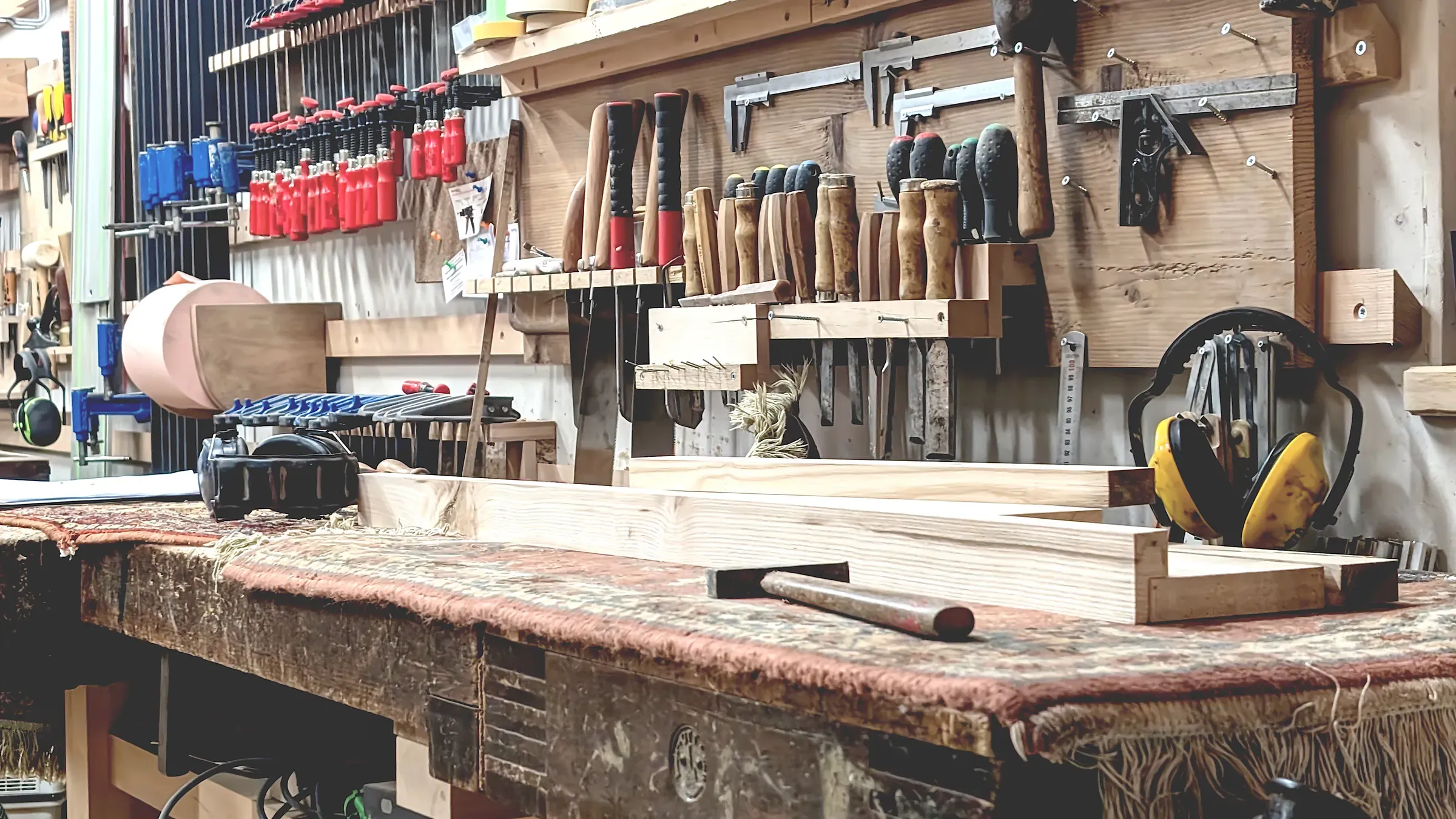
Woodworking tools arranged neatly in a rustic workshop with various hand tools, woodworking tools & plans ecommerce
Woodworking tools & plansHobby woodworkers and small shop professionals who research a project before buying, measure power supply, footprint and dust port sizes against their own shop, and read long-form reviews before committing to a machine.

How woodworking tools & plans makes money

Four levers, and what limits each one here

Revenue is traffic times conversion rate times order value times purchase frequency. In this niche each lever has its own ceiling.

Traffic

Traffic: the project is the query

People search for what they want to build long before they search for what they need to buy. How to build a workbench, dining table plans, a shop cabinet for a small garage, cutting dovetails by hand. That demand is far larger than the demand for any tool name and it arrives with a shopping list attached. We build project and technique content that reaches a real conclusion, with the tools, hardware and materials listed as part of the build rather than bolted on at the end. Tool comparison and specification content covers the rest, because somebody choosing between two machines is making a decision worth being genuinely helpful about.

Conversion

Conversion: will it fit my shop and my power supply

The objections on a machine purchase are physical. Voltage and amperage, whether a dedicated circuit is needed, footprint and table height, dust port diameter and the extraction it requires, weight, and whether it will fit through a garage door. A page that answers those in a specification block converts far better than one listing features, because the buyer is measuring their shop while reading it. Freight is the other half. A delivery estimate that accounts for liftgate and residential access, given before checkout rather than after, prevents the abandonment a surprise shipping charge always causes.

Order value

Order value: the machine is one line of a build list

A machine arrives needing a better blade, a mobile base, extraction hose and fittings, push blocks and often a stand. A plan needs hardware, finish, abrasives and sometimes a specialised bit. Both are honest bundles and both are usually left for the customer to work out alone. We build the accompanying list into the page and into the plan so the order reflects the whole job. Digital plans lift order value indirectly as well, because a customer who bought one has declared exactly which project they are starting and everything it is about to consume.

Frequency

Frequency: consumables between projects, plans between machines

Machines are bought rarely, so the relationship has to live on everything else. Blades, bits, abrasives, finishes, hardware and fasteners are consumed continuously and reorder naturally. Plans give the store a reason to be present between purchases and a signal about what the customer needs next. Technique content and shop upgrade ideas hold the audience through the long gaps, which is exactly when the next machine decision quietly forms. A store that only appears when it has something on sale has no presence at that moment.

Search visibility

Search: project plans, technique guides and machine specifications

Project content is the largest search surface in this niche and it converts because it names the materials. A plan page giving dimensions, a cut list, a hardware list and the tools required answers the query and builds the basket in the same visit. Free plans work as acquisition while paid plans work as a product, and both should link into everything they consume.

Technique guides carry the informational demand. Sharpening, joinery, finishing, dust collection sizing, milling rough lumber. These rank steadily and attract exactly the audience that buys consumables month after month. Written by somebody who actually works wood, they read differently from content assembled out of other articles, and this audience notices the difference immediately.

Machine pages need to be specification pages. Voltage, amperage, motor rating, table dimensions, capacity, dust port size, weight, footprint and what is in the crate, all written as text. That data also feeds comparison content between two machines, which is where a great many buying decisions are actually settled, and it is what an assistant quotes when somebody asks whether a machine will run on a domestic circuit.

Queries that matter

  • how to build a workbench plans
  • dust collection cfm for a table saw
  • bandsaw for a garage shop
  • dovetail joint by hand tutorial
  • router bit set for beginners
  • dining table plans downloadable
  • finish for a kitchen table

Project plans with cut lists, technique guides written by a woodworker, and machine specification and comparison pages rank here. Feature bullets copied from a distributor sheet do not.

AI answers

AI answers: shop fit, power and technique questions

Assistants get asked whether a machine will run on a domestic circuit, what extraction a tool needs, which joint suits a project, and what finish is safe on a surface that will meet food. Those are specification and technique questions with real consequences, so accuracy carries weight. A store becomes citable by publishing full machine specifications as text, being explicit about voltage and circuit requirements, and writing technique content that reaches a clear answer. We structure that data so the page, the feed and the structured data agree, and so a specification can be quoted without anyone opening a PDF.

Will this machine run on a standard household circuit?
What dust extraction does this tool actually need?
Which joint should I use for this project?
Is this finish safe for a surface used with food?
What tools do I need to build this project?

Questions shoppers put to assistants. A store gets named when its pages answer them in plain text.

Google Shopping and Merchant Center

Merchant Center for tools: freight, power and digital plans

Three things complicate this feed. Oversize machinery needs accurate weights and dimensions so shipping is calculated rather than guessed, and where freight is quoted individually the listing has to be honest about that instead of showing a rate that will not hold. A shipping surprise after checkout is both a conversion problem and a source of price complaints.

Digital plans sit awkwardly inside a physical catalog. They can be sold well, but they need clear delivery information, and mixing them into campaigns built around machinery distorts the reporting badly enough that they usually deserve a structure of their own.

Titles and attributes should carry the specifications people search on: capacity, voltage, size and machine class. Product_detail is the place for motor rating, table size, dust port diameter and included accessories. Campaigns split by price band, since a bit set and a bandsaw cannot share a bidding strategy, and free listings carry the consumable tail where paid clicks would not repay themselves.

Feed attributes that decide eligibility

  • shipping weight and dimensions on oversize machines
  • product_detail for voltage, capacity and dust port size
  • gtin and mpn from the manufacturer
  • multipack for bit and blade sets
  • custom_label separating machines, consumables and plans
  • material and size on hardware and fasteners

Disapprovals we see in this niche

  • Freight items advertised with a flat rate that will not hold
  • Missing dimensions so oversize shipping cannot be calculated
  • Digital plans submitted with no delivery information
  • Safety equipment described with protection claims beyond its rating

Meta and social ads

Meta and social: the cut, the joint and the finished piece

Woodworking is one of the strongest performing categories on video, because process is satisfying to watch even for people who will never build anything. The creative that sells is a real cut, a joint coming together, a finish going on, and a finished piece revealed with the tools that made it named clearly on screen.

The risk to manage is safety. Footage showing a guard removed, a hand near a blade or a technique that is plainly unsafe will be shared widely for the wrong reasons and can draw platform attention to safety equipment listings. Keep the technique demonstrably correct. Audiences work best split between hobbyists building for themselves and small shop professionals buying to earn, since price sensitivity and interest in specifications differ sharply between them. Maker collaborations are plentiful and need written rights along with agreement on how the tools are represented.

  • A single joint cut and fitted in one unbroken take
  • A finish applied with the grain change visible
  • A shop tour showing how a small space is laid out
  • A project built from plan through to finished piece
  • A machine unboxed, assembled and set up correctly

Policy line

Safety is the practical constraint: never show guards removed or unsafe technique, and keep any claim about protective equipment inside what the product is actually rated for.

Conversion and the store

The store: freight quotes, specifications and plan delivery

Two page elements decide machine revenue. A specification block answering voltage, circuit, footprint, weight, capacity and dust port before the buyer has to ask, and a delivery estimate including freight, liftgate and residential access shown before checkout. A shipping cost that appears at the final step on a heavy item is the most reliable way to lose an order that had otherwise been won.

Plans need their own treatment. Instant delivery, a clear statement of what is included, a preview of the cut list and the tools required, and a linked hardware and materials list that can be added in one action. On mobile the specification table has to stay readable and the plan preview has to work without downloading a file, because a lot of this browsing happens in a workshop rather than at a desk.

Objections the page must answer

  • “Will it run on the power I have in my shop”
  • “How much space does it need and can I move it alone”
  • “What will freight actually cost to my address”
  • “What extraction does it need and is mine enough”
  • “What is in the plan and what will I still have to buy”

Email, SMS and retention

Email: project sequences, consumables and machine research

The most effective email in this niche is a project sequence. Somebody who downloads a plan has started a build with a known list of requirements, so a short series following the stages of that build, offering the right material at the right moment, reads as useful rather than promotional. It also produces a purchase pattern the store can learn from for the next plan.

Consumable reorder flows run underneath, built from what a customer actually uses instead of a fixed schedule. For machinery the useful flow is a slow research sequence for people who have viewed a machine repeatedly: specifications, shop fit guidance, an honest explanation of freight, and what setup involves, spread across weeks rather than days because the decision genuinely takes that long. SMS belongs to freight delivery windows, where somebody has to be present for a truck.

  1. Project build sequence

    Staged across the phases of the build after a plan download

  2. Consumable reorder

    Built from the blades, abrasives and finishes actually bought

  3. Machine research series

    Across several weeks after repeated views of one machine

  4. Freight delivery coordination

    When a shipment is booked and again before the window

  5. New plan release

    To customers who bought plans in a related category

Where revenue leaks

The leaks we find in woodworking tools & plans stores

The Growth Analysis ranks these against your own numbers and says which to close first.

Get a Growth Analysis for your woodworking brand
  • Freight revealed at the final checkout step

    A buyer who compared machines for a month meets an unexpected delivery charge on the last screen and leaves, and it reads to them as a hidden cost rather than a real one.

  • Power requirements missing from the specification

    Somebody buys a machine that will not run on their circuit, and returning a crated item costs more than the margin on several sales combined.

  • Plans sold with no linked materials list

    The customer has just declared exactly what they are about to build, and the store sells them nothing else for the entire project.

  • Dust port diameter left off the page

    Extraction compatibility is part of the purchase decision, and leaving it unanswered sends the buyer to a forum and often to another retailer's product page.

  • Machinery and consumables sharing one campaign structure

    A single large conversion distorts bidding across thousands of low value items, and neither half of the catalog ends up being managed properly.

Platform notes

Where the platform changes the work

Shopify

Digital plans and physical goods can share a catalog, though fulfillment and tax treatment differ and the reporting needs separating. Freight quoting on oversize items normally needs a carrier integration or a quote request flow rather than flat rate shipping settings.

WooCommerce

Downloadable products handle plans natively alongside physical stock, and shipping classes with accurate dimensional data are essential so machinery never ships on rates that were never costed against a real carrier quote.

BigCommerce

Customer groups cover trade and professional pricing, and the shipping rules engine can hold freight and liftgate surcharges so the estimate a customer sees is the one that actually gets charged.

Questions

Woodworking tools & plans owners ask us

By CartKernel · Last reviewed

How should freight and liftgate charges be handled on a woodworking site?

Shown before checkout, calculated from real dimensions and the destination. Either integrate a carrier quote or run a quote request flow for the heaviest items. What loses orders is a flat rate that turns into a different number later, or a charge that only appears on the final screen after weeks of consideration.

Do downloadable plans belong on the same store as machinery?

They can, provided delivery, tax handling and reporting are separated. Plans convert instantly at low value while machines convert over weeks at high value, so mixing them in one campaign or one report makes both look wrong. Kept apart, plans are one of the best acquisition tools this category has.

What specifications does a machine product page need?

Voltage and amperage, whether a dedicated circuit is required, motor rating, capacity, table dimensions, footprint, weight, dust port diameter and exactly what is included. The buyer is measuring their shop as they read. Every missing figure is a reason to leave and check a forum, and a proportion of those visitors buy wherever the forum sends them.

Is project content worth producing if we mainly sell tools?

It is usually the largest untapped demand available. Project searches outnumber tool searches heavily and they arrive with a materials list implied. A plan or build guide that names the tools, hardware and finish it needs converts a reader into a multi-item order, and it keeps ranking for years because the project does not change.

How do we market a category where the big purchase happens rarely?

By earning the consumables business and staying present in between. Blades, abrasives, hardware and finishes reorder constantly and pay for the relationship. Plans and technique content keep the store useful during the gap. When the machine decision finally arrives, it goes to whoever has been helpful, not to whoever ran an offer that week.

Does safety limit what we can show in ads?

It shapes it rather than limiting it. Creative showing guards removed or a hand where it should not be will be reported and shared for the wrong reasons, and it can attract scrutiny of safety equipment listings. Keeping technique correct also builds credibility with an audience that immediately spots someone who does not work wood.

Grow your woodworking tools & plans store.

A free Growth Analysis ranks what your store should fix first, by revenue at stake, in about a week.