Skip to content

Home & furniture · ecommerce growth

Rug brand marketing agency

A rug is bought by size first and everything else second. The shopper knows the room needs an eight by ten or a nine by twelve, then asks whether wool sheds, whether jute survives a dog, whether the rug is washable, and whether it will look right under their sofa. We build the growth system around that order of decisions: size as the primary attribute in the catalog and the feed, material and care pages that rank, a visualizer that answers the room question, and a rug pad attached to every order rather than sold as an afterthought.

The buyer, in brief

Consideration
One to three weeks, shortened by a visualizer and lengthened when the size is out of stock
Purchase frequency
A rug every few years per room, with a second room within months when the first one worked and a runner or a rug pad in between
Seasonality
Moving season, a fall refresh before hosting, and a January reset, with washable rugs steady through the year
Price band
Wide, from budget machine-made polypropylene to premium hand-knotted wool, with size multiplying the price several times within one design
Return risk
Heavy and awkward: wrong size for the room, a color that read differently on screen, shedding complaints and creases from rolled shipping
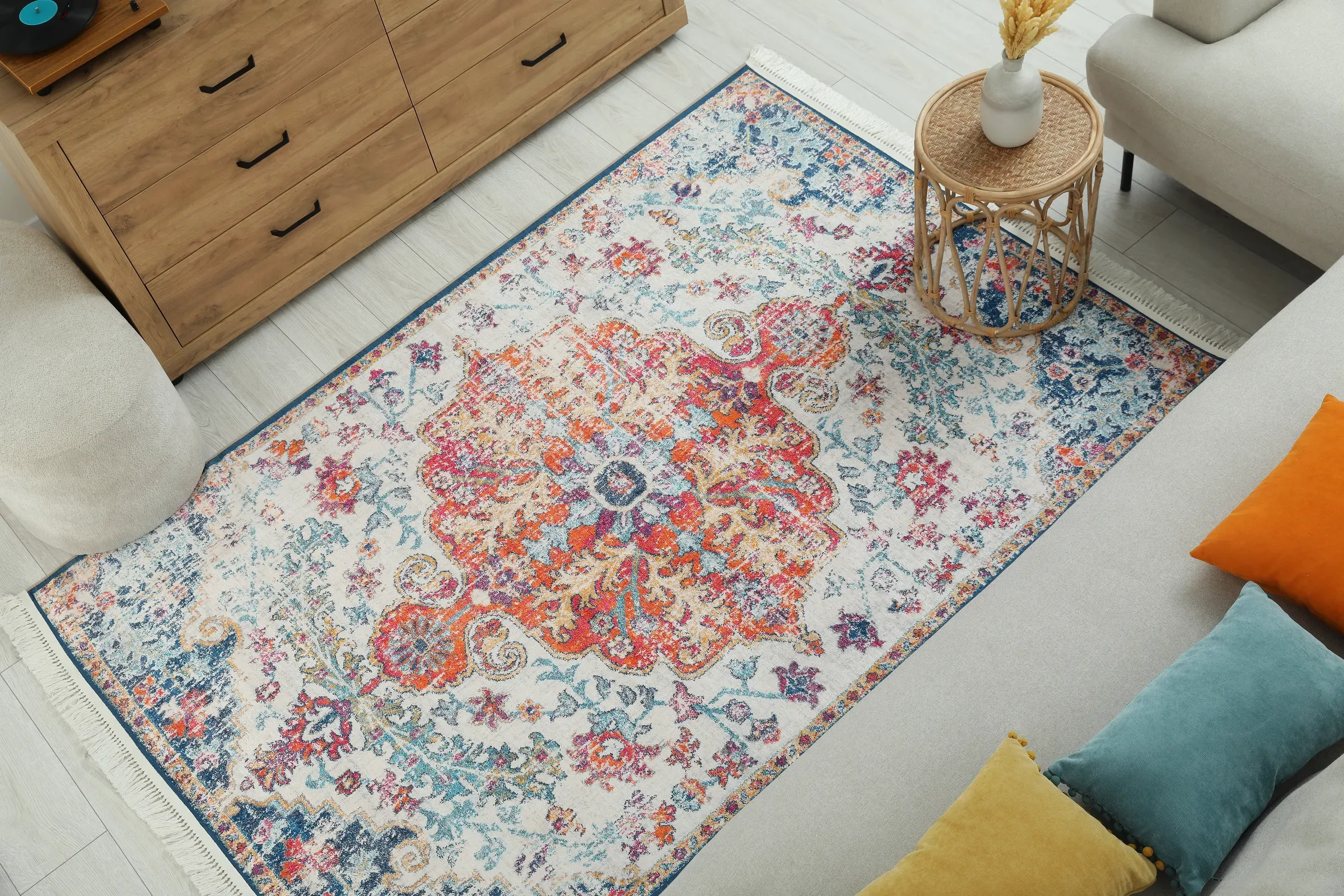
Stylish living room with beautiful carpet and furniture, above view. Interior design, rugs ecommerce
RugsHomeowners and renters finishing a living room, bedroom or entry, who know the size they need, compare materials for shedding, durability and cleaning, and want to see the design in their own room before they commit to something that arrives rolled and heavy.

How rugs makes money

Four levers, and what limits each one here

Revenue is traffic times conversion rate times order value times purchase frequency. In this niche each lever has its own ceiling.

Traffic

Traffic: size, material and room queries a design page cannot hold

Rug searches almost always contain a size, a material or a room: 8x10 wool rug living room, washable runner for hallway, jute rug for dining room, low pile rug for under a door, 9x12 rug that does not shed. A store organized by design name and color reaches none of that, because the size and the material live in a variant dropdown rather than on a page. The traffic lever is a catalog where size, material, pile height, construction and room are attributes, with indexable collections for the combinations that have demand and copy that explains the trade-offs. Material and care guides, such as whether wool sheds or how to clean a jute rug, earn the informational queries that come first and link to the collections that sell.

Conversion

Conversion: seeing the size in the room and trusting the material

The rug shopper hesitates on two questions: is this size right for my room, and will this material behave the way I need. A sizing guide by room type, showing the rug under the front legs of a sofa or fully under a dining table with the chairs pulled out, answers the first, and a visualizer that places the design in a photo of the shopper's own floor answers it better. The material question needs a plain block on shedding, pile height, softness, durability under furniture, pet suitability and cleaning method, stated per material rather than per design. We add both, put the rug pad as a checked option beside the size, and state the rolled shipping and the flattening time so the creases do not become a return.

Order value

Order value: the size up, the pad and the runner

Rug order value moves with the size chosen, and shoppers frequently buy a size too small because the price jump is visible and the room consequence is not. A sizing guide that shows what a too-small rug looks like under a sofa, with the next size up priced in place, moves many orders up one size without a discount. The rug pad is the second lever: a non-slip or cushioned pad sized to the rug, offered as a checked add-on rather than a separate search, attaches to a large share of orders and prevents the slipping complaint. Runners for the hallway in the same design, and a matching bath or entry rug, round out the room in one shipment.

Frequency

Frequency: the next room, the washable reorder and the pad that wears out

A rug is not replaced often, so frequency comes from the next room and from the products around the rug. The post-delivery sequence handles flattening, first vacuuming and shedding expectations, which prevents the early return, then shows the runner and the coordinating designs for the rooms a household typically does next. Washable rug buyers behave differently: they buy a second for another doorway or a kitchen, and a reminder timed a few months after the first fits them. Rug pads wear out and can be reordered by size from the account. We report second-room revenue per customer over twenty-four months, and we keep the size on file so a reorder starts with the right number.

Search visibility

Search: building a rug catalog around size, material and room

Rug demand is stacked from size, material, room, style and behavior. Size is the first word in most queries and it is a variant in most stores, so the first job is making size an indexable attribute: collections for each standard size, such as 8x10 rugs and runners, with copy on which rooms they suit, and the same for materials, such as wool, jute, cotton, polypropylene and washable, and for rooms and behaviors such as living room, entryway, non-shedding and low pile. We build those combinations with real demand as collections inside the platform from the attributes the catalog already holds.

Product pages need every size as a variant of one design with its own price and stock, the exact dimensions in inches and centimeters, the pile height, the material composition, construction such as hand-knotted, hand-tufted or machine-made, the backing, the care instructions and the country of origin, all in text with Product and Offer markup that validates. Material and care guides, a sizing guide by room, and comparison content such as wool versus polypropylene earn links and rank for the questions people ask before they choose.

Technically, sizes and colors stay under one URL per design, faceted combinations without demand carry a canonical to the parent, and image handling matters because rug galleries with room scenes are heavy and mobile rankings depend on Core Web Vitals.

Queries that matter

  • 8x10 wool rug for living room
  • washable runner rug for hallway
  • jute rug for dining room with chairs
  • rug that does not shed
  • what size rug under a queen bed
  • low pile rug for under a door
  • wool vs polypropylene rug

Size, material and room collections with guidance copy, design pages with all sizes under one URL and the material facts in text, and sizing and care guides rank in this niche. A catalog organized by collection name with size buried in a dropdown does not.

AI answers

AI answers: what assistants are asked about rug size, shedding and cleaning

Shoppers ask an assistant what size rug goes under a queen bed, whether a wool rug will stop shedding, whether jute is a mistake with a dog, and how to get the creases out of a rug that arrived rolled. The stores that get named publish the sizing guide as direct answers per room, state shedding and cleaning expectations per material in plain text, give the exact dimensions of every size on the page, and keep Product markup consistent with the feed. We write the material and sizing guides answer-first, keep care wording identical between the product page and the care page, and check that the crawlers behind the major assistants can read the size variants as HTML.

What size rug should go under a queen bed?
Does a wool rug stop shedding after a while?
Is a jute rug a good idea with a dog?
How do I flatten a rug that arrived rolled?

Questions shoppers put to assistants. A store gets named when its pages answer them in plain text.

Google Shopping and Merchant Center

Google Shopping and Merchant Center for rugs sold by size

Rug feeds are built one item group per design, with one item per size and color, because the query contains the size and the price differs several times over between a runner and a nine by twelve. Titles lead with the design or style, the material, the room and the size in the form shoppers type. product_length and product_width carry the exact dimensions, material carries the pile fiber, pattern and color carry the design, and product_detail carries pile height, construction, backing and washability. Rug pads are separate items linked by custom label, not bundled unless is_bundle is set and the page sells the pair. shipping_weight and box dimensions matter, because a rolled nine by twelve ships very differently from a bath mat, and the rate in Merchant Center has to match checkout.

Policy issues in rugs are about images and availability. Room-scene images with text overlays or badges trip the image policy; a clean product image with the room scene as an additional image passes. Sizes that sell out need availability updated within the day or the listing lands on a page with the size greyed out.

Campaigns split by size tier and material margin: large sizes bid to contribution after shipping and return risk, runners and small sizes in a lower-value campaign, washable rugs in their own campaign because the queries differ, and free listings tracked on their own.

Feed attributes that decide eligibility

  • item_group_id per design with one item per size and color
  • product_length and product_width for exact size
  • material for the pile fiber
  • pattern and color
  • product_detail for pile height, construction and washability
  • shipping_weight and shipping dimensions
  • custom_label for size tier

Disapprovals we see in this niche

  • Image policy flags for room scenes with overlays or badges
  • Availability mismatch on sizes that sold out during the day
  • Shipping cost mismatch between the rolled-rug freight rate and checkout
  • Size missing from titles so every size competes for the same query

Meta and social ads

Meta ads: the rug unrolled in a real room and the size shown honestly

Rug creative works when it shows the size in a real room with furniture on it, because the size question is the one the shopper cannot answer from a flat lay. An eight by ten unrolled under a sofa with the front legs on it, a runner laid down a real hallway, a vacuum passing over a wool pile with the shedding named honestly, a washable rug going into a home machine and coming out, and a pet on a jute rug are the angles that answer objections. Visualizer clips, where the design appears on a phone photo of a floor, turn the tool into the ad.

Policy is light in rugs; the constraints are image rights and accuracy. Room scenes from customers need written permission, and any washable or non-shedding claim must match the care page. Audiences start with visualizer users and size-guide readers, then broad prospecting with room video, and catalog ads for retargeting need one lifestyle image per design with the size in the title. Vertical video performs well here because rugs are chosen visually.

  • An eight by ten unrolled under a sofa with the front legs on it
  • A runner laid down a real hallway from one end
  • A washable rug going into and coming out of a home machine
  • The visualizer placing the design on a phone photo of a floor
  • A vacuum over wool pile with shedding described honestly

Policy line

Washable, non-shedding and pet-friendly claims must match the care page; customer room photos need written rights; no implied sizes that the design is not sold in.

Conversion and the store

The store: the size selector, the room guide and the pad checkbox

The rug product page carries the revenue and it needs to make size the first decision. A size selector with the exact dimensions and the price for each, a room guide beside it showing that size under a sofa, a bed or a dining table, and the next size up visible with its price so the shopper can see the trade-off. The material block states shedding, pile height, softness, durability and cleaning for that fiber in plain text. The rug pad sits as a checked option matched to the selected size. Rolled shipping and flattening time are stated so the crease is expected. A visualizer button belongs beside the gallery, not in a footer link.

The collection page is the second template, and it needs filters for size, material, pile and color that read as words rather than codes, with the price shown for the size filtered rather than the smallest size. On mobile the size selector needs to fit one screen with the price updating in place, and the room guide needs a swipe rather than a scroll.

Objections the page must answer

  • “Is this size right for my room and my sofa”
  • “Will it shed, and for how long”
  • “Can I actually wash it, and how”
  • “Will it slip, and do I need a pad”
  • “How long until the creases from shipping go away”

Email, SMS and retention

Email and SMS: flattening, first vacuum and the next doorway

Rug email starts with the box. The delivery sequence explains that the rug arrives rolled, how to flatten it, when to vacuum first and what shedding looks like in the early weeks for the material bought, because most rug returns happen in the first ten days for reasons that are normal. SMS carries the delivery notice for large rugs, which need someone to bring a heavy roll inside. A check-in at two weeks asks whether the size worked and routes a size problem to an exchange rather than a refund.

The next-room sequence starts around a month after delivery and shows the runner, the entry rug and the coordinating designs for the rooms a household does next, with the size guide for each. Washable rug buyers get a shorter cycle, since a second washable for another doorway is a common repeat within a few months. Care content by material earns the right to keep sending; the rug pad reorder runs on a long cycle by size. A moving-season note reminds past buyers that the new place has different rooms.

  1. Arrival and flattening

    On dispatch and on delivery, with SMS for large sizes

  2. Two-week size check-in

    Fourteen days after delivery, routing to exchange

  3. Next room

    Four to six weeks after delivery, by room and size

  4. Washable second rug

    Two to three months after a washable order

  5. Pad reorder and moving season

    Eighteen to twenty-four months, and at the moving-season peak

Where revenue leaks

The leaks we find in rugs stores

The Growth Analysis ranks these against your own numbers and says which to close first.

Get a Growth Analysis for your rug brand
  • Size hidden in a dropdown

    Every 8x10 and runner query lands on a design page priced from the smallest size, or on a marketplace, because the store has no page that is about a size.

  • Rug pads sold as a separate product nobody finds

    The pad lives in an Accessories collection, most orders ship without one, and the slipping complaint arrives as a return reason instead of a second line item.

  • Shedding treated as a defect

    A wool rug sheds for weeks as wool does, nobody told the customer, and the refund goes out on a rug that was behaving normally.

  • Room scenes with badges in the feed

    The main image carries a sale badge or a size overlay, the listing is disapproved for image policy, and the design disappears from Shopping during the fall refresh.

  • Sold-out sizes that stay listed all day

    The nine by twelve sells out at ten in the morning, the feed updates at midnight, and every click for the rest of the day lands on a greyed-out size.

Platform notes

Where the platform changes the work

Shopify

Sizes and colors are variants of one design, with dimensions, pile height, material and care in metafields so they render in the template and reach the feed as product_detail. A size-filter collection built from variant options or tags carries the size pages, and a visualizer app needs to be checked for the weight it adds to the product template.

WooCommerce

Variable products carry sizes with per-variation stock and price; global attributes for material, pile and room power the archives, and the feed plugin must send one item per variation with product_length and product_width filled from the variation, not the parent.

BigCommerce

Size and color as variant options with per-variant pricing, custom fields for material and care, and the faceted search set so size and material archives are indexable while color-plus-size combinations carry a canonical to the design.

Questions

Rugs owners ask us

By CartKernel · Last reviewed

How do you make rug sizes rank when they are variants?

By building size collections as real pages, such as 8x10 rugs or runners, from the variant data the catalog already holds, with copy on which rooms each size suits and links to the designs available in it. The design page keeps all sizes under one URL so reviews and links accumulate, and the size pages carry the queries that begin with a number.

Is a room visualizer worth adding to a rug store?

Usually, when it loads without slowing the product page and when it is placed beside the gallery rather than in a footer. It answers the one question a rug shopper cannot answer any other way, which is how the design looks on their floor at their size. We measure add-to-cart rate for visualizer users against non-users and keep the tool if it earns its weight.

How should rug pads be sold to raise order value?

As a checked option on the rug page, matched automatically to the selected size, with one sentence on why it prevents slipping and protects the floor. Pads sold as a separate product in an accessories collection are bought by a fraction of the customers who need one. We also add the pad reorder to the account so it can be replaced by size later.

How do you structure a Shopping feed for rugs?

One item group per design, one item per size and color, with the exact dimensions in product_length and product_width, the size in the title, the material as an attribute and the rolled shipping weight and box dimensions so the rate matches checkout. Sizes that sell out are updated in the feed within hours, because a click that lands on a greyed-out size is money spent for nothing.

What causes rug returns and how do you reduce them?

Wrong size, color that read differently on screen, shedding that was normal for the material, and creases from rolled shipping. A room sizing guide, daylight photography, a plain shedding statement per material and a flattening email on delivery handle most of it. A two-week check-in routes size problems to an exchange, and we track return reasons by design and material to fix the pages that cause them.

Do washable rugs need different marketing from wool rugs?

Yes. The queries differ, with washable rugs searched by room and by problem such as kitchen, entryway, kids or pets, and the repeat cycle is shorter because a household that likes one buys another for a different doorway within months. We run washable rugs as their own campaign, their own collections and their own email cycle rather than folding them into the main catalog.

Grow your rugs store.

A free Growth Analysis ranks what your store should fix first, by revenue at stake, in about a week.