Skip to content

Industrial & B2B · ecommerce growth

Tool brand marketing agency

A tradesperson buying a tool already owns a battery, and that battery decides most of what they will consider. They search the model number stamped on the tool they are replacing, compare torque and amp-hours against it, and check whether the kit includes a charger before they ever look at price. We build the growth system around that: platform and specification pages that rank, feeds that keep kit and bare tool apart, and a consumables loop that brings the buyer back long after the drill is paid for.

The buyer, in brief

Consideration
Minutes for a blade or a bit, days to weeks for a tool that replaces one already in the van
Purchase frequency
Consumables monthly, hand tools a few times a year, cordless tools on a multi-year replacement cycle
Seasonality
Spring build season and fall trade shows lift the trade side, and November and December pull in gift buyers on kits
Price band
Very wide, from a few dollars for a driver bit to four figures for a full kit or a bench machine
Return risk
Low in volume and expensive when they happen, because heavy tools return at freight rates and warranty work needs a service path rather than a return label
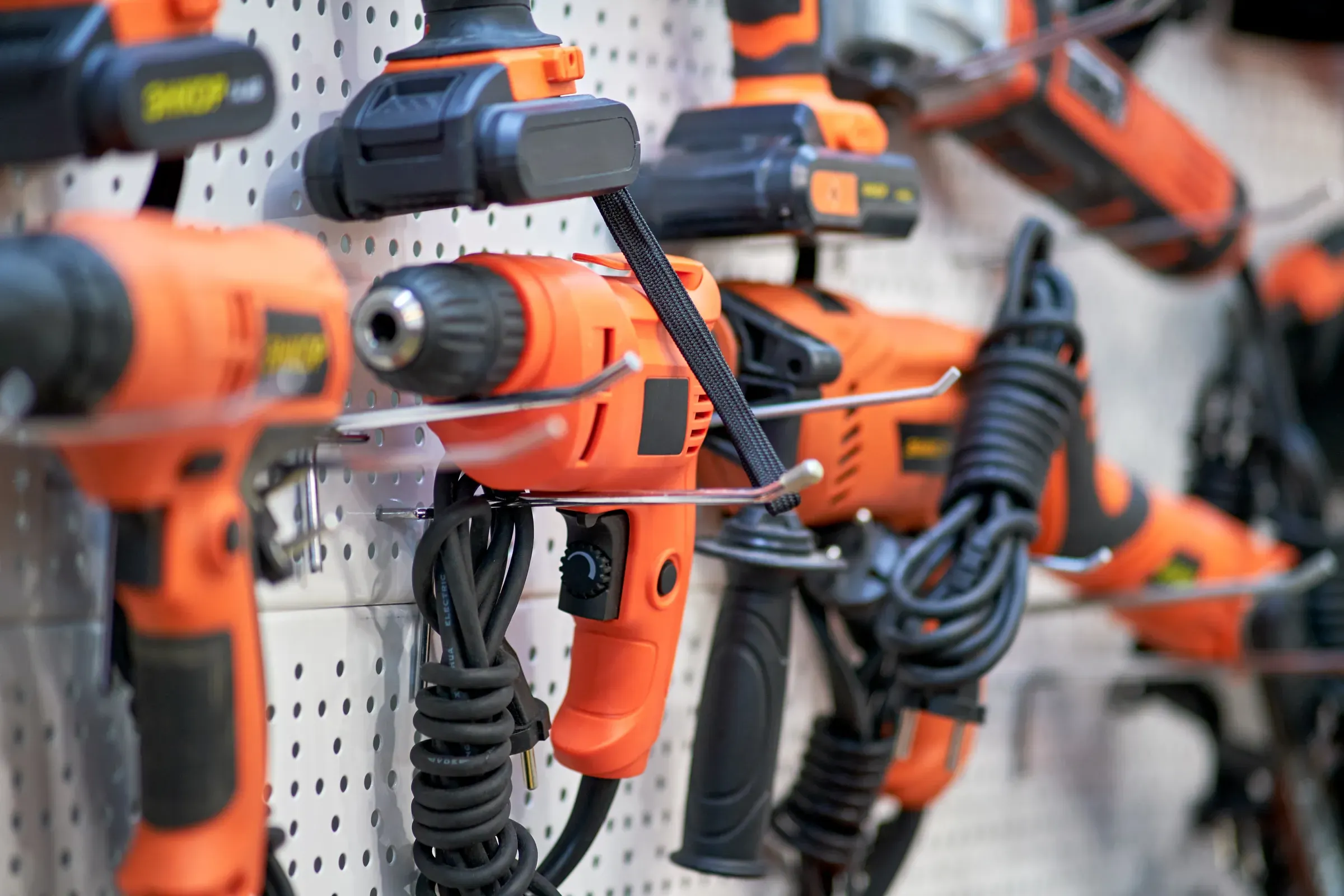
A professional tool for work, repair and construction in the store. Sale of wired power tools and battery, tools & hardware ecommerce
Tools & hardwareTrades and serious home users who already own a battery platform, plus purchasing staff at contractors and facilities buying against a job list. They check platform compatibility, the specification table, warranty length and whether replacement parts will still exist in three years before they trust a supplier.

How tools & hardware makes money

Four levers, and what limits each one here

Revenue is traffic times conversion rate times order value times purchase frequency. In this niche each lever has its own ceiling.

Traffic

Traffic: the battery platform is the category

Tool searches carry the platform before they carry the seller. A buyer types the voltage and the tool type, the model number stamped on the tool being replaced, or the words bare tool because three batteries are already sitting on the charger. Most stores answer all of that with one power tool collection and a filter sidebar search engines never index. The traffic work is building the hubs those searches assume exist: a page for each battery platform, a page for each tool type inside it, collections built from the attributes people actually filter on such as brushless, right angle or torque range, and a model number page for every tool with its full specification as text.

Conversion

Conversion: what is in the box

Conversion in tools is settled by kit contents. A listing that says impact driver kit without stating whether two batteries, a charger and a case are included forces the buyer into a second tab, and plenty of them buy in that tab instead. The page has to list contents item by item, state battery compatibility in the words the manufacturer uses, show the specifications buyers compare on, name the warranty length and the service route, and give honest dated stock for a contractor who needs it Thursday. Weight and dimensions matter more than they look, because a heavy tool ships at a freight rate that has to appear well before the cart.

Order value

Order value: sell the job, not the tool

Order value rises when the store sells the whole job. Every cordless tool needs blades, bits, driver sets, a spare pack or a fast charger, and a case that fits the van. Those belong on the tool page as compatible items with fitment stated, not in a generic also-bought row that ignores which saw the customer just bought. Job bundles do the same work a level up: a rough-in list for an electrician, a tiling set, a deck-building kit. For trade customers, quantity breaks and account pricing lift the basket in a way discount codes never do, because the buyer is stocking a truck rather than buying one item.

Frequency

Frequency: the consumables outlive the tool

The tool is bought once and the consumables are bought forever. Blades dull, bits snap, abrasives wear through and packs lose capacity after a few seasons of daily charging, and each of those is a return visit the store either earns or hands to whoever is nearest. Frequency work means recording what the customer owns so a reorder prompt names the exact blade that fits their saw, and building a reorder list a foreman can run through in a minute. The long cycle is the battery itself, since a customer who bought into a platform three years ago is the most likely buyer of the next pack, charger or bare tool on that system.

Search visibility

Search: model numbers, platform hubs and specification collections

Tool search splits into three shapes and each needs a different page type. Model and part numbers are typed by people replacing or servicing something they already own, and they convert on the spot when the page confirms the number, shows the specification and lists the parts that fit. Platform and voltage searches are the browsing layer and need a hub for each battery system carrying the tool lineup, the pack range and honest guidance on which tools suit which trade. Attribute searches such as brushless, low profile or a torque range should land on collections generated from product data rather than on filter URLs that never enter the index.

The content that earns links here is the comparison a buyer genuinely makes. Impact driver against hammer drill, brushless against brushed, a heavier pack against a lighter one, corded against cordless for a specific task. Written without a thumb on the scale, those pages rank for years and pass authority down into the collections beneath them.

Technically, keep kit and bare tool as separate purchasable pages that link to each other, because they are different purchases to the buyer and different offers to Shopping. Lift specifications out of the supplier PDF into structured fields so they render as text, feed Product markup and can be reused in the feed. Watch for the same tool listed under several supplier numbers, which quietly splits authority across duplicate pages.

Queries that matter

  • 18v brushless impact driver bare tool
  • cordless drill kit with two batteries
  • sds plus rotary hammer for concrete
  • replacement carbon brushes for angle grinder
  • impact driver vs hammer drill
  • 18 gauge brad nailer cordless
  • 1/2 inch impact wrench torque rating

Battery platform hubs, tool-type collections with real buying guidance, model number pages carrying the full specification and a parts list, and honest tool-class comparisons rank in this niche. A single power tool grid behind a filter sidebar does not.

AI answers

AI answers: the compatibility questions asked before the click

Assistants get asked the questions a tool store usually buries. Does this kit include a battery, will an older pack fit the newer line, which blade suits this saw, how much torque does a job need. Stores get named in those answers when the specification lives in text on the page instead of a downloadable sheet, when kit contents are listed item by item, when compatibility is written in the same words the manufacturer uses, and when the page, the markup and the feed agree on price and availability. We write platform and model pages answer first and keep one specification source that the page, the structured data and the feed all read from.

Does this impact driver come with a battery and charger?
Will my older batteries fit the newer cordless line?
What is the difference between an impact driver and a hammer drill?
Which blade fits a 7-1/4 inch circular saw?
How much torque do I need for lag screws into framing?

Questions shoppers put to assistants. A store gets named when its pages answer them in plain text.

Google Shopping and Merchant Center

Google Shopping and Merchant Center for tools and hardware

Tool feeds are usually rich in identifiers and poor in specifications. Manufacturer GTIN and MPN should come straight from supplier data, because an item without a valid identifier competes badly and can be disapproved outright. Titles need the brand, the tool type, the platform or voltage, the headline specification and whether the item is a kit or a bare tool, since bare tool is a phrase buyers type and leaving it out causes returns. Product detail attributes carry torque, speed, chuck size, weight and pack compatibility, and the product category should sit at the specific power tool node rather than at hardware.

The policy risk here is commercial rather than medical. Minimum advertised price agreements mean the feed price, the landing page price and any promotion have to move together, and price mismatch is the disapproval that appears most often. Availability is close behind, because a trade buyer told an item is in stock who then waits three weeks does not come back, and Merchant Center flags the mismatch anyway.

Campaign structure follows margin and role. Kits and bare tools sit in their own groups, accessories and consumables in a campaign bid for repeat value rather than first-order return, and clearance in a third. Free listings stay switched on and reported separately, since part number searches convert there without a bid behind them.

Feed attributes that decide eligibility

  • gtin and mpn from the manufacturer
  • product_detail for voltage, torque and chuck size
  • product_type separating kit from bare tool
  • shipping_weight and dimensions for freight items
  • unit_pricing_measure for multipack accessories
  • custom_label for consumable versus tool

Disapprovals we see in this niche

  • Price mismatch after a promotion moved the page price and not the feed
  • Missing or invalid GTIN on private label accessories
  • Availability mismatch on tools that are actually backordered
  • Image policy flags for promotional overlays on kit photography

Meta and social ads

Meta and social ads: show the tool working

Social sells tools when it shows the tool doing the work. Short clips of a fastener driving home, a clean cut through framing, a kit laid out on the bench with every included item named, and a tradesperson explaining why they moved platforms all beat studio photography. The audience is reachable because trades watch trades, and a creator who works in the trade carries more weight than a polished brand film. The comments under those posts turn into research for the product page, since they are the objections written out for free.

Prospecting works better broad with strong creative than with narrow interest stacks, and catalog retargeting works once the feed images show the tool cleanly against a plain background. The binding constraint is accuracy. Footage filmed with a guard removed or without eye protection puts both the ad and the brand at risk, and any specification quoted in a video has to match the page exactly. Customer footage needs written rights and a check that the creator did not claim a rating the tool does not carry.

  • One fastener, one cut, filmed close on a real jobsite
  • Kit unboxing that names every included item out loud
  • Tool class against tool class for one specific task
  • A trade customer explaining the platform they standardized on
  • The accessory that fixes a daily annoyance on site

Policy line

Show correct guarding and eye protection in every clip, keep torque, speed and runtime claims identical to the specification on the page, and hold written rights for any customer footage that names the tool.

Conversion and the store

The store: what a tool page has to prove

A tool page has to settle compatibility, contents and delivery cost before anything else matters. Battery fit and kit contents belong high on the page in plain text, the specification table belongs on the page rather than behind a link to a sheet, and the parts diagram or replacement part list should be one click away for anyone servicing a tool. Stock status has to be honest and dated, because a contractor with a Thursday deadline will not gamble on a maybe.

For heavy or long items, show a shipping estimate on the product page itself. Freight discovered at the final checkout step is one of the largest sources of abandonment in this niche. Trade customers need a visible route to an account with terms and quantity pricing, and the application has to be short enough to finish on a phone in a truck. On mobile the sticky add to cart, a selector that clearly separates kit from bare tool, and a specification block readable without pinching decide more than any redesign.

Objections the page must answer

  • “Does it include the battery, charger and case”
  • “Will it run on the packs I already own”
  • “How does the torque compare with the tool I am replacing”
  • “Can I still get parts and service in three years”
  • “What will freight cost on something this heavy”
  • “Is it genuinely in stock this week”

Email, SMS and retention

Email and SMS: after the tool comes the blade

Flows in this niche follow the tool into service. A short setup message a couple of days after delivery covers conditioning the first pack, registering the warranty and the accessories that fit, which cuts both returns and support calls. After that the calendar belongs to consumables, reordered on the customer's own wear cycle and prompted by the specific blade or bit they bought rather than by a general catalog send.

The long cycle is the battery. Someone who bought into a platform two or three years ago is the natural buyer of a replacement pack, a fast charger or the next bare tool on that system, and a flow that names their platform outperforms any broadcast. Trade accounts run on a separate track: an invitation after the second order or a basket above the account threshold, quote follow-up while the job is still live, and restock alerts by text for customers who opted in and need a part today.

  1. Tool setup and warranty registration

    Two days after delivery

  2. Consumable reorder

    Timed to the wear cycle of the blades or bits bought

  3. Bare tool on your platform

    Thirty days after a kit purchase

  4. Battery and charger renewal

    Two to three years after the platform purchase

  5. Trade account invitation

    After a second order or a basket above the account threshold

  6. Back in stock alert

    Immediately, by email and opted-in text

Where revenue leaks

The leaks we find in tools & hardware stores

The Growth Analysis ranks these against your own numbers and says which to close first.

Get a Growth Analysis for your tool brand
  • Kit and bare tool merged into one listing

    Buyers cannot tell what they are ordering, Shopping shows one price for two very different offers, and the mistakes come back as freight-rate returns.

  • Specifications locked inside a supplier PDF

    The torque, speed and weight people search on are invisible to search engines, assistants and the feed, so the page loses to a listing that simply typed them out.

  • Accessories with no stated fitment

    Blades and bits sit in a generic accessories collection with nothing linking them to the tools they fit, so the easiest repeat sale in the catalog never happens.

  • Trade pricing behind a contact form

    Contractors who would have opened an account meet a form instead, leave, and buy the same tool at list price somewhere else that afternoon.

  • Freight revealed at the last checkout step

    A bench machine that looked well priced becomes a different purchase once shipping appears, and the cart dies at the step that cost the most to reach.

Platform notes

Where the platform changes the work

Shopify

Specification fields live in metafields so they render on the page, populate Product markup and map into feed detail attributes. Shopify B2B on Plus handles trade pricing, quantity rules and payment terms without a second storefront, and kit and bare tool stay separate products so the offers never blur.

WooCommerce

Global attributes for voltage, platform and tool type drive both the filters and indexable attribute archives. Role-based pricing covers trade accounts, and the feed plugin has to map those attributes into detail fields instead of dropping them at export.

BigCommerce

Customer groups and price lists carry trade pricing per account, while faceted search needs canonical rules so filtered tool URLs do not multiply across the index.

Questions

Tools & hardware owners ask us

By CartKernel · Last reviewed

Should bare tools and kits be separate products or variants of one?

Separate products with their own URLs, linked in both directions. They are different purchases at different price points and different offers in Shopping, and a buyer who assumes a battery is included returns a heavy item at freight cost. Variants make sense for color or length, not for what is in the box.

How do we compete on model number searches against the manufacturer and the marketplaces?

By being more useful on the number itself. Confirm the model in the first line, publish the full specification as text, list the parts and accessories that fit, show dated stock and a service route, and link the superseded number to the current one. Marketplaces rarely carry fitment depth, and manufacturers rarely carry stock detail.

Can we show trade pricing without hiding the catalog from search engines?

Yes. Publish list pricing openly so collections rank and the feed stays eligible, then apply account pricing after sign in. Contract rates and quantity breaks belong to the account rather than to the public page, and quote requests cover anything genuinely negotiated. A fully gated catalog gives up organic demand entirely.

Are thin-margin consumables worth advertising?

Often yes, when they are measured at repeat value rather than on the first order. Blades, bits and abrasives bring buyers back on a short cycle, so we label them in the feed, run them in a campaign with their own target, and judge them on second and third order revenue from the accounts they open.

How should freight on heavy tools be handled in the store?

With shipping profiles that separate parcel from freight, weight and dimension data on every heavy item, and an estimate shown on the product page rather than at the last step. Bench machines and long items need lead time and delivery method stated plainly, including whether a liftgate or a dock is required.

What do you report each month for a tools catalog?

Revenue split by platform family and by tool versus consumable, contribution after ad spend and returns, revenue per session by template, reorder rate on consumables, and trade account revenue against retail. Everything reconciles to orders in the platform rather than to what the ad accounts claim for themselves.

Grow your tools & hardware store.

A free Growth Analysis ranks what your store should fix first, by revenue at stake, in about a week.