Skip to content

Baby & kids · ecommerce growth

Maternity brand marketing agency

A maternity customer is a nine-month customer with a much shorter buying window inside it. She is between two sizes, reluctant to spend on clothes she will wear until one particular month, and trying to work out whether a dress will still be useful once she is nursing. We build the sizing and stage content that answers those questions before the order, apparel feeds that carry maternity sizing properly, ads that never assume anything about the person seeing them, and flows that follow a due date into postpartum and back again years later.

The buyer, in brief

Consideration
Short and urgent for the first few purchases, longer for occasion pieces bought weeks before a wedding or a photo session
Purchase frequency
A burst of orders in the second trimester, a smaller one before the due date, then nursing pieces for months afterwards
Seasonality
Driven by due dates and by the season she will be largest in, with occasion demand around wedding season and holiday parties
Price band
Value to mid for basics with a few months of wear in them, premium for workwear and occasion pieces that have to photograph well
Return risk
High, as in all apparel, and nearly always about fit at a stage the customer had not reached when she ordered
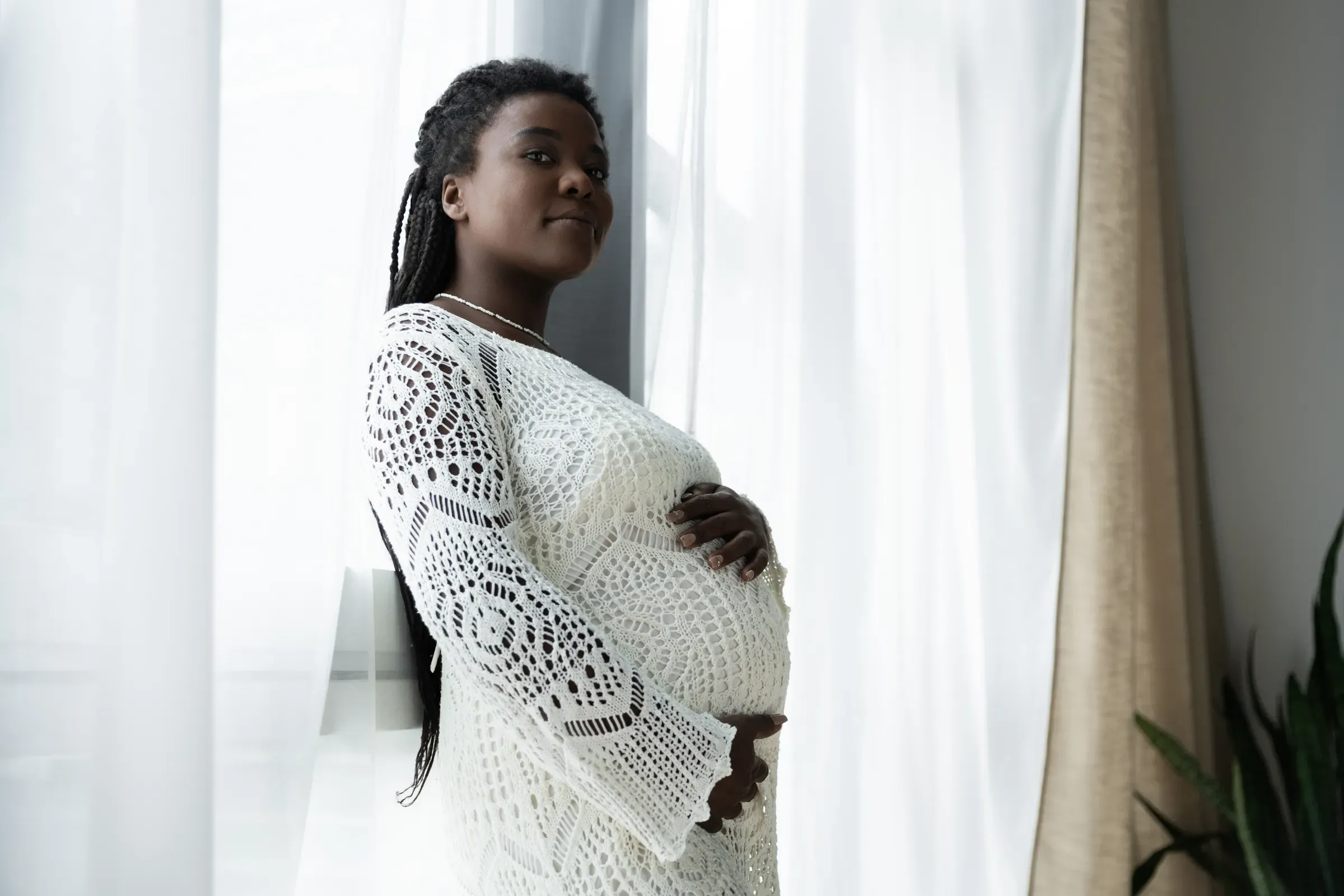
Celebrating motherhood at home with a beautiful pregnant woman and her joy, maternity wear ecommerce
Maternity wearSomeone between roughly twelve and thirty weeks along, usually shopping under pressure after ordinary clothes stopped fitting, plus friends and relatives buying shower gifts. She checks whether to order her usual size, whether the piece can be nursed in later, how it washes, and how it looks on a body at a different stage from the model's.

How maternity wear makes money

Four levers, and what limits each one here

Revenue is traffic times conversion rate times order value times purchase frequency. In this niche each lever has its own ceiling.

Traffic

Traffic: stage, function and occasion, rather than garment type

The searches are practical and specific: whether to size up in maternity jeans, work trousers that fit over a bump, a nursing dress for a wedding, what to wear in a third trimester summer, postpartum clothes that are not maternity. Most brands build a catalog by garment type and hand every one of those queries to marketplaces and parenting sites. The traffic lever is a catalog organised by stage, occasion and function: trimester collections, occasion collections that state whether each piece is nursing friendly, a sizing guide written in the customer's own words, and workwear and hospital-bag guides that carry a product grid rather than a reading list.

Conversion

Conversion: fit at a stage she has not reached yet

Fit is the entire conversion problem here. The customer is between sizes, changing week to week, and looking at a model who is at a different point than she is. Pages convert when they show the same garment on more than one body and more than one stage, state the model's height and how far along she is, and say plainly whether to order the pre-pregnancy size. Nursing access belongs on every piece that has it, described by mechanism rather than by a badge, so a shopper knows whether it is a clip-down, a hidden zip or a wrap. Reviews that can be filtered by height, usual size and weeks along do more here than any additional photograph.

Order value

Order value: pieces that span two stages

Order value grows when the store sells across stages instead of across categories. Two pieces that work through pregnancy and again while nursing cost less per wear than a single occasion dress, and saying so is both honest and effective. Bump bands, waist extenders and layering basics attach well to a first order. A capsule page that assembles five pieces for work or for a holiday sells the whole set to someone who has no time to build one. Gift sets and gift cards belong on the site as well, because the shower guest is a real segment and she has no idea what size to order.

Frequency

Frequency: nursing, then a second pregnancy

The window is short but it does not close at the due date. The nursing wardrobe is a second purchase cycle that most maternity brands leave untouched, and reaching it depends on knowing the due date and continuing the conversation past it. The third cycle is a second pregnancy one to four years later, and a brand that captured the date and kept up a light annual contact takes that order without competing for it. Referral matters more here than in most apparel, because someone going through this talks to everyone else going through it, and a plain friend offer sent after a good first delivery moves quickly.

Search visibility

Search: sizing questions, trimesters and nursing-friendly pages

Demand is phrased by stage, by function and by occasion rather than by garment. Stage queries ask what to wear at a point in the pregnancy. Function queries ask whether something is nursing friendly, whether it fits over a bump, whether it can be worn afterwards. Occasion queries name an event: a wedding, a shower, a family photo session, a return to the office. The pages that carry them are trimester collections with copy about what changes at that point, occasion collections filtered on the nursing attribute, and function collections such as nursing-friendly dresses that exist as real URLs rather than as filter parameters.

The sizing guide is the most valuable page a maternity brand can own. It should explain in plain language how the brand's maternity sizing relates to a pre-pregnancy size, what changes between the second and third trimesters, where the fit differs across the range, and what to do when someone falls between two sizes. Written well it ranks for a query nearly every customer types and it prevents the return that otherwise follows. A postpartum guide does the same job for the second cycle.

Technically, sizes and colours are variants of one product on one URL. Sold-out sizes stay on the page with a notification option rather than vanishing, since size availability is the most common reason a shopper leaves. Seasonal collections keep their URLs from year to year, and model height and stage belong in text rather than burnt into an image, because text is what search and assistants can actually read.
Queries that matter

  • do you size up in maternity jeans
  • nursing friendly dress for a wedding
  • maternity work pants that actually fit
  • what to wear in the third trimester in summer
  • postpartum clothes that are not maternity
  • maternity dress for a baby shower

Sizing guides written in the customer's language, trimester and occasion collections, and nursing-friendly function pages rank here. Garment-type collections with no stage information, and pregnancy blog posts that never link to a product, do not.

AI answers

AI answers: sizing and nursing questions assistants field

Assistants are asked whether to order a usual size, whether a dress can be nursed in, what to wear to a wedding at thirty weeks, and which pieces will still fit after birth. The stores that get named answer all four on the page in plain text: the sizing rule as a single sentence, nursing access described by mechanism, the model's height and stage, the fabric and how much it stretches, and the care instructions. A function collection such as nursing-friendly dresses gives an assistant a list it can quote directly. Product structured data has to carry the size and colour variants and agree with what the feed says.

Should I order my usual size in maternity jeans?
Can this dress be worn for nursing after the baby arrives?
What can I wear to a wedding at thirty weeks?
Which of these pieces will still fit after birth?

Questions shoppers put to assistants. A store gets named when its pages answer them in plain text.

Google Shopping and Merchant Center

Google Shopping and Merchant Center for maternity apparel

Apparel feeds are strict, and maternity has one attribute most stores leave empty. The size type attribute carries a maternity value, and setting it lets Shopping match the listing to the query properly instead of treating the item as regular sizing. Age group is adult, gender is set honestly, size uses one system consistently across the catalog, and item_group_id ties every size and colour of one style into a single product. Colour, material and pattern are required for apparel in the major markets, and product_detail is where the nursing mechanism and the fabric stretch belong.

The disapprovals that show up are apparel disapprovals. A missing colour or size on a variant, a size chart baked into a product image, a barcode omitted on a piece that has one, and price mismatches after a seasonal markdown ends on the site but not in the feed. Images have to show the garment as the main subject, which in maternity means a full-length shot where the fit through the bump is visible rather than a cropped lifestyle frame that hides the thing being judged.

Campaigns split by function and margin: occasion and workwear bid to margin, basics and bump bands in a lower-target campaign that acquires, nursing pieces in a campaign of their own because they reach the customer at a different point in the cycle, and free listings on across the whole size range.

Feed attributes that decide eligibility

  • size type set to maternity
  • size with one consistent system
  • item_group_id for sizes and colours
  • color, material and pattern
  • age group and gender
  • product_detail for nursing access and fabric stretch
  • gtin or identifier_exists

Disapprovals we see in this niche

  • Missing colour or size on apparel variants
  • Size charts and text baked into product images
  • Price mismatch when a markdown ends on the site before the feed
  • Variants submitted as separate products with no group identifier

Meta and social ads

Meta and social ads: one garment, three stages

Creative works when it shows the same piece at different points. A dress at sixteen, twenty-eight and thirty-six weeks in one video answers the question a product photograph cannot. A nursing mechanism demonstrated in three seconds sells the piece to someone buying for a stage she has not reached. Try-on content from customers across a range of sizes and stages does the rest, with written rights in place and no medical commentary anywhere in the caption.

Policy is the constraint most brands underestimate. The personal attributes rule means an ad may not assert or imply that the viewer is pregnant, so copy addresses the product and speaks to the audience in general terms rather than telling the reader what is happening to her body. Health claims about the pregnancy or the baby are out entirely. Audiences start with site visitors, past customers and the email list, then broad prospecting, since inferring pregnancy from interests is both restricted and unreliable. Catalog ads carry the size range and the nursing attribute in the title.

  • One dress at sixteen, twenty-eight and thirty-six weeks
  • The nursing access shown in three seconds
  • Five pieces, one work capsule, worn for a week
  • What still fits after the birth, tested on camera
  • A customer try-on at her own size and stage, with rights secured

Policy line

No copy that asserts or implies the viewer is pregnant, no health claims about pregnancy or the baby, and no targeting built on inferred pregnancy status.

Conversion and the store

The store: the size question, answered in one sentence

The product page has to settle what size to order, how the piece looks at a stage the shopper has not reached, whether it can be nursed in, whether it will be worn afterwards, and what a wrong choice costs her. The template that carries that is a fit block stating the sizing rule in a single sentence, photographs on more than one body and stage with height and weeks given, a nursing-access line describing the mechanism, a fabric and care block, and the returns policy visible beside the price rather than in the footer.

Size availability is the quiet killer. A grid that shows a style as available when the shopper's size is gone wastes the click, so size filters belong on the collection page and the notification option belongs on the size selector rather than on the product as a whole. On mobile, filtering reviews by height and usual size has to be one tap, and the sizing rule should sit above the fold instead of inside a chart the shopper has to pinch open.

Objections the page must answer

  • “Do I order my usual size or size up”
  • “How will this look at thirty-five weeks, not at twenty”
  • “Can I nurse in it afterwards”
  • “Will I get more than three months of wear from it”
  • “What does it cost me if it does not fit”

Email, SMS and retention

Email and SMS: everything keyed to a due date

Almost every flow here keys off a due date, and asking for one is normal in this category as long as it stays optional and the reason is explained. With a date the store can send the second-trimester basics message around the point ordinary clothes stop fitting, an occasion prompt before wedding season, the hospital bag and going-home list in the final month, and nursing pieces in the weeks after. Without it, someone at eight weeks and someone at thirty-eight receive the same newsletter and neither reads it.

Two flows earn their place beyond the standard set. A fit-help message a few days after delivery asks whether the size worked and offers an exchange before a return is opened, which keeps revenue a refund would lose. A light annual message to past customers keeps the brand present for a second pregnancy that arrives years later, and that returning order should be reported as retention rather than as fresh acquisition. SMS suits restock alerts on popular sizes and delivery updates, not weekly promotion.

  1. Second-trimester basics

    Keyed to the due date, near the point ordinary clothes stop fitting

  2. Occasion prompt

    Ahead of wedding and holiday season, filtered to nursing-friendly pieces

  3. Hospital bag and going-home

    Four weeks before the due date

  4. Fit help and exchange offer

    Three days after delivery, before a return is started

  5. Nursing wardrobe

    Two to six weeks after the due date

Where revenue leaks

The leaks we find in maternity wear stores

The Growth Analysis ranks these against your own numbers and says which to close first.

Get a Growth Analysis for your maternity brand
  • A newsletter that ignores the due date

    Someone at eight weeks and someone at thirty-eight get the same send, so the message is wrong for nearly everyone and unsubscribes climb through the most valuable months of the relationship.

  • Returns that were really sizing questions

    The sizing rule sits inside a chart image, the customer guesses, and the piece comes back. The answer costs one sentence on the page and saves the freight in both directions.

  • Nursing-friendly pieces with no page of their own

    The attribute exists only as a filter, so the query that converts best in the category lands on a generic dress collection or on a marketplace.

  • The relationship ending at the due date

    The store sold four months of clothes and never mentioned nursing pieces, so an entire second buying cycle happens somewhere else.

  • Size availability hidden until the product page

    The collection grid shows styles that are sold out in the shopper's size, and she leaves after the third dead end.

Platform notes

Where the platform changes the work

Shopify

Sizes and colours are variants on one product, the nursing mechanism and the fit rule live in metafields that render on the page and map into product_detail, and back-in-stock alerts are set at variant level rather than product level. A due date stored in a customer metafield drives the timing of every flow in the email platform.

WooCommerce

Variable products hold the size range on one URL, global attributes for function and occasion give indexable archive pages, and the feed plugin has to be configured to send the maternity size type rather than leaving that attribute empty.

BigCommerce

Product options carry size and colour, and faceted URLs for occasion and function need canonical rules so the pages that index are the ones written to convert.

Questions

Maternity wear owners ask us

By CartKernel · Last reviewed

How do we cut maternity returns without tightening the returns policy?

By answering the sizing question before the order. One sentence stating whether to order the pre-pregnancy size, photographs at more than one stage with the model's height and weeks given, reviews filterable by usual size, and a fit-help email a few days after delivery that offers an exchange first. Returns fall because the customer knew what was coming, not because the policy got harder.

Can we target pregnant shoppers on Meta?

Not by asserting it. Platform policy prohibits copy that implies the viewer is pregnant, and targeting built on that inference is restricted. What works instead is your own customer and visitor data, broad prospecting with creative that shows the product clearly, and content that lets the right person select herself by clicking the stage or occasion that matches her.

Is it worth adding a nursing range to a maternity label?

Usually, because the customer is already yours and reaching her again costs almost nothing. The condition is that nursing access is described by mechanism on every piece and that nursing friendly exists as its own collection page. A range added without those two things sells to nobody, since the customer cannot find it and cannot tell how it works.

What should we do with a customer after she has given birth?

Move her onto the nursing and postpartum path, then reduce contact rather than dropping her. A light annual message keeps the brand present for a second pregnancy one to four years later, which is the cheapest order a maternity label ever takes. Reporting should count that returning customer as retention rather than as a new acquisition.

Why do our maternity listings appear for regular clothing searches?

Usually because the size type attribute is empty in the feed. Google's apparel specification has a maternity value, and setting it, alongside consistent sizes and a group identifier across variants, tells Shopping which queries the item belongs to. Correcting that single attribute normally shifts impressions toward more relevant searches within a couple of feed refreshes.

Should the sizing guide be one page or one per product?

One brand guide linked from every product page, plus a fit line on the product itself wherever a style runs differently. The single guide accumulates the links and the ranking history, and the product line handles the exception. Splitting the guide across the catalog produces dozens of thin pages that compete with each other and answer the question worse.

Grow your maternity wear store.

A free Growth Analysis ranks what your store should fix first, by revenue at stake, in about a week.