Skip to content

Bags, luggage & travel gear · ecommerce growth

Backpack brand marketing agency

Backpacks are bought by capacity and by use. A commuter wants something that swallows a laptop and a lunch, a one-bag traveller wants the largest pack that still counts as cabin baggage, a parent wants a school bag that will survive until the spring. Litres and use case are the two axes the whole category is searched on, and most stores publish neither. We build the catalog, the feed and the campaigns on those axes and pace the year against term starts.

The buyer, in brief

Consideration
Short for commute and school packs, longer for hiking and travel packs where fit matters
Purchase frequency
Replaced every few years, with a second pack bought for a different use long before the first wears out
Seasonality
A strong run before term starts, a January restart, hiking demand in spring and travel packs before summer
Price band
Entry to premium, with technical and one-bag travel packs sitting well above school packs
Return risk
Mostly capacity and laptop fit, with harness sizing behind the returns on hiking packs
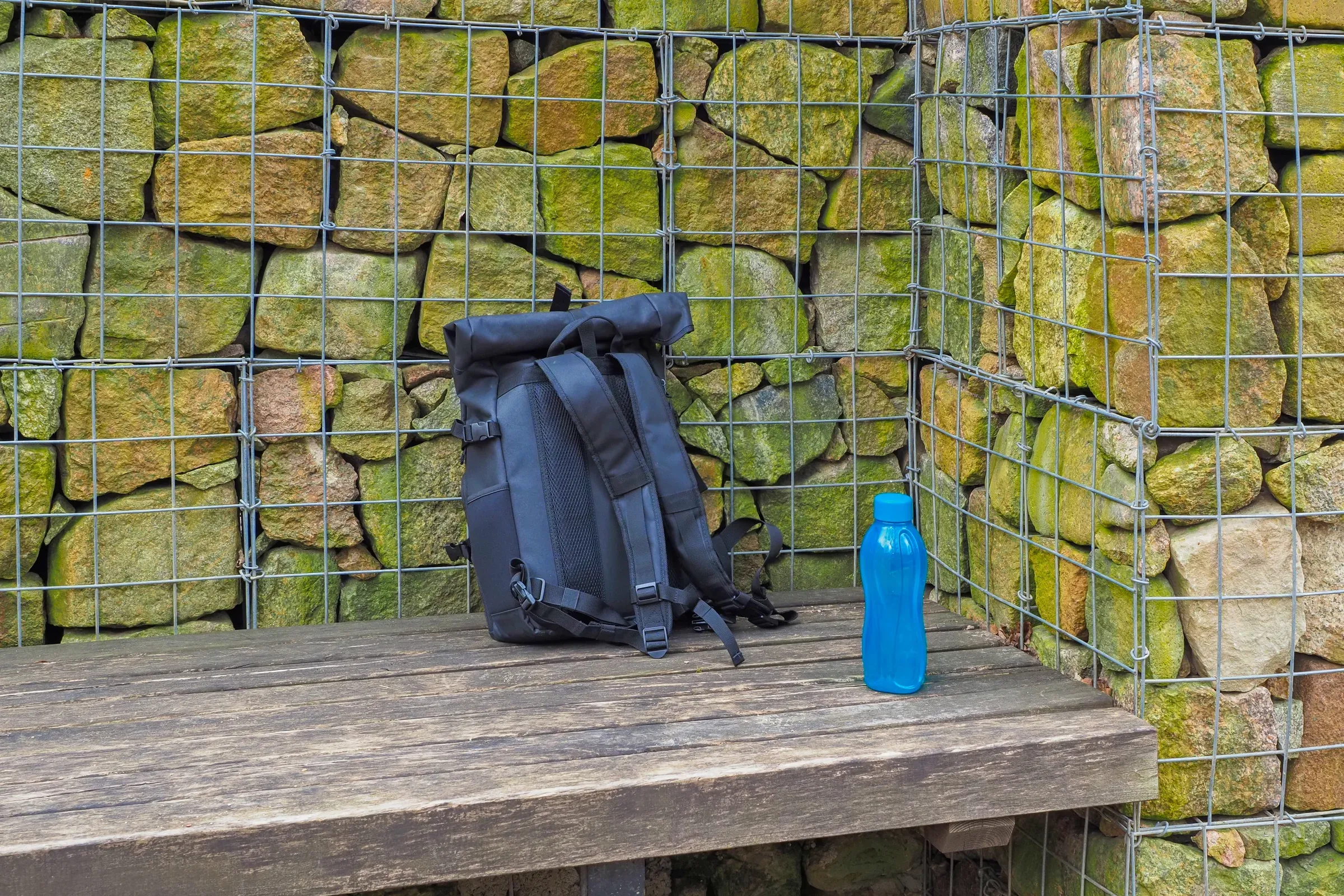
Black rolltop backpack and blue reusable water bottle on a wooden bench against a gabion stone wall, backpacks ecommerce
BackpacksCommuters, students, hikers and one-bag travellers who compare packs on litres, laptop compartment size, empty weight and harness comfort, and who trust a photograph of the pack loaded far more than one of it standing empty.

How backpacks makes money

Four levers, and what limits each one here

Revenue is traffic times conversion rate times order value times purchase frequency. In this niche each lever has its own ceiling.

Traffic

Traffic: litres and use case are the two real filters

Search in this category is almost entirely capacity plus purpose. A commuter types a laptop size, a traveller types a litre number with a cabin question attached, a hiker types a day capacity with a trail context, a parent types a year group. Those combinations are what a backpack catalog should be built from, and very few are. Building litre bands and use case collections as real pages, each with copy that explains what that capacity holds and who it suits, captures demand that otherwise goes to marketplaces and to review sites. The same axes then drive the filters, the feed labels and the ad group structure, so one piece of structural work pays into every channel.

Conversion

Conversion: litres mean nothing until you show them full

Capacity is an abstraction. A shopper cannot picture thirty litres, and nobody converts on a number they cannot picture. The pages that convert show the pack loaded with named contents, state which laptop sizes fit the sleeve by actual dimensions rather than by inches alone, give the empty weight, and show the pack on a person with a height noted so scale is real. For hiking packs, torso length and hip belt sizing need a fitting guide rather than a small, medium, large dropdown. Add the compartment map and the water resistance description in plain terms and the two questions that drive returns, will my things fit and will my laptop fit, are settled on the page.

Order value

Order value: the modules that hang off the pack

Backpack baskets grow through the ecosystem around the pack rather than through discounts. Rain covers, packing cubes sized to that pack's main compartment, tech pouches, hip belts and sternum straps, chest pouches, and a laptop sleeve in the exact size the buyer already told you they need. The trick is specificity: an accessory presented as compatible with this pack converts far better than a generic cross-sell grid. The second path is the size ladder, since a shopper looking at a twenty litre commuter often needs thirty for travel and will take both when the difference is shown side by side with what each holds. Bundles for school buying and for one-bag travel setups do the same job seasonally.

Frequency

Frequency: a different pack for a different purpose

Repeat purchase here is not replacement, it is expansion. The commuter who liked their pack buys a travel pack before a trip, a daypack before a holiday, a school pack for a child. Households buy again every term for a different age. That means the retention job is to keep the brand present at the next use case rather than to chase a worn out bag. Warranty registration, a care and repair sequence, and a use case sequence sent at the times of year each purpose peaks all do more than a general newsletter. Repairs matter too, since a brand that will replace a buckle or a zipper slider keeps a customer whose pack would otherwise be replaced by someone else's.

Search visibility

Search: capacity bands, use cases and the cabin question

The page types that earn traffic in this niche map onto the way people describe their need. Capacity bands come first, built as collections for the ranges that get searched, each explaining what fits at that size, the trip or day it covers and the packs that sit in it. Use case collections come second and are the more valuable half: commuter, school, hiking daypack, one-bag travel, camera, gym. They rank because they match how the query is phrased and because they can hold genuinely useful copy about what the use demands.

The third layer is the questions the category generates, and the strongest is whether a pack counts as cabin baggage. A pack around forty litres sits right at the edge of many cabin allowances, so a page that sets out pack dimensions against published allowances earns steady traffic and links. Laptop fit pages do the same job for device sizes, and a fitting guide for torso length serves the hiking half of the catalog.

Technically, backpacks sit in the luggage and bags branch of the Google product taxonomy rather than the apparel branch, which changes what the feed must carry, but on site the discipline is the same as any variant catalog. Colourways are variants of one product, filters do not generate crawlable URLs on their own, and capacity belongs in the page text as well as in structured data.

Queries that matter

  • 30 litre travel backpack
  • is a 40l backpack carry on
  • backpack for 16 inch laptop
  • commuter backpack waterproof
  • hiking daypack 20l
  • one bag travel backpack
  • school backpack for high school
  • backpack with luggage pass through strap

Use case collections with genuine buying advice, capacity band pages that explain what a size holds, and cabin fit guides written against published allowances rank. Product grids titled Backpacks with a sentence of introduction do not.

AI answers

AI answers: sizing questions assistants are asked to settle

Shoppers ask assistants to do the sizing work for them. What capacity suits a week away, whether a given pack takes a sixteen inch laptop, how many litres a school bag needs, whether a pack will clear a cabin allowance without being gate checked. Getting named in those answers depends on whether the numbers exist as readable text on the page, whether the laptop compartment dimensions are published rather than implied, and whether the capacity claim in the feed matches the one on the site. We write the fit and capacity pages answer first, keep one set of numbers across page, structured data and feed, and make sure the compatibility content is reachable without a script running.

How many litres do I need for a week of hand luggage only travel?
Will a 16 inch laptop fit this backpack sleeve?
Is a 40 litre backpack accepted as cabin baggage?
What size backpack does a secondary school student need?
Which daypack suits a full day hike with water and layers?

Questions shoppers put to assistants. A store gets named when its pages answer them in plain text.

Google Shopping and Merchant Center

Google Shopping and Merchant Center for backpacks

Backpacks sit under the luggage and bags branch of the Google product taxonomy, not under apparel, so the colour, size, age group and gender attributes that catch clothing feeds in several target countries are not demanded in the same way. That is a relief and a trap at once, because it tempts stores to send a bare feed. The attributes that decide performance here are the ones that carry the query: capacity in litres, laptop compartment size, empty weight, material and denier, and the use case, all of which belong in product_detail and in the title where they fit naturally.

Titles should read brand, model, use case, capacity and laptop size, because a shopper searching a thirty litre travel pack with a fifteen inch sleeve is typing exactly those tokens. Item_group_id groups colourways so one model does not bid against itself. Custom labels by capacity band and by margin let campaigns be structured on something meaningful rather than on collection names.

The seasonal risk is the term start run. Promotional pricing applied at cart level rather than on the product, stock disappearing on the popular colour, and hurried image changes with badges added are the three things that take listings down in the exact week they matter most. Free listings deserve their own monitoring here because the category has enough long tail that unpaid placement contributes real volume.

Feed attributes that decide eligibility

  • product_detail for capacity in litres
  • product_detail for laptop compartment dimensions
  • item_group_id for colourways
  • material and fabric weight
  • shipping_weight
  • google_product_category at the backpack node
  • custom_label for capacity band

Disapprovals we see in this niche

  • Missing GTIN on models carried by retailers under a barcode
  • Availability mismatch when a colourway sells out during term start week
  • Promotional badges added to lifestyle images before a seasonal sale
  • Price mismatch when a bundle discount only applies in the cart

Meta and social ads

Paid social: pack it, wear it, then show the empty weight

The creative that works for backpacks is demonstration rather than atmosphere. A pack loaded item by item until the capacity claim is proved. A commute filmed end to end with the laptop going in and out. A pack worn by two people of different heights so scale is honest. A compartment tour that shows where things actually go. Close ups of the zip pulls, the harness and the base fabric, because durability is judged on details a still photograph flattens.

Audiences begin with existing buyers and visitors, then broad prospecting, since interest targeting around students and hikers is far too coarse to beat good creative. Catalog ads earn their place in retargeting once the feed images show the pack clearly on white and the titles carry the capacity. Creative claims are the policy edge to respect: waterproof and lifetime language must match what the specification and the warranty actually say, and any creator content needs written rights and a check that nothing in it promises more than the product does.

  • Loading the pack item by item until the litre claim is visible
  • The same pack worn by people of different heights for honest scale
  • A compartment tour showing where a laptop, water bottle and layers sit
  • Commute or trailhead footage in real weather rather than studio light
  • Two capacities compared with the trip each one covers

Policy line

Water resistance and durability language in ads must match the product specification and warranty terms, creator content needs written rights, and school season creative should avoid framing that targets minors directly.

Conversion and the store

The store: making capacity and fit tangible

A backpack product page has to convert an abstraction into a picture. The specification block needs capacity in litres, exterior dimensions, empty weight, laptop compartment dimensions in centimetres and inches, and the material with its weight. Then the visual work: a loaded shot with the contents named, a worn shot with the model height stated, a compartment map, and for hiking packs a torso fitting guide that is a guide rather than a size chart.

The template detail that moves revenue most is the compatibility statement. A short line saying which laptop sizes fit, which cabin allowances the pack clears, and which of your accessories attach to it converts better than any amount of description. On mobile, keep the specification above the fold on the second scroll, make the colour selector show the fabric rather than a dot, and put shipping and returns terms next to the button. Where the pack has a size or torso option, label it with the measurement rather than a letter, because a shopper who has to guess between medium and large will usually guess by leaving.

Objections the page must answer

  • “Will everything I carry actually fit in this capacity”
  • “Does my laptop fit the sleeve or only the main compartment”
  • “How heavy is the pack before I put anything in it”
  • “Will it hold up to a daily commute for a few years”
  • “Can I take it on a plane without it being gate checked”
  • “Which size do I need for my back length”

Email, SMS and retention

Email and SMS: the school calendar and the second use case

Backpack retention is a calendar problem. Households buy again every term, commuters buy again when a job changes, travellers buy again before a trip. Flows that track those moments outperform anything sent on a fixed weekly schedule. A first-week onboarding sequence that covers care, cleaning and the warranty sets up the repair path that keeps the customer. A use-case sequence introduced a few weeks later shows the next pack in the range with the trip or purpose it serves rather than a discount.

The term start run deserves a dedicated sequence built well before demand arrives, segmented by whether the household bought a school pack last year, with restock alerts on the colours that always sell out first. Post-purchase accessory prompts should name the pack the customer owns and only show what fits it. SMS stays for restocks and delivery in the term start window, where timing genuinely matters, and stays quiet the rest of the year.

  1. Care, cleaning and warranty registration

    Within the first week after delivery

  2. Fitted accessory prompt

    Two to three weeks after delivery, naming the pack owned

  3. Second use case

    Six to eight weeks later, timed to the next seasonal purpose

  4. Term start sequence

    Built and scheduled several weeks before the school run begins

  5. Restock and colour alerts

    Triggered during peak weeks for waitlisted colourways

Where revenue leaks

The leaks we find in backpacks stores

The Growth Analysis ranks these against your own numbers and says which to close first.

Get a Growth Analysis for your backpack brand
  • Capacity that exists only as a number

    Every product says thirty litres and none of them shows what thirty litres holds. Shoppers go to a review video to find out and frequently buy from whoever is linked underneath it.

  • Laptop fit written in inches only

    Laptop models of the same nominal size differ in actual dimensions, so an inch figure alone does not answer the question and creates a return when the sleeve is a centimetre short.

  • Term start spend that arrives late

    Budgets are raised once the season is visible in the data, which is after the demand curve has already turned, so the store bids at the most expensive moment with no learning advantage.

  • Use case demand with no page to land on

    Commuter, hiking and one-bag travel are how the category is searched, but the site only has Backpacks and Sale, so paid traffic lands on a grid and organic traffic never arrives at all.

  • No repair path for a broken buckle

    A small hardware failure ends in a refund or a lost customer because there is no spare part, no repair form and nothing in the post-purchase emails explaining what the warranty covers.

Platform notes

Where the platform changes the work

Shopify

Capacity, laptop compartment dimensions and empty weight belong in metafields so they populate the specification block and product_detail together. Use case and capacity band tags drive collections that are real pages rather than filtered views, and a fitted accessory metafield lets cross-sells show only what attaches to the pack being viewed.

WooCommerce

Global attributes for capacity, use case and laptop size make the archive pages worth indexing and keep the filters consistent with the feed. Term start promotions should be set as product level sale prices rather than cart coupons so the feed price stays honest through the peak.

BigCommerce

Custom fields carry the specification block and complex rules handle torso or size options priced the same, while faceted search needs canonical control so capacity and colour combinations do not become indexable URLs.

Questions

Backpacks owners ask us

By CartKernel · Last reviewed

Should we build collections by litres or by use case?

Both, because they catch different searches. Use case collections carry more commercial weight since a commuter or hiking query says what the shopper wants the pack to do, while capacity bands catch the shopper who already knows the number. Build the use case pages first with genuine advice, then the capacity bands, and link them to each other so one query can reach the other.

How do we handle the cabin baggage question honestly?

By publishing the pack's dimensions when full and comparing them with the allowances carriers publish, without claiming approval. A soft pack expands when loaded, so the honest version explains that a forty litre pack can clear a sizer when packed carefully and may not when stuffed. That framing loses no sales and prevents returns from a gate check.

Do backpack feeds need colour and size attributes?

They sit in the luggage and bags part of the product taxonomy rather than the apparel part, so the apparel attribute requirements do not apply in the same way. Colourways still need item_group_id to be grouped, and capacity, laptop fit and material belong in product_detail because they are the attributes shoppers actually search on.

How early should a back to school push start?

Content and email should be ready weeks before parents start looking, and paid budget should rise as the first searches appear rather than at the peak. The window is short and competitive, so stock depth on the colours that sell out and a restock alert list matter as much as the ad budget does.

Are technical hiking packs worth selling on the same site as commuter packs?

Yes, provided the navigation separates them properly and the technical packs get their own fitting content. The two shoppers ask different questions, and mixing them in one collection makes the page answer neither. Separate use case sections, shared checkout and shared retention works well.

What should we measure to know if the structure is working?

Revenue per session on the use case collections against the general grid, the share of organic entries landing on capacity and fit pages, accessory attach rate to pack orders, and the proportion of returns coded to fit or capacity. If the specification work is doing its job that last number falls while the others rise.

Grow your backpacks store.

A free Growth Analysis ranks what your store should fix first, by revenue at stake, in about a week.