Skip to content

Bags, luggage & travel gear · ecommerce growth

Travel gifts marketing agency

The person buying has never travelled with the person receiving. They know only that their sister flies a lot, they have a budget in mind and a date they cannot miss. Everything in this niche follows from that: navigation by recipient and price rather than by product type, a shipping calendar that has to hold, and a tag or a keepsake that has to look considered when it is opened. We build the gift finding, the delivery operation and the campaigns that run to a deadline.

The buyer, in brief

Consideration
Short, often a single session, with the decision made on price band and delivery certainty
Purchase frequency
Repeats on the same occasions each year with the same recipients
Seasonality
Concentrated in the run to December, with Mother's and Father's Day, graduations, weddings and retirement gifts through the year
Price band
Low to mid, with bundles and personalisation lifting the order into a more comfortable gifting range
Return risk
Low, but exchanges and address errors spike in the weeks around a gifting peak
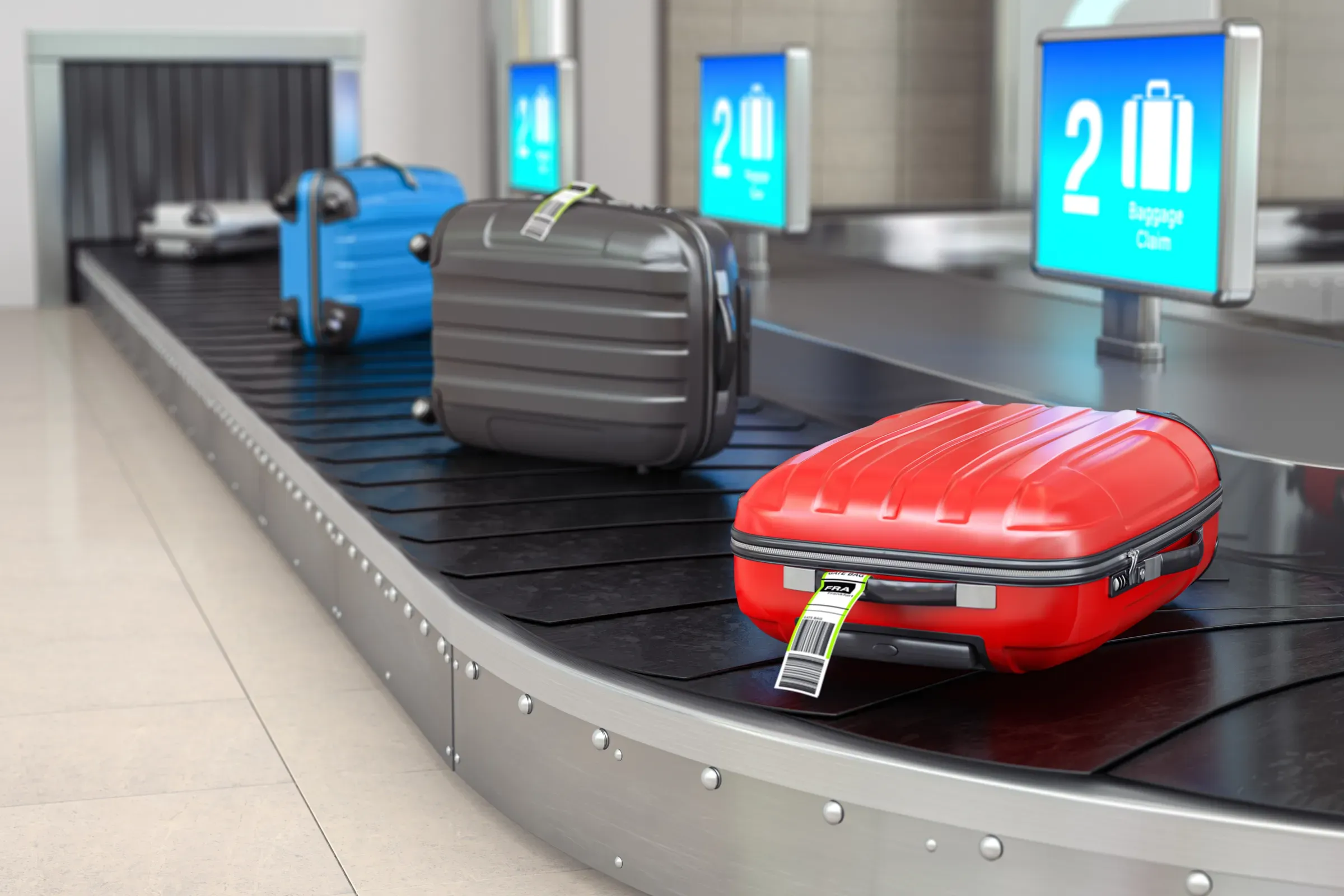
Baggage claim in airport terminal. Suitcases on the airport luggage conveyor belt, luggage tags & travel gifts ecommerce
Luggage tags & travel giftsGift buyers who know the recipient travels but not what they already own, working to a price band and a delivery date, and looking for something that feels personal rather than generic.

How luggage tags & travel gifts makes money

Four levers, and what limits each one here

Revenue is traffic times conversion rate times order value times purchase frequency. In this niche each lever has its own ceiling.

Traffic

Traffic: people search for the person, not the product

The queries in this niche describe a recipient and an occasion. Gifts for someone who travels constantly, a present for a friend moving abroad, a retirement gift for a couple about to tour, something small for a colleague going on secondment. Almost nobody searches for a luggage tag. That means the pages that earn traffic are recipient and occasion pages rather than product collections, each written about the person and their situation before it recommends anything. Price band pages work the same way, since a gift budget is a real constraint people search with. Product type collections still need to exist, but they are the second layer rather than the front door.

Conversion

Conversion: the date, the presentation and the message

A gift buyer is deciding on three things the store often hides. Whether it arrives in time, shown as a delivery date rather than a dispatch estimate. What it looks like when it is opened, shown with the packaging photographed rather than described. And whether they can send it straight to the recipient with a message, which is the difference between a convenient purchase and an inconvenient one. Add a personalisation preview where initials or a name can be added, state the production time it adds, and be explicit about what can and cannot be returned once it carries somebody's name. Those five things settle almost every hesitation in the category.

Order value

Order value: build a gift, not a basket

A luggage tag on its own is a small, slightly thin present, and the buyer knows it. The lift comes from assembling something complete: a tag with a passport cover, a tag with a cable organiser and a small pouch, a departure set for someone starting a long trip. Presented as a gift with a photograph of everything in its packaging, that is an easy decision at a price band people are comfortable giving. Personalisation adds again, and gift wrapping with a hand written card adds a little more while making the whole thing feel considered. The other lift is quantity, since a buyer with several people to shop for will take three if the store makes sending to three addresses straightforward.

Frequency

Frequency: the same occasion, the same people, every year

This is one of the most predictable repeat patterns in ecommerce and it is usually wasted. Someone who bought a gift in December for a sibling has the same sibling and the same December next year, and they remember that the last one worked. Recording the occasion and, with permission, the recipient relationship turns that into a straightforward message a few weeks ahead of the date. The second path is the calendar itself, since a customer who bought for a birthday is also shopping at the end of the year. The third is the recipient becoming a customer, because a good travel gift arrives with a brand name on the packaging and often produces a direct purchase later.

Search visibility

Search: recipient pages, price bands and the cut-off calendar

Build the gift finding structure first, because it matches how the search is phrased. Recipient pages for the frequent flyer, the person moving abroad, the couple travelling in retirement, the student on a year away, the colleague leaving. Occasion pages for the dates that matter in your market. Price band pages, because a budget is a genuine search constraint and a page that respects it converts. Each of these should be written about the situation, with honest recommendations, rather than as a wrapper around a product grid.

Product collections sit underneath: luggage tags by material and attachment, passport covers, travel journals, keepsakes and small organisers. Tag content deserves particular attention because there is a real question people ask, which is what to write on a luggage tag. The sensible answer, a name with a phone number or email rather than a home address, and a cover that hides the details until the tag is opened, is genuinely useful and almost nobody publishes it.

The cut-off calendar is the third asset and should be a page rather than a banner. Last order dates for standard delivery, for express and for personalised items, kept accurate, linked from every gifting page and updated each year at the same URL so it accumulates rather than restarting.

Queries that matter

  • gifts for people who travel a lot
  • what to write on a luggage tag
  • personalised luggage tag with initials
  • leaving gift for someone moving abroad
  • travel gifts under 30
  • retirement gift for a couple who travel
  • passport cover and tag set

Recipient and occasion pages written about the person, price band pages and practical tag content rank here. A collection called Gifts sorted by price does not.

AI answers

AI answers: gift suggestions and one very practical question

Assistants are asked to solve the gift problem outright. What to buy for someone who travels constantly, what makes a good leaving present for a colleague moving abroad, what to give a couple retiring who plan to travel, and separately the practical question of what details are safe to put on a luggage tag. Stores get cited when their recipient pages give reasoned suggestions rather than a list of products, when price ranges are stated plainly, and when the tag guidance is genuinely useful. We write those pages to answer the question on their own, keep personalisation lead times and cut-off dates accurate, and avoid presenting a product list as though it were advice.

What should I buy for someone who travels for work constantly?
What details are safe to put on a luggage tag?
What is a good leaving gift for a colleague moving abroad?
Can a personalised gift be delivered before a specific date?
What travel gift works for someone who already owns good luggage?

Questions shoppers put to assistants. A store gets named when its pages answer them in plain text.

Google Shopping and Merchant Center

Google Shopping and Merchant Center through a gifting peak

Gifting is the hardest season to keep a feed accurate, because everything that can move moves at once. Promotions need to be set as product level sale prices rather than cart rules, since a price mismatch during the peak weeks removes listings at the moment they are worth the most. Availability has to sync frequently, because gift bundles go out of stock when a single component does and a bundle advertised without one of its parts creates cancellations that are hard to recover from.

The attributes that carry the query are gifting attributes. Custom labels by price band make it possible to run campaigns that match how people shop for presents. Multipack applies to sets, product_detail should carry what is included in the box, the personalisation options and the production lead time, and gift wrapping availability is worth stating because it appears in the decision.

Personalised items need their own treatment. They should exist as distinct items rather than duplicates of the plain version, with availability reflecting production time and a description that makes the lead time explicit. Merchant Center promotions can be effective in this window where a genuine offer exists, provided the terms on the site match the feed exactly and the promotion ends when the shipping deadline does.

Feed attributes that decide eligibility

  • custom_label for gift price band
  • multipack for gift sets
  • product_detail for box contents and personalisation options
  • product_detail for production lead time
  • identifier_exists for own brand keepsakes
  • item_group_id for materials and colourways

Disapprovals we see in this niche

  • Price mismatch when a gifting promotion is applied in the cart only
  • Availability mismatch on a set when one component sells out
  • Personalised items advertised with availability that ignores production time
  • Promotion terms in the feed that differ from the terms shown on the site

Meta and social ads

Paid social: the moment it is opened

Gifting creative should show the receiving rather than the product. The box opened, the tissue moved, the tag with initials on it turned over in someone's hand, the card read. That sequence tells the buyer what their money produces, which is the thing they are actually purchasing. Personalisation being applied is the second angle and works all season. A quick tour of what is in a set is the third, because a buyer needs to know the gift is substantial enough.

Audiences start with previous gift buyers, who are the strongest segment available, then broad prospecting during the season with creative organised by price band and recipient. Deadline creative in the final week should carry the date rather than an offer. On policy, keep any claim about delivery timing accurate because an ad promising arrival by a date is a commitment, make sure personalisation examples do not display real people's names or addresses, and secure rights for any customer footage showing a gift being opened.

  • A gift box opened, tissue moved, tag turned over in the hand
  • Personalisation applied to a tag or cover in the workshop
  • Everything in the set laid out as it arrives, in its packaging
  • The tag attached to a case at an airport, doing its job
  • A handwritten card being added to the parcel

Policy line

Delivery date claims in creative are commitments and must be accurate, personalisation examples should not show real names or addresses, and unboxing footage from customers needs written rights before it runs.

Conversion and the store

The store: gift finding, then a delivery promise that holds

The navigation is the product here. A gift finder that filters by recipient, occasion and price band does more for revenue than any redesign, because it matches how the buyer is thinking and because it rescues the shopper who has no idea what to choose. Every gifting page should carry the cut-off dates and the personalisation lead time in the same place, so nobody has to hunt for them.

The checkout carries the second half. Sending to the recipient's address rather than the buyer's, a gift message with enough characters to be worth writing, an option to hide prices in the parcel, and the ability to send several gifts to several addresses in one order. That last one is missing from most stores and quietly caps the basket of every buyer with more than one person to shop for. On mobile, keep the delivery date visible near the button, keep the personalisation preview usable with a thumb, and make sure the packaging photograph is easy to find, since presentation is a large part of what is being bought.

Objections the page must answer

  • “Will it arrive before the day I need it”
  • “Does it look good enough to give as it is”
  • “Can I have it sent straight to them with a message”
  • “Can I put their initials on it and still get it in time”
  • “Will the price be visible in the parcel”
  • “Can I send different gifts to different addresses in one order”

Email, SMS and retention

Email and SMS: the occasion diary and the deadline series

The most valuable asset this list can build is an occasion diary. Record what each customer bought, for which occasion, and contact them ahead of the same date the following year with something different for the same recipient. That message needs no discount because it solves a problem the buyer had not yet started worrying about.

The deadline series is what carries the peak. A short sequence in the final days of personalised production, then a switch to stock items with express delivery, then a clear stop. It is honest, it is genuinely useful, and it consistently produces the strongest sends of the season. Around it sit a gift finder introduction for new subscribers, a post-delivery message asking whether the gift landed well, which produces both reviews and next year's segment, and a recipient welcome for anyone whose gift arrived with a card inviting them to the brand. SMS earns its place in the deadline days and for dispatch confirmation, and should go quiet immediately afterwards.

  1. Gift finder introduction

    On subscription, especially during a gifting season

  2. Personalisation deadline series

    The final days of production before the cut-off

  3. Switch to express eligible items

    Immediately after the personalisation cut-off passes

  4. Did the gift land well

    A week after the occasion date

  5. Occasion diary reminder

    Three to four weeks before the same occasion the following year

Where revenue leaks

The leaks we find in luggage tags & travel gifts stores

The Growth Analysis ranks these against your own numbers and says which to close first.

Get a Growth Analysis for your travel gifts store
  • Navigation organised by product type

    The buyer knows the person and the budget but not the product, and the only way in is a list of categories, so they leave for a marketplace gift guide that asked about the recipient instead.

  • One address per order

    A buyer with four people to shop for has to place four orders, so they place one and buy the rest somewhere that lets them send to several addresses at once.

  • Cut-off dates hidden in a banner

    The dates that decide every purchase in the season live in a rotating message rather than on a page linked from every gifting product, so shoppers hesitate and campaigns have nothing to point at.

  • Packaging never photographed

    Presentation is a large part of what a gift buyer is paying for and the store shows only the product on white, so it looks like a purchase rather than a present.

  • Last year's gift buyers never contacted

    The most predictable repeat audience in ecommerce sits untagged in the database, and the same occasion arrives with no message sent to the people who bought for it last time.

Platform notes

Where the platform changes the work

Shopify

A gift finder is best built from recipient, occasion and price band tags driving real collections rather than a filter widget, so each combination has a URL that can rank and be advertised. Gift messaging and hidden prices belong in the theme and the packing slip, and multi address orders usually need an app chosen carefully so it does not break the delivery date logic.

WooCommerce

Custom taxonomies for recipient and occasion give indexable archives that match the search, while personalisation fields need to write clearly to the order so the workshop sees them, and shipping date logic must account for production time rather than only for carrier transit.

BigCommerce

Product option rules price personalisation without duplicating SKUs, and the cut-off calendar is best held as a single content page referenced everywhere so a date change is made once rather than across dozens of product descriptions.

Questions

Luggage tags & travel gifts owners ask us

By CartKernel · Last reviewed

How should a travel gift store be organised?

Around the recipient, the occasion and the budget, because that is what the buyer knows. Product type collections should exist underneath for the minority who arrive with a specific item in mind. A store that opens with categories asks the shopper to solve the problem they came to you to solve.

Why does sending to multiple addresses matter so much?

Because gift buyers rarely have one person to shop for. If each recipient means a separate order, most people place one and finish elsewhere. Supporting several addresses in a single order, with a message for each, raises the basket more than any upsell and removes real friction at the busiest time of year.

How should the cut-off calendar be handled?

As a page, not a banner. List last order dates for standard, express and personalised items, keep it accurate, link it from every gifting page and product, and reuse the same URL each year so it builds authority. Campaigns and emails can then point at one source that is always current.

What is worth publishing about luggage tags themselves?

The practical question people actually ask, which is what to put on one. A name with a phone number or an email is sensible, a home address broadcast on a case is not, and a cover that conceals the details until the tag is opened solves it. That guidance is genuinely useful, ranks well and very few stores bother to write it.

Should personalised gifts be advertised right up to the deadline?

Only while they can be produced and delivered. Once the workshop cut-off passes, the personalised items should leave the feed and the campaigns should move to stock products that can still arrive in time. Continuing to advertise something you cannot deliver converts spend into refunds and complaints during your busiest week.

How do you get repeat business from gift buyers?

By recording the occasion at the time of purchase and returning to it a year later with something different for the same person. It is the most predictable repeat pattern in ecommerce and it is usually ignored because nobody tagged the order. Done properly it needs no discount, because the reminder itself is the value.

Grow your luggage tags & travel gifts store.

A free Growth Analysis ranks what your store should fix first, by revenue at stake, in about a week.