Skip to content

Beauty & skincare · ecommerce growth

Dermocosmetics marketing agency

Dermocosmetics customers arrive with the name of an active and a page of reading behind them. They want the percentage, the vehicle, the tolerance testing and a straight answer on whether the product sits alongside what a clinician already put them on, and they buy from whichever store answers at that level of detail. We put the evidence where the doubt is, build the catalogue around actives and concerns rather than around ranges, and keep one approved wording for every claim across the site, the feed and the ads.

The buyer, in brief

Consideration
Days to a few weeks, decided mainly on how much of the evidence is stated plainly on the page
Purchase frequency
Actives every two to three months, cleansers and creams on a shorter cycle, with a full routine bought once and then refilled a part at a time
Seasonality
Barrier repair through winter, acids and pigment work in autumn as sun exposure drops, and clinic-driven demand in the weeks after procedures
Price band
Mid to premium, anchored by a pharmacy shelf price the shopper can check in five seconds
Return risk
Few in number but consequential, since a tolerance reaction needs a route back to the brand rather than into a public review
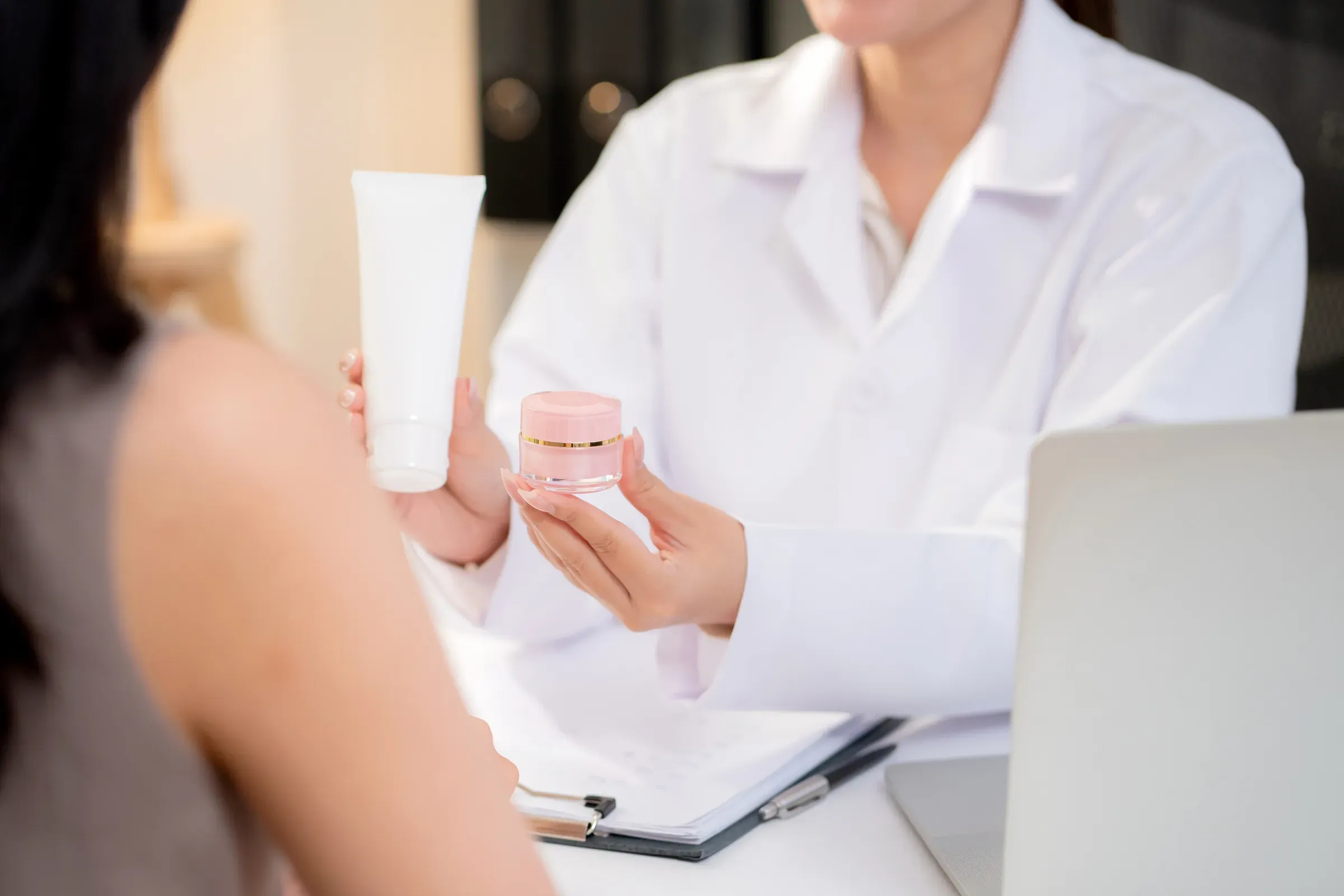
Asian woman doctor recommend skincare cream holding cosmetic product tube and jar of moisturizer for patient, dermocosmetics ecommerce
DermocosmeticsShoppers who name actives and concentrations, often after a consultation or a course of treatment, and who look for the percentage, the vehicle, the pH where it matters, who carried out the tolerance testing, and whether the product can sit alongside a prescription.

How dermocosmetics makes money

Four levers, and what limits each one here

Revenue is traffic times conversion rate times order value times purchase frequency. In this niche each lever has its own ceiling.

Traffic

Traffic: actives, strengths and the questions about combining them

Search in this niche is written in the vocabulary of the ingredient deck. People type an active with a percentage, an active with a concern, or two actives with the word together, and they expect a page that reads like it was written by someone who formulates. Most brands answer with range pages named after their own product families, which nobody searches. The work is a catalogue whose primary axis is the active and the concern: a page per active that covers what it is used for cosmetically, the strengths it comes in, the vehicles it works in and who tends not to tolerate it, plus a compatibility layer that answers the combining questions honestly. Product pages then link up into those pages instead of standing alone.

Conversion

Conversion: evidence placed exactly where the hesitation is

This shopper does not need convincing that the ingredient works. They need to know that this particular formulation is worth their skin's tolerance. What converts is a page that states the active and its percentage near the price, names the vehicle, gives the pH where it is relevant, describes the tolerance testing in plain terms including who it was carried out on and for how long, and lists the full ingredient deck without a tab. A short introduction schedule showing how to build up use over the first weeks does more for conversion than any badge, because the fear behind the hesitation is a reaction rather than a wasted purchase. Where a claim is made, the supporting detail sits beside it rather than in a footnote nobody opens.

Order value

Order value: the routine a clinician would actually write down

Baskets here grow by completing a protocol rather than by adding extras. An active is rarely used alone: it needs a gentle cleanser that will not compound the irritation, a buffering moisturiser and, in almost every case, daily sun protection. Presenting those three as a routine with the order of application and a reason for each is both better advice and a larger order. Sizes matter too, since a customer who has proved they tolerate an active is a candidate for the larger format at a lower cost per use. Where the brand supplies clinics, a post-procedure pack sold as one item removes the guesswork for both the practice and the patient.

Frequency

Frequency: the introduction ramp changes when the refill is due

Replenishment maths in dermocosmetics is different because usage is not constant. A customer told to start an active twice a week and build to nightly will make the first bottle last far longer than the second, so a reminder based on the first interval fires weeks too early and gets ignored, and the next one lands weeks too late. Timing the refill to the ramp rather than to the calendar fixes both. Two other cycles sit on top: the seasonal switch, where pigment and resurfacing work moves into autumn and barrier support into winter, and the procedure cycle, where a clinic appointment creates a short, predictable window of demand for specific products.

Search visibility

Pages that carry evidence: actives, concerns and compatibility

Demand splits into three shapes and each needs a different page. Active queries, often with a strength attached, need a page for the ingredient itself that explains the cosmetic use, the common strengths, the vehicles and the tolerance considerations, then lists the products you make at each strength. Concern queries need collections written in the language the shopper uses without crossing into treatment claims, which means describing who a product suits and what it does cosmetically rather than promising to resolve a diagnosed condition. Compatibility queries, which ask whether two actives can be used together, need their own answers page and are among the most linked-to content in the category.

Product pages have to hold the detail those pages promise: the percentage in the title where the brand sells by strength, the full ingredient list as text, the vehicle, the testing described honestly, and a references block that says what was tested, on how many people and for how long, in plain sentences. A dated review line and a named person or standard behind it tells both readers and search engines the page is maintained.

The structural rule that catches brands out is the opposite of the usual one. Different strengths of the same active are different products with different search demand and different tolerance advice, so they get their own pages rather than becoming options on one selector, while pack sizes of a single strength stay as variants. Alongside that, run one claims register: a single approved wording for each claim, used identically on the page, in the feed, in ad copy and on any marketplace listing, so a reviewer anywhere sees the same sentence.
Queries that matter

  • azelaic acid 10 percent serum
  • moisturiser to use with a prescribed retinoid
  • niacinamide vs azelaic acid for redness
  • ceramide cream for eczema prone skin
  • can you use retinol and vitamin c together
  • fragrance free cleanser for a compromised barrier
  • skincare after microneedling
  • high strength vitamin c serum ph

Ingredient pages with strengths, vehicles and tolerance notes, compatibility answers, and product pages that publish their testing are what hold position here. Range pages named after an internal product family, and claims with no supporting detail anywhere on the site, do not.

AI answers

Why assistants quote clinical clarity, and how to write for it

The questions put to assistants in this category are precise and often cautious: whether two actives can be layered, what strength a beginner should start at, what to use after a procedure, whether an ingredient is suitable during pregnancy. Assistants favour sources that state limits as clearly as benefits, so a page that says who a product is not for, and that recommends speaking to a clinician where that is the right answer, is more quotable than one that only sells. We make sure each active and compatibility page opens with the direct answer, that strength, vehicle and testing appear as text rather than inside an image, and that the same claim wording appears everywhere the brand is represented, since inconsistency between a site and a retailer listing reads as unreliability.

Can I use a vitamin C serum in the morning and a retinoid at night?
What percentage should someone new to acids start with?
Which ingredients should be paused before and after a peel?
Is this ingredient considered suitable during pregnancy?
How long does skin usually take to adjust to a new active?

Questions shoppers put to assistants. A store gets named when its pages answer them in plain text.

Google Shopping and Merchant Center

Merchant Center when the product copy is a regulated claim

The line that decides everything in this feed is the one between a cosmetic and a drug. In the United States, a product claiming to affect the structure or function of the body, or to treat a condition, is regulated as a drug regardless of how it is sold. In Canada, therapeutic claims require the product to be authorised with its own identifier. Listing copy that drifts across that line pulls the item into the healthcare and unapproved-product policies, and the consequences land on the account rather than on the single product. Titles should read as brand, active, strength, product type and size, which is both compliant and closer to the query.

The claims register is what keeps a large catalogue safe at scale. One approved sentence per claim, stored once, is used for the page, the product_detail attribute, the ad copy and any retailer listing. Where the brand wants to say a claim was tested, the description of that testing has to exist on the landing page a reviewer will open. Wording such as clinically proven or dermatologist tested is fine where the work behind it is real and described; it is a liability where it was inherited from a carton designed for another market.

Campaigns follow concern and margin. Routine sets carry the best contribution and deserve their own campaign. Single actives are bid to margin by strength, since a higher strength is usually a different customer. Cleansers and moisturisers work as an acquisition tier that leads into the actives, and free listings are monitored on their own so the long tail is visible.

Feed attributes that decide eligibility

  • product_detail for active, strength and vehicle
  • product_highlight taken from the approved claims register
  • gtin and size
  • google_product_category at the skin care node
  • custom_label by concern and by strength
  • description written from the register rather than from packaging

Disapprovals we see in this niche

  • Healthcare policy flags where copy crosses from cosmetic description into therapeutic claims
  • Clinically proven wording with no description of the testing on the landing page
  • Unapproved product policy issues on items making claims that require authorisation
  • Strengths grouped as one item so a listing shows the price of the weaker version

Meta and social ads

Meta for clinical skincare: mechanism, not transformation

The transformation ad, which is the default in skincare, is unavailable here twice over. Meta restricts before-and-after imagery and prohibits ads that imply the viewer has a personal attribute such as a skin condition, and the brand's own claim discipline rules out the language that usually accompanies it. What is left is the strongest creative in the category anyway: a formulator explaining why the percentage is what it is, an introduction schedule shown week by week, a patch test demonstrated properly, and a routine card that says what goes on in what order and why.

Clinician appearances work when they are framed as education rather than as an endorsement of a medical outcome, with the person's role stated accurately and a clear line that the content is not individual advice. Audiences begin with buyers and site visitors, then broad prospecting behind the mechanism creative, because interest targeting cannot find people by their skin's tolerance. Retargeting copy needs the same care as prospecting copy, since referring to a viewer's condition is a policy issue no matter how warm the audience is.

  • A formulator explaining why an active is at the strength it is
  • The introduction schedule for an acid, shown week by week
  • A patch test done properly, start to finish, in under a minute
  • What to apply after a clinic procedure, filmed with the practitioner
  • The full ingredient deck read out with the function of each part named

Policy line

No before-and-after, no personal attributes referring to a viewer's skin condition, no treatment, cure or prescription-strength claims, and any clinician on camera identified accurately and presented as education rather than individual advice.

Conversion and the store

The product page as a document a careful reader can check

Treat the page as something a sceptical reader is going to audit. The active and its percentage belong beside the price, not in paragraph four. The vehicle, the pH where relevant and the full ingredient deck are visible without a click. The testing section says what was done, on how many people, over what period, in sentences rather than in a graphic. The introduction schedule tells the customer exactly how to start, and a short compatibility note says what to avoid using at the same time, which is the question this buyer would otherwise leave to ask elsewhere.

Two blocks separate a good page from an ordinary one. The first is a plainly stated limit: who this product is not for, which builds more trust than any badge. The second is a support route for a reaction, offered before it is needed, so a customer whose skin does not tolerate the product contacts the brand instead of writing a review. On mobile, the strength and the ingredient deck must be reachable without opening an accordion, and the routine block should offer the buffering moisturiser and the sun protection in the same view, because sending an active out alone is where most tolerance problems begin.

Objections the page must answer

  • “What is the active and at what percentage”
  • “Will it clash with what my clinician already prescribed”
  • “How do I start it without making my skin worse”
  • “Who tested this, on whom, and for how long”
  • “Is it considered suitable during pregnancy or breastfeeding”
  • “What do I do if my skin reacts to it”

Email, SMS and retention

Email and SMS built around the ramp and the clinic calendar

The onboarding sequence is the product's instruction manual, and in this niche it is the difference between a repeat customer and a reaction. It sets out the introduction schedule week by week, names the buffering products that go with the active, and says what a normal adjustment feels like against what is a reason to stop. A tolerance check-in around the second week gives the customer somewhere to go if things are not going well, which keeps the conversation with the brand rather than in public.

Refills are timed to the ramp, so the first reminder sits later than a simple size calculation would suggest and the second sits earlier. Seasonal messages move customers between pigment and resurfacing work in autumn and barrier support in winter, which is genuine advice and a reliable second order. Where the brand works with clinics, a post-procedure sequence triggered by a practice code delivers the right products in the right order at the only time the patient will follow instructions closely. SMS carries the check-in and restock notices for customers who opted in, and nothing that reads as a claim.

  1. Introduction schedule

    On delivery, then weekly through the first month

  2. Tolerance check-in

    Around day ten to fourteen of a new active

  3. Buffer and sun protection pairing

    Three days after an active is ordered on its own

  4. Refill timed to the ramp

    Later for the first bottle, earlier for every one after it

  5. Post-procedure sequence

    Triggered by a clinic code, from the day of the appointment

Where revenue leaks

The leaks we find in dermocosmetics stores

The Growth Analysis ranks these against your own numbers and says which to close first.

Get a Growth Analysis for your dermocosmetics brand
  • Three versions of the same claim in three places

    The website, the feed and the ad each word a claim differently, so a reviewer sees inconsistency and applies the strictest reading, and the brand spends a fortnight proving something it never meant to say.

  • A percentage used in marketing but missing from the page

    The strength appears on the carton and in a campaign but not in the product detail, so shoppers who search by strength cannot confirm it and buy from a brand that prints it plainly.

  • Automated ad text writing new claims

    Automatically created assets stitch site copy into headlines nobody approved, and a compliant catalogue starts advertising a promise it has no file to support.

  • No route back after a reaction

    A customer whose skin flares finds only a returns form, so the story goes into a public review instead of into a support conversation and a replacement product.

  • Strengths sold from one page

    The low and high strengths share a listing, so the search demand for each is split, the tolerance advice is generic, and some customers start at a level they were never meant to start at.

Platform notes

Where the platform changes the work

Shopify

The claims register lives as a metaobject referenced by every product, so an approved wording is written once and rendered on the page, exported into the feed and pulled into ad copy; active, strength, vehicle and testing sit in metafields, and Markets handles country-specific claim wording without duplicating products.

WooCommerce

Global attributes for active and strength drive both filters and indexable archives, a reusable block holds the approved claim text so it cannot drift between pages, and the feed plugin maps testing and vehicle into product_detail rather than dropping them.

Headless

Claims and evidence are stored once in the content layer and rendered into the storefront, the feed and the ad exports, so a wording change propagates everywhere at once instead of being edited in four systems by three teams.

Questions

Dermocosmetics owners ask us

By CartKernel · Last reviewed

What actually counts as substantiation for a skincare claim?

Evidence that matches the claim in kind and in strength, held on file and described where a reader can find it. A tolerance claim needs tolerance testing, a hydration claim needs the measurement that was taken, and a claim about how skin looks after a period needs the study that ran for that period. The practical test is whether a reviewer opening your landing page can see what supports the sentence.

Can we say dermatologist tested or dermatologist recommended?

Only where each is literally true and described. Dermatologist tested means a dermatologist ran or supervised testing on the finished formula, and the page should say what that testing was. Recommended implies an endorsement that needs to exist and be documented. Where neither is solid, describing the formulation decisions and the tolerance work is more persuasive to this buyer anyway.

Should a five percent and a ten percent version share one product page?

No. They attract different searches, suit different users and carry different guidance on how to start, so each needs its own page, its own copy and its own feed item. Pack sizes within a single strength stay as variants. Splitting by strength also stops a listing showing the cheaper price while the shopper lands on the stronger product.

Pharmacies and clinics stock us too. How do we sell direct without upsetting them?

By making the direct store do something the shelf cannot. Keep the recommended price consistent, publish the full evidence and the introduction guidance online, give clinics professional accounts with sample packs coded to the practice, and run a stockist finder so local demand reaches them. The claim wording has to be identical everywhere, since a pharmacy listing that differs from your own page creates the inconsistency reviewers look for.

How do we stop automated campaigns inventing claims about our products?

Turn off automatically created assets, supply every headline and description yourself from the approved register, and restrict image assets to packaging and texture shots you control. Then audit the served combinations regularly, because an asset that is compliant alone can become a claim when paired with another. This is routine maintenance in a claims-bound catalogue rather than a one-time setup task.

Do people really search by ingredient percentage?

In this niche, yes, and the volume is meaningful enough to build pages for. Someone who types an active with a number has already decided what they want and is looking for a formulation to trust. Putting the strength in the page title, the product title in the feed and the first line of the description is often the difference between appearing for that search and never being considered.

Grow your dermocosmetics store.

A free Growth Analysis ranks what your store should fix first, by revenue at stake, in about a week.