Skip to content

Beauty & skincare · ecommerce growth

Haircare marketing agency

Nobody searches for shampoo. They search for shampoo for fine hair that goes flat, for a curl cream that holds 3b curls in humidity, for a conditioner that will not strip fresh colour. Haircare is bought by hair type, by wash-day problem and by what happened last time, and the shopper wants a store that knows their hair before it sells them anything. We build the hair-type structure that ranks, the quiz that ends in a routine with a price, the size and refill economics that make replenishment pay, and the ad and feed setup that stays on the right side of scalp and hair-loss policies.

The buyer, in brief

Consideration
A week or two of reading reviews and watching wash-day videos for a new brand, minutes for a repeat
Purchase frequency
Shampoo every six to ten weeks, conditioner slower, masks and treatments every two to three months, stylers by use
Seasonality
Humidity and frizz in summer, dryness and static in winter, a colour and bond-repair lift after holiday and summer sun, and gifting at year end
Price band
Wide, from accessible to salon-professional, with litre sizes and refills that change the per-wash economics
Return risk
Low but scent-driven and texture-driven; the common complaint is weight or build-up on fine hair, which a hair-type fit statement prevents
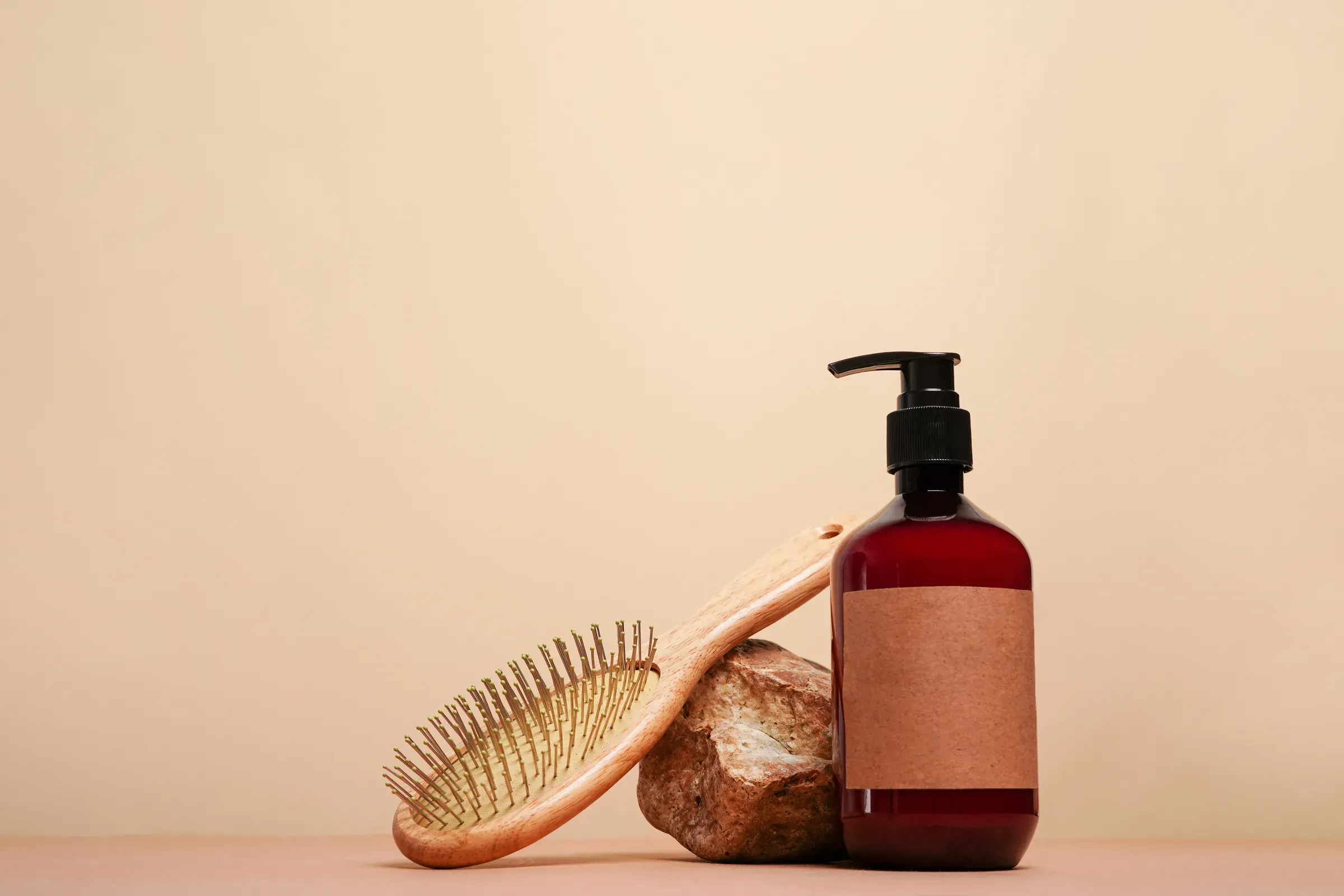
Brown bottle with pump mock up, used for shampoo or conditioner for hair and wood comd near stone on beige, haircare ecommerce
HaircareShoppers who describe their hair in detail, from curl pattern and porosity to colour history and scalp behaviour, and who check whether a product is sulfate-free, silicone-free or colour-safe and whether people with hair like theirs say it worked.

How haircare makes money

Four levers, and what limits each one here

Revenue is traffic times conversion rate times order value times purchase frequency. In this niche each lever has its own ceiling.

Traffic

Traffic: hair type, wash-day problem and ingredient, in that order

Haircare demand is described in the shopper's own hair vocabulary: curl pattern numbers, porosity, fine or coarse, colour-treated, oily roots with dry ends, flaky scalp. The searches that convert combine one of those with a product type or an ingredient, such as leave-in for low porosity hair or rosemary scalp oil. A store with a Shampoo collection and a Conditioner collection captures almost none of it. The traffic lever is a hair-type and concern architecture, with every combination that has demand built as an indexable collection carrying its own copy, a wash-day guide for each hair type with products attached, and Shopping listings whose titles say who the product is for.

Conversion

Conversion: the quiz result has to be a routine with a price

Haircare shoppers are nervous about weight, build-up and stripping colour, and they want to be told what to use in what order. A quiz that asks about hair type, porosity, scalp and goals and lands on a three-product routine with a set price converts because it removes the choice; a quiz that lands on a filtered collection adds a step and loses people. Product pages carry the hair-type fit in one line near the price, the ingredient list with sulfates and silicones called out, a how-much-to-use line, and reviews filtered by hair type so the shopper can find someone with their hair. That last feature does more for conversion in this niche than any redesign.

Order value

Order value: the wash-day set and the litre

Haircare baskets grow through pairs and sizes. Shampoo and conditioner are bought together, and a set page with a small saving turns most single-bottle visits into pairs. The wash-day set adds the mask or leave-in that the routine calls for. The litre size and the refill pouch raise order value while lowering the cost per wash, and they belong on every full-size page as the value option, with the per-wash comparison stated plainly. For salon-professional brands, the litre is also the product the salon buys, so its page has to serve both the home customer and the stylist without showing trade pricing to the wrong one.

Frequency

Frequency: shampoo runs out first, conditioner later

Replenishment in haircare fails when every product is reminded on the same cycle. Shampoo is used more heavily than conditioner in most routines, so the shampoo runs out weeks earlier and the pair goes out of step. Frequency work here times each product's reminder to its own size and use rate, offers the pair as a subscription with staggered quantities, and moves the customer to the litre once they have repurchased twice. Seasonal routines add a second frequency driver: a humidity product in late spring and a repair mask after summer give existing customers a reason to order between replenishments without a discount.

Search visibility

Hair-type architecture: the collections and guides that carry haircare demand

Haircare search demand maps to a grid of hair type by product type, with concern and ingredient as further layers. Curl pattern collections (wavy, curly, coily), texture collections (fine, thick, coarse), state collections (colour-treated, bleached, heat-damaged) and scalp collections (oily, dry, flaky) each need real copy explaining what that hair needs and why the products listed fit. Product-type collections stay, but they link down into the hair-type versions rather than trying to rank on their own. A wash-day guide per hair type, with the routine and the products in it, is the informational layer that earns links and feeds the collections.

Ingredient pages carry the second layer: sulfate-free and silicone-free as indexable free-from collections, and hero ingredients such as rosemary, argan, bond-building complexes and rice water each with an explainer and a product grid. Colour-safe and curly-method-friendly are claims shoppers search for by name and should be stated exactly.

The technical work is about sizes and pairs. A 250 ml, a litre and a refill pouch are one product with size variants and one canonical URL, with the litre's per-wash value stated in the copy. Sets are their own products that link to each component. Scalp and hair-loss language needs care in copy as much as in ads, because a page that promises regrowth attracts the wrong queries and the wrong policy attention.

Queries that matter

  • shampoo for fine hair that goes flat
  • leave-in conditioner for low porosity hair
  • sulfate free shampoo for colour treated hair
  • curl cream for 3b hair humidity
  • rosemary oil for scalp
  • wash day routine for curly hair
  • best hair mask for bleached hair
  • litre shampoo and conditioner set

Hair-type collections with real copy, wash-day guides with products attached and ingredient explainers rank in haircare. Product-type collections with no hair-type layer, and blog posts about hair trends with no products, do not hold rankings for long.

AI answers

Assistant questions about hair and what makes a store the quoted answer

People ask assistants whether a shampoo is safe for colour-treated hair, what porosity means and how to test it, whether a curl cream will work on wavy hair, and how often to use a bond-repair mask. Stores get cited when the hair-type fit, the ingredient facts and the usage frequency are stated in plain text on the product and collection pages, when the free-from claims match the ingredient list exactly, and when Product markup and the Merchant Center feed agree on size and name. We write the hair-type pages to answer the fit question in the first sentence, keep the porosity and curl-pattern explanations on our own pages rather than linking out, and check that assistant crawlers can reach the guides.

Is this shampoo safe for colour-treated hair?
How do I know if my hair is low or high porosity?
Will a curl cream work on 2b wavy hair?
How often should I use a bond repair mask?
Which conditioner will not weigh down fine hair?

Questions shoppers put to assistants. A store gets named when its pages answer them in plain text.

Google Shopping and Merchant Center

Feeds for haircare: sizes, pairs and the scalp policy line

Haircare feeds succeed on size handling and on who-it-is-for titles. Every size of a shampoo is a variant in one item group with the size attribute set, so a litre and a 250 ml appear as one product with options instead of competing listings. Sets are their own items with is_bundle true. Titles carry product type, hair type or concern, key claim and size, so that shampoo for fine hair, sulfate-free, 250 ml reads the way the query does. Product_detail carries curl pattern fit, porosity fit and free-from claims; product_highlight carries the three things a stylist would say about it. The google_product_category sits at the specific hair care node.

Policy in haircare is drawn at the scalp. Anti-dandruff products with medicated actives are regulated as drugs in the United States and Canada, and any hair regrowth or hair-loss claim falls under the healthcare policies. Cosmetic language about a flaky scalp, thicker-looking hair and reduced breakage is safe when the ingredient list supports it. Aerosol dry shampoo and hairspray carry ground-only shipping restrictions that the shipping settings must reflect. Salon-professional brands have one more constraint: the feed price must match the page, and the page must not show trade pricing to consumers.

Campaigns are split by role in the routine: shampoo and conditioner pairs in a campaign bid to margin, treatments and masks in a higher-margin campaign, litres and refills in a retention campaign judged on repeat buyers, and free listings monitored separately.

Feed attributes that decide eligibility

  • size and item_group_id across bottle sizes
  • is_bundle for pairs and wash-day sets
  • product_detail for curl pattern, porosity and free-from claims
  • product_highlight
  • shipping overrides for aerosol stylers
  • google_product_category at the hair care node

Disapprovals we see in this niche

  • Healthcare policy flags on regrowth, hair-loss or dandruff-treatment language
  • Sizes listed as separate products rather than variants, triggering duplicate and mismatch issues
  • Shipping accuracy failures on aerosol dry shampoo and hairspray
  • Price mismatch when the litre discount on the page is not reflected in the feed

Meta and social ads

Meta for haircare: the wash day, filmed on the hair it was made for

Haircare creative that performs shows a wash day from start to dry on hair the viewer recognises as their own: the curl pattern, the length, the colour history. Texture on the hand, the amount used, and the finished result in natural light say more than any claim. A second angle is the honest comparison, such as a mask against a leave-in for the same hair, explained by a stylist. Reviews filmed by customers with that hair type are the most credible creative in the niche, provided the rights are secured and the customer has not made a claim the brand cannot support.

Policy limits sit around hair loss and scalp conditions. Ads must not imply the viewer is losing hair or has a scalp condition, and before-and-after imagery is restricted, which removes the classic transformation ad. Regrowth language is a health claim. Audiences begin with customers and site visitors, then broad prospecting split by hair-type creative, since interest targeting for hair types is unreliable. Catalog ads retarget by hair-type collection, so a shopper who viewed curl products sees curl products.

  • Full wash day on 3c hair, from cleanse to dry, with amounts shown
  • Fine-hair volume test in one wash, filmed at the roots
  • Colour before and after a month of washes is not allowed, so show the colour on wash one and the routine that protects it
  • Stylist explaining when to use a mask and when a leave-in
  • Litre versus bottle: the per-wash maths on screen

Policy line

No hair-loss or scalp-condition personal attributes, no regrowth claims, no before-and-after transformations, and any medicated scalp product advertised only within the healthcare rules for its market.

Conversion and the store

The haircare store: hair-type fit, reviews by hair, and the size choice

The haircare product page has to state who the product is for before it says what it does. A hair-type fit line near the price, a clear sulfate and silicone statement, a how-much-and-how-often line, and reviews that can be filtered by hair type answer the objections that stop the add to cart: will it weigh my hair down, will it strip my colour, will it work on my curl pattern, how much do I use. The size selector shows the per-wash value of the litre and the refill beside the price, so the customer sees why the larger size costs more and per wash costs less.

The template that carries revenue is the routine result page from the quiz: three products, the order to use them, a set price and one button. Wash-day guides double as landing pages for hair-type ads. On mobile, the hair-type fit line and the size selector need to sit above the reviews, and the pair-and-set upsell belongs in the cart drawer rather than on the page. For salon-professional brands, a stockist locator and a trade login belong in the header so salon buyers find their path without seeing consumer pricing as an insult.

Objections the page must answer

  • “Will it weigh down my fine hair or leave build-up”
  • “Is it safe on hair I just coloured or bleached”
  • “Does it work on my curl pattern and porosity”
  • “How much do I use and how often, in what order”
  • “Why does the litre cost more than the bottle I usually buy”

Email, SMS and retention

Email and SMS for haircare: staggered replenishment and the seasonal routine

Haircare flows run on two cycles that do not match. Shampoo reminders fire earlier than conditioner reminders, by size and by the customer's answers to the quiz, and the pair subscription ships shampoo more often than conditioner so the bathroom stays in step. The quiz result flow sends the routine, then a wash-day walkthrough on delivery covering amounts, order and how many washes to give a new product before judging it, which cuts the returns that come from a first wash that felt heavy.

Seasonal routines give existing customers a reason to buy between replenishments. A humidity message in late spring for wavy and curly customers, a repair and bond message after summer sun, and a dry-scalp and static message in winter each sell a treatment product the customer does not yet own, without a discount. The litre upgrade lands after the second repurchase, when the customer has proved the product suits them. SMS carries the shampoo-first replenishment nudge and restock alerts for customers who opted in, and nothing else.

  1. Quiz result and routine

    Immediately after the quiz, with a follow-up two days later if no order

  2. First wash-day walkthrough

    On delivery, before the first wash

  3. Shampoo-first replenishment

    Six to eight weeks for shampoo, ten to twelve for conditioner, by size

  4. Seasonal routine

    Late spring for humidity, early autumn for repair, midwinter for dryness

  5. Litre upgrade

    After the second repurchase of the same product

Where revenue leaks

The leaks we find in haircare stores

The Growth Analysis ranks these against your own numbers and says which to close first.

Get a Growth Analysis for your haircare brand
  • Quiz results that land on a filtered collection

    The shopper answers eight questions about their hair and is shown twenty products to choose from. The quiz adds a step without removing a decision, and completion turns into exit.

  • Pair reminders on the same day

    Shampoo and conditioner are reminded together, the shampoo ran out three weeks ago, and the customer already bought a replacement somewhere else.

  • Trade pricing visible to consumers, or invisible to salons

    A professional brand either shows salon pricing to home customers, which devalues the retail price, or hides the trade path so well that stylists give up and order from a distributor.

  • Regrowth language on a scalp serum

    A single line about thinning or regrowth moves the product into healthcare policy on every channel, and the account waits in review during the autumn shedding season when demand peaks.

  • Litres listed as separate products

    The litre has its own URL and its own feed entry, so the product competes with itself in search and in Shopping, and reviews split across two pages.

Platform notes

Where the platform changes the work

Shopify

Hair-type fit, porosity fit and free-from claims live in metafields that render on the page and pass into product_detail; the quiz app must write its result to the customer record so flows can time shampoo and conditioner separately, and B2B pricing for salon accounts uses company profiles rather than a second store.

WooCommerce

Global attributes for hair type, porosity and claim drive both filters and indexable attribute archives, size variations share one product page, and a review plugin that supports custom questions captures hair type so reviews can be filtered by it.

BigCommerce

Customer groups handle salon and consumer pricing on one catalog, and faceted URLs for hair type need canonical rules so filter combinations do not multiply in the index.

Questions

Haircare owners ask us

By CartKernel · Last reviewed

Is a hair quiz worth building if we only sell twelve products?

Yes, if the result is a routine with a set price rather than a filtered list. With a small catalog the quiz's job is to tell the shopper which three of the twelve are for their hair and in what order, which removes the decision that stops most first orders. We test the quiz against the hair-type collection pages and keep whichever produces more revenue per visitor.

We sell through salons as well. How do we run direct sales without undercutting them?

By keeping the retail price identical across channels, giving salons a trade login with their own pricing, and agreeing a brand-term bidding policy so stockists and the brand are not bidding against each other. The direct store then competes on range, routine guidance and litre availability rather than on price, and a stockist locator sends local shoppers to salons rather than away from the brand.

Can we say our scalp serum helps with thinning hair?

Not in those words. Thinning, regrowth and hair-loss claims are healthcare claims on Meta and Google, and personal-attribute rules stop ads implying the viewer is losing hair. The product can be described in cosmetic terms that the ingredients support, such as scalp comfort, reduced breakage and fuller-looking hair, and that language has to be consistent across the page, the feed and the ads.

Should the litre and the refill pouch have their own product pages?

No. They are size variants of the same product on one URL, with the per-wash comparison stated in the copy and the size selector. That keeps reviews, ranking history and the feed item group together. The litre earns its own section on the page and its own campaign in Shopping, but not its own page.

Which hair-type and porosity pages actually rank?

The ones with real explanation and a product grid that fits. A collection for low porosity hair that explains what porosity is, how to test it, what those strands need and which of your products qualify ranks over months; a collection with a heading and a grid does not. Curl-pattern pages behave the same way, and wash-day guides with products attached support both.

How do we time replenishment when shampoo runs out before conditioner?

By treating them as two products with two clocks. The shampoo reminder fires first, sized by bottle and by the customer's wash frequency from the quiz, and the conditioner reminder follows weeks later. For subscribers, the pair plan ships shampoo more often than conditioner. We report repeat rate per product rather than per pair so the timing can be tuned.

Grow your haircare store.

A free Growth Analysis ranks what your store should fix first, by revenue at stake, in about a week.