Skip to content

Beauty & skincare · ecommerce growth

Nail brand marketing agency

Nail brands run on colour and on calendars. A shade drops, a wave of demand arrives in an hour, one colour sells out and the rest of the range is judged by how well the store handled it. Underneath sits a catalogue where every product is a variant, a shipping classification that rules out air freight for anything liquid, and a press-on customer whose whole experience depends on whether the set fits. We build the drop mechanics, the colour discovery and the fit work that decide whether a launch becomes a business.

The buyer, in brief

Consideration
Seconds for a colour they have already seen, longer for a first press-on order while sizing is worked out
Purchase frequency
Press-on sets every one to three weeks for regular wearers, polish accumulated as a collection rather than replaced, base and top coats on a genuine replenishment cycle
Seasonality
Driven by drops and by trend cycles, with peaks around party season, holidays and weddings, and a summer lift for brights and pedicure shades
Price band
Accessible per item, so multi-buys, sets and the tools around them decide whether an order is worth fulfilling
Return risk
Concentrated almost entirely in press-on fit, with colour disappointment second when the product was photographed in a bottle rather than on a nail
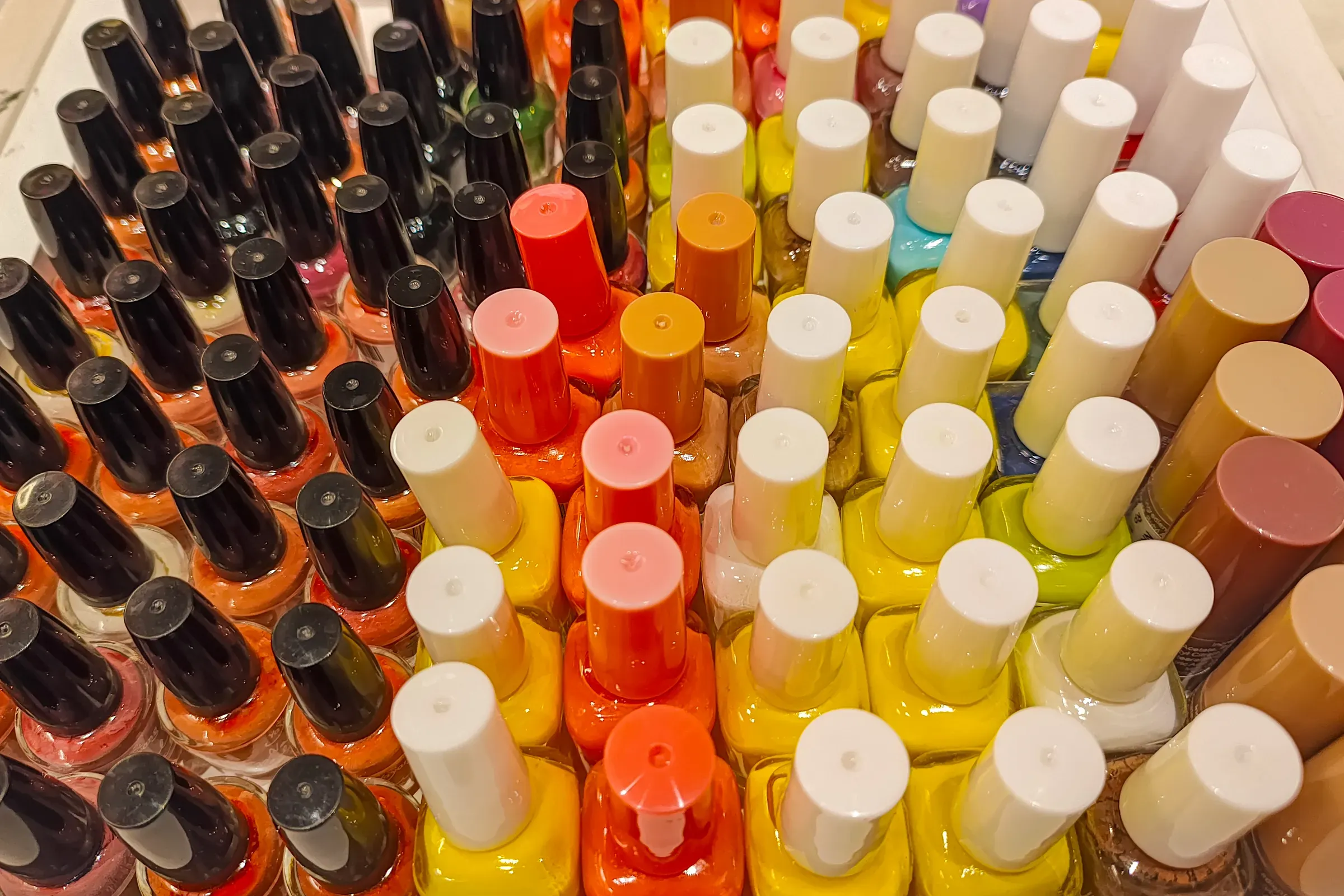
Vibrant Assortment of Colorful Nail Polish Bottles in a Display, nail polish & press-ons ecommerce
Nail polish & press-onsColour-led shoppers who decide from an image, want to see the shade on a hand rather than in a bottle, check how long a set or a manicure lasts before it chips or lifts, and, for press-ons, need to know the shape and size will fit their own nails.

How nail polish & press-ons makes money

Four levers, and what limits each one here

Revenue is traffic times conversion rate times order value times purchase frequency. In this niche each lever has its own ceiling.

Traffic

Traffic: colour words, finishes and the occasion someone is dressing for

Nail demand is visual and it is described in ordinary language: a milky white, a chrome, a jelly red, a chocolate brown, a French tip with a coloured line. Brands name their shades poetically and then wonder why nothing ranks, because the poetic name appears nowhere in a search. The traffic work is to give every shade a plain colour word and a finish word in its page copy and its title, then build collections by colour family, by finish and by occasion that can rank on their own. Shape and length collections do the same job for press-ons, since a customer with short square nails is searching for exactly that. Technique content on application, wear and safe removal carries the rest.

Conversion

Conversion: the shade on a hand, and the set that fits

Two failures account for most disappointment in this category and both are solvable on the page. The first is photography: a bottle photograph tells nobody what a colour looks like once it is on a nail, so every shade needs on-nail imagery across a range of skin tones and nail lengths, in daylight, with the finish visible. The second is fit. Press-ons come in shapes and widths, and a set that does not fit is a return and a bad review regardless of how good it looks, so a sizing kit at a low price, a printable measuring guide and clear per-nail measurements do more for the numbers than any offer. Wear expectations, stated honestly in days, prevent the rest.

Order value

Order value: nothing works without the system around it

A colour on its own is a small order and a poor result. Polish needs a base and a top coat to last, and a customer who buys neither concludes the brand chips. Press-ons need the adhesive or tabs, a prep kit and a remover, and a set sold alone is a set applied badly. Building those into a starter kit at first purchase is honest merchandising and lifts the basket at the same time. After that, multi-buy pricing on shades, seasonal capsules of three or four colours chosen to work together, and the tools that get replaced regularly keep the order size sensible in a category where a single item rarely covers its own fulfilment.

Frequency

Frequency: press-ons repeat, polish accumulates

The two halves of this catalogue behave nothing alike. Press-ons are consumed: a set lasts a week or two, is replaced, and the customer settles into a rhythm that a subscription or a multipack fits neatly, once their size is known and stored so reordering is a single tap. Polish is collected rather than used up, so repeat purchase is driven by drops, by seasons and by capsules rather than by an empty bottle. The exception is the treatment layer, where base coats, top coats and removers do run out and reward a straightforward reminder. Building the two cycles separately, instead of emailing everyone at the same interval, is what turns a launch audience into a repeat base.

Search visibility

Colour, finish and fit: making a variant-heavy catalogue searchable

Almost everything in this catalogue is a variant, which means almost nothing has a page of its own unless the structure is built deliberately. Colour family collections, finish collections for creme, shimmer, chrome and jelly, and occasion collections give search something to rank that is not a single shade with three sentences under it. Every shade page needs its plain colour and finish words in the copy, since the shade name alone is unsearchable. For press-ons, shape and length collections are equally important, because fit is part of the query.

The informational layer is where the durable traffic sits: how to make a manicure last, how to apply press-ons so they stay on, how to remove them without damaging the nail underneath, how to choose a shape for a nail bed. These rank all year, are unaffected by which shade is currently trending, and end in products rather than in a newsletter box.

Technically, three things repay the effort. Shades belong on one product page as variants with per-variant images and stock, so the range does not compete with itself. Sets, capsules and kits are separate products with their own URLs. And a retired shade keeps its page with a status note and the closest current colour, because trending colours generate search demand long after the stock has gone and that traffic is easy to convert into whatever replaced it.

Queries that matter

  • milky white press on nails short square
  • chrome nail polish top coat
  • how to make press on nails last two weeks
  • jelly red nail polish sheer
  • press on nail sizing guide
  • how to remove press ons without damage
  • chocolate brown nail colour autumn
  • gel polish that does not need a lamp

Colour and finish collections that use ordinary colour words, shape and length pages for press-ons, and technique guides on wear and removal all rank here. Shade pages named only with an invented word, and lookbooks with no products attached, do not.

AI answers

Assistant questions about wear, fit and removal

The questions people bring to assistants are practical and they are the same ones that decide a purchase: how long press-ons last, how to size them, whether they damage the natural nail, what the difference is between formulas that need a lamp and those that do not, and which colours suit a particular skin tone. Stores get quoted when that information exists as plain text on their own pages, with honest durations rather than optimistic ones, and when the colour description includes ordinary words a model can match to a question. Free-from and non-toxic style claims need to state exactly what is excluded, since vague versions are neither verifiable nor quotable, and precision is what gets a source used.

How long do press-on nails usually last?
How do I measure my nails for a press-on set?
Do press-ons damage your natural nails?
What is the difference between gel polish and regular polish?
Which nail colours suit warm undertones?

Questions shoppers put to assistants. A store gets named when its pages answer them in plain text.

Google Shopping and Merchant Center

Feeds for a colour range, and a liquid that cannot fly

The listing has to carry colour in a way the system can use. Shade names are meaningless on their own, so the colour attribute needs an ordinary colour word, the title should read as brand, colour, finish and format, and the image must show the shade on a nail rather than in a bottle, because the landing page shows a hand and a mismatch is the most common quality problem in this category. Finish belongs in the descriptive attributes, since creme and chrome versions of the same colour are different purchases. Press-ons need shape, length and the number of nails in the set, all of which are selection criteria a shopper filters on.

Transport is the constraint that catches nail brands out. Nail lacquer is a flammable liquid, which limits it to specific ground and surface services, caps quantities per parcel and restricts destinations, and press-ons carry no such restriction. A cart containing both is therefore governed by the polish, which is why mixed orders quietly become the slowest and most expensive parcels in the warehouse. Shipping settings and delivery promises have to reflect the services that will actually accept the order.

Claims are light in this catalogue with two exceptions. Free-from and non-toxic style wording must be accurate about what is excluded, and anything suggesting a product treats or strengthens damaged nails as a health outcome moves into a different policy area. Campaigns are structured around baskets: kits and capsules first, tools and treatments bid to margin, single shades kept mostly in free listings.

Feed attributes that decide eligibility

  • color with an ordinary colour word rather than the shade name
  • finish and format in the descriptive attributes
  • shape, length and nail count for press-on sets
  • item_group_id across shades of one product
  • shipping settings reflecting flammable liquid restrictions
  • custom_label for single shade, capsule, kit and tool

Disapprovals we see in this niche

  • Images showing a bottle where the landing page shows the colour on a nail
  • Delivery services promised on lacquer that carriers will not accept
  • Free-from or non-toxic claims that do not match the ingredient list
  • Shades listed as unrelated products so one range competes against itself

Meta and social ads

Meta and the visual surfaces: colour has to be shown honestly

Nails are among the easiest products to make watchable and among the easiest to misrepresent. Application filmed in real time, a set pressed on and pushed against a nail bed, a shade painted in daylight with no grading, and a removal done properly all perform because they are useful as well as satisfying. The drop reveal is its own format, and it works best when the whole capsule is shown in one continuous shot rather than as a montage that hides how the colours relate.

The policy issue here is representation rather than health. Colour grading, filters or lighting that make a shade look different from what arrives is misleading, and it also produces the returns and reviews that follow a colour disappointment, so the discipline serves both purposes. Claims about strengthening or repairing nails as a health outcome cross into a different policy area, and free-from wording has to be accurate. Audiences start with people who watched a previous drop to the end, then past buyers by colour family and by press-on size, then broad prospecting behind the strongest application video, since the format qualifies viewers better than any targeting option available.

  • A full set applied in real time, including the fitting and filing
  • One shade painted on several skin tones in daylight, ungraded
  • The capsule revealed in a single continuous shot, all shades together
  • Safe removal shown start to finish, with the nail underneath at the end
  • The sizing kit used properly, so a first-time buyer knows what to order

Policy line

No filters, grading or lighting that change the apparent colour of the product, no claims about strengthening or repairing nails as a health outcome, and free-from wording that matches the ingredient list exactly.

Conversion and the store

The colour page, the fit tool and the launch that has to hold up

The shade page has one job: show the colour truthfully and in context. On-nail imagery across skin tones and lengths sits above everything else, with the finish named in words and a plain colour word in the description so the shopper who searched for a milky white recognises what they found. Wear time is stated in days, honestly. For press-ons, the fit tool is the page: a sizing kit offered at a low price, a printable guide, per-nail measurements listed, and the size stored on the customer's account so the second order takes one tap.

The other half of conversion in this niche is operational. Drops concentrate a large amount of traffic into a short window, so the site has to hold up under it, the waitlist has to work, and a sold-out shade needs a back-in-stock option rather than a dead button, because the shopper who missed one colour will buy another if the page lets them. Communicating restock intentions honestly, including when something will not return, keeps that audience for the next launch instead of leaving them refreshing a page. On mobile, the swatch grid and the size selector are the two things that must be easy to use at speed.

Objections the page must answer

  • “What does this shade look like on a hand, not in the bottle”
  • “Will this set fit my nails and how do I measure them”
  • “How long will it last before it lifts or chips”
  • “Will it damage my natural nails”
  • “How do I take them off safely”
  • “Is this shade coming back if I miss it”

Email, SMS and retention

Email and SMS for drops, sizes and the tools that run out

The drop calendar is the backbone of the programme. A preview to the people most likely to buy, a reminder at launch, and an honest restock or retirement note afterwards give three sends that customers actually want, and they work far better than a discount because the scarcity is real rather than manufactured. Waitlist alerts for a specific shade are the highest-converting message in the account and should fire per colour, not as a general restock announcement.

Around that sit the practical flows. A first press-on order triggers a fitting and application sequence, sent before the parcel arrives so the customer prepares properly, which is the single biggest lever on fit returns and on wear time. The size captured there drives every later recommendation. Treatment products, base coats, top coats and removers get a straightforward replenishment reminder, since they genuinely run out while shades do not. Win-back leads with the colour family the customer bought rather than with a discount. SMS carries drop-day access and shade-level restocks for people who asked for them.

  1. Drop preview and launch

    Two days before and again at the moment of launch

  2. Fitting and application

    Between despatch and delivery of a first press-on order

  3. Shade-level waitlist alert

    The moment that specific colour is back

  4. Tools and treatment replenishment

    By product life for base, top coat and remover

  5. Colour family win-back

    After two missed drops, leading with their palette

Where revenue leaks

The leaks we find in nail polish & press-ons stores

The Growth Analysis ranks these against your own numbers and says which to close first.

Get a Growth Analysis for your nail brand
  • Shades photographed in the bottle

    The colour on the page bears little resemblance to the colour on a nail, so the store converts on imagination and pays for it in returns and in reviews that mention the shade being nothing like the picture.

  • Press-ons sold without a way to size them

    No sizing kit, no measuring guide and no stored size, so a first order is a guess, and the fit failure is blamed on the product rather than on the missing step.

  • A drop that takes the site down with it

    Traffic arrives in ten minutes, the store slows or the waitlist fails, and the demand the brand spent weeks building is spent on a loading spinner.

  • Express delivery sold on a flammable liquid

    Checkout offers an air service that will not carry lacquer, so the order is delayed or returned, and a mixed cart of polish and press-ons quietly becomes the most expensive parcel in the warehouse.

  • Shade names with no colour in them

    Every product is called something evocative and nothing on the page says brown, or chrome, or sheer, so a range with real demand behind it is invisible to anyone searching in ordinary words.

Platform notes

Where the platform changes the work

Shopify

Shades are variants with their own images and stock so a range lives on one page, colour and finish metafields drive the collections and the feed, back-in-stock is configured per variant, and drop-day load is handled with a launch queue and cached collection pages rather than by hoping the theme copes.

WooCommerce

Variations carry per-shade images and stock, attribute archives for colour family and finish create the indexable pages a variant name cannot, and shipping classes hold the lacquer restrictions so a mixed cart is rated correctly.

BigCommerce

Option sets with swatch imagery keep a wide range on one listing, and product-level shipping rules stop express services being offered on liquids that cannot travel that way.

Questions

Nail polish & press-ons owners ask us

By CartKernel · Last reviewed

Our shade names are part of the brand. Do we have to change them?

No, keep them. What has to change is what surrounds them. The page copy, the product title in the feed and the colour attribute all need an ordinary colour word and a finish word, so that a search for a chocolate brown creme can find the shade you called something else. The evocative name stays as the name, and the plain words do the work of being found.

What is the single biggest cause of press-on returns?

Fit, by a wide margin. A set that is the wrong width for the nail bed will lift no matter how well it was applied, and the customer experiences that as a product failure. A cheap sizing kit, a printable measuring guide, per-nail measurements on the page and the size stored on the account after the first order remove most of it. Application content handles the rest.

How should we prepare a store for a launch that concentrates traffic into an hour?

Treat it as an operations problem rather than a marketing one. Test the site under load, cache the collection and shade pages, make sure the waitlist and back-in-stock tooling works before the day, set ad budget headroom in advance, and have a rule for pausing ad groups on shades as they sell out. Then say honestly afterwards what is coming back and what is not.

Why do our polish orders keep getting held up by couriers?

Nail lacquer is a flammable liquid, which limits it to particular ground services, caps how much can go in a parcel and rules out some destinations. Air and express options should not be offered on any order containing polish, and because a mixed cart is governed by its most restricted item, an order with one bottle and four press-on sets follows the polish rules.

Should a shade that has sold out and will not return keep its page?

Yes, with a clear note and a link to the nearest current colour. A trending shade attracts searches for months after it is gone, and that traffic converts well onto a close alternative. Removing the page sends people to resale listings you gain nothing from, and it wastes the links and mentions the launch earned in the first place.

Can subscriptions work for a nail brand?

On the press-on side, yes, because a set is genuinely consumed on a rhythm and the customer's size is already known, which makes a recurring order sensible rather than a commitment. Polish is collected rather than used up, so a shade subscription tends to accumulate bottles and cancel. A capsule club tied to the drop calendar suits that half of the catalogue better.

Grow your nail polish & press-ons store.

A free Growth Analysis ranks what your store should fix first, by revenue at stake, in about a week.