Skip to content

Electronics & gadgets · ecommerce growth

Drone brand marketing agency

A drone buyer has to answer a question no other electronics shopper faces before adding to cart: am I allowed to fly this where I live. Weight thresholds, registration, pilot certificates and the rules on flying near people shape which model they choose, and the store that explains those rules plainly earns the sale and the parts orders that follow. We build drone stores around that reality: regulation guides by country, comparison by weight class and camera, feeds and shipping that treat lithium batteries correctly, and an FPV parts catalog that ranks for every motor and frame.

The buyer, in brief

Consideration
Two to six weeks for a camera drone, most of it spent on rules and comparison videos; days for FPV parts once the build list is settled
Purchase frequency
A drone every two to three years; propellers, batteries and filters several times a season; FPV builders order parts monthly
Seasonality
Flying season from spring to autumn drives most volume, December gifting brings first-time buyers, and each new model launch reprices the previous one
Price band
Wide, from sub-250 gram starters to professional cinema rigs; FPV parts are small individually and add up across a build
Return risk
Crash damage presented as a defect, dead-on-arrival claims, and flyaway disputes; batteries are hard to return by air, and opened electronics need clear terms
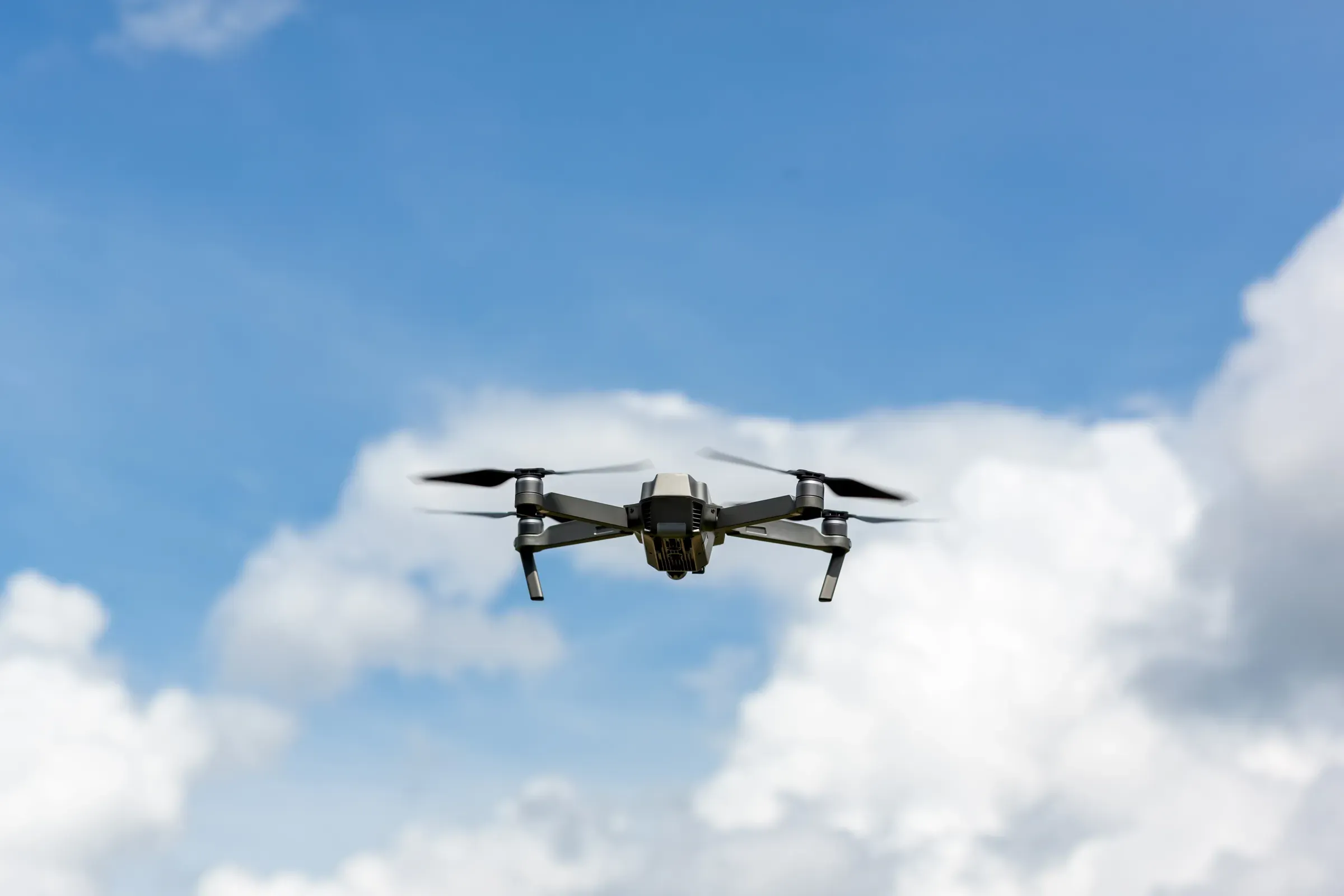
Drone copter flying with digital camera.Drone with high resolution digital camera. Flying camera take a photo, drones & fpv ecommerce
Drones & FPVHobby pilots, content creators and FPV builders. The first two check takeoff weight against the registration threshold, camera and flight time, and what happens after a crash; builders check motor size, KV rating, frame class and whether the parts on the page work together.

How drones & fpv makes money

Four levers, and what limits each one here

Revenue is traffic times conversion rate times order value times purchase frequency. In this niche each lever has its own ceiling.

Traffic

Traffic: the rules people search before they search a product

Drone demand starts with a regulation question. Do I need to register a drone under 250 grams. What certificate do I need in Canada. What is Remote ID. Can I fly in a park. The stores that answer those questions by country, with dates and links to the regulator, earn the visit before the model is chosen and get linked from the forums where pilots compare notes. The second stream is the parts long tail. FPV builders search motor sizes, KV ratings, frame classes, flight controller names and propeller sizes, and a catalog with a page per part carrying those figures as text ranks for hundreds of queries that no marketplace bothers to write for. We build both layers inside the store and link them to the products they lead to.

Conversion

Conversion: weight, flight time and what happens after the crash

The drone buyer converts when the page states the takeoff weight exactly and what that means for registration where they live, gives a realistic flight time rather than the maximum, explains transmission range in plain terms, and says what happens if it crashes. Most product pages lead with cinematic footage and bury the weight in a spec tab. We put the weight and the registration note beside the price, list what is in the box down to the number of batteries, add a plain paragraph on the repair path and warranty, and show the kit options next to the single unit. For FPV parts, conversion depends on compatibility statements: which frames the motor fits, which flight controllers the stack works with, which propellers match the motor.

Order value

Order value: the extra batteries and the build list

A drone flies for as long as its battery lasts, so the buyer who leaves with one battery is back on the store or on a marketplace within a week. The kit that adds two batteries, a charging hub, spare propellers, filters and a case is the order-value lever, presented on the product page as the option most pilots choose, with the saving shown against the pieces bought separately. For FPV, the build list does the same work: a frame, motors, stack, camera and receiver that are confirmed to work together, presented as a bundle with the option to swap each part. The pages that carry this are the kit selector on the drone page and the build configurator on the parts side, both linked from the guides.

Frequency

Frequency: propellers, batteries and the spring return

Pilots come back on consumables and on the season. Propellers break and are replaced constantly; batteries lose capacity over a couple of seasons and are replaced in sets; filters, straps and cases get lost or worn. A replenishment flow timed to how a pilot actually flies sells those from the brand rather than from a marketplace. The season is the other clock: a message before the first good weather that covers firmware, battery health checks and rule changes brings pilots back to the store when they are thinking about flying again. FPV builders are the highest-frequency segment and deserve their own list, with new parts and compatibility notes sent as they arrive.

Search visibility

Search for drones: rules by country, weight classes and every part number

Drone queries fall into three groups. Regulation queries ask about registration thresholds, certificates, Remote ID and where flying is allowed, and they are asked separately for Canada and the United States because the rules differ. Comparison queries ask which drone under a weight threshold has the best camera, which model suits real estate work, or how two models differ. Parts queries name a motor size, a KV rating, a frame class, a propeller size or a flight controller.

The page types that carry them are country-specific regulation guides with a last-updated date and links to the regulator's own pages, comparison pages by weight class and by use, product pages with takeoff weight, flight time, camera and range as text, and a parts catalog where every motor, frame, stack and propeller has a page with its figures and its compatibility list. Guides link to products; product pages link back to the guide that applies to their weight class.

Technically, parts catalogs need clean handling of the near-duplicate: the same motor in three KV ratings is one product with variants, not three thin pages. Regulation guides need a review schedule, because a rule change that the page does not reflect costs trust and can bring complaints.

Queries that matter

  • do I need to register a drone under 250 grams in Canada
  • drone under 250 grams with a good camera
  • part 107 vs recreational drone rules
  • what is remote id for drones
  • 2207 motor kv for a 5 inch freestyle build
  • 5 inch fpv frame with a 20 by 20 stack mount
  • drone for real estate photography

Country-specific regulation guides that are dated and maintained, weight-class comparisons and parts pages with figures and compatibility lists rank in this niche. Footage-led product pages with the weight hidden in a tab and undated rules articles do not hold a position.

AI answers

Regulation and compatibility questions assistants get about drones

People ask assistants whether they need a licence for a drone under 250 grams in Canada, what Remote ID means for a drone bought this year, which motors suit a five-inch frame, and how long a given model really flies. Stores get cited when the regulation guide is country-specific, dated and written in plain sentences an engine can quote, when the product page states takeoff weight and realistic flight time as text, and when the parts pages carry compatibility lists rather than a generic description. We write the guides answer-first with the threshold figures stated exactly, keep weight and flight-time figures consistent across page, feed and packaging, and confirm the crawlers behind the major assistants can reach the pages as plain HTML.

Do I need a certificate to fly a drone under 250 grams in Canada?
Does this drone need Remote ID in the United States?
Which motors work with a five-inch freestyle frame?
How long does this drone actually fly on one battery?

Questions shoppers put to assistants. A store gets named when its pages answer them in plain text.

Google Shopping and Merchant Center

Merchant Center for drones: kits, batteries and shipping that matches reality

Branded drones carry GTINs and MPNs, and both are required for matching. Kit versions that add batteries and a case are separate products with their own identifiers and is_bundle set, never the single unit's GTIN with a different price. Product_detail carries takeoff weight, flight time, camera resolution and transmission range, because those are the terms the comparison queries use. Titles lead with brand and model, then the kit name, then the defining spec such as the weight class.

Shipping is the policy problem particular to this niche. Drones, spare batteries and many FPV parts contain lithium batteries, which most carriers restrict to ground services with specific packaging and labelling. If Merchant Center's shipping settings promise a delivery speed the battery items cannot meet, the account collects shipping mismatch disapprovals and, over time, a misrepresentation review. We set shipping by product group so battery items carry ground-only rates and times, and keep the checkout in step with the feed.

Campaigns split by margin and by role: current drones and kits bid to margin, the outgoing generation in a clearance campaign, consumables and parts in a campaign that accepts a lower return because they bring pilots back, and free listings watched as their own line because parts queries convert well from them.

Feed attributes that decide eligibility

  • gtin and mpn on drones, kits and branded parts
  • is_bundle for kit versions with batteries and cases
  • product_detail for takeoff weight, flight time, camera and range
  • shipping set per product group for ground-only battery items
  • product_highlight for weight class and flight time
  • custom_label for battery-containing items and clearance stock

Disapprovals we see in this niche

  • Shipping mismatch when battery items cannot ship at the speed the account promises
  • Kit versions submitted under the single unit's GTIN
  • Price mismatch after a launch reprices the outgoing model
  • Images with overlaid text about range or flight time

Meta and social ads

Creative that shows flight without showing a rule broken

Flight footage sells drones, and the footage has to show flying that is legal where it was filmed. Creative that works shows the drone's own footage with the location and conditions noted, the first-flight setup from unboxing to takeoff, a crash and the repair that followed, an FPV build from parts bag to first hover, and the drone on a scale showing the weight beside the registration threshold. Kit creative counts the batteries and the flight time they add up to.

Audiences begin with past buyers and site visitors, then broad prospecting carried by footage, with FPV builders as a separate segment fed by build content. Catalog ads retarget parts by the item viewed. Footage must not show flying over crowds, near airports or beyond the rules of the place it was filmed; claims about legal flying anywhere are avoided; creators need written rights and their footage needs the same rules check.

  • The drone's own footage with the location and conditions noted
  • First flight from unboxing to takeoff, including the app setup
  • A crash, the damage and the repair with parts from the store
  • An FPV build from parts bag to first hover
  • The drone on a scale beside the registration threshold

Policy line

Footage must show flying that complies with the rules where it was filmed; no crowds, airports or restricted areas; no claims that a drone is legal to fly everywhere; battery shipping restrictions stated where ads promote batteries.

Conversion and the store

The page settles the rules question before the price question

A drone product page has to do something no other electronics page does: tell the buyer whether they can use it. We place the takeoff weight and a short registration note for Canada and the United States beside the price, with a link to the full guide. Below that, the realistic flight time, the range in plain language, the camera figures as text and what is in the box down to the battery count. The kit selector sits with the variant chooser, showing the saving against buying the pieces separately. The repair path, the warranty and the crash policy are stated in a short block near the add-to-cart button, because the buyer is thinking about the crash before they buy.

On the parts side, the build configurator is the template that carries revenue: pick a frame, and the motors, stack, camera and receiver offered are the ones confirmed to fit, with the option to swap. Compatibility warnings appear inline rather than after checkout. On mobile, the weight and registration note must be visible without scrolling, and the kit comparison needs to collapse into a single column.

Objections the page must answer

  • “Can I legally fly this where I live without a certificate”
  • “How long does it really fly, not the maximum in the brochure”
  • “What happens if I crash it in the first week”
  • “How many batteries are in the box and how many do I actually need”
  • “Will these parts fit the frame and stack I already have”

Email, SMS and retention

Flows for pilots: first flight, consumables and the season

The delivery message is a first-flight checklist: registration if the weight requires it, app and firmware setup, battery charging and storage, and a link to the regulation guide for the buyer's country. A week later, a check-in covers propeller replacement and the kit accessories the buyer skipped. The consumables flow follows how pilots fly: propellers a few weeks in, filters and straps a month or two later, replacement batteries after a season or two.

The seasonal flow sends a pre-season message before the first good weather covering firmware, battery health and any rule change since last year. FPV builders get their own list with new parts, compatibility notes and build guides as they publish. The launch flow goes only to owners of the outgoing model with the new model's differences stated plainly. SMS is used for battery shipping updates, because ground shipping takes longer, and for restock alerts on parts.

  1. First-flight checklist

    On delivery

  2. Propellers and skipped accessories

    One week after delivery

  3. Battery replacement

    After one to two flying seasons, by model

  4. Pre-season check

    Late winter, before the first flying weather

  5. FPV parts and build guides

    As new parts and guides publish, to the builder segment

Where revenue leaks

The leaks we find in drones & fpv stores

The Growth Analysis ranks these against your own numbers and says which to close first.

Get a Growth Analysis for your drone brand
  • Regulation pages that never say which country

    One article covers the rules in general, so Canadian and American searches both land on it, neither is answered, and the shopper leaves for the regulator's site and then a marketplace.

  • Battery orders shipped by air and refused by the carrier

    Checkout offers express shipping on spare batteries the carrier will not accept by air, the parcel comes back, and the refund and the reship both cost the store.

  • Kits listed under the single drone's GTIN

    The fly-more version shares the base unit's identifier with a higher price, and Merchant Center reads it as a price mismatch on the base drone.

  • Parts pages with a photo and no figures

    The motor page does not state the size, KV or mounting pattern as text, so the hundreds of exact queries builders type land on a marketplace listing that does.

Platform notes

Where the platform changes the work

Shopify

Shipping profiles separate battery-containing products so only ground rates appear at checkout for them, and the same rule is mirrored in Merchant Center. Takeoff weight, flight time and compatibility lists live in metafields that render as text and map to product_detail; the build configurator is a custom section built on those metafields.

WooCommerce

Shipping classes handle the battery restriction, global attributes carry motor size, KV, frame class and mount pattern for the parts archives, and the feed plugin must map those attributes and the shipping classes rather than using the store-wide shipping default.

BigCommerce

Product-level shipping rules and custom fields carry the same restrictions and figures, and faceted navigation on the parts catalog needs canonical rules so KV and size filters do not multiply indexable URLs.

Questions

Drones & FPV owners ask us

By CartKernel · Last reviewed

Are drones allowed in Google Shopping and Meta ads?

Yes. Consumer drones are not a restricted category on either platform. The constraints are around shipping accuracy for lithium batteries, footage in creative that shows rule-compliant flying, and claims about range and flight time that match the spec sheet. Accounts run into trouble through shipping mismatches on battery items far more often than through the product itself.

How should a drone store handle lithium battery shipping in the feed and at checkout?

Batteries and drones with batteries installed ship by ground with most carriers and need the packaging and labels the carrier requires. Checkout should only offer the services those items qualify for, and Merchant Center's shipping settings should say the same thing, set per product group rather than store-wide. We build the shipping profiles, mirror them in the account and test a battery order end to end before launch.

Is it worth publishing regulation guides that will go out of date?

Yes, as long as they are maintained. Rules questions are where drone demand starts, and a dated, country-specific guide that links to the regulator and is reviewed on a schedule earns links from pilot communities and ranks for years. An undated page that quietly goes wrong is worse than none. We set a review cadence and log each change on the page.

How do we rank for FPV parts when we have hundreds of small products?

By giving every part a page that carries its figures and its compatibility list as text, grouping the same part in different ratings as variants rather than separate thin pages, and building attribute collections by motor size, frame class and stack mount. Build guides link to the parts and the parts link back. Marketplaces rarely write this content, which is why a specialist store can own it.

Should crash repair and spare parts be part of the store?

They should be visible on the product page before the sale and easy to order after it. A stated repair path lowers the buyer's perceived risk, and spare arms, propellers and shells are high-margin repeat orders that otherwise go to marketplaces. We link repair parts from each drone's page and include the crash policy in the delivery email.

What if our drones are heavier than 250 grams and everyone searches for that threshold?

Then the page explains, plainly, what the extra weight requires and what it buys. Many searches for the threshold come from people who have not yet understood what registration or a certificate involves; a guide that walks through it and a comparison that shows what the heavier class delivers for camera and wind handling convert some of them. Pretending the threshold does not matter converts none.

Grow your drones & fpv store.

A free Growth Analysis ranks what your store should fix first, by revenue at stake, in about a week.