Skip to content

Garden & outdoor living · ecommerce growth

Greenhouse brand marketing agency

Every sale in this category starts with a tape measure and ends with a pallet. Between those two points the buyer works out whether the frame will hold their snow load, whether they need a prepared base, how many people and hours the build takes, and where exactly the delivery driver will leave a crate that weighs more than they do. Answering all of that on the page is what turns a compressed spring window into a good year, because a question that has to be asked by phone usually does not get asked at all.

The buyer, in brief

Consideration
A day or two for a raised bed, several weeks for a glazed greenhouse that costs as much as a holiday
Purchase frequency
Once for the structure, then staging, vents, glazing panels, fixings and more beds
Seasonality
A compressed late winter and spring peak, with a smaller autumn window for cold frames and season extension
Price band
Low for a single timber bed, high for a glazed structure delivered on a pallet
Return risk
Rare as returns and common as freight damage claims, which turn on whether the customer inspected the pallet before signing
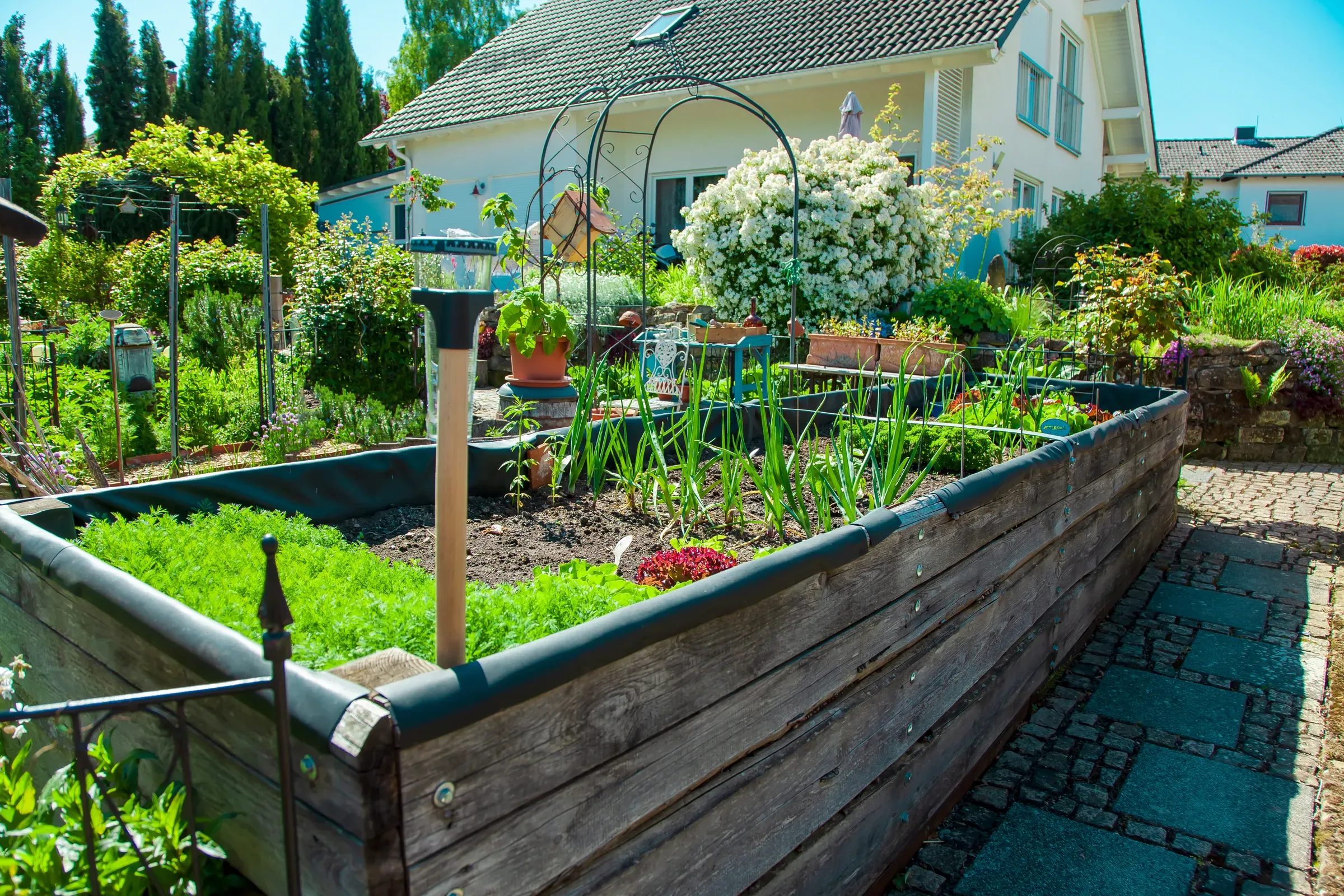
Residential garden, private vegetable garden. Landscape design in home garden, beautiful landscaping in, greenhouses & raised beds ecommerce
Greenhouses & raised bedsGardeners extending their season and households building beds, measuring the plot before they shop and comparing glazing type, frame material, snow and wind ratings, and what the base underneath has to be.

How greenhouses & raised beds makes money

Four levers, and what limits each one here

Revenue is traffic times conversion rate times order value times purchase frequency. In this niche each lever has its own ceiling.

Traffic

Traffic: the search names a dimension or a material

Almost nobody searches for a greenhouse without qualifying it. They want an eight by six, they want polycarbonate rather than glass, they want a cedar bed rather than galvanised steel, they want something that will survive a coastal wind or a heavy snow winter. A catalog that offers one greenhouse collection and one raised bed collection concedes all of that specificity. We build the size, material and glazing collections that people actually search, write them with the trade offs stated honestly, and support them with sizing and material comparison guides that pick up demand in the long research run up before the spring buying weeks arrive.

Conversion

Conversion: the build, the base and the delivery

Three unknowns stall this purchase and none of them are the price. How long does it take to put together and how many people are needed. What has to be underneath it, since most structures need a level and often anchored base that the customer has to prepare in advance. And what actually happens on delivery day, which for a pallet usually means a kerbside drop and a customer who has to move a heavy crate. Stating all three plainly, with build time in hours rather than in adjectives and base requirements described precisely enough to act on, converts better than any photograph. It also prevents the cancellation that comes when someone realises in week three that they needed a slab.

Order value

Order value: a structure is the middle of a project

Nobody puts up a greenhouse and stops. They need staging or shelving, an automatic vent opener, shade netting for summer, a base kit or anchors, guttering, and something to grow in. Raised bed buyers need considerably more soil than they expect, plus edging, liner, hoops and covers. Presenting those as the completion of the project at the point of purchase captures spend that otherwise happens in three separate visits to a local store. Soil is the clearest example: a customer who has been told exactly how many bags or litres their bed requires buys the right amount from you, while a customer left to do the arithmetic buys it from whoever is closest that weekend.

Frequency

Frequency: panels break and gardens grow

The structure itself is a once in a decade purchase, but almost everything attached to it is not. Polycarbonate panels crack, glazing clips ping off in a gale, vent openers fail, covers tear, timber beds need replacement boards and every bed needs topping up with compost each spring. Making all of those individually purchasable and findable, tied to the model they fit, is what converts a single seasonal spike into a customer relationship. The other repeat driver is expansion. A gardener who built one raised bed almost always builds a second, and a message that arrives at the start of the next season, offering the matching kit, is one of the easiest orders in the account.

Search visibility

Sizing, materials and load ratings: how this catalog gets searched

Search here is dominated by specification. Dimensions come first, because gardeners measure the plot before they shop, so size collections need to exist as real pages rather than as filtered results. Material and glazing comes next: toughened glass against twin wall polycarbonate, aluminium against timber framing, cedar against galvanised steel or composite for beds. Each comparison has genuine demand and a clear answer that changes with climate and budget, which makes it easy content to write well and easy content to write uselessly.

The second layer is the practical build question. What base does a greenhouse need, how to anchor a structure in a windy site, how much soil a bed of a given size takes, how to assemble without damaging the panels. These are searched throughout the year, they earn links because they are reference material, and they lead directly into base kits, anchors, fixings and compost.

The technical priority is variant discipline. The same greenhouse in four sizes and two finishes should be one page with variants, not eight competing pages splitting their reviews and their links. Load ratings, panel thickness and frame gauge belong in text on the page, since they are both the deciding factor for the buyer and the fact an assistant needs in order to name your product.

Queries that matter

  • 8x6 polycarbonate greenhouse
  • cedar vs metal raised garden beds
  • how much soil to fill a 4x8 raised bed
  • greenhouse base options concrete or paving
  • snow load rating for a garden greenhouse
  • walk in polytunnel for a small garden
  • how long does it take to build a greenhouse

Size and material comparisons written with real trade offs, plus practical build and base guides, carry most of the organic revenue here. Product pages split by size compete with themselves and rank for none of it.

AI answers

Assistants asked to size a structure and check a rating

The assistant questions in this niche are calculations and suitability checks. How much soil a bed of given dimensions needs, what size greenhouse suits a small garden, whether a frame will handle a snowy winter, whether a structure can go straight onto grass. Brands get named when the arithmetic and the ratings are published as text, when dimensions are given both internally and externally because those differ and buyers care, and when base requirements are written out rather than left to a diagram. We put those numbers in readable form, keep the assembly and base guidance answer first, and make sure the specification does not live only inside a downloadable manual.

How much soil does a raised bed of these dimensions need?
What size greenhouse fits a small suburban garden?
Will this frame handle heavy snow in winter?
Can a greenhouse be built directly on grass or lawn?
Is polycarbonate or glass better for a windy site?

Questions shoppers put to assistants. A store gets named when its pages answer them in plain text.

Google Shopping and Merchant Center

Pallet freight, dimensions and variant sprawl in the feed

The feed problem here is dominated by two things: weight and duplication. Structures ship on pallets and cost real money to move, so shipping values must reflect actual freight by region rather than a parcel default, and handling times need to match a carrier that books deliveries rather than one that leaves parcels at the door. A greenhouse listed with a small flat shipping figure collects clicks that abandon at the shipping step and drags the account average down with them.

Duplication is the second issue. Sizes and finishes submitted as separate products create near identical listings that compete with each other, split performance data and make campaign structure incoherent. Item group identifiers keep them together while allowing the size that matters to be the one that serves.

Attributes worth the work are the ones people filter and search on: exact external dimensions, frame material, glazing type and thickness, and product highlights carrying the base requirement and the assembly expectation. Own brand kits usually have no barcode, so identifier_exists is declared as false rather than fabricating a code. During the spring peak the feed needs a faster refresh, because stock on large structures is finite and a sold out model advertised for a week during the only weeks that matter is an expensive mistake.

Feed attributes that decide eligibility

  • shipping reflecting real pallet freight by region
  • item_group_id grouping sizes and finishes
  • product_highlight for base requirement and assembly time
  • material and glazing type as searchable attributes
  • size carrying exact external dimensions
  • identifier_exists false for own brand kits

Disapprovals we see in this niche

  • Shipping cost mismatch where a pallet is priced as a parcel
  • Duplicate listings created by size and finish variants
  • Availability mismatch on limited stock structures during the spring peak
  • Missing dimension and material attributes that the category expects

Meta and social ads

Build footage and the season extension story

Two kinds of creative do the work here. The first is the build, condensed honestly: two people, a real garden, the actual number of hours, including the awkward part with the roof panels. It answers the question that stops most buyers and it builds far more trust than a finished product shot, because everybody suspects assembly is worse than advertised. The second is the payoff, which is what the structure lets somebody grow. Tomatoes ripening in October, salad in February, a bed going from bare timber to full harvest across one summer.

Audiences work from intent and from past behaviour rather than demographics. People who read the sizing and base guides are the prospect pool that matters, and past raised bed buyers are the most reliable audience for the second bed. Keep any snow, wind or load claim to the figure the manufacturer actually tested to, since that is a claim a customer may rely on structurally rather than commercially.

  • A full build condensed into a couple of minutes with the real hours stated
  • One raised bed from bare timber to a full harvest across a season
  • Growing in the structure in the coldest and darkest month
  • Delivery day filmed properly, including inspecting the pallet
  • A side by side of two glazing types in the same weather

Policy line

Keep wind, snow and load statements to the figures the manufacturer has tested to, since customers rely on them structurally, and describe assembly time honestly rather than optimistically.

Conversion and the store

Deciding on a structure nobody can see in person

This is a considered purchase made entirely from a screen, usually against a plot the buyer is standing in. The page has to substitute for seeing it. Internal and external dimensions both stated, because the difference decides whether staging fits. Headroom at the eaves and at the ridge. A scale reference in the photography, ideally a person. A diagram of the footprint that can be zoomed on a phone. Panel thickness and frame gauge, not just the material name.

After that come the practical blockers. A base requirement stated as a specification the customer can hand to whoever prepares it. Assembly time and crew size. What is in the box and what is not, since fixings, base and glazing are sometimes separate. And a soil calculator on raised bed pages, which converts and prevents the most common post purchase disappointment, which is a bed that is only half full. On mobile, dimensions and the delivery method should be reachable without scrolling through the gallery.

Objections the page must answer

  • “How long will this take to build and how many people do I need”
  • “What has to be underneath it before it arrives”
  • “Will it stand up to the wind and snow where I live”
  • “What is actually in the box and what do I buy separately”
  • “How much soil does this bed need to fill it properly”
  • “What happens if a panel arrives cracked on the pallet”

Email, SMS and retention

From delivery inspection to next spring's soil order

The most valuable message in this niche is sent before the pallet arrives. It tells the customer what will turn up, that it comes on a pallet to the kerb, that they should check it for damage before signing, and what to do if something is broken. That single email prevents most of the disputes in the category and turns a damage claim from an argument into a straightforward replacement. It also sets expectations for the day, which is when cancellations otherwise happen.

After that the sequence supports the build and then the growing. Assembly tips for the stage people find hardest, a first season guide for the structure they bought, and a check in when the first summer heat makes ventilation and shading urgent. The following winter brings the accessory and expansion prompts, and early spring brings the compost and soil top up, which every bed needs and almost nobody plans for. Replacement panel and fixing reminders after a regional storm are timely rather than promotional, and they arrive when the need is real.

  1. Pre delivery and pallet inspection

    When the freight booking is confirmed, before the delivery date

  2. Assembly support

    A few days after delivery, focused on the hardest stage of the build

  3. First season growing guide

    Through the weeks after the structure goes up

  4. Summer ventilation and shading

    As regional temperatures rise inside the structure

  5. Spring soil and compost top up

    At the start of the following growing season

  6. Storm damage panel reminder

    After significant weather in the customer's region

Where revenue leaks

The leaks we find in greenhouses & raised beds stores

The Growth Analysis ranks these against your own numbers and says which to close first.

Get a Growth Analysis for your greenhouse brand
  • Inspection instructions that arrive after the pallet

    A customer who signed for a crate without checking it has no straightforward route to a claim, and what should have been a replaced panel becomes a refund and a complaint.

  • Every size published as its own product

    Four sizes and two finishes become eight thin pages that split reviews, links and Shopping performance, and none of them ranks for the dimension query the customer actually typed.

  • Assembly time nobody will state

    The single biggest hesitation in the category goes unaddressed, so the shopper searches for a review to find out and completes the purchase wherever that review points them.

  • Soil quantity left to the customer

    A bed needs far more compost than people expect, and a store that does not do the arithmetic hands the largest and most repeatable part of the order to a local supplier.

  • Load ratings hidden inside a manual

    The wind and snow figures decide the purchase in half the country and they sit in a download, invisible to shoppers comparing on a phone and to any assistant answering the question.

Platform notes

Where the platform changes the work

Shopify

Size and finish held as variants on one product keeps ranking and review signals together, while separate shipping profiles price pallet freight honestly against parcel accessories and soil.

WooCommerce

Shipping classes handle the spread from a bag of fixings to a crated structure, and grouped or bundled products let a base kit, anchors and the structure be bought as one configured order.

BigCommerce

Complex option sets suit configurable structures where glazing, base and extras change the price, and price lists cover allotment groups and trade buyers alongside retail.

Questions

Greenhouses & raised beds owners ask us

By CartKernel · Last reviewed

How do you sell greenhouses that arrive on a pallet?

By treating delivery as part of the product. The page states that it comes by freight to the kerb, how heavy the crate is, what the customer needs to do on arrival and how damage is handled, and the feed carries shipping values that match reality by region. Buyers accept complicated logistics when they are described in advance.

Should each greenhouse size be a separate product page?

No. Sizes and finishes belong on one page as variants, grouped in the feed with an item group identifier. Separate pages split reviews, internal links and Shopping data across near identical listings, which weakens all of them, and it makes the size collection you actually want to rank harder to build.

What sells a raised bed better than photographs?

Numbers. Internal and external dimensions, board thickness, timber species or steel gauge and coating, expected lifespan in a wet climate, and above all the soil volume required to fill it. A calculator that turns dimensions into bags or litres removes the largest source of post purchase disappointment and adds the compost to the same order.

How do you reduce freight damage claims?

Mostly with timing and instructions. A pre delivery message telling the customer to inspect the pallet before signing, photograph anything suspect and note it with the driver turns most incidents into a simple replacement panel. Clear packaging photography also sets expectations so ordinary crate scuffing is not reported as damage.

When does greenhouse demand actually begin?

Research starts in the depths of winter and buying concentrates into a short spring window that opens region by region. That means the content and the feed have to be finished before anyone is buying, and paid budgets ramp with local conditions rather than on a fixed national date. Work started in March is generally a year late.

Do wind and snow ratings belong in marketing copy?

They belong on the page as tested figures, stated as the manufacturer states them, because in much of Canada and the northern United States they decide the purchase. What they should not be is an unqualified claim of strength, since a customer relies on that number structurally and a vague version is worse than none.

Grow your greenhouses & raised beds store.

A free Growth Analysis ranks what your store should fix first, by revenue at stake, in about a week.