Skip to content

Gifts, flowers & occasions · ecommerce growth

Custom engraving brand marketing agency

Engraving is bought on material and legibility. A shopper wants to know how deep the mark goes on stainless steel, whether a logo can be reproduced from the file they have, and whether the machine has capacity before their date. Those are workshop questions, and a store that answers them in public wins orders from businesses that keep them behind a contact form. We build the material and technique pages, the artwork path and the capacity-aware promise that goes with them.

The buyer, in brief

Consideration
A day or two for a single occasion piece, several weeks for corporate and award orders that pass through artwork approval
Purchase frequency
Occasional for consumers, reliably annual for awards, recognition programmes and event work
Seasonality
A fourth quarter peak, spring wedding and graduation work, and award season clusters that repeat on the same dates each year
Price band
Mid, set by the blank plus the setup and the complexity of the mark rather than by the item alone
Return risk
Very low because the goods cannot be resold, replaced by remakes when a file, a spelling or an alignment goes wrong
Laser engraving and cutting, using reclaimed wood, upcycling, engraved & custom products ecommerce
Engraved & custom productsBuyers choosing a material as much as a product, from individuals marking an occasion to businesses ordering awards and branded items, who need to see how the engraving actually looks and to know whether their artwork file will work.

How engraved & custom products makes money

Four levers, and what limits each one here

Revenue is traffic times conversion rate times order value times purchase frequency. In this niche each lever has its own ceiling.

Traffic

Traffic: the search names a material and a method

People shopping for engraving type the substrate and the technique together, because that is what they are unsure about. Laser engraved leather wallet, etched glass whisky decanter, engraved stainless tumbler, deep engraved brass plaque. A catalog listing only finished products misses that vocabulary entirely. Material pages that explain what each substrate does under a laser or a rotary tool, what the mark looks like on it and what it costs, are among the strongest pages this niche can build, because they answer the question and demonstrate competence in the same breath. Technique pages do the same job for the process and attract the more technical buyer who compares suppliers carefully.

Conversion

Conversion: the mark has to be visible in the photograph

Engraving is genuinely difficult to photograph. A shallow mark on brushed metal disappears at thumbnail size, which means the product shot fails to show the only thing being sold. Macro photography at an angle that catches the light, short clips rotating the piece under a lamp, and comparison images across materials fix that faster than any copy change. The other conversion element is artwork confidence. Telling a buyer exactly which file formats work, what happens if they only have a low resolution logo, and that a proof will be sent before the machine runs, removes the hesitation that keeps corporate enquiries sitting unfinished.

Order value

Order value: setup is fixed, so the second item is cheap to make

Most of the cost in an engraving job is preparation. Once the artwork is set and the machine is jigged, further pieces cost far less to produce, which makes quantity the natural lever. Presenting price breaks openly, suggesting the matching item that shares the same setup, and offering the reverse side or a second surface as an addition all raise value without lengthening the job. Presentation adds more: a fitted box, a certificate for an award, or a protective sleeve turns a piece into something ready to hand over. A clearly priced rush option is also worth offering, since urgent buyers are rarely price sensitive and the workshop can decide when it has room.

Frequency

Frequency: awards and recognition come back on a schedule

The consumer side of engraving is occasional, but the business side runs on a calendar that repeats. Annual awards evenings, long service recognition, sports club presentation nights, sales achievement programmes and memorial dedications all recur on almost the same date each year and involve the same artwork. Keeping approved files, jig settings and previous order details on the account makes the second year trivial to reorder, and contacting those clients a couple of months before their date generally secures the work before anyone else is asked. That stored artwork is the switching cost that keeps the account.

Search visibility

Search: materials, techniques and what the machine can actually do

The pages that work here read like a workshop explaining itself. A page per material covering what the mark looks like, how durable it is, whether the finish changes colour, what depths are achievable and which products come in that substrate. A page per technique covering laser engraving, rotary engraving, etching, sublimation and printing, each with honest notes about where it suits and where another method would be better. These pages rank because very few businesses publish them and because they answer the exact question a buyer is stuck on.

The artwork guide is the second pillar. File formats, vector versus raster, minimum line widths, what happens to fine detail at small sizes, and how to supply a logo when only a website image exists. Corporate buyers forward that page to whoever holds the brand assets, which makes it a sales tool as much as a ranking one.

Product pages then need to carry the specifics search engines and shoppers both look for: engraving area dimensions, character limits, available fonts, lead time, and what is included in the price. Keep the finished work gallery permanent and captioned, since a growing archive of real jobs is the most persuasive and most linkable content an engraving business produces.

Queries that matter

  • laser engraved leather wallet
  • engraved stainless steel tumbler
  • can you laser engrave anodised aluminium
  • etched glass whisky decanter personalised
  • engraved brass plaque for a bench
  • what file format for laser engraving
  • custom engraved corporate awards

Material and technique explainers, an artwork specification guide, and a captioned gallery of finished work rank in this niche. Product pages that show a blank item with no visible mark do not.

AI answers

AI answers: what can be engraved, and how should the file be supplied

The questions assistants receive here are technical and specific. Can this material be engraved, will the mark be black or silver, what file type is needed, how small can text go before it stops being readable, how long does an order take. A workshop that publishes real answers, including the cases where engraving is a poor choice and printing would serve better, becomes the reference those responses draw on. Honesty about limits helps rather than hurts, because the buyer with an unsuitable file is a support burden and the buyer with a clear brief is a good order.

Which metals can be laser engraved and how does the mark look?
What file format should I send for engraving a logo?
How small can engraved text be and still be readable?
Can you engrave a photograph onto wood or slate?
How long does a custom engraved order take to produce?

Questions shoppers put to assistants. A store gets named when its pages answer them in plain text.

Google Shopping and Merchant Center

Google Shopping and Merchant Center for engraved goods

The first feed problem is visual. An engraved product photographed straight on and shown at listing size looks like an unmarked blank, so the listing competes as a plain tumbler or a plain frame and loses on price. The main image should be shot at an angle that makes the mark read at thumbnail scale, and the additional images should carry the macro detail. Adding text to the photograph to explain the engraving is not the answer, since promotional overlays run into image policy.

The second is price honesty. Where setup, artwork or a minimum quantity applies, the advertised price has to be one a shopper can genuinely pay at checkout. A listing showing the bare blank price while checkout adds a mandatory engraving charge is a mismatch, and it also produces a poor experience for the shopper who clicked expecting the lower figure.

The third is availability against capacity. Engraving stock is not the constraint, machine time is, and during peak the queue closes long before the shelves empty. Feeds that keep advertising a delivery estimate the workshop cannot meet generate refunds in the worst possible week. Handling time should follow the queue, and lines should be paused when capacity is genuinely gone.

Feed attributes that decide eligibility

  • main image shot at an angle where the engraving reads at thumbnail size
  • additional_image_link carrying macro detail of the mark
  • price that includes any mandatory setup or engraving charge
  • handling time following the current machine queue
  • product_type by material and by technique
  • custom_label separating rush-capable lines from long-queue lines

Disapprovals we see in this niche

  • Price mismatch when checkout adds a compulsory engraving or setup fee
  • Promotional text added to product images to make the engraving visible
  • Delivery estimates based on stock levels rather than machine capacity
  • Availability left active on lines the workshop has closed for the season

Meta and social ads

Meta and social ads: process footage is the whole advantage

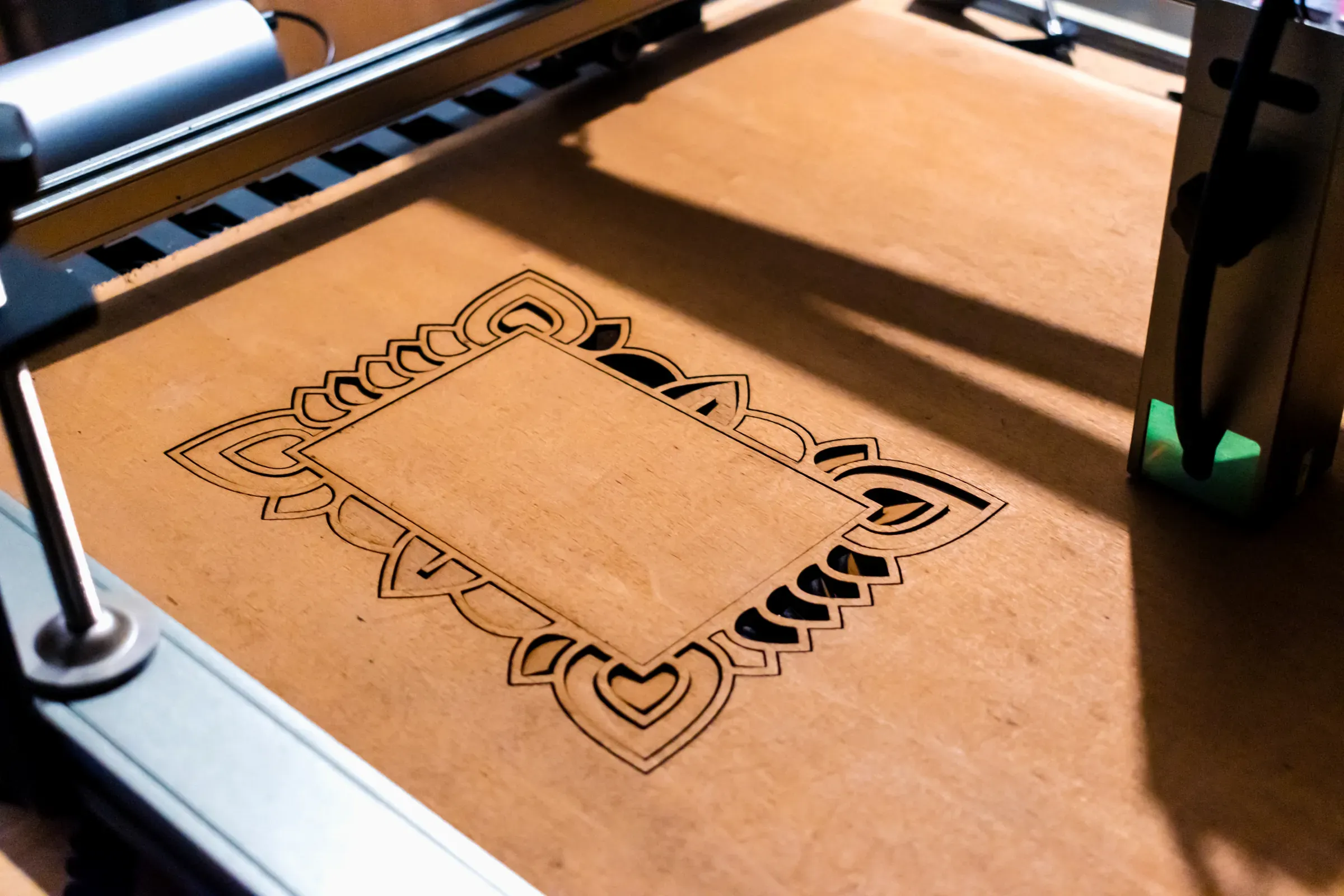
Engraving is one of the most watchable manufacturing processes there is. A laser head tracking across leather with a thin line of smoke, a rotary cutter biting into brass, the moment a blank is wiped clean and the mark appears. That footage holds attention without any of the persuasion techniques other categories need, and it also communicates capability to a corporate buyer far better than a description of the equipment.

The second format is material comparison, showing the same design on five substrates so the viewer can see the difference in contrast and depth, which answers the question that drives most enquiries. Corporate work needs its own creative treatment, closer to a capability demonstration than a gift ad. Any client logo or personal name appearing in creative needs permission from whoever owns it, and sample work shown in ads should use marks the workshop has the right to display rather than recognisable brands it has no relationship with.

  • A laser head tracking across leather or wood in close macro
  • The same design engraved on five different materials, compared
  • A blank wiped clean and the finished mark revealed
  • An awards order being produced and boxed in batch
  • The artwork being prepared from a supplied file to a cutting path

Policy line

Client logos and personal names in creative need permission from their owner, and sample work shown in ads should use marks the workshop is entitled to display rather than recognisable brands it has no relationship with.

Conversion and the store

The store: legibility, artwork and a lead time the workshop can keep

An engraving product page has to do three jobs a normal product page never attempts. Show the mark clearly enough that a shopper understands what they are buying, usually through macro photography and a short clip under angled light. Explain the artwork path in specific terms, listing accepted formats, what happens with a poor quality file, and whether a proof is provided. And give a lead time that reflects the current queue rather than an average from a quiet month.

The details that win orders are dimensional. The engraving area in millimetres, the maximum characters per line, the fonts available, whether both sides can be marked and what the mark looks like on each finish. For business enquiries, a route that accepts a logo file, a quantity and a deadline in one step will out-convert a general contact form every time. On mobile, the file upload has to work reliably from a phone, since a large share of corporate buyers will start the enquiry away from their desk.

Objections the page must answer

  • “How deep is the engraving and will it stay legible”
  • “What does it look like on this particular material”
  • “Can you work from the logo file I have”
  • “Will I see a proof before it is made”
  • “How long will it take with your current workload”
  • “What happens if the alignment or spelling is wrong”

Email, SMS and retention

Email: the artwork chase, the queue update and the annual award date

Most delay in an engraving business happens between the order and the machine, so the transactional sequence should be built around artwork. A message confirming the file has been received and whether it is usable, a proof for approval, and a chase if the approval stalls, since a proof waiting on a client is the most common reason a job misses a deadline. A queue position or production update after that keeps the buyer calm through the wait.

On the campaign side, the annual dates are the opportunity. Contact award and recognition clients two to three months before their event with last year's artwork already attached, and they rarely go elsewhere. Consumer flows work off stored occasions in the same way, with the added advantage that the engraving text is on file. Rush capacity is worth communicating too: a short message when the workshop has room in a busy month converts urgent buyers who assumed they had left it too late.

  1. Artwork received and assessed

    Same day, confirming whether the supplied file will reproduce well

  2. Proof approval and chase

    On proof, then again if approval stalls, counted back from the deadline

  3. Production and queue update

    When the job enters the machine schedule

  4. Annual awards reorder

    Two to three months before the client's event date, with last year's artwork

  5. Rush capacity announcement

    When the workshop has spare machine time inside a busy period

  6. Stored occasion reminder

    Ahead of the same date the following year, with the previous engraving text

Where revenue leaks

The leaks we find in engraved & custom products stores

The Growth Analysis ranks these against your own numbers and says which to close first.

Get a Growth Analysis for your engraving business
  • Photography that hides the product

    The engraving is invisible at listing size, so the item competes as an ordinary blank and loses to cheaper unmarked versions of the same thing. Angled macro shots change the economics of the whole catalog.

  • Artwork problems discovered late

    A logo supplied as a small web image is only assessed when the job reaches the machine, days after the order. Checking files on arrival turns a missed deadline into a quick conversation.

  • Lead times quoted from a quiet month

    The site promises a turnaround the workshop cannot meet in November because handling time never changes with the queue. The result is refunds and complaints in the busiest weeks.

  • No rush option for buyers who would pay

    Urgent enquiries are turned away rather than priced, so the workshop loses the least price-sensitive orders it could take and fills its remaining capacity with cheaper work.

  • Award clients contacted after their event

    Annual recognition work runs on a fixed date and gets ordered months ahead. A supplier who waits to be asked competes for a decision that was made in a meeting they were not part of.

Platform notes

Where the platform changes the work

Shopify

File uploads and engraving text belong on the line item so they reach the packing slip and the production sheet, not just the order notes. Handling time should be adjustable per product as the queue changes, and rush options are best built as a paid upgrade with limited availability rather than an open promise.

WooCommerce

Product add-ons handle text and file fields, but the upload size limits and accepted file types need setting deliberately or corporate buyers will fail to send a usable logo. Feed exports should include the engraved price rather than the bare blank price.

BigCommerce

Native product options can carry engraving fields without creating a variant per combination, which keeps the catalog and the feed manageable, and customer groups suit the awards and trade side that reorders on an annual cycle.

Questions

Engraved & custom products owners ask us

By CartKernel · Last reviewed

Why do material pages matter so much for an engraving business?

Because the shopper's uncertainty is about the substrate, not the product. They want to know how the mark looks on anodised aluminium, whether slate chips, what happens to leather under a laser. A page that answers that properly ranks for the exact search, demonstrates competence to a corporate buyer, and shortens every enquiry that follows it.

How should engraved products be photographed for listings and feeds?

At an angle where light catches the mark, close enough that the engraving reads at thumbnail size, with macro shots as supporting images and a short clip rotating the piece under a lamp. Do not add explanatory text to the image, since promotional overlays conflict with image policy and look worse than a properly lit photograph anyway.

What is the right way to handle customer artwork files?

Assess them on arrival and say so. Publish the accepted formats, explain what happens when only a low resolution image exists, and offer a redraw as a priced service rather than a favour. Most missed deadlines in this trade come from artwork sitting unresolved, so the earlier a file problem surfaces the less it costs everyone.

How do you stop peak season promising more than the machines can deliver?

By tying the published lead time to machine capacity rather than stock. Handling time in the feed and on the site should move as the queue lengthens, lines should be paused when capacity is genuinely gone, and a rush tier should be priced and limited so urgent work is a decision rather than an emergency.

Is corporate award work worth pursuing alongside consumer gifting?

Usually yes, because it repeats on a known date with artwork you already hold. Awards evenings, long service programmes and club presentation nights come round annually, and the supplier holding the approved files and the previous order is the obvious choice. It needs a quote path, a proof process and outreach two to three months ahead of each client's event.

Should engraving be priced into the product or added at checkout?

Into the product wherever it is mandatory. A listing showing the blank price while checkout adds a compulsory engraving charge is a mismatch that damages trust and creates feed problems. Optional extras such as a second surface, a presentation box or a rush upgrade are perfectly fine to add later, because the shopper is choosing them.

Grow your engraved & custom products store.

A free Growth Analysis ranks what your store should fix first, by revenue at stake, in about a week.