Skip to content

Gifts, flowers & occasions · ecommerce growth

Flower delivery marketing agency

Flowers are ordered by someone who cannot see the address, cannot judge a stem count and often needs the arrangement to arrive before the shop closes today. Trust comes from the cutoff time, the covered postal codes and a photograph of what actually turns up, not from a longer product description. We build the local and occasion pages that carry that demand, then make the delivery promise visible from the ad through to the confirmation email.

The buyer, in brief

Consideration
Minutes on a same-day order, a few days when the delivery is scheduled ahead of an occasion
Purchase frequency
Two to four orders a year for most households, clustered on the same anniversaries, birthdays and funerals
Seasonality
Two single days carry a large share of the year, sitting on top of a steady base of birthdays, sympathy and thank-you orders
Price band
Entry bouquets through to designer arrangements, with a delivery fee the shopper reads as part of the total
Return risk
Almost never returned, settled by replacement or refund, and driven by freshness, substitution and a missed delivery date
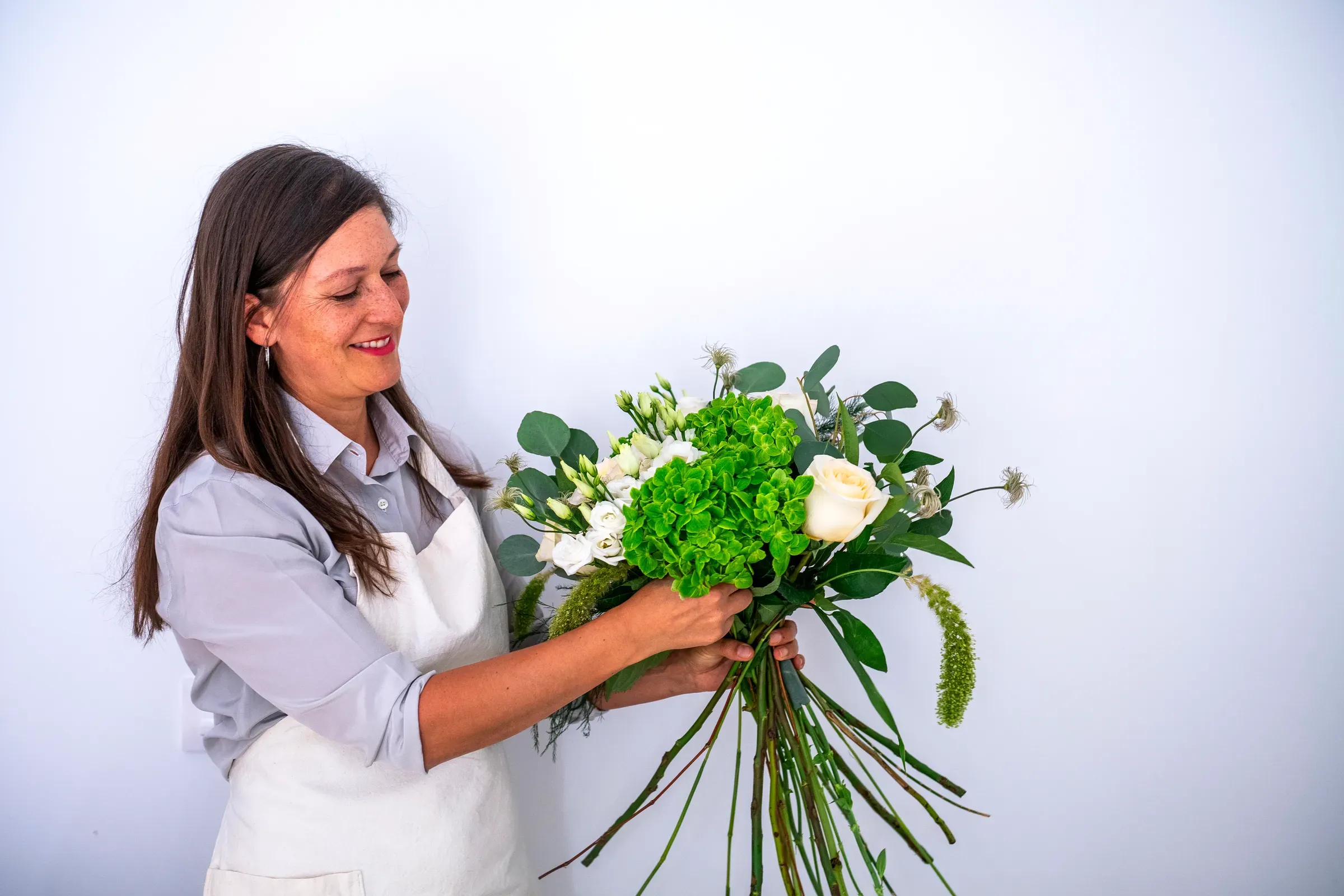
Florist arranging fresh flower bouquet for delivery, flower delivery ecommerce
Flower deliveryGift buyers ordering for somebody else, frequently on the same day, who look first for the cutoff time, whether their postal code is covered and a real photograph of the arrangement before trusting an unfamiliar florist.

How flower delivery makes money

Four levers, and what limits each one here

Revenue is traffic times conversion rate times order value times purchase frequency. In this niche each lever has its own ceiling.

Traffic

Traffic: the query names a place and a day, not a flower

Almost nobody searches for a flower variety. They search for a city, a suburb, a hospital or a funeral home, plus a timeframe: today, tomorrow, this afternoon. A florist that publishes one delivery page per area actually served, with the streets or postal codes covered, the cutoff for that area and the fee, can rank for those searches. A single Delivery Areas page listing forty place names in a paragraph cannot. Occasion pages are the second half of the demand, and they should live at permanent URLs rather than being rebuilt each February, so the authority accumulates instead of resetting.

Conversion

Conversion: the cutoff clock does most of the selling

The decision a same-day buyer makes is whether this shop can get flowers there in time, and they make it in seconds. A live line that reads order within a stated window for delivery today, shown against the postal code they entered, converts better than any amount of copy about the arrangement. Under it belongs the honest picture: what the bouquet looks like at the size chosen, what happens when a stem is unavailable, and what the courier does if nobody answers the door. Stores that hide the substitution policy pay for it later in refunds rather than saving anything at the point of sale.

Order value

Order value: the add-on step, not a bigger bouquet

Pushing a shopper from a standard to a premium arrangement is slow work. Attaching something to the delivery is faster, because by the time the buyer picks a date they have already committed. A vase, chocolates, a balloon, a small teddy and a handwritten card each fit naturally after the date and address step and rarely need a discount to sell. The other reliable lift is a size ladder shown with real photographs of each tier, so the difference between standard and deluxe is visible rather than described. Sympathy orders behave differently and should be left alone, with no add-on prompts at all.

Frequency

Frequency: the date the customer has already told you

A flower buyer hands over a date and a relationship at every checkout. Most stores throw both away. Capturing the occasion during checkout, storing it against the customer, and sending a reminder ahead of the same date next year turns a one-off order into an annual one. Corporate accounts add a second frequency path: reception desks, salons, restaurants and offices that want a standing weekly or fortnightly arrangement, invoiced monthly. That is a small list to build and a durable base of revenue between the peaks, and it needs its own page and its own enquiry route rather than the consumer checkout.

Search visibility

Search: delivery-area pages, occasion pages and sympathy language

Flower search is local and immediate, so the site structure has to mirror the delivery map. Build a page for each area genuinely served, and give it the details only a local operator knows: the postal codes or neighbourhoods covered, the cutoff time for that run, the delivery fee, and which hospitals, hospices, funeral homes and crematoria the shop delivers to. Those pages rank because they answer the question the searcher actually has, which is whether this florist reaches their address today.

Occasion pages are the second layer, and they should be permanent. A Mother's Day page that stays live all year, gets refreshed each spring and links to the arrangements that suit it will outrank a fresh URL created six weeks before the date. The same applies to sympathy, new baby, anniversary, thank you, get well and congratulations. Write each in the language of that moment, because sympathy buyers use words no birthday buyer would type.

On the technical side, keep availability honest. Seasonal stems go out of stock and pages that stay live with no product behind them waste crawl and disappoint visitors. Set arrangements as one product with size variants rather than three separate URLs, keep the arrangement photography original rather than the wholesaler's, and make sure the local business details, opening hours and service areas are consistent between the site, structured data and any business profile.
Queries that matter

  • same day flower delivery calgary
  • flower delivery near me open now
  • funeral flowers delivered to funeral home
  • valentines day roses delivery
  • birthday flowers delivered tomorrow
  • sympathy flowers next day delivery
  • flower delivery downtown vancouver

Delivery-area pages with real coverage detail, occasion pages kept live all year, and arrangement pages with original photography rank in this niche. City pages spun from one template with the place name swapped do not.

AI answers

AI answers: who delivers to that address today

The questions assistants field here are logistical before they are aesthetic: who covers this postal code, what time do I have to order by, will it arrive before the funeral. A florist becomes quotable by stating those facts as plain text on the page rather than inside a booking widget that a crawler cannot read. Cutoff times per area, delivery fees, the substitution policy, care instructions and what is appropriate to send to a service or a hospital all belong in indexable copy. Keep opening hours and service areas identical everywhere they appear, because contradictions between the site and a business listing make a store a risky thing to recommend.

Which florists deliver to this postal code today?
What time is the cutoff for same-day flower delivery?
What flowers are appropriate to send to a funeral?
How long should a delivered bouquet last and how do I care for it?
Can flowers be delivered to a hospital room?

Questions shoppers put to assistants. A store gets named when its pages answer them in plain text.

Google Shopping and Merchant Center

Google Shopping and Merchant Center for a florist

Shipping configuration decides more here than any other part of the feed. Merchant Center needs handling time and transit time set per region so that the delivery estimate a shopper sees in a listing matches the promise on the site, and a florist running same-day within a radius and courier delivery outside it has to describe both. Getting this wrong produces shipping errors and misleading estimates that quietly cost impressions during the weeks that matter most.

Availability is the second pressure point. Stems sell out mid-peak, and a listing that keeps serving after the arrangement is gone creates an availability mismatch and a bad first experience. Feeds should update often enough to keep pace, and the availability of an arrangement should follow the scarcest component in it rather than the recipe as a whole. Own designs generally have no barcode, so identifier_exists is set to false rather than padded with a made-up value.

Images must be the arrangement as it will be delivered, with no price flashes or badges baked into the picture. Campaign structure follows the calendar: an always-on group for birthdays, sympathy and thank you, and separate custom labels for the peak-day arrangements so budgets and bids can be moved without disturbing the base.

Feed attributes that decide eligibility

  • shipping with region, handling time and transit time
  • availability tied to the scarcest stem in the recipe
  • identifier_exists set to false for own arrangements
  • product_type by occasion
  • custom_label for peak-day pacing
  • image_link showing the arrangement as delivered
  • sale_price_effective_date for peak pricing

Disapprovals we see in this niche

  • Shipping settings that contradict the delivery promise on the site
  • Availability mismatch when a stem sells out during a peak week
  • Price mismatch after a peak-week price change on site only
  • Promotional text or badges burned into the bouquet photograph

Meta and social ads

Meta and social ads: the shop, the doorstep and the care guide

Flowers are one of the few categories where the product photographs itself, so the creative that works is closer to documentary than to advertising. Filming an arranger building a bouquet from bucket to wrap, showing the same arrangement on day one and day five to make the freshness claim concrete, and short care guides all earn attention without a discount. Delivery moment footage is powerful and needs the recipient's permission before it runs.

Targeting follows the van. Radius and postal-code targeting keeps spend inside the area the shop can actually serve, which matters more here than audience cleverness. Warm audiences are built from past buyers and from people who reached the delivery-area page, and the strongest seasonal play is retargeting last year's buyers of the same occasion a fortnight before the date. Sympathy products should be excluded from broad prospecting and from any playful creative, and no ad should imply the store knows something about the viewer's circumstances.

  • An arranger building the bouquet from bucket to wrap, filmed in the shop
  • The same arrangement photographed on day one and day five
  • A short care guide on trimming stems and changing water
  • The doorstep handover, filmed only with the recipient's permission
  • A grower or wholesale market visit showing where the stems come from

Policy line

Keep sympathy and memorial products out of broad prospecting, secure permission before using a recipient's face or home in creative, and avoid copy that implies the store knows anything about the viewer's personal circumstances.

Conversion and the store

The store: the six questions a flower buyer needs answered

The product page has to settle timing before taste. Will it arrive today, does the shop cover this address, what does the arrangement look like at the size being bought, what happens if a stem is unavailable, can a card message be included, and who signs for it. Most florist templates answer the last four somewhere and the first two nowhere, so the shopper leaves to check a competitor's cutoff instead.

The fastest fix is a postal code check placed above the add to cart, returning the cutoff and the fee for that address. After that comes photography at each size tier, a stated substitution promise phrased as a commitment rather than a disclaimer, and a card message field with a character count and a preview of how it will be printed. On mobile, the date picker is the weak point: default to the earliest achievable date, grey out dates the shop cannot serve rather than accepting them and apologising later, and keep the delivery fee visible so the total does not jump at checkout.

Objections the page must answer

  • “Will it actually arrive today”
  • “Do you deliver to this postal code”
  • “Will it look like the photograph at the size I picked”
  • “What happens if nobody is home”
  • “Can I include a handwritten card message”
  • “What do you do if a flower in the picture is out of season”

Email, SMS and retention

Email and SMS: from the delivery window to next year's date

Transactional messages carry more weight than campaigns in this niche because the sender is anxious. A confirmation that names the delivery window, a dispatch message, and a delivered notice with a photograph where the shop takes one will reduce support contacts more than any policy page. Care instructions sent the same evening extend the life of the arrangement, which is the thing the buyer will judge the shop on.

The campaign side runs on the calendar. Peak-day reminders should start early and stage themselves around the last safe order dates rather than sending one panic message the night before. The occasion reminder is the highest-value flow available to a florist: a note ahead of the anniversary or birthday the customer ordered for last year, with the arrangement they chose and a one-click repeat. SMS suits dispatch and delivery notices and the final hours before a cutoff, and should stay away from sympathy orders entirely.

  1. Order confirmation with the delivery window

    Immediately, naming the date and the window rather than a generic thank you

  2. Out for delivery and delivered notice

    On dispatch and on completion, with a photograph where one is taken

  3. Flower care guide

    The evening of the delivery day

  4. Occasion anniversary reminder

    Ten to fourteen days before the same date next year

  5. Peak-day order-by sequence

    Staged across the two weeks before Valentine's Day and Mother's Day

  6. Standing order invitation for businesses

    After a second delivery to the same commercial address

Where revenue leaks

The leaks we find in flower delivery stores

The Growth Analysis ranks these against your own numbers and says which to close first.

Get a Growth Analysis for your flower delivery business
  • The cutoff time buried in the FAQ

    The one fact a same-day buyer needs sits three clicks away, so they check another florist who put it on the product page. Every hour of the afternoon this costs orders that were ready to place.

  • Coverage discovered at checkout

    A shopper picks an arrangement, enters an address and learns the shop does not reach it. The postal code check belongs before the product choice, not after the cart.

  • The occasion date nobody wrote down

    Customers hand over an anniversary or a birthday at checkout and the store never stores it, so the reminder that would have produced next year's order is never sent.

  • Peak budgets exhausted by lunchtime

    Daily caps set for an ordinary Tuesday empty by midday on the busiest day of the year, and the afternoon rush of last-minute buyers goes to whoever is still bidding.

  • Substitution treated as a secret

    Nothing on the page says a stem may be swapped for an equivalent, so the first the customer hears of it is when the recipient sends a photograph, and the conversation becomes a refund.

Platform notes

Where the platform changes the work

Shopify

Local delivery zones defined by postal code, a date and time picker that respects a per-zone cutoff, and delivery fees calculated by distance are the core build. Occasion dates captured as cart attributes flow into the customer record so the reminder flow has something to fire on.

WooCommerce

Shipping zones handle the delivery map, but the cutoff logic and blocked dates usually need a delivery date plugin configured per zone, and the feed plugin must export those handling times rather than a single site-wide value.

BigCommerce

Shipping zones and a date field on the order work for scheduling, while delivery-area content is best built as real category or web pages so each area has an indexable URL of its own.

Questions

Flower delivery owners ask us

By CartKernel · Last reviewed

How do you rank a florist for same-day searches in a specific city?

With one page per area actually served, carrying the covered postal codes, the cutoff time for that run, the delivery fee and the local venues delivered to, plus consistent business details across the site, structured data and any business profile. Thin pages that swap a place name into the same paragraph tend not to hold position for long.

Should Valentine's Day and Mother's Day pages be taken down after the date?

No. Leave them live at the same URL, soften the messaging out of season, keep them linked from the occasion navigation, and refresh the arrangements each year. A page that exists all year enters the next peak with history behind it. A page created in January starts from nothing at the worst possible moment.

How do you stop peak-day ads from running out of budget by noon?

By raising budgets and bid targets several days ahead so the campaigns are settled before the ramp, then pacing through the day rather than front-loading. We also separate peak arrangements in the feed with a custom label so the money can move onto them without touching the everyday range.

What is the right way to handle flower substitution on the website?

State it plainly on the product page as a commitment: seasonal availability varies, and anything swapped will be of equal or greater value in the same style and colour palette. Buyers accept that when they read it first. They dispute it when they discover it after a photograph arrives from the recipient.

Can a florist sell subscriptions or standing orders profitably?

Often yes, especially to businesses. Reception desks, salons and restaurants want a predictable weekly or fortnightly arrangement and monthly invoicing, which smooths revenue between peaks. It needs its own enquiry page and account handling rather than the consumer checkout, since the buying process and the payment terms are different.

How do you market sympathy and funeral flowers without being intrusive?

By treating them as a separate part of the store with their own tone. No countdown timers, no discount codes, no add-on prompts and no retargeting after the order. The pages explain what is appropriate for a service, a home or a hospice, and the practical questions about timing and delivery to a funeral home get answered directly.

Grow your flower delivery store.

A free Growth Analysis ranks what your store should fix first, by revenue at stake, in about a week.