Skip to content

Hobby, craft & creative · ecommerce growth

Craft kit brand marketing agency

Most craft kits are bought by someone who will never make the thing. An aunt choosing for a nine year old, a friend covering a birthday, a parent buying against a rainy week of school holidays: they are shopping for a recipient and an outcome, not for materials. That changes how a kit brand ranks, what its ads have to show, and why a second order almost never happens on its own. We build the recipient-led catalog, the safety and contents data, and the flows that turn a gift buyer into a maker.

The buyer, in brief

Consideration
Under an hour when a gift is being bought against a deadline, far longer for a subscription commitment
Purchase frequency
One or two gifting occasions a year per buyer unless a refill or subscription path exists
Seasonality
Sharp peaks across the fourth quarter, school breaks and the run-up to birthdays through the year
Price band
Impulse to mid range for a single kit, recurring monthly for a box
Return risk
Low, and normally about a missing component, a broken part or a kit that proved too hard for the recipient
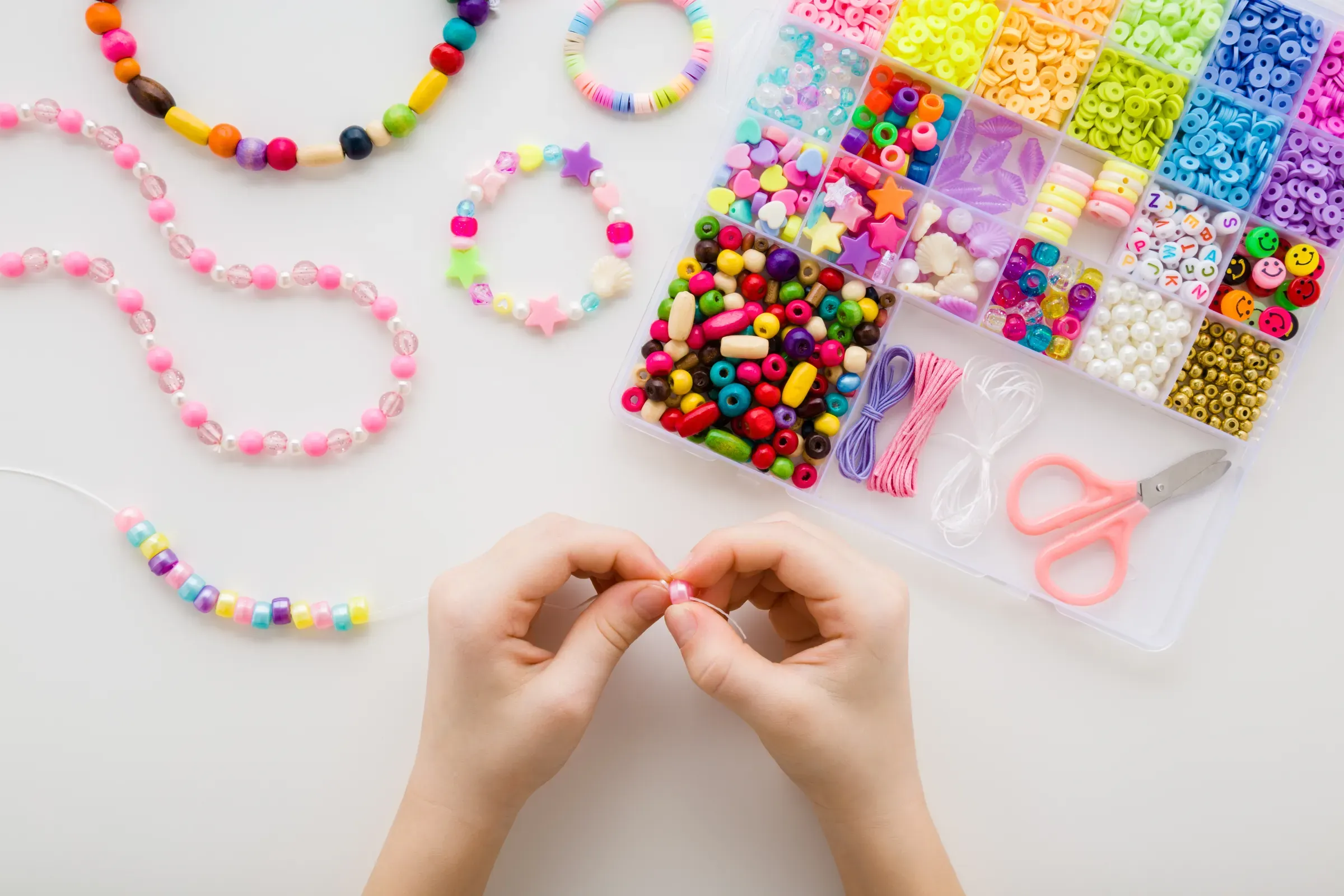
Girl hands making bracelet. Case with different colorful plastic parts on white table background. Creating, craft kits & diy ecommerce
Craft kits & DIYGift buyers choosing on behalf of someone else, usually a child, a teenager or a beginner adult, who check the age range, the difficulty, what is inside the box and whether anything extra has to be bought separately.

How craft kits & diy makes money

Four levers, and what limits each one here

Revenue is traffic times conversion rate times order value times purchase frequency. In this niche each lever has its own ceiling.

Traffic

Traffic: people search for the recipient, not the craft

The queries that matter here are shaped like gifts. Craft kit for a 7 year old, pottery kit for adults, sewing kit for a complete beginner, indoor activities for a rainy day: the age, the relationship and the occasion sit inside the query and the craft itself is often missing from it. Most kit brands arrange their catalog by craft type, which answers none of those searches. We build recipient and occasion collections alongside the craft ones, with age bands, difficulty levels and time to complete as real indexable structure, and gift guides that stay at one address and get updated each year instead of being rebuilt from scratch every autumn.

Conversion

Conversion: show the finished thing and the whole box

A gift buyer is trying to picture two moments, the recipient opening the box and the recipient finishing the project, and if either is unclear the page loses. The hero image should show the completed piece rather than the packaging. A flat lay of every component belongs high on the page, with quantities named. The page also has to state plainly what is not included, because glue, an oven, an iron or adult supervision is a deal breaker for someone buying from a distance. Time to complete, difficulty and recommended age need to be readable at a glance rather than buried in a specification tab nobody opens.

Order value

Order value: two kits, a card and a written note

Basket size in gifting is set by the occasion rather than by the product. Someone shopping for one child often has a sibling to cover or a party to attend, so a clear multi-buy price, a second kit suggested for a different age, and gift wrapping with a handwritten note do more than a cross-sell widget ever will. Ready-made gift sets convert particularly well when they carry a recipient label rather than a discount label, since the buyer is trying to avoid a decision. For adult kits, the tool that outlives the project, a set of hooks, a mold or a burner, is the natural companion and it opens the refill relationship at the same time.

Frequency

Frequency: the refill is the only route to a second order

A kit is a closed loop by design. Once it is finished the customer has no reason to come back, which is why acquisition looks affordable in this niche and lifetime value looks poor. The fix is a deliberate second act: refill packs for the consumable parts, a next level kit in the same craft, and a subscription for people who want the habit rather than the object. Timing matters more than the offer, because the message has to land near the moment the project is finished, and that is an evening for a small kit and several weeks for a large one. A single global delay gets both wrong.

Search visibility

Search: gift queries, age bands and published instructions

Demand splits into gift intent and craft intent, and a kit brand needs pages for both. Gift intent queries name an age, a relationship and an occasion, and they are served by collections that exist all year rather than only in December: kits for 8 to 10 year olds, craft gifts for teenagers, kits for adults who want an evening away from a screen. Craft intent queries name the activity and the skill level, such as beginner candle making kit or embroidery kit for a first project, and they need craft collections that explain honestly what the kit teaches and what it leaves out.

Instruction content is the compounding asset. Publishing the instructions and the technique guidance openly, rather than only inside the box, does three jobs at once. It ranks for the how-to queries the whole category shares. It reassures a gift buyer who wants to see the difficulty before committing. And it gives the recipient a reason to visit the site after the box is opened, which is the only moment a refill or a next kit can realistically be sold.

The technical work is mostly about seasonal pages and retired stock. Gift guides should live at stable addresses that are refreshed each year rather than published as dated posts and then abandoned. Kits that sell out or retire keep their pages with a clear alternative rather than returning a not found, because a kit that catches attention once keeps being searched for years afterwards.

Queries that matter

  • craft kits for 8 year olds
  • beginner candle making kit
  • diy gift ideas for teens
  • craft subscription box for adults
  • mess free craft kits for toddlers
  • pottery kit for beginners at home
  • school holiday activity kits

Recipient and age collections with real editorial guidance, published instructions and honest difficulty notes rank in this niche. Dated gift guides rewritten at a fresh address every year keep starting again from nothing.

AI answers

AI answers: what a gift buyer asks an assistant

Assistants in this niche are asked to choose, which is a recommendation task rather than a lookup. The questions arrive carrying an age, a budget, an interest and a constraint, such as something for a ten year old who likes animals, under thirty dollars, nothing messy. A kit brand gets named when its pages state the age range, the time to complete, the difficulty, the full contents and the things deliberately not included as plain text, and when those values agree between the page, the structured data and the Merchant Center feed. We write kit pages so each of those facts stands on its own and keep safety and age information consistent everywhere it appears.

What craft kit should I buy for a ten year old who likes animals?
Which beginner kits do not need an oven or a kiln?
Is this kit safe for a child under three?
What craft subscription boxes exist for adults?
How long does this kit take to finish?

Questions shoppers put to assistants. A store gets named when its pages answer them in plain text.

Google Shopping and Merchant Center

Shopping feeds for kits: age, contents and safety data

A kit is a bundle and Merchant Center needs to be told so. Set is_bundle where a kit contains several distinct products, use the manufacturer barcode where one exists, and set identifier_exists to false for own-made kits rather than borrowing a code from a component inside the box. Age_group and the minimum age carry more weight here than in almost any other category, both for policy reasons and because Shopping surfaces gift queries that name an age. Product_highlight is the right home for the contents summary, the time to complete and the difficulty, since those are the three things a gift buyer scans first.

Policy attention concentrates on anything sold for children. Kits with small parts need the choking warning present and accurate. Kits containing candle wax, soldering irons, resin or blades meet shipping and category restrictions that differ by market. Claims about educational or developmental benefit should stay modest and describable.

Campaign structure follows the gifting curve rather than margin alone. Evergreen campaigns run against craft and age collections all year, and a separate seasonal structure carries the fourth quarter with its own budget, its own shipping deadline messaging and promotions registered properly so a sale price actually shows.

Feed attributes that decide eligibility

  • is_bundle for multi component kits
  • age_group with an accurate minimum age
  • product_highlight for contents, time and difficulty
  • identifier_exists for own-made kits
  • material for the main components
  • promotion_id for registered gifting offers

Disapprovals we see in this niche

  • Missing choking hazard warning on kits containing small parts
  • Age_group set to adult on a kit clearly sold for children
  • A component barcode reused as the kit identifier
  • A sale price live on the site but never sent through the feed

Meta and social ads

Meta and social: the finished object is the ad

Kit creative works when the video answers the question a gift buyer never types, which is whether the recipient can genuinely do this. A build from open box to finished piece, filmed at real pace with real hands, sells better than a polished brand film. Showing a child of the stated age completing it, with documented parental consent, is the strongest proof this category has.

Audiences should be built around gift givers rather than crafters. Parents, grandparents and people already shopping for presents respond to different framing than hobbyists do, so the same kit often needs two ad sets with two different stories. Catalog ads carry the fourth quarter provided feed images show the finished project rather than the box. Anything featuring children needs care: keep the message about the activity rather than about a child's development, avoid copy that implies personal circumstances, and hold written consent for every creative featuring a minor.

  • Open box to finished piece in under thirty seconds
  • A child of the stated age completing the kit unaided
  • Everything in the box laid out and counted on camera
  • Two kits compared by age and difficulty for a gift buyer
  • A parent describing how long it kept the table quiet

Policy line

Keep learning and development claims modest, avoid targeting or copy implying anything about a child's abilities or circumstances, and hold written consent for any creative that features a minor.

Conversion and the store

The store: settling difficulty, contents and the delivery date

Three questions decide a kit sale and all three involve taking a risk on someone else's behalf. Will they manage it, is everything needed inside the box, and will it arrive in time. The page should answer them in that order and in plain words: a contents list with quantities, a difficulty label with a sentence explaining what it means, a realistic time to complete, and a delivery date rather than a shipping speed.

The template that carries a gifting peak is a collection page filtered by age and price that lets someone compare six kits without opening a single tab. Gift options belong at the cart rather than the product page, the gift note should be free, and the shipping deadline needs to appear on every template through December. On mobile the contents flat lay has to be swipeable at full width, because that image does more selling than the description underneath it.

Objections the page must answer

  • “Will a child of this age manage it without help”
  • “Is everything included or do I need glue, paint or an oven”
  • “How long will it take and will they actually finish it”
  • “Will it arrive before the birthday or the holiday”
  • “What happens if a part is missing from the box”

Email, SMS and retention

Email and SMS: gift buyer to maker to refill

The first order belongs to someone who may never open the box, so the flows have to reach past them. A post-purchase sequence carrying a share-with-the-maker link, instructions hosted on the site and a prompt to register the kit turns one buyer into two contacts. Once the maker is on the list, refill and next kit messages have somewhere to land.

Timing runs off the project rather than the calendar. A small kit is finished in an evening and a large one takes a month, so the finished-your-kit message should be staged per product instead of on one global delay. Subscription boxes need flows of their own: a strong first box experience, a pause option offered before cancellation is reached, and a save flow that changes the theme rather than cutting the price. SMS earns its place in December for delivery deadlines and dispatch updates, where the message is genuinely time critical.

  1. Send this to the maker

    With the shipping confirmation, before the gift is opened

  2. Finished your kit

    Staged per product, from three days for small kits to four weeks

  3. Refill and next level

    Straight after the finished-your-kit message is engaged with

  4. Subscription pause and save

    On the first cancellation signal, ahead of the next charge

  5. Gifting deadline

    Before each shipping cutoff through the fourth quarter

Where revenue leaks

The leaks we find in craft kits & diy stores

The Growth Analysis ranks these against your own numbers and says which to close first.

Get a Growth Analysis for your craft kit brand
  • Kits sold as one SKU with untracked components

    The kit reads as in stock while the box is missing its ribbon or its glue pot, so orders ship incomplete or sit on hold. Component level stock control prevents a support queue that peaks exactly when volume does.

  • Gift guides republished at a new address each year

    Every December the guide starts from zero rankings because last year's version was abandoned rather than updated where it stood.

  • No route from the recipient back to the store

    The person who made the kit is the one who would buy the next one, and nothing in the box or the packaging ever asks for their email address.

  • Age and contents data missing from the feed

    Shopping cannot match the kit to gift queries that name an age, so the listing competes on the craft word alone against far broader catalogs.

  • Subscriptions with no pause option

    A subscriber travelling for a month cancels outright because pausing was never offered, and winning them back later costs more than the pause would have.

Platform notes

Where the platform changes the work

Shopify

Kits built with a bundle app or component linked inventory keep stock honest across shared parts. Age, difficulty, contents and time to complete belong in metafields so they render on the page, flow into Shopping and stay consistent inside structured data.

WooCommerce

Grouped or composite products handle kits that share components, and attribute archives for age band and difficulty can be set to index so gift queries have somewhere to land rather than hitting a filter parameter.

BigCommerce

Product options and modifiers cover personalization and gift notes without duplicating SKUs, and the promotions engine holds the seasonal multi-buy pricing that gifting revenue depends on.

Questions

Craft kits & DIY owners ask us

By CartKernel · Last reviewed

How do you market a kit when the buyer is not the person making it?

By writing the catalog for the gift buyer and the follow-up for the maker. Collections, ads and product pages address the person choosing, using age, occasion and difficulty. Post-purchase messaging then tries to reach the recipient through instructions hosted on the site and a registration prompt, because that is the only contact who will ever buy a refill.

Should kit instructions be public on the site or only in the box?

Public, in almost every case. They rank for how-to searches your category already receives, they let a cautious gift buyer judge the difficulty before ordering, and they pull the recipient onto the site where the next kit can be sold. Keep the printed copy in the box as well, since not everyone reads instructions on a phone.

What age and safety data do we need for Shopping and Meta?

An accurate minimum age and age_group in the feed, the choking hazard warning where small parts are present, and any required safety marks shown on the page rather than only on the packaging. Ad copy should avoid claims about developmental outcomes. Getting this right also removes the most common cause of listings being pulled at the worst moment.

How do we get a second order out of a one-off kit buyer?

By selling a second act deliberately. Refill packs for whatever ran out, a harder kit in the same craft, and a subscription for people who want the routine. The trigger is the completion moment, which differs by kit, so the timing has to be set per product rather than as one delay applied to everything you sell.

Is a craft subscription box worth adding to a kit range?

It is when the craft has a genuine repeat habit and you can hold theme quality month after month. The economics turn on churn rather than acquisition, so before launching we look at whether existing customers buy a second kit unprompted. If they do not, a subscription tends to inherit that problem rather than solve it.

When should we start preparing for the fourth quarter?

Content and structure in late summer, budget and creative by early autumn. Gift guides need time to be crawled and to build rankings before demand arrives, promotions have to be registered in Merchant Center ahead of the sale, and shipping deadlines must be set once and shown everywhere. Work started in November is competing without the traffic it needed.

Grow your craft kits & diy store.

A free Growth Analysis ranks what your store should fix first, by revenue at stake, in about a week.