Skip to content

Home & furniture · ecommerce growth

Home organization brand marketing agency

Organization products are bought by somebody standing in front of a mess with a phone in one hand. They have measured a shelf, they are trying to work out how many units they need, and they want whatever they buy next year to match what they buy today. We build the growth system for that: problem-led pages that answer the space rather than the product, interior dimensions and multipack counts the feed can read, quantity guidance that gets the order right, and a January calendar that treats the reset as the peak it actually is.

The buyer, in brief

Consideration
Very short once the space has been measured, longer for a whole-room system where the pieces have to work together
Purchase frequency
Several orders a year as rooms are worked through, plus add-on units bought later to extend a system already installed
Seasonality
A January reset that dominates the year, a back-to-school peak in late summer, moving season through the middle months, and a smaller spring cleaning lift
Price band
Low per unit and moderate per order, because the basket is decided by quantity rather than by unit price
Return risk
Driven by fit and count: bins a fraction too wide for the shelf, lids that do not match an earlier version, and quantities ordered by guesswork
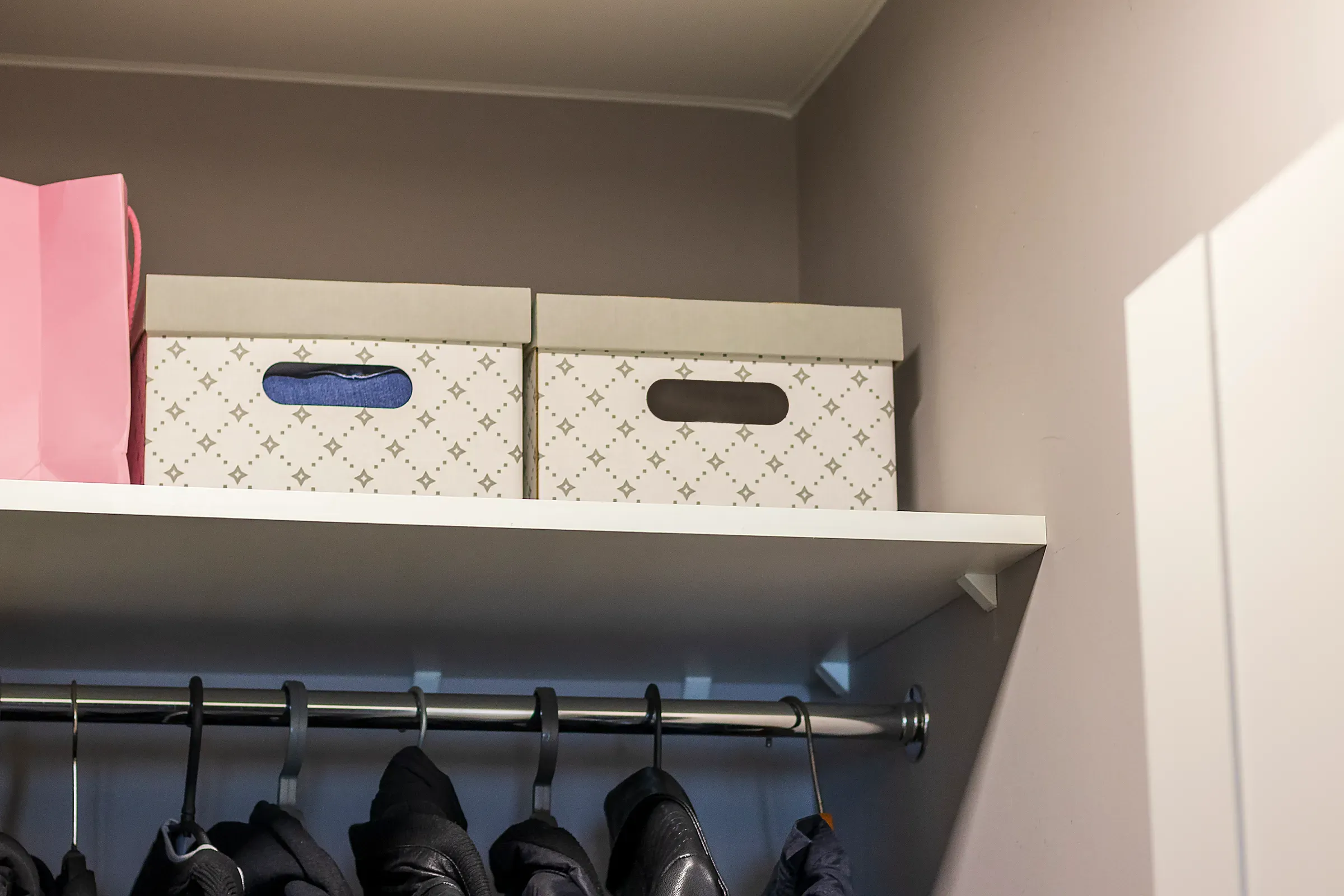
Storage boxes on the shelf in the closet room. Interior, storage & organization ecommerce
Storage & organizationPeople solving one specific space rather than shopping a category, usually working room by room after a move, a new year or a school term, who measure the shelf or the cupboard first, count how many units the space takes, and care that the same product will still exist when they organize the next room.

How storage & organization makes money

Four levers, and what limits each one here

Revenue is traffic times conversion rate times order value times purchase frequency. In this niche each lever has its own ceiling.

Traffic

Traffic: the query names a space, not a product

People do not search for storage bins. They search for pantry organization for deep shelves, an under sink organizer with a pipe in the way, garage overhead storage for bikes, a small closet with no rod, toy storage that still looks tidy in a living room. Each of those is a space with a constraint, and the answer is usually a combination of products rather than one item. The traffic lever is a library of space and problem pages that solve the room, recommend the products with quantities and link into the collections, sitting alongside collections organized by room, container type and dimension. This is a category where genuinely useful planning content ranks, because the shopper is trying to solve a layout rather than compare two nearly identical bins.

Conversion

Conversion: interior dimensions and how many to order

Two facts convert here and most product pages carry neither. The first is interior dimensions, because a bin is bought to hold something and the exterior measurement never says whether a cereal box fits. Publishing both, along with the usable height under a lid, removes the largest source of doubt in the category. The second is quantity. Somebody with a thirty-six inch shelf wants to know how many units fit across it, and a page answering that in one line, or with a small calculator, turns a browse into a basket several units deep. After those, the useful details are stackability, whether lids are included, whether the colorway will still be available next year, and the material, since food storage and airtight claims carry their own expectations.

Order value

Order value: quantity, systems and the whole room

This is a multipack category, and the order value work is mostly arithmetic made easy. Multipacks priced with a visible per-unit saving, quantity suggestions tied to a stated shelf width, and kits assembled for a specific space all raise the basket honestly. Systems matter more than bundles: when bins, lids, risers, dividers and labels are designed as one range, the page should show what else shares the same footprint, because the shopper is building something rather than buying an object. A room kit sold as a single product with a diagram and a parts list ranks for a query almost nobody else answers, and it turns a four-unit order into a finished pantry. Labels and dividers cost little and complete the job.

Frequency

Frequency: the next room, and whether the range still exists

Somebody who organizes a pantry in January will do a closet in spring and a garage in summer, so the repeat cycle is short and driven by rooms rather than by anything wearing out. The second driver is unusual in home goods: people return specifically to buy more of exactly what they already own, which makes range continuity and stock reliability retention features rather than merchandising details. A discontinued lid breaks the system and sends the customer to another brand for the entire room. Retention work is therefore a room-by-room sequence, restock notifications on the products a customer has bought before, and a January calendar built for people who organized a room last January. We report rooms per customer and the reorder rate on system pieces.

Search visibility

Search: spaces, constraints and dimensions rather than product names

Organization demand is problem shaped. The searches name a room and a difficulty: a pantry with deep shelves, a closet with no rod, an under sink cupboard with a garbage disposal in it, a small entryway with nowhere to put anything, a garage with a low ceiling. Product-level queries exist too, and they are dimensional: clear stackable bins twelve inches deep, airtight cereal containers, drawer dividers that expand. A catalog that publishes only product pages competes for the second group and loses the first, which is where the demand starts and where the recommendation gets made.

The answer is two connected page types. Space guides solve a room end to end with a plan, a product list with quantities and photographs of the finished result, and they earn links and the assistant citations that follow. Collections organized by room, container type, material and dimension carry the commercial queries and link back into the guides. Product pages need interior and exterior dimensions, capacity, stackability, lid inclusion, material and any food-safe information as text.

Technically this catalog has a duplication risk, because one bin in four sizes and three colors, sold singly and in packs of two, four and six, can generate dozens of near-identical URLs. Sizes and colors are variants, pack counts are handled with multipack rather than as separate products wherever the platform allows, and the filters that combine them need canonical discipline. Reset pages keep one URL and are refreshed each January instead of being rebuilt from nothing.

Queries that matter

  • pantry organization for deep shelves
  • under sink organizer with garbage disposal
  • clear stackable bins 12 inches deep
  • closet organization with no rod
  • airtight cereal storage containers
  • garage overhead storage for bikes
  • how many bins fit on a 36 inch shelf
  • toy storage that looks tidy in a living room

Space and problem guides that solve a room with quantities and photographs, plus collections built on dimension and container type, rank in this niche. A Storage collection sorted by price does not, and neither does a product page that gives exterior measurements and says nothing about what fits inside.

AI answers

AI answers: the space planning questions assistants are asked

Assistants are asked how to organize a pantry with very deep shelves, how many bins fit a given shelf width, whether a container is airtight, what to do about the pipe under a sink, and which pieces in a range work together. Answering any of those requires numbers a store either publishes or does not: interior and exterior dimensions, capacity, stacked height, lid compatibility and material. Stores that publish them, and that write space guides containing real plans rather than lists of products, get named because they are the only source with the specifics. We write the guides answer first, keep dimensions consistent across the page, the markup and the feed, and state plainly which pieces are designed to fit together.

How many storage bins fit on a thirty-six inch shelf?
How do you organize a pantry with very deep shelves?
Are these containers airtight and safe for food?
What can you do with the space under a sink when a pipe is in the way?
Do these lids fit the older version of the same bin?

Questions shoppers put to assistants. A store gets named when its pages answer them in plain text.

Google Shopping and Merchant Center

Google Shopping and Merchant Center for bins, systems and multipacks

Multipack is the attribute that decides this feed. A pack of four listed without it competes against a single unit on price and loses every comparison, so the count belongs in multipack and in the title. Product dimensions carry the exterior measurement while product_detail carries the interior dimensions, usable height, capacity, stackability, lid inclusion and material, because those are the specifics the query contains. Sizes and colors of one design share an item_group_id, and kits assembled for a room take is_bundle with the parts listed on the page. Titles that lead with container type, material, dimension and pack count match the way people actually type.

The claims to watch are functional. Airtight, food safe, BPA free and dishwasher safe are all checkable, and they need to be accurate on the page as well as in the feed. Where a product carries a chemical warning obligation in a state where you sell, it belongs on the listing page rather than in a policy document. Images should show the product clearly, with the styled pantry photograph in the additional images rather than as the main one.

Campaigns are shaped by the calendar more than by the catalog. January is the peak and needs budget in place during December, back-to-school is a second and narrower window, and the middle of the year is carried by moving-related demand. Multipacks and kits hold the order value and can support a higher cost per click than single units, which are better used to enter a basket than to earn on their own.

Feed attributes that decide eligibility

  • multipack with the true unit count
  • product dimensions for the exterior
  • product_detail for interior dimensions and usable height
  • item_group_id across sizes and colors
  • is_bundle for room kits
  • material and color
  • custom_label for the season a product peaks in

Disapprovals we see in this niche

  • Multipacks listed as single units so the price reads wrong against competitors
  • Airtight or food safe claims the product page does not support
  • Main images showing a styled room rather than the product itself
  • Price mismatch when a January promotion goes live on the site before the feed

Meta and social ads

Meta ads: the transformation of a cupboard, filmed

This is the one home category where a before and after is both allowed and unbeatable, because the subject is a cupboard rather than a body. A pantry moving from chaos to order in a time lapse, a drawer being divided in real time, a garage wall fitted out, and the moment a lid stacks flush all perform. The satisfying quality of the footage is the point, and it also communicates the specifics better than a description can, because the viewer can see exactly how much fits.

Creator content is native here, since organizing videos are an established genre with their own audience. What matters is that the creator uses the actual system and names quantities, so a viewer knows what to order. Rights are secured in writing before anything runs. Audiences segment by room from purchase history, because a pantry buyer and a garage buyer are on different journeys. Around the new year the addressable audience widens considerably, and creative prepared in advance is what makes that window usable.

  • A pantry moving from chaos to order in a time lapse
  • A drawer divided and filled in real time with the counts on screen
  • Lids stacking flush as the system extends along a shelf
  • A garage wall fitted out from empty to finished
  • A creator organizing a real cupboard and naming every quantity

Policy line

Transformation content is fine when the subject is a space rather than a person, functional claims such as airtight or food safe have to match the product page, and creator footage needs written rights before it runs.

Conversion and the store

The store: dimensions inside and out, and how many to buy

The organization product page is a measurement page. It needs exterior dimensions, interior dimensions, usable height under a lid, capacity, stacked height, and a note on which other pieces in the range share the footprint. It also has to answer the quantity question, either with a line stating how many fit common shelf widths or with a small calculator that takes a measurement and returns a count. That single feature moves the basket more than any discount, because the shopper's real problem is arithmetic they would rather not do while standing in a cupboard.

The second requirement is continuity. State whether the design is a permanent line, whether the lids fit earlier versions, and whether the color is a seasonal run, because the customer fully intends to buy more later and being wrong about that is what sends them to another brand for the whole room. On mobile the dimension block and the pack size selector belong together above the fold, and the pack options should show a per-unit price so the larger pack is an obvious choice rather than a calculation.

Objections the page must answer

  • “Will it fit the shelf and what fits inside it”
  • “How many do I need for the space I measured”
  • “Will I be able to buy more of these next year”
  • “Do the lids fit the ones I already own”
  • “Is it airtight and safe for food”
  • “Does it stack and how high”

Email, SMS and retention

Email and SMS: the room after this one, and the January calendar

Retention here is a route through the house. The first message after delivery is practical: plan the layout before unpacking everything, what surfaces the labels stick to, and how to measure for the next shelf. A week or two later, once the space is finished, a request for a photograph produces the content the brand needs and gives the customer a sense that the project is complete. The room-by-room sequence follows, and it works because it matches the customer's genuine next intention rather than a marketing invention.

The second half is the calendar. Restock and add-on prompts go out for the exact products somebody already owns, because in this category people want more of the same rather than something new. Back-to-school reaches households with children, moving season reaches recent buyers of moving-adjacent products, and January is prepared well in advance and sent to everyone who organized a room the previous year. SMS is useful for restock alerts on system pieces, one of the few genuinely time-sensitive messages in home goods.

  1. Plan before you unpack

    On delivery, with layout and measuring guidance

  2. Finished space and photograph request

    Ten to fourteen days after delivery

  3. Next room

    Three to five weeks after delivery, following the usual order of rooms

  4. More of the same

    Two to three months after delivery, for the exact products owned

  5. January reset

    Late December and the first two weeks of January, to last year's organizers

  6. Back-to-school and moving season

    Late summer, and through the middle of the year for recent movers

Where revenue leaks

The leaks we find in storage & organization stores

The Growth Analysis ranks these against your own numbers and says which to close first.

Get a Growth Analysis for your home organization brand
  • Interior dimensions missing from every product page

    The shopper knows what has to fit inside and the page gives only the outside measurement, so they buy from a listing that answers the question instead.

  • Multipacks sent to the feed as single units

    A pack of six is compared against one bin, the price looks unreasonable at a glance, and the listing loses clicks it should have won easily.

  • No quantity guidance anywhere on the site

    Somebody with a measured shelf has to do the arithmetic alone, so they order two to be safe rather than the six the space actually needed.

  • Ranges discontinued without warning

    A customer comes back for matching lids, finds the design gone, and replaces the whole system with another brand's version.

  • January prepared in January

    Budgets, stock and campaigns are set up in the first week of the year, so the learning period runs while the peak is already passing.

Platform notes

Where the platform changes the work

Shopify

Interior dimensions, usable height, stackability and lid compatibility live in metafields so they render in the dimension block and reach the feed as product_detail. Pack sizes are variants of one product with per-unit pricing shown, and room kits are built as their own products so they can rank and carry is_bundle.

WooCommerce

Global attributes for room, container type and dimension drive the filters and the archives worth indexing, and the feed plugin has to send multipack counts correctly rather than treating a pack of six as a single item at a strange price.

BigCommerce

Pack sizes belong to one product as variant options, and the faceted search needs canonical rules so combinations of room, color and size do not create a large index of near-identical pages before the January peak.

Questions

Storage & organization owners ask us

By CartKernel · Last reviewed

Why do organization brands need content about rooms rather than products?

Because the search that starts the purchase describes a space and a problem, not a product. Somebody with deep pantry shelves needs a plan before they need a bin. A guide that solves the room, names the products and states the quantities answers the query, earns links, and sends a far larger order to the cart than a product page reached later ever would.

How do you get customers to order the right quantity?

By answering the arithmetic on the page. A line stating how many units fit common shelf widths, or a small calculator that takes a measurement and returns a count, removes the guesswork that makes people order two when they need six. Kits assembled for a specific space do the same job for shoppers who would rather not measure at all.

How should multipacks be listed in Google Shopping?

With the multipack attribute set to the true unit count and the count in the title, so the listing is compared like for like rather than against a single item. Pack sizes belong to one product as variants where the platform allows, and custom labels by pack count let campaigns favour the baskets that actually carry margin.

Does range continuity really affect marketing?

It does, because customers return specifically to buy more of what they own. A discontinued lid or a colorway that ran for one season breaks a system and pushes the shopper to replace an entire room elsewhere. We treat range availability as a retention metric and state on the page whether a design is a permanent line or a seasonal run.

How do you prepare a home organization brand for January?

In November and December. Campaigns are live and past their learning period before the first week, stock and feed data are checked, reset content is refreshed on its existing URLs rather than republished, and the email to last year's organizers is written in advance. Demand arrives immediately in this category and does not wait for a store to catch up.

What do you report for a home organization brand?

Rooms per customer, reorder rate on system pieces, revenue by room and by pack size, and contribution after shipping, since low unit prices make delivery a large share of margin. Comparisons are made against the same season last year rather than the previous month, because the calendar is far too uneven for month-over-month to mean anything.

Grow your storage & organization store.

A free Growth Analysis ranks what your store should fix first, by revenue at stake, in about a week.