Skip to content

Home & furniture · ecommerce growth

Home decor marketing agency

Home decor is bought with the eyes and shipped in a tube. Someone sees a print in a social feed or a visual search result, then wants to know how large it will look above their sofa, whether a frame is included, and whether the color on their screen is the color that arrives. We build the growth system for that: image and collection work that gets the artwork found, size and frame variants a feed can read, print economics that survive the shipping, and refresh flows timed to the seasons people actually redecorate in.

The buyer, in brief

Consideration
Hours to a few days for a single print, a week or two for a gallery wall that has to work together
Purchase frequency
Several purchases a year, tied to seasons, moves and rooms rather than to anything wearing out
Seasonality
A spring refresh, an autumn reset before hosting, a strong holiday gifting quarter, and short seasonal decor peaks that begin earlier each year
Price band
Low to mid for unframed prints, several times higher once framing is added, with size multiplying both
Return risk
Scale that did not match the wall, a color that printed differently from the screen, creases from tube shipping, and glass broken in transit
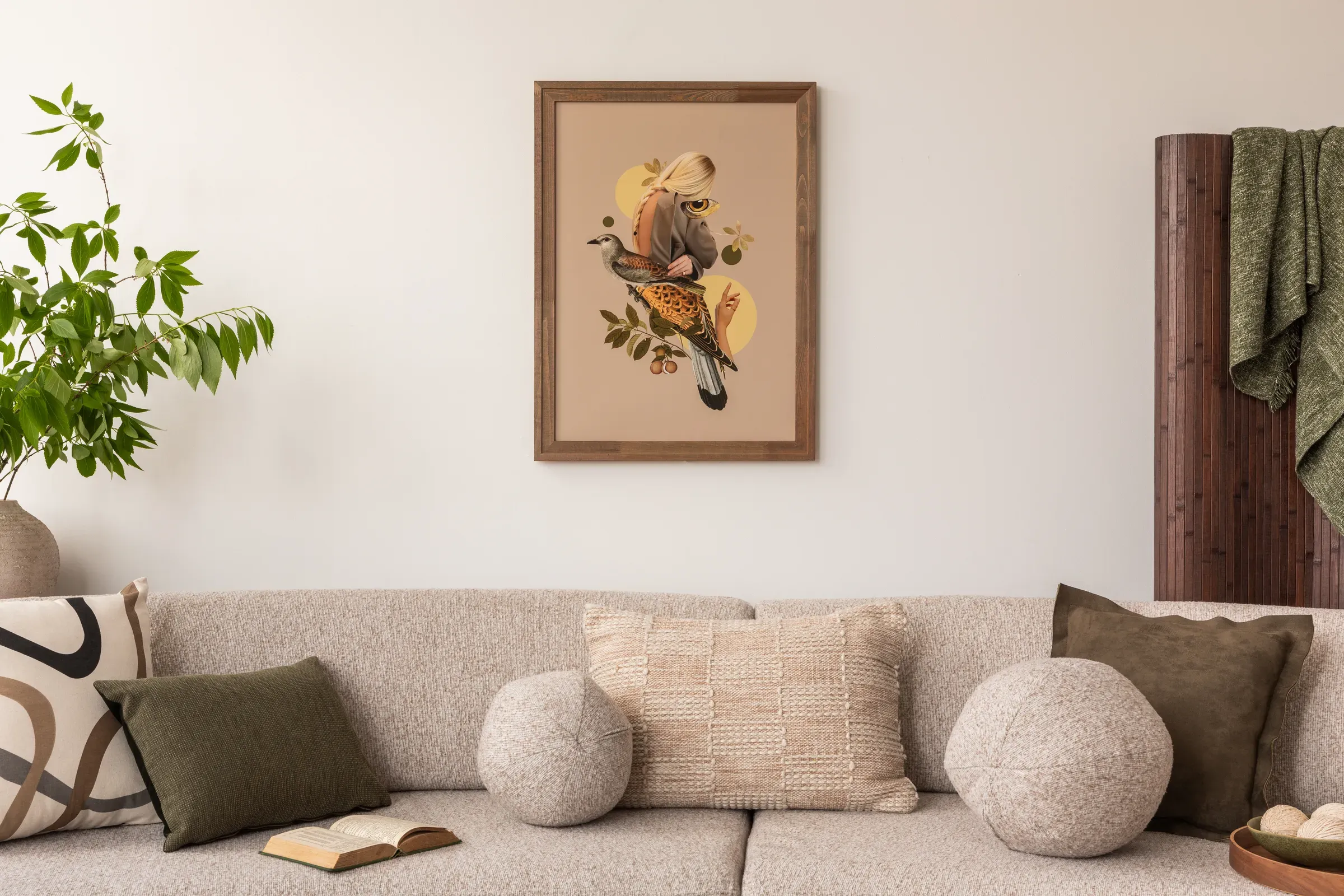
Cozy living room with a beige sofa adorned with textured and patterned pillows. A framed art piece depicting, home decor & wall art ecommerce
Home decor & wall artRenters and homeowners refreshing a room rather than furnishing it, plus housewarming and holiday gift buyers, who arrive from an image, judge scale against their own wall, check whether a frame and hanging hardware are included, and want to know how close the printed color will be to the picture on their screen.

How home decor & wall art makes money

Four levers, and what limits each one here

Revenue is traffic times conversion rate times order value times purchase frequency. In this niche each lever has its own ceiling.

Traffic

Traffic: images are the entry point, so they have to be findable

Decor demand starts with a picture. People search visually, save to boards, and type queries that describe a scene rather than a product: large abstract art for above a couch, botanical prints for a bathroom, mid-century gallery wall set, neutral art for a rental. Text-only optimization misses most of it. The traffic lever is a catalog where every artwork has a descriptive file name, alt text that truthfully describes the image, high-resolution imagery in the markup, and a collection structure organized by room, style, color palette, subject and orientation rather than by artist alone. Written guides on gallery layouts and print sizing capture the planning searches that come before a purchase and give the collections a natural place to link from. Where a design exists in several sizes and frames, it keeps one page rather than fragmenting into a dozen thin ones.

Conversion

Conversion: scale, color and what is actually in the box

Three doubts stop a decor purchase and all three are solvable on the page. Scale comes first: a print listed as twenty-four by thirty-six means nothing until it is shown on a wall beside a sofa, a bed or a standing person, so every size needs a scale image or a viewer that places it on a photograph of the customer's own wall. Color is second, and honesty works better than saturation: state the paper or canvas type, note that screens vary, and offer a small sample where the price justifies it. The third is the box, which means whether the frame is included, whether hanging hardware comes with it, whether the piece ships rolled or flat, and how long a rolled print takes to relax. Add the production lead time when a piece is printed to order, because that is the difference between a good review and a complaint.

Order value

Order value: the wall, not the single print

One print is a small order. A gallery wall is several, and a gallery wall is what most people are actually trying to build. Curated sets sold as a single product, with a layout diagram, the spacing between frames and a total wall width, raise the basket and remove the hardest part of the decision. Framing is the second lever and it often doubles the order, so the frame choice belongs on the product page with real photographs of each moulding and corner rather than in a dropdown of names. Matting, hanging kits and picture lights are honest smaller additions. The mechanics that matter are a set page that can rank on its own, a complete-the-wall block on single prints showing the pieces designed to sit beside them, and a cart that makes clear a second print does not add a second shipping charge.

Frequency

Frequency: rooms get refreshed rather than replaced

Decor has the shortest repeat cycle in the home category. The same customer buys again when the season turns, when a room is repainted, when they move, and when they need a gift, which can be several times a year rather than several times a decade. That makes the email list the main asset in the business. New collection drops give a genuine reason to send, seasonal changeovers give another, and a room-by-room sequence walks a living room buyer toward the hallway and the bedroom. Catalogs printed on demand can add designs quickly, which suits the rhythm, but only if new work reaches the people whose taste matches it rather than the whole list at once. We segment by style and palette from purchase history and report revenue per customer over twelve months, because a year is already a long cycle here.

Search visibility

Search: room, style and size demand, plus the images that carry it

Decor search demand is descriptive. The queries name a room, a style, a color, a subject and often a size: large abstract canvas for a living room, black and white line art prints, botanical wall art set of three, oversized art above a king bed. A catalog sorted by artist or by newest cannot answer any of them. The collections that rank are built on those axes, each with copy explaining what the style suits and a grid filtered to the attribute, and they are worth building only where the demand is genuine. Guides on choosing art size for a wall and planning a gallery layout capture the step before purchase and link into those collections.

Images need as much attention as text. Descriptive file names, honest alt text, high resolution files that are still served efficiently, and image sitemaps make a real difference in a category where most discovery is visual. Product markup should carry the artwork, the sizes, the materials and a price range that changes with size and frame.

The technical work is variant control and duplication. A design offered in five sizes and three frames is one product with variants, not fifteen URLs, and print-on-demand catalogs are prone to generating exactly that. Where designs are licensed from a library other stores also sell, the descriptions have to be written rather than imported, or the page competes with dozens of identical listings and none of them win. Seasonal collections should be permanent URLs refreshed each year rather than new pages built from nothing every season.

Queries that matter

  • large abstract art for above couch
  • botanical wall art set of 3
  • black and white line art prints
  • what size art above a king bed
  • framed wall art for living room
  • gallery wall layout ideas
  • oversized canvas art 40x60
  • neutral wall art for rental

Room, style and size collections with real copy, gallery wall and art sizing guides, and product pages with scale images and original descriptions rank in this niche. Artist-sorted grids do not, and neither do pages carrying the same imported description as every other store selling that design.

AI answers

AI answers: the sizing and framing questions assistants get about wall art

The questions here are about proportion and logistics: what size art belongs above a sofa, how high a picture should hang, whether a set works on a narrow wall, whether frames are included, and how a rolled print is flattened. Stores that get named answer them in text, with dimensions for every size, frame materials and finishes described, hanging hardware listed and the shipping format stated. Consistency matters because the same artwork often appears across many stores, so a page adding original guidance on placement and scale gives an assistant a reason to cite it rather than a competitor with an identical catalog. We write the sizing and layout guides answer first and keep dimensions identical in the copy, the markup and the feed.

What size art should hang above a three seat sofa?
How high should wall art be hung from the floor?
Are frames included with these prints?
How do you flatten a print that arrived rolled in a tube?
How many pieces make a balanced gallery wall?

Questions shoppers put to assistants. A store gets named when its pages answer them in plain text.

Google Shopping and Merchant Center

Google Shopping and Merchant Center for prints, canvases and framed art

Decor feeds are image feeds with a sizing problem attached. The main image has to show the artwork cleanly with no room scene, no watermark and no promotional text, while lifestyle shots go into additional_image_link where scale can be demonstrated. Size carries the printed dimensions in the format the query uses, and every size and frame option of one artwork shares an item_group_id so the group is not read as unrelated products. Material distinguishes paper, canvas and metal, product_detail carries the frame material and finish, the orientation, the paper weight and whether hardware is included, and is_bundle marks curated sets.

The exposure that matters most here is intellectual property. Artwork reproducing a protected character, a logo, a photograph or a recognizable design without a licence is an infringement issue rather than a copy issue, and it reaches the whole account rather than a single listing. Catalogs built from image libraries need a licensing record for every design. Personalized products need their pages to state clearly what is customizable and what is delivered.

Campaign structure follows print economics. Framed pieces carry the margin and the shipping cost, unframed prints are cheap to ship and cheap to click, and gift-sized items behave differently through the fourth quarter. Custom labels by format and by print partner make it possible to bid on contribution rather than on revenue, and free listings matter because decor is browsed repeatedly before anyone commits.

Feed attributes that decide eligibility

  • size with the printed dimensions
  • item_group_id across sizes and frame options
  • material for paper, canvas or metal
  • product_detail for frame finish, orientation and hardware
  • is_bundle for curated sets
  • additional_image_link for scale and room shots
  • color and pattern

Disapprovals we see in this niche

  • Main images carrying watermarks, borders or promotional text
  • Designs that reproduce protected characters, logos or photographs without a licence
  • Sizes and frames grouped as unrelated products so the cheapest option sets the expectation
  • Price mismatch when a framing surcharge is calculated at the cart rather than in the feed

Meta and social ads

Meta ads: scale shown honestly and the room as the product

Decor is a natural fit for social because the product is an image, but the ad that works is not the artwork on its own. It is the artwork on a wall, at a size the viewer can judge, in a room that looks like somewhere people live. A hand hanging a piece, a wall filling up frame by frame, a pan from an empty wall to a finished gallery, and the same print shown at two sizes all do more than a flat product shot. Seasonal changeovers film well because the transformation is fast and visible in a few seconds.

The constraints are rights and originality. Customer room photographs need written rights, creator content needs the same, and artwork licensed from a library carries terms that may limit how it is advertised. Because many stores sell overlapping catalogs, creative is often the only real differentiator, so the room, the styling and the voice have to belong to the brand. Audiences segment well by style and palette, and catalog ads work when the feed image is the artwork itself rather than a room scene that hides it.

  • A wall filling up frame by frame in a time lapse
  • The same print shown at two sizes on the same wall
  • A hand levelling and hanging a piece from start to finish
  • An empty rental wall becoming a finished gallery in one pan
  • A seasonal changeover swapping the art inside a single frame

Policy line

Licensed and library artwork carries terms that limit how it may be advertised, customer and creator room photography needs written rights, and any design reproducing a protected character, logo or photograph must not run at all.

Conversion and the store

The store: scale, frame choice and what arrives in the tube

The decor product page is a scale problem before it is anything else. Every size needs its own scale image against a recognizable reference, and a viewer that places the piece on a photograph of the customer's wall closes the gap for anyone still unsure. The frame selector should show a photograph of each moulding and corner rather than a color name, and the price for each option should update in front of the shopper rather than at the cart, because a framing surcharge discovered late is a lost order.

The second half of the page is delivery reality. State whether the piece ships rolled or flat, how long a rolled print takes to relax, whether hanging hardware is in the box, what the lead time is when the piece is printed to order, and what happens if glass arrives broken. Gallery wall sets need a layout diagram with spacing and total wall width so the buyer can measure before ordering rather than after. On mobile the size selector, the price for that size and the scale image need to be visible together, because everything else is secondary to whether it fits the wall.

Objections the page must answer

  • “How big will this actually look on my wall”
  • “Is the frame included and what does it add to the price”
  • “Will the color match what I see on my screen”
  • “Does it ship rolled and how do I get the creases out”
  • “Is the hanging hardware in the box”
  • “What happens if the glass arrives broken”

Email, SMS and retention

Email and SMS: hanging help, seasonal changeovers and the next room

The first message in decor is practical. It arrives with the parcel and covers unrolling and flattening a print, the hanging height that suits most walls, the spacing for a set, and what hardware is in the box. That single email prevents a large share of the complaints in this category, and it produces better customer photographs, which the brand needs for its own creative.

After that the calendar does the work. New collection drops are segmented by the style and palette a customer has already bought rather than sent to the whole list. Seasonal changeovers land ahead of spring and autumn and before the holiday period, framed around swapping one piece rather than redecorating a room. A room-by-room sequence four to six weeks after delivery moves a living room buyer toward the hallway and the bedroom. Gifting sequences run through the fourth quarter with shipping cut-off dates stated plainly, and SMS is kept for drop announcements to people who asked for them and for delivery updates.

  1. Hanging and flattening

    On delivery, before the piece is unrolled

  2. Complete the wall

    Ten to fourteen days after delivery, with matching pieces and a layout

  3. New collection drops

    On release, segmented by the style and palette already bought

  4. Seasonal changeover

    Early spring, early autumn and ahead of the holiday period

  5. Next room

    Four to six weeks after delivery

  6. Gifting with cut-offs

    Through the fourth quarter, with shipping deadlines in the subject line

Where revenue leaks

The leaks we find in home decor & wall art stores

The Growth Analysis ranks these against your own numbers and says which to close first.

Get a Growth Analysis for your home decor brand
  • Prints listed without a scale image

    The dimensions are stated and nothing shows what they mean, so the shopper guesses, orders the smaller size and returns it, or never orders at all.

  • Framing surcharges revealed at the cart

    The price on the page is for an unframed print, the frame is added at checkout, and the abandonment gets recorded as a price problem rather than a disclosure problem.

  • Imported descriptions on licensed designs

    Dozens of stores publish the same words for the same artwork, so none of them rank and the traffic settles on a marketplace listing instead.

  • Every size and frame as its own product page

    One design becomes fifteen thin URLs splitting their own authority, and the feed reads them as unrelated items competing with each other on price.

  • Seasonal collections rebuilt from scratch every year

    New URLs launch each season with no history behind them, so the pages start from nothing at exactly the moment the demand arrives.

Platform notes

Where the platform changes the work

Shopify

Sizes and frame options belong to one product as variants, with metafields carrying orientation, paper type and hardware so they reach the feed as product_detail. Print-on-demand apps need their imported titles and descriptions rewritten, and their production lead times surfaced on the product page rather than only in the confirmation email.

WooCommerce

Variable products handle size and frame combinations, but the price display needs to show a range and update on selection, and global attributes for style, palette and orientation drive both the filtering and the archives worth indexing.

BigCommerce

Complex option rules on framing can create prices the feed export does not reflect, so option pricing has to be mirrored in the feed, and the faceted search needs canonical rules for style and color filters.

Questions

Home decor & wall art owners ask us

By CartKernel · Last reviewed

How do you market wall art when other stores sell the same designs?

By owning the parts that are yours. Original descriptions, original room photography, sizing and layout guidance written from experience, and collections organized around how people actually describe their walls. Where designs are licensed, imported copy is replaced before the page goes live, because dozens of identical listings cannot all rank and your own words are the only advantage available.

What is the best way to show size on a print product page?

A scale image for every size, shot against something a viewer recognizes such as a sofa, a bed or a standing person, plus a viewer that places the piece on a photograph of their own wall. Numbers alone do not work, because very few people can picture thirty-six inches on a wall they are standing in front of.

Do print-on-demand economics work for a decor brand?

They work when the margin survives the print cost, the shipping and the return rate together. The risks are production times that surprise the customer, quality variation between print partners, and catalogs growing faster than anyone can write for. We report contribution by print partner and by format, and keep the product page honest about how long a piece takes to make.

How do you avoid intellectual property problems in feeds and ads?

By keeping a licensing record for every design and auditing the catalog before it reaches Merchant Center. Reproductions of protected characters, logos and photographs are an account-level risk rather than a listing-level one. Where designs come from a library, the licence terms are read for advertising restrictions as well as resale rights before anything is uploaded.

How often should a decor brand email its list?

More often than a furniture brand and always with a reason. Drops, seasonal changeovers and room-by-room sequences give genuine occasions, and segmentation by style and palette keeps the sends relevant. The measure is revenue per recipient alongside unsubscribe rate, and the schedule follows how much genuinely new work exists rather than a fixed weekly slot.

What causes returns on wall art and how do you reduce them?

Scale that did not match the wall, color that printed differently from the screen, creases from tube shipping, and glass broken in transit. Scale images and a wall viewer address the first, honest color and paper notes the second, a flattening guide in the delivery email the third, and better packaging plus a plain damage policy the fourth.

Grow your home decor & wall art store.

A free Growth Analysis ranks what your store should fix first, by revenue at stake, in about a week.