Skip to content

Bags, luggage & travel gear · ecommerce growth

Travel adapter brand marketing agency

The query in this niche is a country. Someone is going to Japan, or Italy, or Thailand, and they want to know which plug the socket takes and whether their charger will survive the voltage. Get the destination pages right and the category almost sells itself. Get them wrong, or blur the difference between an adapter and a voltage converter, and you inherit support tickets, returns and damaged devices. We build the destination content, the specification data and the campaigns around that.

The buyer, in brief

Consideration
Very short, usually resolved in a single session close to departure
Purchase frequency
Repeats with each new region visited and when device charging standards change
Seasonality
Follows outbound travel to different regions, so demand rotates by destination through the year rather than peaking once
Price band
Low to mid, with multi port and higher wattage chargers carrying the better margin
Return risk
Concentrated on incompatibility and on the adapter against converter confusion, both preventable with clearer pages
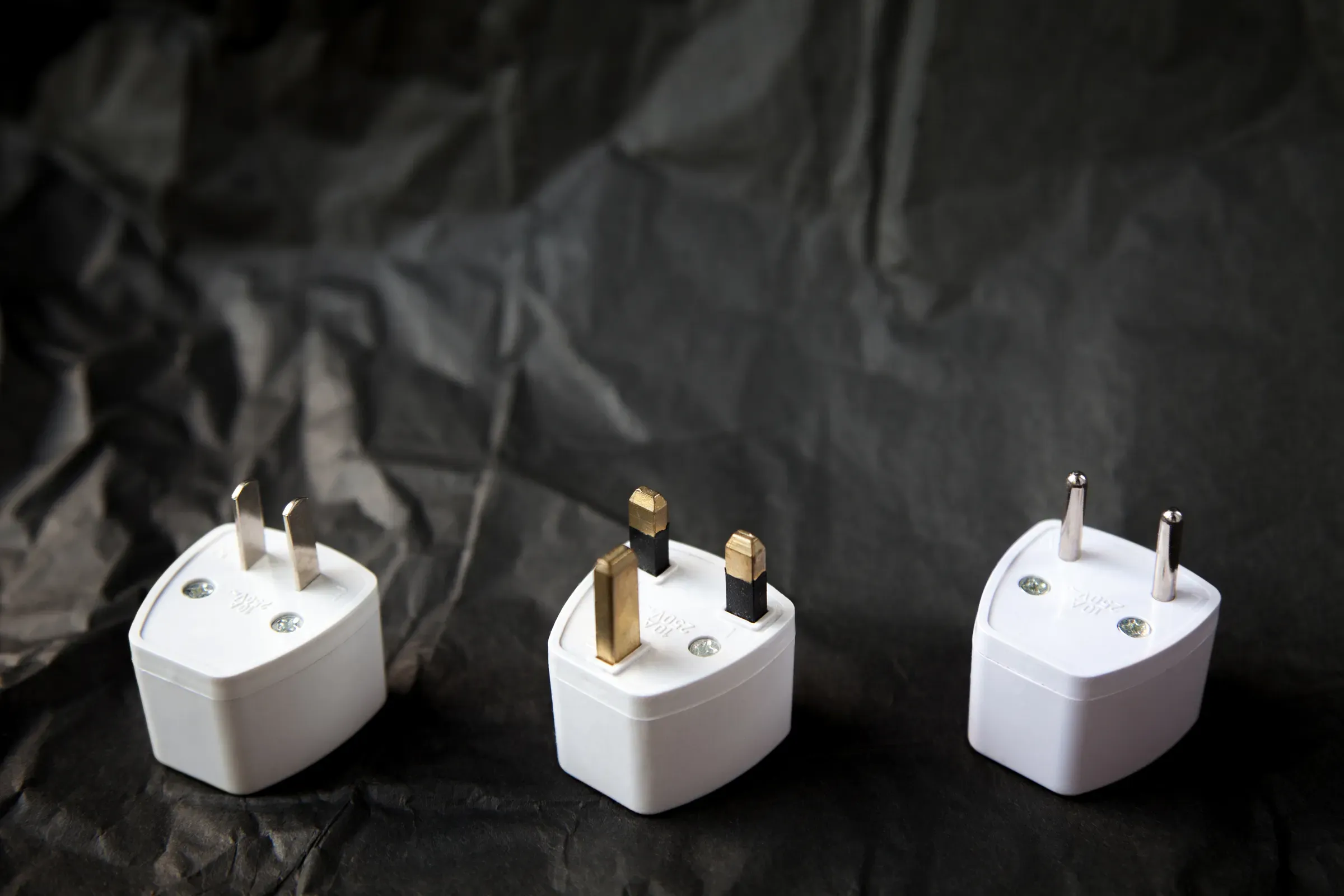
Choosing from various electric plug adapters. Difficulties of traveling, tech travel adapters & chargers ecommerce
Tech travel adapters & chargersTravellers with a destination and a departure date who need to know the plug type and the voltage there, want enough ports for a phone, a laptop and a watch, and check for safety certification marks before buying an electrical product from an unfamiliar brand.

How tech travel adapters & chargers makes money

Four levers, and what limits each one here

Revenue is traffic times conversion rate times order value times purchase frequency. In this niche each lever has its own ceiling.

Traffic

Traffic: a page for every destination people fly to

The demand here is one of the cleanest patterns in ecommerce. People search a country plus the words plug, socket, adapter or voltage, and they do it days before they travel. A destination page for each country that states the plug types in use, the mains voltage and frequency, whether visitors from a given region need a converter as well as an adapter, and which of your products cover it, answers that search completely. Built as a set from one reliable data source, these pages compound into a large body of genuinely useful content that earns links from travel sites and gets quoted by assistants. Very few brands in this category bother, which is why the opportunity persists.

Conversion

Conversion: separate the adapter from the converter, plainly

The most damaging misunderstanding in this niche is that an adapter changes voltage. It does not. It changes the shape of the plug, and a device that is not dual voltage will be damaged regardless. A page that states this in a sentence, then says which of your products are adapters and which include conversion, prevents returns, complaints and a bad review that mentions a ruined appliance. Alongside it comes the modern charging question: total wattage, how it splits when several ports are used at once, whether a laptop can be charged at full speed, and which cable standard is needed. Publish the per port and combined output, name the safety certification marks the product carries, and the technical shopper is satisfied.

Order value

Order value: ports, cables and the trip specific bundle

The natural upgrade path is capacity. A single adapter becomes a multi port adapter, which becomes an adapter and a high wattage charger for a household travelling together. Cables are the honest attachment, because the right cable for the right standard is a genuine requirement rather than a filler item, and a shopper who has just worked out their wattage needs is receptive to being told which cable actually carries it. Region bundles are the third route, since a set covering a multi country trip is easier to buy than three separate products. Where the range includes a power bank, that pairs naturally, provided the page is clear about airline carriage rules rather than leaving the customer to discover them at security.

Frequency

Frequency: a new region every trip, a new standard every few years

This category repeats for two reasons that have nothing to do with wear. The first is geography, since a customer who bought for a European trip needs a different plug shape for a trip to North America or Australia, and asking where they are going next is a reasonable thing to do. The second is the pace of change in charging, where higher wattage standards and new connector requirements mean a charger bought a few years ago will not fast charge a current laptop. Content that explains those changes honestly, without implying anyone was sold something inadequate, sells upgrades. Lost items are the third reason, because adapters are left in hotel sockets more often than almost any travel product.

Search visibility

Search: destination pages, plug types and charging standards

The destination set is the backbone. One page per country, each carrying the plug types used, the voltage and frequency, a plain statement about whether travellers from particular regions need conversion as well as adaptation, and the products that cover it. Built from a single maintained data source rather than written by hand, the set stays consistent and can be updated in one place when something changes. These pages are exactly what somebody wants three days before a flight, which is why they attract links and citations.

Plug type pages are the second family, one for each common socket type, explaining where it is used and what it looks like. They catch a different phrasing of the same need and give the destination pages something to link to.

The third layer is charging education: what wattage a laptop needs, how power splits across ports, what a given fast charging standard requires from a cable, and what changed when connector rules shifted in some markets. Technically, the destination set has to be built carefully so it does not become hundreds of near identical thin pages. Each needs genuinely different data, a reason to exist and internal links from the products and the plug type pages, otherwise a large content programme turns into an indexing problem rather than an asset.

Queries that matter

  • what plug does japan use
  • travel adapter for europe uk plug
  • do i need a voltage converter for the usa
  • universal travel adapter with usb c
  • 65w gan charger for travel
  • plug type g countries
  • power bank allowed in hand luggage

Destination pages with accurate plug, voltage and frequency data, plug type explainers, and charging guides written for real devices rank here. A single page called Travel Adapters with a product grid does not.

AI answers

AI answers: the question assistants are asked most before a trip

This is one of the most heavily asked categories in assistant search, because the question has a factual answer and travellers ask it every time they book somewhere new. Which plug does a country use, is the voltage compatible, will a hair dryer work, how many watts does a laptop need, can a power bank go in checked baggage. A store gets cited when its destination data is accurate, published as text rather than as a graphic, and consistent with the products it recommends. We build the destination set from a maintained source, write the safety distinctions plainly, and keep the wattage and certification details identical across the page, the structured data and the feed.

Which plug type and voltage does this country use?
Do I need a converter or just an adapter for my devices?
How many watts do I need to charge a laptop and a phone together?
Can I take a power bank on a plane and where does it have to go?
Will a universal adapter work everywhere?

Questions shoppers put to assistants. A store gets named when its pages answer them in plain text.

Google Shopping and Merchant Center

Google Shopping and Merchant Center for adapters and chargers

Electrical products are held to accuracy standards that soft goods are not, so the feed has to carry the technical truth. Total and per port wattage, input voltage range, plug types included, connector standards and the safety certification marks the product holds all belong in product_detail, and the certification detail should be there because shoppers and reviewers look for it. Titles read best as type, plug coverage, port configuration and wattage, since a search for a universal adapter with a high wattage port is typed in those terms.

Products containing lithium cells, including power banks and any adapter with a battery, are treated as restricted or specially handled in several advertising and shipping contexts. Watt hour ratings need publishing, carriage rules should be described honestly on the page, and shipping settings must reflect any carrier restriction rather than promising delivery methods that cannot legally carry the item.

The recurring feed problems are identifiers and variants. Own brand adapters frequently have no barcode and need identifier_exists set rather than an invented value, while region variants of the same product should be grouped so a store does not appear to sell five unrelated items. Custom labels by wattage tier and by margin make campaign structure possible in a catalog where a small adapter and a high output charger have very different economics.

Feed attributes that decide eligibility

  • product_detail for total and per port wattage
  • product_detail for input voltage range and plug types
  • safety certification marks
  • watt hour rating for anything containing a cell
  • identifier_exists for own brand items
  • item_group_id for region variants
  • custom_label for wattage tier

Disapprovals we see in this niche

  • Restricted product handling for items containing lithium cells
  • Missing identifiers on own brand electrical accessories
  • Descriptions implying voltage conversion in an adapter that only changes plug shape
  • Shipping settings offering carriage methods that cannot legally carry batteries

Meta and social ads

Paid social: one useful fact per piece of creative

The creative that works here is informational rather than aspirational. A fifteen second explanation of why an adapter is not a converter. A country named on screen with its plug type and voltage. A charger powering a laptop, a phone and a watch at once with the wattage shown. A demonstration of the sliding pins covering four regions. Each piece teaches something a traveller can use, which earns the save and the share that this category needs because the product itself is not visually interesting.

Audiences start with buyers and site visitors, then broad prospecting, with destination content used to build an audience of people who are actively planning. The policy points are specific to electrical goods. Claims about safety, surge protection or certification must be accurate and supportable, products containing batteries fall under restricted handling in several placements, and anything implying a device will be protected from voltage damage needs to be exactly true, because the consequence of getting it wrong is a damaged appliance rather than a disappointed shopper.

  • Why an adapter is not a voltage converter, explained in fifteen seconds
  • A country named on screen with its plug type and mains voltage
  • Three devices charging at once with the wattage split shown
  • Sliding pins demonstrated across four regional configurations
  • What the certification marks on the casing actually mean

Policy line

Safety, surge and certification claims must be accurate and supportable, products containing lithium cells are restricted in several placements, and no creative should imply protection from voltage damage that the product does not provide.

Conversion and the store

The store: a compatibility answer before a product pitch

The page has to answer a compatibility question before it sells anything. Which plug shapes the product provides, which regions that covers, the input voltage range, the total wattage and how it divides across ports, the connector standards supported, the certification marks and a plain sentence on whether the product converts voltage. A short region list is worth more than a paragraph of description, because the shopper is checking rather than reading.

The destination pages then do the selling. Someone arriving from a search about a country should find the facts they wanted and a single clear recommendation, not a grid of eleven similar products. Where a power bank or battery product is involved, the carriage rules belong on the page in plain language, since discovering them at an airport is a customer service failure the store could have prevented. On mobile, keep the region list and wattage table readable without zooming, and show a delivery date during the days before travel, because a correct adapter that arrives after departure is worth nothing.

Objections the page must answer

  • “Will this fit the sockets where I am going”
  • “Do I also need something to change the voltage”
  • “Can it charge my laptop at full speed while my phone is plugged in”
  • “Is it certified and safe to leave charging overnight”
  • “Can I take the battery version on the plane”
  • “Will it arrive before I leave”

Email, SMS and retention

Email and SMS: ask where they are going next

One question drives this programme: where are you travelling next. Asked in the post-purchase flow, the answer creates a segment that can be served the right destination content and the right product before the next trip, which is the only reliable way to sell a second adapter to someone who already owns one.

The other flows follow the technology and the traveller. A short onboarding message explains the voltage distinction again, in friendlier terms, which prevents the misunderstanding that generates returns. A charging upgrade sequence explains when a higher wattage charger genuinely matters, aimed at customers who bought a lower output product some time ago. A replacement prompt acknowledges that adapters are commonly left behind in hotels. Cable and accessory prompts should be specific to what the customer bought rather than a general list. SMS is useful only for dispatch and for a delivery reminder in the final days before a stated departure.

  1. Voltage and safety onboarding

    With or just after the dispatch confirmation

  2. Next destination capture

    Two weeks after delivery, in exchange for a country guide

  3. Region expansion prompt

    Ahead of the next trip when a destination is known

  4. Charging upgrade explainer

    Twelve to eighteen months after a lower wattage purchase

  5. Replacement nudge

    After a typical trip cycle, aimed at commonly lost items

Where revenue leaks

The leaks we find in tech travel adapters & chargers stores

The Growth Analysis ranks these against your own numbers and says which to close first.

Get a Growth Analysis for your travel adapter and charger brand
  • No destination pages at all

    The clearest, most reliable search pattern in the category goes unanswered, so the traffic lands on travel blogs and marketplace listings while the brand bids on expensive generic terms instead.

  • Voltage conversion left ambiguous

    The page never says an adapter does not change voltage, so a customer plugs in a single voltage appliance abroad, damages it, and the store gets a return and a review that will sit there for years.

  • Wattage published as a single headline number

    A charger rated at a total output splits that power across ports, and a shopper who expects full laptop speed with three things plugged in finds out the hard way.

  • Battery products advertised without carriage information

    Power banks are sold with no mention of airline rules or shipping restrictions, which creates confiscations, complaints and shipping settings that promise carriage methods the item cannot use.

  • A destination set built as thin duplicates

    Hundreds of country pages are generated with the same paragraph and a swapped name, so instead of an asset the site gains an indexing problem and a quality signal it did not want.

Platform notes

Where the platform changes the work

Shopify

The destination set is best built from a metaobject holding plug types, voltage and frequency per country, rendered through one template so a data correction updates every page at once. Wattage and certification live in product metafields so the specification block and product_detail stay identical.

WooCommerce

A custom post type or taxonomy for destinations keeps the country pages structured and linked to products, while shipping classes need configuring so battery products only offer carriage methods that can legally take them.

Headless commerce

Where a brand sells the destination set across several markets and languages, a headless front end lets one country data source drive localised pages without duplicating the catalog, provided the pages are rendered server side so they can be crawled and cited.

Questions

Tech travel adapters & chargers owners ask us

By CartKernel · Last reviewed

How many destination pages are worth building?

As many as you can keep accurate, which usually means the countries your customers actually travel to rather than every territory on a list. Each page needs real data, a genuine reason to exist and links from the relevant products. A hundred accurate country pages outperform three hundred generated from one paragraph with the name swapped.

How do you keep plug and voltage data correct over time?

By holding it in one structured source that every page reads from, so a correction is made once, and by reviewing it on a schedule against published references. Writing the same facts into hundreds of separate pages guarantees that some of them will be wrong within a year and nobody will notice which.

What is the safest way to describe voltage compatibility?

State the product's input voltage range, state clearly that a plug adapter does not change voltage, and tell the reader to check the label on their own device for a dual voltage rating. That puts the check where it belongs and avoids implying a level of protection the product does not provide.

Do power banks complicate advertising and shipping?

Yes. Items containing lithium cells face restricted handling in several advertising placements and real limits on how they can be shipped and carried. Publish the watt hour rating, explain the carriage rules on the page, and set shipping options so the checkout cannot offer a method that is not permitted for the item.

Is this category too cheap to advertise profitably?

Not if the account is built around the destination and specification terms rather than the generic ones, and if the basket is grown with cables, higher wattage chargers and multi region bundles. The generic universal adapter query is expensive and crowded. The country and wattage queries are cheap, specific and convert quickly.

What do you report each month for a brand in this niche?

Revenue by channel with brand separated, contribution after shipping, performance of the destination page set as its own group, share of orders that include a cable or second item, and returns coded to compatibility. That last figure tells you whether the technical content is doing its job better than any survey would.

Grow your tech travel adapters & chargers store.

A free Growth Analysis ranks what your store should fix first, by revenue at stake, in about a week.