Skip to content

Beauty & skincare · ecommerce growth

Fragrance marketing agency

You cannot smell a bottle through a screen, so a perfume store sells language, sampling and trust instead. Shoppers arrive with a note in mind, a scent they wore years ago, or a person they are buying for, and they want to know what the juice does on skin before they commit to a full bottle. We build the note and family vocabulary into the catalogue, make discovery sets earn their cost back, and run the gifting calendar around the shipping cutoff rather than after it.

The buyer, in brief

Consideration
Weeks for a full bottle bought blind, days when a sample or a discovery set is available
Purchase frequency
One bottle lasts most wearers the better part of a year, with sample and travel spray orders in between
Seasonality
A long gifting run at year end and a shorter spring one, with lighter citrus and aquatic scents moving in summer and resins and ambers in winter
Price band
From vials and travel sprays to premium niche bottles, with a discovery set as the usual first order
Return risk
Restricted once a bottle is unsealed, so sampling and an honest scent description do the work a returns policy cannot
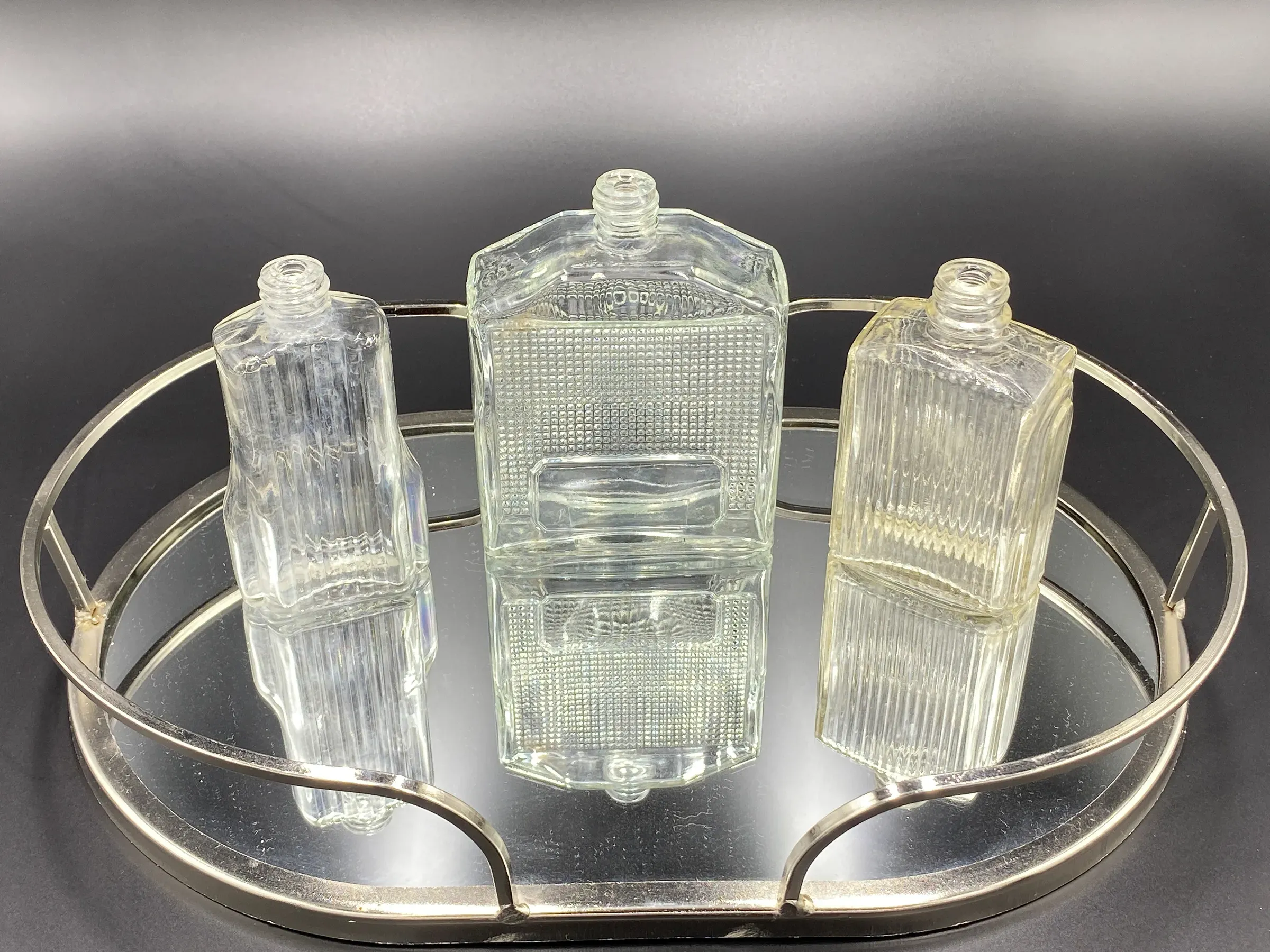
Antique Perfume Bottles, fragrance ecommerce
FragranceShoppers who describe scent in notes and families, often replacing something discontinued or choosing a gift, and who look for the concentration, the bottle size, whether a sample of the same juice exists and whether the store is selling the current formulation.

How fragrance makes money

Four levers, and what limits each one here

Revenue is traffic times conversion rate times order value times purchase frequency. In this niche each lever has its own ceiling.

Traffic

Traffic: notes, families and the scent someone is trying to replace

Perfume demand is expressed in a vocabulary most stores never put on a page. People search by note (vetiver, tuberose, oud, tonka), by family (gourmand, chypre, aquatic, woody), by occasion (office scent, wedding day perfume), by season, and by the scent they used to wear and can no longer find. A site organised by house and by a two-way gender split answers none of those queries, which is why editorial sites and forums own them. The traffic work is a second axis over the brand navigation: a page for every note and family that has real demand, occasion and season collections that stay live all year, and a considered structure for discontinued scents that keeps the demand on your site instead of sending it to a marketplace listing.

Conversion

Conversion: describing a smell so that a stranger can picture it

The whole conversion problem in fragrance is that the product cannot be experienced before payment. What closes the gap is specific description rather than atmosphere: the note pyramid written out, the family named, how the scent behaves in the first ten minutes against how it sits after an hour, how far it projects, how long it lasts on skin, and which concentration this bottle is. Beside that, a sample of the same juice has to be one click away at a price that feels like nothing, because the shopper who is not ready for a bottle will otherwise leave to find one. Stores that write scent descriptions in their own words and sell a vial of everything convert first-time visitors who would never risk the full size.

Order value

Order value: the sample credit and the wardrobe idea

Average order value in perfume moves through sets and through credit rather than through discounts, which cheapen a scent faster than they sell it. A discovery set priced as a real product, with its cost redeemable against a full bottle within a stated window, raises the first order and pre-sells the second. Travel atomisers and refill formats add margin to a bottle order. Layering pairs, sold as two scents chosen to sit together with a short explanation of why, give a reason to buy two. For gift buyers, the tiered set with wrapping and a hand-written card option adds value that a shopper will pay for, and personalisation such as engraving both lifts the order and makes a return less likely.

Frequency

Frequency: one bottle a year, so the relationship lives on the calendar

A perfume customer who buys one bottle and is left alone will not be back for a year, if at all. Frequency in this niche is built by widening the wardrobe rather than by waiting for the bottle to empty. A customer who bought a warm winter scent is a candidate for a lighter one in late spring, and the seasonal rotation message is the most reliable second order in the category. Sample sets of new arrivals in a family the customer already likes work as a low-commitment purchase between bottles. The other repeat driver is the gift buyer: someone who bought a bottle for a partner last December is the most likely person to buy one again this December, and almost nobody emails them in time.

Search visibility

Notes and families: the second navigation a perfume store is missing

Fragrance search demand sits in three layers, and only the first is usually built. Brand and product-name queries land on the pages a store already has. Note and family queries, which are far larger in total, need collections that explain what vetiver smells like or what makes a scent a chypre, then list the bottles you carry that fit. Occasion and season queries need collections that persist year after year so they accumulate ranking history instead of being rebuilt each November. Each of these pages needs real writing, not a heading over a grid, because the shopper is asking a question about smell before they are asking about a product.

The informational layer carries the rest. A note glossary, a plain explanation of the concentrations, a guide to making a scent last on dry skin, and storage advice all earn links and answer questions the product page cannot hold. They also give you somewhere honest to send the shopper searching for a scent that has been reformulated or withdrawn: a page that says what happened and lists the closest things you stock, written neutrally and without claiming that any bottle is a copy of another house's work.

Technically, the catalogue has two rules that stores routinely get wrong. Sizes of one juice are variants on one page. An eau de toilette and an eau de parfum of the same name are different formulations that people search for separately, so they are separate products that link to each other rather than options on one selector. Sample vials belong to the parent product so the review history stays in one place, and a discontinued bottle keeps its URL with a status note rather than being deleted into a soft 404.

Queries that matter

  • eau de parfum vs eau de toilette
  • vanilla perfume that lasts all day
  • fresh citrus cologne for summer
  • perfume discovery set
  • unisex vetiver fragrance
  • how to make perfume last longer on dry skin
  • warm amber scent for winter
  • wedding day perfume for the bride

Note and family collections written by someone who can describe a smell, concentration and storage guides, and product pages that carry a full pyramid and a matching sample all hold rankings here. Brand-and-gender navigation with the manufacturer's blurb pasted underneath does not.

AI answers

Assistants and the scent question: what gets a perfume store quoted

The questions people put to assistants in this category are almost all comparative or definitional: what the difference between the concentrations really means, which notes last longest on skin, what suits an office, what to buy for someone who likes warm gourmand scents, whether a fragrance can be tried before committing. A store gets named in those answers when its own pages state the family, the full note pyramid, the concentration, the size and the perfumer where it is known, in text rather than inside a product image, and when the family pages define the family instead of gesturing at a mood. We write those pages answer-first, keep the sampling offer explicit on every product page so the try-before-you-buy question has an answer to quote, and check that the pages render as plain HTML for the crawlers behind the major assistants.

What is the difference between eau de parfum and eau de toilette?
Which fragrance notes last longest on skin?
What is a good unisex scent to wear to work?
Can I try a perfume before buying the full bottle?
How should I store perfume so it does not turn?

Questions shoppers put to assistants. A store gets named when its pages answer them in plain text.

Google Shopping and Merchant Center

Merchant Center for perfume: concentrations, sizes and a flammable liquid

Designer and licensed bottles carry manufacturer barcodes, so the GTIN belongs in the feed; indie and own-brand juice without a barcode sets identifier_exists to false. Titles should read as brand, scent name, concentration, size, because that is the order the query arrives in and the concentration is the detail a shopper filters on. Sizes of the same juice share an item_group_id with the size attribute filled. An eau de toilette and an eau de parfum must not share that group, since grouping them shows one price for two different products. Product_detail carries the family, the top, heart and base notes and the perfumer; product_highlight carries the three things a wearer would actually say.

Two policy areas matter more here than in the rest of beauty. Resellers of designer fragrance sit under the misrepresentation and counterfeit rules, which means the store has to be clear about who it is, where stock comes from and what condition a bottle is in, with batch and packaging photographed honestly. Second, alcohol-based perfume is a flammable liquid for transport purposes. Air and express services are limited or unavailable for those items in many lanes, and quantity limits apply, so the shipping settings in Merchant Center and the rates at checkout must show only the services a carrier will actually accept for that parcel.

Campaign structure follows the entry path. Discovery sets and travel sizes sit in an acquisition campaign judged on new customers and on the bottle that follows. Full bottles are bid to margin by family. Gift sets run as a seasonal campaign with a hard stop at the shipping cutoff, and free listings carry the long tail of niche references that paid clicks cannot justify.
Feed attributes that decide eligibility

  • gtin for licensed bottles, identifier_exists for indie juice
  • item_group_id and size across bottle sizes only
  • product_detail for family, note pyramid and perfumer
  • product_highlight
  • google_product_category at the perfume and cologne node
  • custom_label for sample, travel and full bottle

Disapprovals we see in this niche

  • Misrepresentation reviews for resellers whose supply route and seller identity are unclear
  • Shipping services quoted on a flammable liquid that the carrier will not take by air
  • Eau de toilette and eau de parfum grouped as one item so the wrong price shows
  • Missing size, which puts a travel spray and a full bottle side by side on price

Meta and social ads

Meta for fragrance: creative for a sense the feed cannot carry

No platform can transmit a smell, so the creative has to make one imaginable. The formats that work are the perfumer or founder describing an accord in concrete words, a wearer giving three adjectives and the occasion they reach for it, the discovery set opened and sprayed on paper strips, and a layering demonstration that explains why two scents sit together. Bottle-in-hand footage in daylight outperforms studio stills because it settles the size question at the same time. Gift creative is a separate set with the box, the card and the cutoff date, aimed at an audience built from past gift orders.

The policy line in this niche is not health, it is imagery and implied outcome. Fragrance advertising has a long habit of sensual footage, and Meta restricts nudity and sexually suggestive content, which is where perfume creative is most often rejected. Claims that a scent attracts other people, or pheromone framing, fall foul of misleading-claim rules. Music and film references need cleared rights. Audiences begin with buyers and site visitors, then broad prospecting behind the strongest description-led creative, since interest targeting cannot tell a chypre wearer from a gourmand one.

  • The perfumer describing one accord in plain, concrete words
  • Three adjectives and an occasion, from a wearer rather than the brand
  • A discovery set opened and sprayed on paper strips in real time
  • Two scents layered, with the reason they work together explained
  • The gift box, the card and the shipping cutoff in one fifteen-second cut

Policy line

No nudity or sexually suggestive imagery, no attraction or pheromone claims, no implied comparison to another house's marks in text or on screen, and cleared rights for any music or film reference.

Conversion and the store

The bottle page: pyramid, projection, sample, and what happens if it is wrong

A perfume product page has one job that no other beauty page has: to substitute for the nose. It does that with a note pyramid written out in text, a family label, a plain description of how the scent opens and where it settles, a qualitative line on projection and wear time, and the concentration explained rather than abbreviated. Under that sits the sample of the same juice as an add-to-cart, the size selector with the price per millilitre visible so the larger bottle can be judged, and a returns line that states honestly what can and cannot come back once a seal is broken.

The gift layer is the second template and it carries a large share of the year's revenue. It needs the box photographed as it arrives, a message card field, the cutoff date shown against the visitor's own delivery options, and a discovery set positioned as the safe gift for someone whose taste is unknown. On mobile, the pyramid and the sample button belong above the reviews, and the search box has to understand notes and families rather than only product names, because a shopper who types tuberose and gets no results assumes you do not stock it.

Objections the page must answer

  • “What does it actually smell like on skin, not on paper”
  • “How long will it last and how far does it carry”
  • “Is this the current formulation and is the bottle sealed”
  • “Can I try it before I spend this much”
  • “What happens if I open it and dislike it”
  • “Which size makes sense for how often I would wear it”

Email, SMS and retention

Email and SMS: sample to bottle, then the seasonal rotation

The most valuable automation in fragrance is the discovery set follow-up. It goes out once the customer has worn the vials for a week, asks which one won, and carries the credit toward the full bottle with the deadline stated. A second message before that credit expires recovers a meaningful share of sets that would otherwise end as a nice experience and nothing more. The first-order email after a bottle covers storage, application points and how much to use, which sounds trivial and prevents the disappointment that follows a scent sprayed onto clothes rather than skin.

After that the calendar takes over. A rotation message in late spring to customers who bought something warm, and in late autumn to those who bought something fresh, sells a second bottle without a discount. New arrivals go only to the customers who bought that family, so the send stays relevant. The gift anniversary flow reaches last year's gift buyer before the same occasion comes round, with the recipient's earlier choice referenced so the message is useful rather than generic. SMS is kept for the shipping cutoff and for restocks of a bottle someone waited for.

  1. Discovery set follow-up

    Day seven to day fourteen after the set is delivered

  2. Sample credit reminder

    Two weeks before the credit window closes

  3. Seasonal rotation by family

    Late spring and late autumn, based on what they already own

  4. Gift anniversary

    Eleven months after a gift order, ahead of the same occasion

  5. New arrival preview

    Before launch, to customers who bought the same family

Where revenue leaks

The leaks we find in fragrance stores

The Growth Analysis ranks these against your own numbers and says which to close first.

Get a Growth Analysis for your fragrance brand
  • Sample credits that expire in silence

    The store issues a credit with the discovery set, never mentions it again, and the customer buys the bottle they chose from whichever site they happened to open next.

  • A catalogue navigable only by house and gender

    Every note, family, occasion and season query goes to editorial sites and forums, and the store competes only for the shoppers who already know exactly which bottle they want.

  • Two concentrations on one page

    The eau de toilette and the eau de parfum share a selector, so the customer receives the lighter version they did not want and blames the scent rather than the page.

  • Express delivery offered on a flammable liquid

    Checkout sells an air service the carrier will not accept for perfume, and the parcel comes back a week later with the gifting window gone.

  • Retired scents deleted from the site

    The page for a withdrawn bottle is removed rather than kept with a status note and alternatives, so steady demand from people hunting it lands on nothing you own.

Platform notes

Where the platform changes the work

Shopify

Family, note pyramid, concentration and perfumer live in metafields so they render on the page and pass into product_detail, samples are variants of the parent with their own inventory, gift wrap and card messages are line item properties rather than a separate SKU, and a dedicated shipping profile keeps air services off flammable items.

WooCommerce

Global attributes for note and family drive both the filters and indexable archive pages, shipping classes hold the restricted services for alcohol-based stock, and the feed plugin must pass concentration into the title rather than leaving it in the description.

BigCommerce

Option sets handle size and sample together on one product, and price lists let a gift set carry seasonal pricing without a duplicate listing that would split its ranking history.

Questions

Fragrance owners ask us

By CartKernel · Last reviewed

Samples barely break even. Is it worth selling them at all?

Yes, when they are treated as acquisition rather than as product. A vial costs little to fulfil and removes the single biggest reason a first-time visitor leaves, which is that they cannot smell anything. The measure that matters is the share of sample and discovery set buyers who return for a bottle, and the credit mechanic that brings them back. We report that rate on its own line.

How do we describe a scent without copying the brand's own marketing copy?

By writing what the juice does rather than what it evokes. The note pyramid in text, the family, how the opening differs from the drydown, roughly how long it wears, how much it projects, the weather and occasions it suits. That copy is original, it matches how people search, and it gives assistants something quotable, which the manufacturer's paragraph on ten other sites never will.

We stock other houses. Can we bid on their names in Google Ads?

Bidding on trademarked terms is generally permitted by Google, while using a mark inside ad text is governed by its trademark policy and by the conditions that apply to resellers. The other constraint is commercial: many supply agreements say what a stockist may do with a brand name. We check both before the campaign is built, then keep those terms in their own reported line.

Why do couriers keep refusing or returning our perfume parcels?

Because alcohol-based fragrance is classed as a flammable liquid, which limits air and express services, caps quantities per parcel and rules out some destinations. The fix is on both sides: rates at checkout show only services the carrier will accept for those items, and the same restrictions go into the shipping settings that feed Merchant Center so listings are not promising delivery that cannot happen.

When should work on the year-end gifting peak actually start?

The gift set needs to exist as a real product, with its own page, images and feed entry, by early autumn, so it has time to be indexed and to gather reviews before demand arrives. Creative and email are ready before the first buyers start looking. Once the shipping cutoff passes, the message switches to digital cards and to sets held for collection where you offer it.

Are reviews useful when everyone's skin changes a scent?

They are, if the review form collects context. Asking what the reviewer normally wears, how long it lasted on them and in what weather turns opinion into something a reader can use, and gives the product page text that matches long-tail queries. Star ratings with no context tell a fragrance shopper almost nothing and do little for the page.

Grow your fragrance store.

A free Growth Analysis ranks what your store should fix first, by revenue at stake, in about a week.