Skip to content

Books, stationery & paper · ecommerce growth

Puzzle book brand marketing agency

Puzzle books are bought by people who will work through one or two a day and then need another book, and a large share of that audience is over sixty. That makes the store itself part of the product: type size, contrast, form length and whether somebody can complete an order without fighting a popup decide revenue here more than creative does. We build for that reader specifically, with puzzle type and difficulty navigation, honest print specifications, and a repeat cycle timed to how quickly a book actually gets used.

The buyer, in brief

Consideration
Short for a known type and difficulty, longer for a gift buyer guessing at somebody else's preference
Purchase frequency
High and predictable, since a book of puzzles is consumed at a readable pace and then replaced
Seasonality
Gift season is the peak, with winter months, travel periods and hospital or recovery buying adding steady demand
Price band
Low per book, which puts the emphasis on multi-packs, sets and standing orders
Return risk
Low, and usually about print size or difficulty being different from what the buyer expected
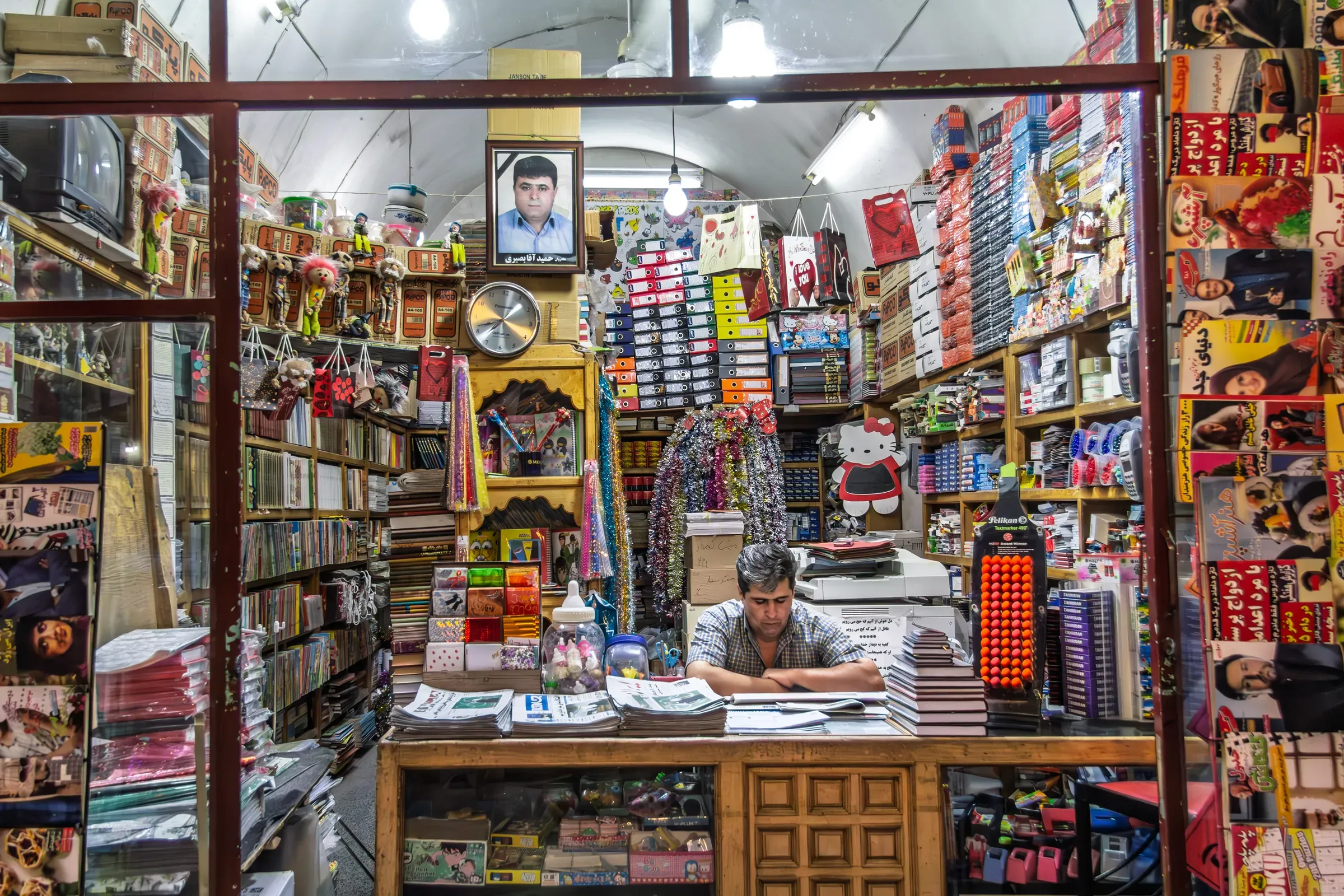
Shopkeeper sits behind a counter in a packed school and office supplies store in Yazd, Iran, through the, puzzle books & brain games ecommerce
Puzzle books & brain gamesCommitted puzzlers who know exactly which type they prefer, from cryptic crosswords to sudoku, wordsearch and logic grids, alongside adult children buying for a parent, all of whom check print size, difficulty, puzzle count and whether answers are included.

How puzzle books & brain games makes money

Four levers, and what limits each one here

Revenue is traffic times conversion rate times order value times purchase frequency. In this niche each lever has its own ceiling.

Traffic

Traffic: puzzle type, difficulty and print size

Search here is precise and rarely brand-led. People type the puzzle type, the difficulty and often the print size in one phrase, because they know what they want and have been disappointed by a book that was too easy, too hard or too small to read comfortably. Large print is a substantial search category on its own and is served badly across most of the web, which leaves it available. The structure that works is a page per puzzle type, difficulty levels within each, and dedicated large print and accessible-format pages, each written to help somebody choose rather than simply listing every title in the catalog.

Conversion

Conversion: the store has to be usable by its own customer

This is the one niche in the industry where site accessibility is a direct revenue lever rather than a compliance exercise. Small body text, low contrast, tiny tap targets, long forms, aggressive popups and a checkout that demands an account will lose orders from an audience that is entirely willing to buy. Alongside that, the product page needs to show the print at true scale rather than describing it as large, state the number of puzzles, the grid size, whether answers are included and at the back, and whether the binding lets the book stay open while somebody writes in it.

Order value

Order value: nobody buys one puzzle book

A puzzler working through a book in a few weeks will happily buy several at once, which makes multi-packs the natural unit of sale rather than an upsell. Packs of the same type and difficulty suit committed solvers, while mixed sets across types suit gift buyers who are not sure what a recipient prefers. A gift set with a pencil, an eraser and sometimes a magnifier is an easy addition that solves a real problem for the buyer. Since a single low-price paperback cannot carry postage sensibly, presenting the pack as the default option rather than as a saving is the difference between a viable order and a marginal one.

Frequency

Frequency: consumption can be estimated closely

Almost no other category lets you calculate the reorder date this accurately. A book with a stated number of puzzles, solved at a pace the customer effectively told you when they chose a difficulty level, runs out on a schedule. A prompt timed to that point, offering the same type at the same or the next level up, performs better than a general newsletter by a wide margin. A standing order or subscription formalizes it for the heaviest solvers. Activity coordinators in care and community settings buy on the same logic in larger quantities, and they reorder on a calendar rather than on a whim.

Search visibility

Search: types, difficulty levels and large print

Puzzle type pages come first, one for each of crosswords, cryptics, sudoku, wordsearch, logic grids, number puzzles and the rest, written to explain what the type involves and who tends to enjoy it. Difficulty pages sit within them, since a beginner looking for gentle cryptics and an expert looking for a genuine challenge are two different buyers using two different searches. Large print pages are the third pillar and deserve real attention, because the demand is significant, the intent is unmistakable and the competition is thin.

How-to content performs unusually well in this niche. Explaining how cryptic clue types work, how to start a difficult sudoku, or what distinguishes one puzzle variant from another attracts exactly the person who buys puzzle books and earns links from communities that share solving guides. It also gives a publisher something to send between purchases.

The technical work is mostly about clarity and accessibility. Difficulty should be a consistent scale across the catalog rather than described differently on each title, puzzle counts and print size belong in structured text rather than on a cover graphic, and the site itself needs to meet accessibility standards properly, since in this category that overlaps almost exactly with the customer's ability to complete a purchase.

Queries that matter

  • large print wordsearch books for seniors
  • cryptic crossword book for beginners
  • hard sudoku puzzle book 200 puzzles
  • puzzle book with answers included
  • spiral bound crossword book that lies flat
  • puzzle book gift set for a grandparent
  • logic puzzle books for adults

Puzzle type and difficulty pages, large print collections and genuine solving guides rank here. Catalog pages listing every title with a cover image and a price do not, because they help nobody choose.

AI answers

AI answers: choosing a puzzle book for somebody else

A large share of the questions assistants field in this niche come from gift buyers who do not solve puzzles themselves. Which books suit somebody with poor eyesight, what the difference is between a quick and a cryptic crossword, how many puzzles a book contains, whether answers are included, and what to buy for a beginner. Publishers that state print size in real terms, keep a consistent difficulty scale, list puzzle counts and explain the types plainly become the source those answers use. We put that information into text on every product page and build type explainer pages that stand on their own, since a recommendation cannot be made from a cover image.

Which puzzle books are best for someone with poor eyesight?
What is the difference between a quick and a cryptic crossword?
How many puzzles are in this book?
Are the answers included in the back?
What puzzle book suits a complete beginner?

Questions shoppers put to assistants. A store gets named when its pages answer them in plain text.

Google Shopping and Merchant Center

Merchant Center for puzzle titles and multi-packs

Published titles carry an ISBN for the gtin attribute, and independently printed editions use identifier_exists set to false with a proper brand and MPN. Titles should be written the way the search is typed, so puzzle type, difficulty and large print come before any series name, since almost nobody searches for a puzzle series by name. Puzzle count, grid size and whether answers are included belong in product_detail, and multipack should be set on any pack of several books so it is compared against the right competition.

The policy exposure in this niche is health claims, and it is the one thing most likely to cause real trouble. Describing puzzles as keeping the mind sharp is common in the category, but claims that a book improves memory, prevents cognitive decline or helps with dementia move the listing into healthcare policy territory and are unsupportable in any case. Titles and descriptions should describe the puzzles, the difficulty and the format, and leave the outcome claims out entirely.

Campaign structure follows the buyer rather than the catalog. Multi-packs and gift sets run in a campaign that can afford an acquisition cost, single titles are either bundled or bid down, large print runs separately because the intent is specific and the conversion rate is high, and the gift quarter gets its own budget with shipping cutoff messaging attached.

Feed attributes that decide eligibility

  • gtin from the ISBN of the published edition
  • identifier_exists false for independently printed titles
  • title carrying puzzle type, difficulty and large print
  • product_detail for puzzle count, grid size and answers included
  • multipack for multi-book packs and sets
  • custom_label for puzzle type and difficulty band

Disapprovals we see in this niche

  • Healthcare policy flags on memory or cognitive decline claims
  • Missing GTIN errors on independently printed titles
  • Price mismatch where a multi-pack price differs from the page
  • Image policy issues on covers carrying added promotional text

Meta and social ads

Meta and social: solving, print size and the gift box

Creative here works best when it is plain and demonstrative. A puzzle being solved at speed, the print size held next to an ordinary paperback so the difference is visible, a pencil moving across the paper to show it does not smudge or tear, a gift set opened, and a single clue explained properly. That last format performs well because it gives something away rather than asking for something, and it reaches the solvers who share puzzles with each other.

The policy line is health language, and it is easy to cross without meaning to. Claims that puzzles improve memory, protect against cognitive decline or help with a diagnosed condition run into health claim rules and the personal attributes rule at the same time, since implying the viewer or their parent has a condition is prohibited. Describe the puzzles instead. Audiences work from past buyers and lookalikes on repeat purchasers, with gift-quarter prospecting aimed at the adult children who buy for a parent rather than at the solver.

  • A puzzle solved at speed in a single take
  • Print size held beside an ordinary paperback for comparison
  • A pencil working across the paper without smudging
  • A multi-pack or gift set opened and fanned out
  • One cryptic clue explained from start to finish

Policy line

No health claims: creative must not say puzzles improve memory, slow cognitive decline or help with any condition, and must not imply the viewer or the person they are buying for has one.

Conversion and the store

The store: accessibility is the conversion work here

Start with the things that stop an order being placed. Body text large enough to read without zooming, contrast that survives a bright room, tap targets a less steady hand can hit, guest checkout without an account, a short form, no popup covering the page, and a phone number for people who would rather order that way. Those are ordinary accessibility improvements, and in this niche they read directly through to revenue because they match the customer.

Then the product page. Print size shown at true scale next to something familiar rather than described as large, puzzle count stated, difficulty on a consistent scale, answers confirmed as included and where, binding described in terms of whether the book stays open, and paper described in terms of whether a pencil or a pen behaves on it. Multi-packs should be the default presentation with the single copy as the alternative, since that is the order shape the category needs. Delivery timing matters through the gift quarter and should be stated as a date.

Objections the page must answer

  • “How big is the print actually going to be”
  • “How many puzzles are in the book”
  • “Are the answers included and where are they”
  • “Is this the right difficulty for me or for the person I am buying for”
  • “Does the book stay open while I am writing in it”
  • “Can I order without creating an account”

Email, SMS and retention

Email and SMS: the run-out date and the standing order

The reorder prompt is the whole retention strategy and it can be timed properly rather than guessed. A book with a stated puzzle count, bought by somebody who chose a difficulty, will be finished in a range you can estimate, and a message at that point offering the same type again or a step up in difficulty converts strongly because the need is real and immediate.

Beside it sit a small number of useful flows. A solving tip series keeps the list warm without selling anything and suits an audience that enjoys the subject. A gift quarter sequence aimed at adult children buying for a parent needs different language from anything sent to solvers themselves. A standing order invitation goes to anybody who has ordered three or more times, since they have already demonstrated the behavior a subscription formalizes. Care and community settings should be handled with a scheduled reorder contact rather than a marketing campaign. SMS suits dispatch notices and the gift cutoff only.

  1. Reorder timed to puzzle count

    Estimated from the number of puzzles and the difficulty chosen

  2. Difficulty step up

    After two or three books at the same level

  3. Solving tips series

    Fortnightly, with no offer attached

  4. Gift quarter sequence for family buyers

    Through the final quarter with a stated cutoff

  5. Standing order invitation

    After a third order of the same puzzle type

Where revenue leaks

The leaks we find in puzzle books & brain games stores

The Growth Analysis ranks these against your own numbers and says which to close first.

Get a Growth Analysis for your puzzle book range
  • A store the core customer struggles to read

    Small type, low contrast and cramped controls on a site whose buyers are frequently older, which turns willing customers into abandoned sessions nobody can see a reason for.

  • Forced account creation at checkout

    A one-off gift buyer or an infrequent purchaser hits a registration wall and leaves, when guest checkout would have taken the order without any friction at all.

  • Print size described but never shown

    Large print is claimed in the title and never demonstrated at true scale, so the buyer with the specific need that brought them here cannot verify the one thing they came to check.

  • Health claims in titles and descriptions

    Language about memory and mental sharpness sits across the catalog, which risks disapprovals in Shopping and rejections in social advertising during the quarter that matters most.

  • No prompt when a book runs out

    The most predictable reorder in this industry goes unasked for, so a customer who finishes a book buys the next one from whichever shop is nearest or fastest.

Platform notes

Where the platform changes the work

Shopify

Theme accessibility deserves a proper audit in this niche rather than an app badge, guest checkout should stay enabled, and native bundles let multi-packs exist as one product with a price the feed can carry accurately.

WooCommerce

Checkout can be shortened by removing fields the business does not need, grouped products handle mixed puzzle sets, and theme choices should be judged on legibility and tap target size before anything else.

BigCommerce

Price lists suit publishers supplying care homes and community groups alongside direct customers, and product options can carry difficulty and format selection without additional apps.

Questions

Puzzle books & brain games owners ask us

By CartKernel · Last reviewed

Why does site accessibility matter so much for puzzle book sales?

Because the audience skews older and the barriers are practical rather than theoretical. Small text, low contrast, cramped buttons, long forms and forced account creation remove orders from people who were entirely ready to buy. Improving those is usually the fastest available conversion work in this niche, and it costs nothing in creative.

How should large print be presented on a product page?

Shown at true scale next to a familiar reference rather than described in words. A photograph of the actual page beside an ordinary paperback answers the question instantly. Stating the point size means little to most buyers, while seeing it settles the decision for exactly the person who searched for it.

What can a puzzle publisher safely say about brain training?

Describe the puzzles, their difficulty and their variety, and leave outcome claims alone. Statements about improving memory or slowing cognitive decline are unsupportable and run into healthcare and health claim policies across Shopping and social advertising. The category sells perfectly well on enjoyment and challenge without them.

Why do multi-packs matter more than single titles?

Because a single low-price paperback cannot carry the cost of shipping and acquiring the order. Solvers finish books quickly and are content to buy several, and gift buyers prefer a set. Presenting packs as the standard purchase, with a single copy available for those who want it, changes the economics of every campaign.

How do you time a reorder message accurately?

From the puzzle count and the difficulty chosen, which together give a reasonable estimate of how long a book lasts for that buyer. That is far more precise than a fixed interval, and it means the message arrives when the need is real. Adjusting the estimate against actual reorder data sharpens it over a few months.

Is there a business in supplying care homes and community groups?

Often yes, and it behaves differently from retail. Those buyers order in quantity on a schedule, care about large print and format above everything, and need an invoice rather than a card checkout. A simple ordering path, a named contact and a scheduled reorder call are usually enough to build a steady, predictable revenue line.

Grow your puzzle books & brain games store.

A free Growth Analysis ranks what your store should fix first, by revenue at stake, in about a week.