Skip to content

CPG & household · ecommerce growth

Razor brand marketing agency

Buying a razor is choosing a system, because the handle costs little and the blades cost forever. Shoppers know it, which is why they research compatibility, blade cost per shave and whether a system will still be sold in three years before they commit. Growing a shaving brand means winning that decision, then holding the blade reorder against a supermarket shelf and a marketplace listing that both sell the same cartridges.

The buyer, in brief

Consideration
A few days to several weeks on the handle decision, seconds on every blade order after it
Purchase frequency
Blades every four to twelve weeks depending on shave frequency and hair coarseness, cream and balm on a slower clock
Seasonality
Steady demand with sharp gifting peaks in December and around Father's Day, and a men's health awareness lift in November
Price band
Mid for handles and sets, low for blade packs, so the handle order pays for the acquisition
Return risk
Low on blades for hygiene reasons, moderate on handles where weight, grip and balance disappoint expectations set by photography
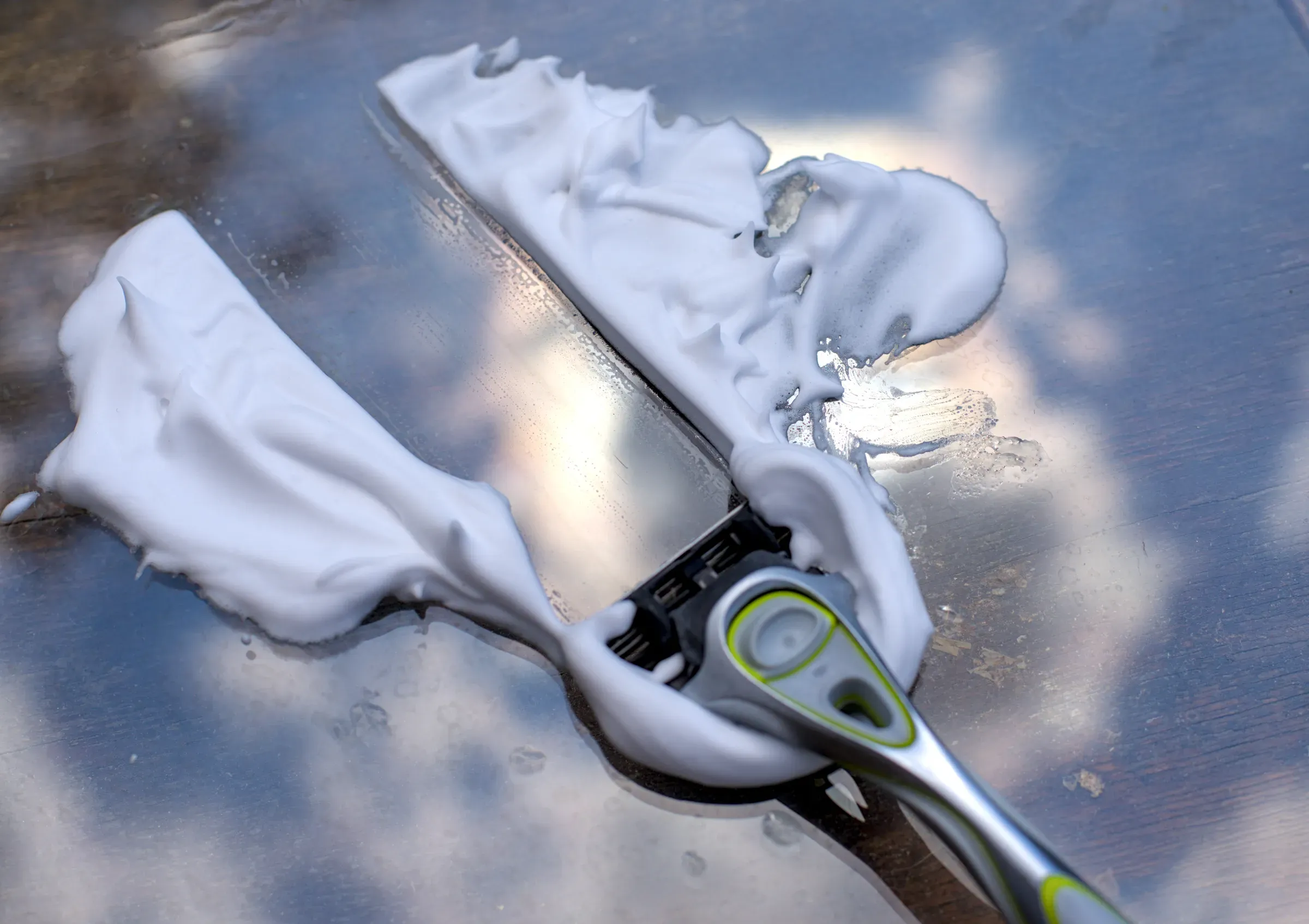
Safety razor and shaving foam on the glass, shaving & razors ecommerce
Shaving & razorsPeople replacing a shaving system they have grown tired of paying for, gift buyers looking for something that feels like an object rather than a consumable, and returning customers who want blades and nothing else.

How shaving & razors makes money

Four levers, and what limits each one here

Revenue is traffic times conversion rate times order value times purchase frequency. In this niche each lever has its own ceiling.

Traffic

Traffic: compatibility, technique and the cost-per-shave question

Three demand pools sit outside the brand name. Compatibility searches come from people who own a handle and want blades that fit it. Technique searches come from people with a problem: razor burn on the neck, ingrown hairs, irritation on sensitive skin, a first shave. Format searches come from people weighing a safety razor against a cartridge system, usually on cost and on waste. A shaving store that publishes only product pages reaches none of them. Building a technique library, a format comparison and precise fitment pages gives the catalog three ways in, and the technique content ages well because the questions never change.

Conversion

Conversion: the handle is bought with the hands

A handle is the only tactile decision in this niche, and photography flatters it badly. Buyers want the weight in grams, the length, the material, the grip texture, the balance point and a video of it being held and turned. They also want to know how long the blades will remain available, because they are agreeing to a future obligation. Publishing the weight, dimensions and blade format, showing the handle in a hand rather than on marble, and stating plainly that the blade format is a common standard where that is true removes most of the hesitation. Returns on handles fall at the same time.

Order value

Order value: the set that survives being wrapped

Gifting is a larger share of this niche than most owners plan for, and gift orders behave differently. They need a set that looks like a present, a stand or a case, a cream and a balm, arrival dates that are stated rather than estimated, and packaging that does not need to be repacked. Outside the gifting peaks, the basket grows through blade quantity tiers and through the shave routine: pre-shave oil, cream, brush, post-shave balm. Showing cost per shave as the pack size changes is the single most effective way to move someone from a small pack to a large one, because it converts a bigger number into a smaller one.

Frequency

Frequency: blades run on the customer's face, not on a calendar

Blade cadence varies more than almost any consumable, because a daily shaver with coarse hair replaces a cartridge several times faster than someone shaving twice a week. A default monthly subscription overshoots for half the list and undershoots for the rest, producing skips at one end and lapses at the other. Ask two questions at signup, how often they shave and how many blades they used last time, and set the interval from the answers. Then let customers change it in one click from inside the reminder itself. Cadence accuracy, not discount depth, is what keeps a blade subscription alive past the first few months.

Search visibility

Search: fitment pages, shave problems and the safety razor comparison

Fitment is the commercial core. Anyone typing blades that fit a particular handle, or asking whether a cartridge is compatible with a given system, is minutes from a purchase. Those pages need the handle named in the heading, the compatible blade formats listed without hedging, the pack sizes and a clear statement of what does not fit. They are unglamorous and they carry a disproportionate share of the revenue.

Problem content is how the brand reaches people who are not yet customers. Razor burn on the neck, ingrown hairs after shaving, irritation on sensitive skin, shaving over acne, a teenager's first shave. Each deserves a page that explains the cause, the technique change that helps and the products that suit, written so it is useful even to someone who buys nothing.

The third pillar is format comparison. Safety razor against cartridge, single blade against multi-blade, electric against wet shaving, each written as a fit guide rather than an argument, because both options have genuine advantages and the reader can tell when a page is pretending otherwise. Technically, blade pack counts belong as variants with the cost per blade visible, handle finishes as one item group, and gift sets as their own indexable products with their own seasonal copy.

Queries that matter

  • blades compatible with my safety razor
  • how to stop razor burn on neck
  • safety razor vs cartridge razor cost
  • best razor for ingrown hairs
  • double edge blade sampler pack
  • shaving kit gift set for men
  • how many shaves per cartridge

Fitment pages that name specific handles, technique guides that solve one shaving problem properly, and even-handed format comparisons rank in this niche. Product pages with a paragraph of heritage copy do not.

AI answers

AI answers: fit, technique and what a blade really costs

Assistants field the questions shoppers find tedious to research: which blades fit a given handle, how many shaves a cartridge lasts, why the neck gets irritated, whether a safety razor is cheaper over a year. Stores get named in those answers when the fitment data is written as text rather than drawn in a compatibility chart image, when cost per shave is stated rather than left for the reader to divide, and when technique pages give a real method instead of a product pitch. We write the fitment and technique pages to be quotable in a sentence, keep the blade format wording identical across the site and the feed, and make sure the pages need no script to render.

Which blades fit this razor handle?
How many shaves should I get from one cartridge?
Is a safety razor cheaper than cartridges over a year?
What causes razor burn on the neck and how do I stop it?
Can I take a safety razor and blades on a plane?

Questions shoppers put to assistants. A store gets named when its pages answer them in plain text.

Google Shopping and Merchant Center

Google Shopping and Merchant Center for razors and blades

Blades are sold by count, so the multipack attribute and unit pricing decide whether a listing looks competitive. A pack of ten priced as a pack of ten, next to a competitor whose feed says nothing about quantity, wins the comparison every time the shopper is doing the division. Handle finishes belong in one item group so a single product does not appear four times, and blade format belongs in the title, because format is what the query contains.

The policy question in this niche is classification. Blades and open razors can be caught by the weapons and dangerous products policies when the category, imagery or wording reads more like a knife than a grooming tool. Keeping the product category at the shaving node, avoiding imagery of a blade held against skin or presented aggressively, and describing the item as grooming equipment keeps listings clear. Age restrictions apply in some markets for loose blades, and those need to be reflected rather than discovered.

Gift sets need their own handling in the feed. They are bundles, they change price seasonally, and their availability has to be accurate to the day during December, because an availability mismatch during the gifting window is the most expensive feed error a shaving brand can make.

Feed attributes that decide eligibility

  • multipack with the blade count
  • unit_pricing_measure for cost per blade
  • is_bundle for gift sets and kits
  • item_group_id for handle finishes
  • product_detail for blade format and compatibility
  • google_product_category at the shaving and grooming node
  • gtin or identifier_exists

Disapprovals we see in this niche

  • Loose blade listings caught by weapons or dangerous products classification
  • Aggressive blade imagery flagged under the shocking content policy
  • Blade counts missing so unit pricing misrepresents the price
  • Gift set availability out of date during the December window

Meta and social ads

Meta and social ads: the shave itself, filmed honestly

Nothing outperforms a real shave filmed in real time. The lather, the angle, the sound of the blade, the rinse. Slow-motion product spins do very little in this niche because the audience is trying to judge whether the thing works on a face like theirs. Cost breakdowns perform well too, laid out simply as a year of blades against the alternative the viewer already buys. Gift creative needs a completely different treatment, aimed at someone who does not shave and is buying for someone who does, which means showing the box, the presentation and the delivery date rather than the technique.

Policy in this niche is about blades and bodies. Creative that shows a blade in a threatening context, or lingering close-ups of a blade against skin, can be rejected under violent or graphic content rules. Ads implying the viewer is unkempt or has a grooming problem run into personal attributes. Body hair advertising is permitted but is reviewed more strictly for some placements, so it is worth having compliant alternate cuts ready before a launch rather than during it.

  • One uncut pass down the cheek and neck with no edit
  • A year of blade spend laid out on a table, side by side
  • The unboxing of a gift set exactly as the recipient will see it
  • A first-shave walkthrough filmed for someone who has never done it
  • The handle turned slowly in a hand so the weight reads on camera

Policy line

Avoid blades presented in a threatening or graphic way, avoid implying the viewer is unkempt, keep body hair content within the stricter review standards that apply to some placements, and confirm age restrictions where loose blades are sold.

Conversion and the store

The store: choosing a system you cannot hold

Two decisions happen on this store and they need different pages. The handle decision is tactile and long term, so the page must carry weight, length, material, grip, balance and a video of it in a hand, plus a straight answer on how blades will be supplied in future. The blade decision is arithmetic, so the pack selector must show cost per blade or per shave as the quantity changes, and the fitment must be confirmed on the page rather than left to the customer's memory.

Gift orders are a third experience entirely and most stores never build it. A gift buyer needs a set page with the contents listed as objects, a delivery date rather than a shipping estimate, a gift note field and no discount code box shouting for attention. On mobile, the pack selector should sit above the fold with the per-blade price attached, and the compatibility statement should be plain text near the top, because the most common failed purchase in this niche is blades that do not fit the handle in the cabinet.

Objections the page must answer

  • “Will these blades fit the handle I already have”
  • “How heavy is it and how does it feel in the hand”
  • “What is this actually costing me per shave”
  • “Will these blades still be available in two years”
  • “Will it arrive wrapped and in time to be given”

Email, SMS and retention

Email and SMS: cadence set by the face, not by the month

Blade reordering is the entire programme, and it works only when the interval is personal. Ask at signup how often they shave and how long the last pack lasted, then set the reminder from that and let it be adjusted in one tap from the message. A customer who edits their cadence twice is far more valuable than one who cancels because the third pack arrived while the second was unopened. The reminder should name the blade format, not just the brand, since many customers cannot recall which they bought.

Around the handle purchase, a short technique series prevents the disappointment that causes early churn. Angle, pressure, pass direction and blade freshness are the four things that decide whether a new safety razor user stays. Gifting needs its own annual sequences with real order deadlines, and a January flow that reaches the recipient rather than the buyer, since the person who will reorder blades is the one who unwrapped the box. SMS suits the reorder nudge and the last-order-date reminder in December.

  1. Shave technique series

    Days one, four and ten after a first handle order

  2. Blade reorder

    Interval set from declared shave frequency, adjustable in one tap

  3. Gift order deadline

    The final week before each posting cut-off

  4. Recipient welcome

    Early January and the week after Father's Day

  5. Cadence correction

    After a second skip or an early reorder

Where revenue leaks

The leaks we find in shaving & razors stores

The Growth Analysis ranks these against your own numbers and says which to close first.

Get a Growth Analysis for your shaving brand
  • Subscriptions cancelled because the blades pile up

    A single default interval sends the same quantity to a daily shaver and to someone who shaves twice a week. The second group cancels within three orders, and the report calls it churn rather than a cadence error.

  • Gift buyers who never become blade buyers

    The set is delivered, the recipient enjoys it, and no message ever reaches them because the email address on the order belongs to the giver. The reorder revenue that justified the gift discount never appears.

  • Fitment left to the customer to guess

    Blade listings describe the pack but never state which handles they fit. The order arrives, the blade does not seat properly, and a hygiene-restricted product generates a refund and a bad first impression.

  • Handle photography that oversells the object

    Studio lighting on a heavy-looking finish sets an expectation the parcel cannot meet. Without weight and dimensions on the page, the return rate on handles quietly funds a competitor's advertising.

  • December stockouts left live in the feed

    A gift set sells through and the availability signal lags by a day. Clicks keep arriving and landing on an out of stock page during the only fortnight of the year when that traffic was cheap to earn.

Platform notes

Where the platform changes the work

Shopify

Handle finishes belong in one product with variants so the item group stays intact in the feed, while blade packs work better as separate products with quantity variants so cost per blade can be displayed. A metafield holding compatible blade formats drives the fitment statement, the filters and product_detail from a single place.

WooCommerce

Variable products handle blade counts well, but the per-blade price has to be calculated and rendered rather than left implicit. Gift sets are cleanest as grouped or bundled products so stock decrements correctly during the December window when availability accuracy matters most.

BigCommerce

Complex rules can drive kit pricing without duplicating SKUs, and shared option sets keep blade formats consistent across the catalog. Seasonal gift collections should be scheduled with real date logic so the set pages disappear cleanly rather than lingering into January.

Questions

Shaving & razors owners ask us

By CartKernel · Last reviewed

How do we stop a blade subscription from cancelling in the third month?

Fix the interval before you touch the discount. Collect shave frequency at signup, set the cadence from it, and put a one-tap adjustment inside every reminder so changing the schedule is easier than cancelling. Most cancellations in this niche come from arriving too often, and the cure is scheduling accuracy rather than a deeper offer.

Do blade listings really get flagged as weapons?

It happens when the category, the imagery or the wording reads more like a bladed weapon than a grooming product. Keeping the product category at the shaving node, describing the item as shaving equipment, and avoiding aggressive or threatening blade imagery resolves most of it. Some markets also apply age restrictions to loose blades, which need to be set deliberately.

How should we handle gift season without wrecking the rest of the year?

Treat it as a separate audience with separate campaigns, separate creative and its own budget line, then measure it on the reorder revenue it produces rather than on the December order alone. The recipient, not the buyer, is the future customer, so the January flow that reaches them is as important as anything running in December.

Is it worth writing shaving technique content when we sell hardware?

It is the cheapest way to reach people who are not shopping yet, and it directly reduces churn among people who are. A new safety razor user who is not taught the angle and pressure concludes the product is uncomfortable. The same pages get quoted by assistants and earn links that product pages never attract.

Should we show cost per shave on the product page?

Show cost per blade, which you can state honestly, and let the shopper apply their own shave count. Claiming a specific number of shaves per blade is a promise you cannot keep across different beards and skin types. The arithmetic still does its job, and it moves people up the pack sizes without overstating anything.

What is the fastest search win for a new razor brand?

Fitment pages. They are quick to build, the queries are precise, the competition is largely marketplace listings with no page behind them, and the traffic converts because the buyer already owns the handle. Technique and comparison content takes longer to establish but builds the audience the gifting season monetises.

Grow your shaving & razors store.

A free Growth Analysis ranks what your store should fix first, by revenue at stake, in about a week.