Skip to content

Electronics & gadgets · ecommerce growth

Refurbished electronics marketing agency

Nobody buying refurbished is worried about the price, they are worried about the seller. They want to know what your grade B actually looks like, what battery health they will receive, who honours the warranty, and whether the unit is genuinely unlocked. We build refurbished stores around answering all four in public: grade definitions written in concrete terms, condition data that matches in the feed and on the page, single-unit inventory that stays accurate, and post-purchase communication that turns a nervous first order into a repeat customer.

The buyer, in brief

Consideration
A few days for a phone or a laptop, longer where the buyer is comparing sellers rather than models
Purchase frequency
One device every two to four years per person, with cases, chargers and screen protection immediately after, and a trade-in when the next upgrade comes
Seasonality
Back-to-school and the holiday weeks are the strongest periods, with a spike after each major device launch when trade-ins flood in and prices on the previous generation fall
Price band
Below new throughout, with grade tiers creating several price points for the same model and a clear premium for higher battery health
Return risk
Higher than new-goods retail and almost entirely about expectation: cosmetic condition that did not match the grade, battery below what the buyer assumed, or accessories they expected in the box
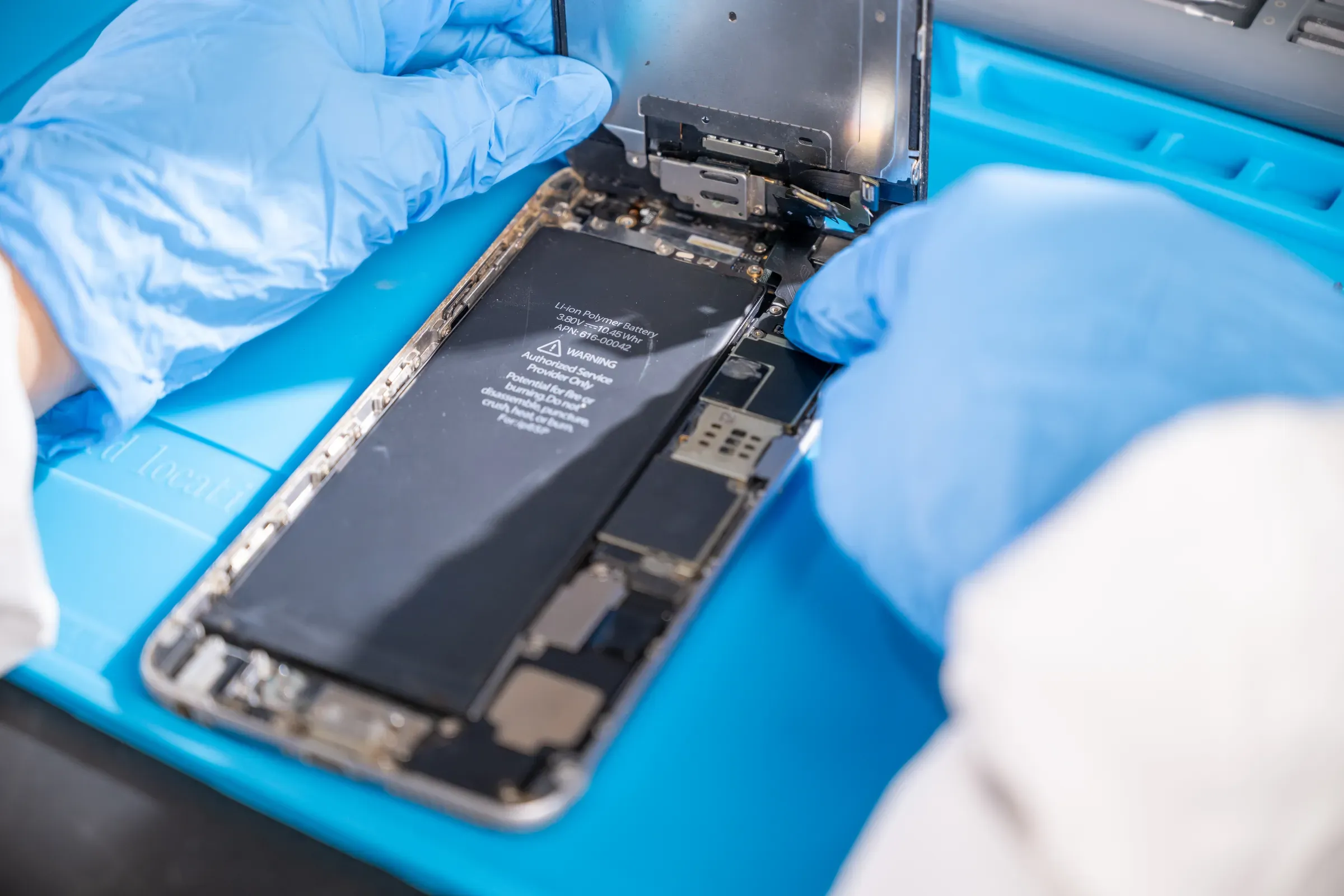
Smartphone technician repairing disassembled mobile phone hardware, refurbished electronics ecommerce
Refurbished electronicsPrice-aware buyers who have decided the model they want and are now choosing a seller, along with parents buying a first device, small businesses fitting out a team and people replacing something broken. They compare grade definitions between sellers, look for battery health figures, check the warranty length and the returns window, and read reviews about what actually arrived.

How refurbished electronics makes money

Four levers, and what limits each one here

Revenue is traffic times conversion rate times order value times purchase frequency. In this niche each lever has its own ceiling.

Traffic

Traffic: the model name with a condition word attached

Search demand here is model-led and condition-led at the same time. People type a device name followed by refurbished, renewed, used or unlocked, and they type grade and battery health questions on their own. Most refurbished stores build one page per product listing and nothing else, which leaves the explanatory demand untouched. The traffic work is a page for every model the store regularly stocks that survives individual units selling out, plus content that defines the grades, explains what refurbished means compared with used and open-box, and covers battery health, network locking and warranty. Those explainers rank because the alternative results are marketplace listings that explain nothing.

Conversion

Conversion: define the grade in things a stranger can picture

Grade labels mean nothing until they are described physically. Excellent, good and fair are marketing words. Faint marks not visible at arm's length, a scratch under a stated length on the frame, a screen with no visible marks when powered on: those are descriptions a buyer can hold you to, and being held to them is exactly what builds the trust that converts. The same applies to battery health stated as a minimum percentage, to whether the charger and cable are original or aftermarket, and to whether the device is unlocked for all carriers. Photographs of the actual unit, where the operation allows it, outperform every trust badge on the page.

Order value

Order value: protect the device that was just bought carefully

Somebody who has thought hard about buying a used phone is unusually receptive to protecting it. A case, a screen protector, a charger that was not in the box and an extended warranty are all natural additions in the same session, and the extended warranty in particular is high margin and directly addresses the anxiety that brought them to the page. Bundling a device with protection at a modest combined price raises order value while reducing the accidental damage claims that follow later. Business buyers taking several units want a different bundle: matched configurations, a longer warranty and a single invoice.

Frequency

Frequency: trade-in closes the loop

The repeat cycle in refurbished is longer than most niches, but it has an unusual advantage: every customer is holding an old device, and every customer will eventually replace the one they bought. Trade-in is both a supply channel and a retention mechanism, and it is the reason a refurbished store can afford to acquire a customer that a pure reseller cannot. A store that offers a valuation at the moment somebody is browsing an upgrade, and that keeps a record of what each customer bought and when, can time the next conversation accurately. Accessories and repairs fill the years between.

Search visibility

Search for refurbished devices: models, grades and the trust questions

The structural problem is that inventory is serialised. A specific unit sells and the page it lived on becomes worthless, which is why so many refurbished stores have thin catalogs full of dead links. The fix is a model page that persists regardless of individual stock, listing the grades and configurations currently available, holding the specification and the model history, and offering a notification when a particular grade returns. That page can rank for years while the units beneath it turn over weekly.

The explanatory layer is where a refurbished seller separates itself. What refurbished means in this store, how grading is done, what battery health means and how it is measured, what unlocked means and how to verify it, what the warranty covers and who fulfils it, and how the returns window works. These pages are read closely by people about to spend real money with a seller they have not used before, and they are the pages that earn links from consumer advice sites.

The technical work is unglamorous and decisive: never deleting a model page when stock runs out, canonical handling so grade and capacity variants do not compete, structured data that reflects the actual condition and price of what is available, and an internal linking pattern that keeps low-stock models discoverable rather than orphaned.

Queries that matter

  • refurbished phone battery health 90 percent
  • what does grade b refurbished mean
  • renewed vs refurbished vs used difference
  • unlocked refurbished laptop with warranty
  • is refurbished worth it compared to new
  • refurbished tablet for a student
  • how to check if a refurbished phone is unlocked

Persistent model pages that survive stock changes, plain definitions of grading and battery health, and honest comparisons of refurbished against new rank here. Individual unit listings and thin category pages that empty out when stock sells do not.

AI answers

AI answers: the trust questions assistants field about refurbished

Assistant questions in this category are about risk rather than product. What does a grade mean, how much battery life is left, is there a warranty, can it be returned, is it locked to a network. Those answers are specific to each seller, which is unusual and useful, because it means a store with clearly written grading and warranty pages can be cited where a marketplace listing cannot. The requirement is precision: grade definitions in measurable terms, battery health as a stated minimum, warranty length and who provides it, and a returns window in days. Vague reassurance is not citable, and it does not convert either.

What is the difference between refurbished, renewed and used?
How much battery life will a refurbished phone have left?
Does a refurbished device come with a warranty and who honours it?
Will a refurbished phone work on my network?
What comes in the box with a refurbished device?

Questions shoppers put to assistants. A store gets named when its pages answer them in plain text.

Google Shopping and Merchant Center

Merchant Center for refurbished stock: condition, identifiers and fast stock updates

The condition attribute is the foundation and it is not optional. Refurbished stock is submitted as refurbished, used stock as used, and neither as new, because a condition mismatch is treated as a misrepresentation of the product rather than as a data error. Google also operates a certified refurbished designation with its own requirements around warranty and returns, and where a seller qualifies it is worth pursuing, because it puts the reassurance directly into the listing where the comparison happens.

Identifiers stay with the original product. A refurbished device carries the manufacturer's GTIN and MPN, which is how it appears in the same comparison as new units of the same model. That comparison is the point: a shopper looking at the model sees your price alongside new, and the condition attribute explains the gap. What breaks this is stale stock. Serialised inventory sells one unit at a time, so availability has to update within minutes rather than overnight, or the account accumulates availability mismatches and the buyers who click get an empty page.

Campaigns should be split by grade band and by device value, because a top-grade recent flagship and an entry-grade older model attract very different buyers and support very different targets.

Feed attributes that decide eligibility

  • condition set to refurbished or used, never new
  • the original manufacturer gtin and mpn retained
  • product_detail for grade, battery health minimum and lock status
  • availability updated in near real time for single-unit stock
  • google_product_category matching the device, not a used-goods node
  • custom_label for grade band and device generation

Disapprovals we see in this niche

  • Condition mismatch between the feed, the page and the listing description
  • Availability mismatch on serialised units that sold minutes earlier
  • Price mismatch where grade pricing on the page differs from the feed
  • Descriptions implying a device is new or sealed when it is refurbished

Meta and social ads

Social creative that shows the actual condition

The strongest creative in refurbished is the inspection itself. Footage of a device being tested, graded and packed, a close look at what a stated grade really means on a real unit, a battery health screen shown on camera, and the box being opened so the buyer knows exactly what arrives. This works because it addresses the doubt directly instead of talking around it, and because very few sellers are willing to show it.

Audiences respond to context rather than to discount framing. Parents buying a first device, students, and people replacing something broken all have different reasons to consider refurbished, and each deserves its own creative rather than a single price message. Environmental angles are legitimate here and perform well, but any claim about waste avoided or emissions saved has to be phrased carefully and supported, since unsupported environmental claims attract both regulatory attention and platform scrutiny. Keep condition language in ads identical to the grading page, because a mismatch between an ad and a product page is a returns problem before it is a policy one.

  • A device inspected, graded and packed, filmed end to end
  • Two grades of the same model shown side by side in daylight
  • A battery health screen shown on camera before dispatch
  • An unboxing that states plainly what is and is not included
  • A customer explaining why they chose refurbished for a first phone

Policy line

Never present a refurbished unit as new or sealed, keep grade and battery language identical to the grading page, and support any environmental claim with something specific rather than a general statement about sustainability.

Conversion and the store

The page has to make the grade physical

Conversion in this niche is trust engineering. The grade definition belongs on the product page itself, written in observable terms, not linked to from a footer. Battery health should be a stated minimum for the grade rather than a range with no floor. The box contents need listing item by item, including whether the charger is original or aftermarket. Warranty length and who honours it sit beside the price, and the returns window is stated in days with a plain description of what happens if the unit is not as described.

Where the operation can support it, photographs of the actual unit rather than stock imagery change conversion more than any other single change, and they reduce returns because expectations are set by the real item. Reviews should be surfaced by what they say about condition accuracy rather than by star average, since that is the specific reassurance this buyer wants. On mobile, the grade selector and the battery health figure need to sit above the specification list, because those two facts decide the purchase and everything else is confirmation.

Objections the page must answer

  • “What does this grade actually look like in person”
  • “How much battery capacity is left”
  • “Is it unlocked and will it work on my network”
  • “What exactly is in the box”
  • “Who fixes it if it fails in three months”
  • “How do I return it if it is not as described”

Email, SMS and retention

Flows for a buyer who is nervous until the parcel arrives

The most valuable message in this niche goes out between the order and the delivery. A short note that repeats what grade was purchased, what battery health to expect, what is in the box and how to check the device on arrival removes most of the anxiety and prevents the returns that come from surprise rather than from fault. It costs nothing and it is skipped by most sellers.

After delivery the sequence covers setup, unlocking verification, warranty registration and protection, since a customer who has just received a device is at their most receptive to a case and a screen protector. Restock alerts by model and grade are the highest-converting broadcast in the category, because buyers wait for a specific configuration and will act immediately. Later, the trade-in conversation is timed from the purchase date rather than from a campaign calendar, and it serves two purposes at once by bringing in supply and starting the next sale.

  1. What to expect before it arrives

    Between dispatch and delivery

  2. Arrival check and protection

    The day after delivery

  3. Restock alert by model and grade

    When a matching unit enters stock

  4. Warranty and coverage reminder

    Shortly before the standard warranty period ends

  5. Trade-in and upgrade

    Eighteen to thirty months after purchase, by device

Where revenue leaks

The leaks we find in refurbished electronics stores

The Growth Analysis ranks these against your own numbers and says which to close first.

Get a Growth Analysis for your refurbished electronics store
  • Model pages that disappear when the last unit sells

    Serialised stock turns over constantly. Deleting the page each time discards the ranking the store spent months earning and leaves a catalog that looks empty to both shoppers and crawlers.

  • Grades described with adjectives instead of measurements

    Excellent and good mean whatever the buyer imagines, which is always better than what arrives. Vague grading is the direct cause of most returns and most negative reviews in this niche.

  • Availability updated once a day on single-unit stock

    A unit that sold this morning and is still advertised this afternoon produces a disapproval, a wasted click and a shopper who now doubts everything else on the site.

  • Battery health mentioned only in a policy page

    It is one of the two facts that decide the sale. Leaving it out of the listing means the buyer either assumes the worst or asks a question that delays the order past the point of purchase.

  • Trade-in run as a separate business

    When trade-in has no presence on the product pages, the store pays full acquisition cost for every customer and buys its inventory from wholesalers at a worse price than its own customers would accept.

Platform notes

Where the platform changes the work

Shopify

Grade, battery health minimum, lock status and box contents belong in metafields, with grades as variants of a persistent model product so the page survives stock turnover. Inventory sync frequency matters more than anything else in the build, since single-unit quantities go to zero constantly.

WooCommerce

Workable for large serialised catalogs when grade and capacity are global attributes and stock is driven from the inspection system, though performance needs attention as variation counts grow across hundreds of models.

Headless

Worth it where grading, trade-in valuation and inventory live in an internal system and the storefront needs to reflect real-time condition and stock without a nightly sync gap.

Questions

Refurbished electronics owners ask us

By CartKernel · Last reviewed

How should we define our grades so buyers actually trust them?

In observable terms rather than adjectives. Say what a mark looks like, at what distance it becomes visible, what the screen shows when powered on, and what the battery health floor is for that grade. Then hold to it, because grade definitions are the promise the whole business rests on and a single mismatch generates a review that outlives the sale.

Can refurbished products appear alongside new ones in Google Shopping?

Yes, and that comparison is an advantage rather than a risk. Keeping the original manufacturer identifiers means your listing appears against the same model, and the condition attribute explains the price difference. What must never happen is submitting refurbished stock as new, which is treated as misrepresenting the product.

How do we stop pages disappearing every time a unit sells?

By separating the model page from the unit. The model page holds the specification, the grade options, the history and a restock notification, and it stays live whether or not stock exists today. Individual units become variants or inventory beneath it, so ranking accumulates instead of resetting with every sale.

Is an extended warranty worth offering on refurbished devices?

For most sellers it is, because it answers the exact worry that brought the buyer to the page and it carries good margin. It has to be described precisely: what is covered, what is not, how long it runs, who performs the repair and what happens if the device cannot be repaired. Vague coverage creates disputes that cost more than the premium.

Should we build trade-in into the store?

It is one of the strongest moves available in this niche. It supplies inventory at a better cost than wholesale, it gives customers a reason to come back at upgrade time, and it lets the store afford acquisition that a pure reseller cannot. It needs a clear valuation process, honest deductions for condition, and prompt payment.

What numbers actually tell us how a refurbished store is doing?

Margin per unit after grading, refurbishment and returns, return rate split by cause so condition mismatches are visible separately from faults, sell-through time by model and grade, the share of inventory sourced from trade-in, and repeat and referral rates, since trust in this category compounds into cheaper acquisition over time.

Grow your refurbished electronics store.

A free Growth Analysis ranks what your store should fix first, by revenue at stake, in about a week.