Skip to content

Food & beverage · ecommerce growth

Craft spirits marketing agency

Most craft distilleries cannot ship a bottle to most of the people who want one, so the website's first job is not a checkout. It has to be found by someone deciding what to pour, prove the liquid is worth asking for by name, and then send that person to a shelf, a bar or the one channel allowed to sell to them. We build distillery growth around that reality: cocktail and category content that ranks, a stockist and delivery path that works on a phone, paid channels used only where spirits are permitted, and release and gifting moments that give the year a shape.

The buyer, in brief

Consideration
Long before a first bottle from an unfamiliar distillery, short once the brand has a place on the home shelf
Purchase frequency
A bottle every one to three months for a regular pour, faster for a mixing spirit
Seasonality
Heavy in November and December, with Father's Day and the cocktail seasons as smaller peaks
Price band
Premium against the shelf around it, with single barrels and limited releases well above that
Return risk
Almost none once a bottle ships, so the risks are breakage in transit and orders placed from an address that cannot receive spirits
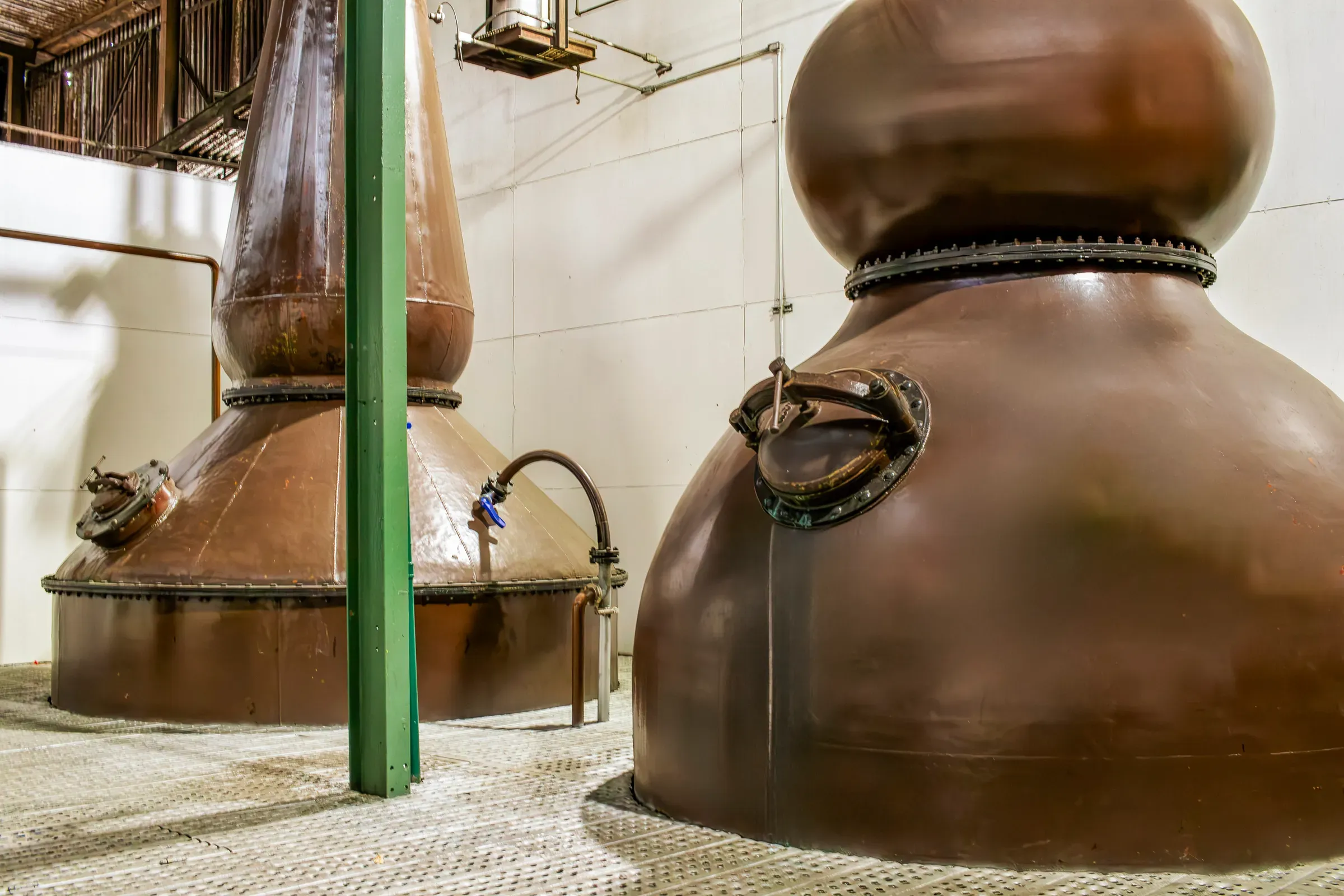
Traditional Copper Pot Stills Inside a Modern Whiskey Distillery, spirits & craft distilleries ecommerce
Spirits & craft distilleriesDrinkers choosing by category, mash bill, proof and age statement, gift buyers who want something made nearby, and bartenders deciding which bottle to put on a back bar.

How spirits & craft distilleries makes money

Four levers, and what limits each one here

Revenue is traffic times conversion rate times order value times purchase frequency. In this niche each lever has its own ceiling.

Traffic

Traffic: cocktails and categories bring people, the locator converts them

Very little spirits demand starts with a distillery name. It starts with a cocktail someone wants to make, a category they are curious about, or a gift they need this week. Those searches are winnable because the pages that currently answer them are recipe sites with no bottle behind them. We build cocktail pages that name the spirit style and link to the bottle, category explainers that teach the difference between styles honestly, and a stockist and delivery finder that turns all of that reading into a place to buy. Local intent matters too, since distillery tours, tasting rooms and bottle shops nearby carry real volume.

Conversion

Conversion: the path ends at a shelf as often as at a cart

A distillery site converts in more than one way, and only some of them look like ecommerce. Someone in a market you can ship to should reach a clean checkout. Someone outside it should reach a stockist list they can actually use, filtered to their area, current, and readable on a phone in a parking lot. Someone planning a visit should be able to book. Treating all three as conversions changes what you measure and what you fix, because a site optimised only for its cart will look broken in the majority of markets where the cart cannot legally open.

Order value

Order value: glassware, engraving and the barrel pick

Where direct sales are permitted, the basket grows through things that are not restricted. Glassware, bar tools, bitters and merchandise ship under ordinary rules and pair naturally with a bottle. Engraving and gift presentation raise both the price and the perceived occasion, and they are the difference between a bottle and a present. At the top end, a private barrel or single cask programme sells a large order to a bar, a whisky club or a group of friends, and it needs its own page, its own enquiry path and a clear explanation of how selection, bottling and pickup work.

Frequency

Frequency: releases, the list and the bar that reorders

Repeat purchase in spirits comes from three places. A release calendar gives people a reason to return, and it works best when the list hears first and the public hears second. A club or allocation list turns interest into a queue rather than a scramble. Wholesale reorders from bars and bottle shops are the steadiest revenue in the business and rarely get any marketing attention at all. We build the release rhythm, keep the list warm between drops with cocktail and process content, and set up a reorder path for trade accounts that does not run through the retail cart.

Search visibility

Spirits search: cocktail pages, category explainers and a locator that works

Search in spirits is mostly informational at the top and local at the bottom, with a thin band of product demand in between. The informational layer is cocktail recipes and category questions, and it is winnable when the page is written by people who make the spirit rather than assembled from other recipe sites. A negroni page from a gin distillery can say what its own botanicals do in that drink, which is something a generic recipe cannot claim.

The local layer is the stockist and visit demand. Pages for the tasting room, tours, and a genuinely maintained store locator carry queries that convert into visits, and visits convert into bottles at full margin. Business profile data, opening hours and event listings need to agree with the site, because a locator with a closed shop in it costs trust immediately.

The product layer is small but valuable. Bottle pages should carry the category, mash bill or botanical list, proof, age statement where one exists, cask type and the retail and delivery options for the reader's region. Where an age confirmation is used, it must not stop crawlers from reading the page, and where a market cannot buy directly, the page should still exist and rank so the brand is found and asked for by name.

Queries that matter

  • small batch rye whisky canada
  • how to make a negroni with local gin
  • cask strength single barrel bourbon
  • where to buy craft vodka near me
  • distillery tour and tasting near me
  • difference between london dry and old tom gin
  • craft gin gift set with glasses

Cocktail and category pages written by the people who distil, tasting room and tour pages, and an accurate stockist locator rank in this niche. Bottle pages alone rarely carry a distillery's search demand.

AI answers

AI answers: what assistants get asked about craft spirits

The questions assistants field here are about substitution, provenance and availability. Someone wants to know what to use instead of a spirit they cannot find, what makes one style different from another, whether a bottle can be shipped to their province or state, and which distilleries near them are open for a tasting. Stores that get named write those answers as text: proof, cask, mash bill and botanicals stated plainly, an availability section that says which markets can order directly and which cannot, and hours and address that match the business profile. We keep those facts identical everywhere they appear, since an assistant reconciling two versions of your opening hours will usually cite neither.

Can this distillery ship whisky to my province?
What can I use instead of an aged rum in a cocktail?
Which distilleries near me are open for tastings this weekend?
What does cask strength mean on a bottle?
Which craft gins are made without juniper-forward botanicals?

Questions shoppers put to assistants. A store gets named when its pages answer them in plain text.

Google Shopping and Merchant Center

Feeds for a distillery: eligibility, merchandise and local inventory

Hard spirits are the most restricted alcohol category on the major platforms, and eligibility varies by country in ways that differ from beer and wine. That question gets answered before any feed work, because building a spirits feed for a market that will not serve it is time spent for nothing. Where listings are permitted, the usual alcohol conditions apply: age-restricted targeting, exclusions for regions you cannot serve, and a landing page a reviewer can reach.

Merchandise is the part of the catalog most distilleries forget. Glassware, bar tools, apparel and non-alcoholic mixers are ordinary products with ordinary eligibility, and they can carry a feed and a Shopping presence even when bottles cannot. Keep them cleanly separated so a restricted product never rides along in a campaign built for merchandise.

If you have a tasting room or shop, local inventory listings are worth investigating for the market you are in, since the shortest path from a search to a sale here is often a person walking through your door. Feed hygiene is the same as anywhere: identifiers that match the label, availability that follows real stock through a release, and prices that agree with the page.

Feed attributes that decide eligibility

  • gtin from the bottle label where one exists
  • item_group_id for 375 ml and 750 ml formats
  • product_type mirroring the spirit category
  • product_detail for proof, cask and age statement
  • availability that follows release inventory
  • custom_label separating merchandise from bottles

Disapprovals we see in this niche

  • Spirits listings submitted for a country that does not permit them
  • Restricted bottles mixed into a campaign built for glassware and apparel
  • Availability mismatch after a single barrel release sells through
  • Landing page a reviewer cannot open because of a blocking age screen

Meta and social ads

Meta for distilleries: the still, the pour and the place

Social is where a craft distillery gets to show what large brands cannot: a person, a still and a process. The creative that performs is the mash going in, the spirit coming off, the cask being filled, a bottle being labelled by hand, and a bartender building one drink from start to finish. Everything is age-gated by the platform and restricted by country, and the rules about depicting consumption are stricter here than in most categories, so the camera stays on the making and the drink rather than on people drinking.

Audiences are local first. A distillery has a home market where the brand means something, and prospecting inside that radius is far more efficient than chasing national reach. Beyond it, target the markets you can actually serve, whether that is direct delivery or a strong stockist presence. Creator content needs written rights and a check that the creator has not made claims the brand cannot support, since the account carries the responsibility.

  • The spirit coming off the still, with the cut explained in one sentence
  • A cask filled and dated, then the same cask opened years later
  • One cocktail built in real time using your bottle and three ingredients
  • Hand labelling and waxing a limited release, batch number visible
  • The tasting room on a Saturday, with the booking link on screen

Policy line

Spirits creative is age-restricted and country-restricted, cannot target minors, cannot suggest that drinking solves a problem or improves performance, and cannot show excessive or irresponsible consumption.

Conversion and the store

Distillery sites: availability answered before anything else

The question every visitor arrives with is whether they can get the bottle, and most distillery sites answer it last. The fix is a single availability block near the top of every product page that says, for the reader's region, whether they can order directly, which shops carry it, and whether the tasting room has stock. That block does more for revenue than any redesign, because it converts the majority of visitors who cannot legally use the cart into people who know where to go.

After that the page has the usual work. Proof, cask, age statement and tasting language in plain words. Cocktail suggestions that use this bottle rather than a generic style. Gift presentation and engraving shown as photographs rather than described. On mobile the age confirmation should be one tap and remembered, the locator should use the phone's location without a form, and the trade enquiry link should be visible to a bar manager without hunting through a footer.

Objections the page must answer

  • “Where can I actually buy this near me”
  • “Can it be shipped to my province or state at all”
  • “What does it taste like and how should I drink it”
  • “Will it look like a gift when it arrives”
  • “How does a private barrel pick work and what does it involve”

Email, SMS and retention

Email and SMS for spirits: the release list and the trade reorder

The list is the most valuable thing a craft distillery owns, because it is the only channel that is not restricted, throttled or dependent on someone else's policy. It earns its keep when it carries the release calendar, the story behind a cask, cocktail ideas people actually make, and the tasting room calendar. Allocation drops go to the list first and are timed so that a subscriber who opens an hour late still has a chance.

Two flows matter beyond the newsletter. A visit follow-up reaches someone who came to the tasting room while the memory is fresh, and it should point at whatever they can buy from home. A trade reorder sequence keeps bars and bottle shops stocked, timed to the pace of the account rather than to a monthly send. SMS is worth using for release drops and event reminders where subscribers opted in, and win-back should reference the expression a customer bought rather than offering a discount that cheapens a premium bottle.

  1. Release and allocation notice

    List first, public announcement two to three days later

  2. Tasting room visit follow-up

    Within two days of a tour or tasting

  3. Cocktail series using your own bottles

    Every two weeks between releases

  4. Trade reorder reminder

    On the account's own reorder cadence

  5. Gifting sequence with engraving cutoffs

    From early November to the last engraving date

Where revenue leaks

The leaks we find in spirits & craft distilleries stores

The Growth Analysis ranks these against your own numbers and says which to close first.

Get a Growth Analysis for your distillery
  • A stockist locator nobody can use

    The list is a PDF, or a page of shop names with no addresses, so a visitor who was ready to buy gives up and picks a bottle they can find.

  • Cocktail content with no route to a bottle

    Recipe pages rank and collect traffic, then end without saying which of your expressions to use or where to get it, so the traffic belongs to the recipe rather than to the brand.

  • Releases announced everywhere at once

    The list, social and the public page all learn about a limited drop simultaneously, so subscribers see no benefit in staying subscribed and the next drop sells to strangers.

  • Trade accounts served through the retail cart

    A bar ordering six cases fights with a checkout designed for one bottle, and the reorder that should be automatic becomes an email thread nobody chases.

  • Age screens that hide the whole site

    The confirmation blocks crawlers as well as minors, so cocktail and category pages that should be earning search traffic are never indexed.

Platform notes

Where the platform changes the work

Shopify

Age confirmation, region-limited shipping and trade pricing are handled with apps, Functions and customer segments rather than theme edits. A stockist locator built on a metaobject stays maintainable, and the trade account path should use a separate price list rather than a discount code.

WooCommerce

Shipping zones and a role-based pricing plugin can carry both the retail and the trade side on one install, and the locator should be a queryable custom post type so the data can be updated without a developer.

Headless

Worth it when the tasting room, events, ticketing and the shop all need to share content, since a headless front end can render cocktail and category pages fully to crawlers while the age confirmation runs client side.

Questions

Spirits & craft distilleries owners ask us

By CartKernel · Last reviewed

How do we market spirits when we cannot ship to most of our customers?

By treating discovery and demand as the product of the site rather than the cart. Cocktail and category content earns the search traffic, the availability block tells each visitor their real options, and the stockist locator and tasting room turn that into sales you can measure. Direct checkout is switched on only for the markets that permit it, and everything else points at a shelf or a visit.

Are Google Shopping ads available for a craft distillery?

It depends entirely on your country and your account, and hard spirits are treated more restrictively than beer and wine on the major platforms. We confirm eligibility for your markets before any feed work. Meanwhile glassware, bar tools and merchandise are ordinary products and can run in Shopping in their own campaigns, which is often where a distillery's first feed value comes from.

Does a distillery need a store locator, and how should it work?

Yes, and it should use the visitor's location, show current stockists with addresses and links, and be editable by your sales team without a developer. A locator that is out of date does more harm than no locator at all, because someone drives to a shop that no longer carries you and blames the brand rather than the page.

What should we do with cocktail recipe content?

Write it as a distiller would, using your own bottles by name, and finish every recipe with where to get the spirit for the reader's region. Recipes that could have been written by anyone rank slowly and sell nothing. Recipes that explain why your botanicals or your cask change the drink are the reason someone asks for your bottle at a bar.

How do we sell private barrel or single cask programmes online?

With a page that explains the process end to end: how a group selects, what the barrel yields, the timeline from selection to bottling, and how collection or delivery works in your market. Then an enquiry form that reaches a person, not a ticket queue. These are large orders with long decisions, so the page has to answer everything a group would ask before they commit.

Should our bars and bottle shops order through the website?

Through their own path on it, yes. Trade accounts need account-specific pricing, case quantities, purchase order references and a reorder screen that repeats their last order in a couple of taps. Running them through the retail cart creates pricing confusion, distorts your ecommerce reporting and makes wholesale revenue look like advertising performance.

Grow your spirits & craft distilleries store.

A free Growth Analysis ranks what your store should fix first, by revenue at stake, in about a week.