Skip to content

Food & beverage · ecommerce growth

Baking brand marketing agency

Baking is the one grocery category where the customer will follow instructions exactly, which means the recipe is the product manual and the reason people find you in the first place. It is also a category where a bag of flour weighs more than the margin on it, and where a shopper with celiac disease will not buy at all unless the facility statement is clear. We build flour, mix and baking ingredient brands around those facts: recipes written to work, allergen information that answers the real question, bundles that make a heavy box worth shipping, and a bake season planned before it starts.

The buyer, in brief

Consideration
Immediate for a familiar staple, careful and research-heavy for anyone shopping around an allergy
Purchase frequency
Weekly for bread bakers, monthly for occasional bakers, with a long pause outside the season
Seasonality
A steep climb from October through December, a smaller Easter lift, and a quiet summer
Price band
Above supermarket staples, with specialty flours and certified allergen-free products higher again
Return risk
Rare, and usually caused by a split bag or an infestation concern rather than by the recipe failing
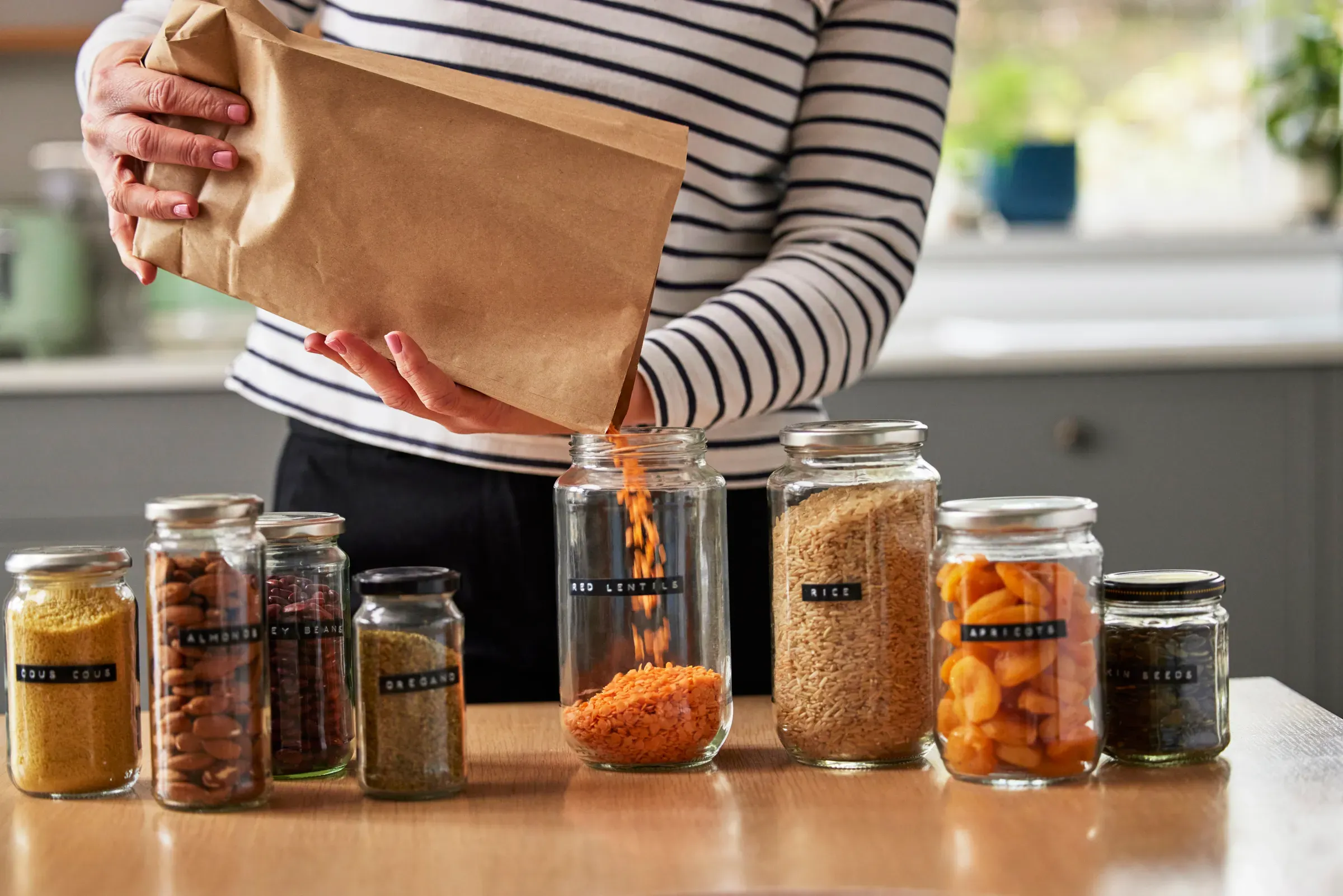
Woman Saving On Packaging By Filling Recycled Jars To Store Dried Food At Home, baking mixes & flour ecommerce
Baking mixes & flourHome bakers who follow recipes closely and weigh their ingredients, households managing celiac disease or a serious allergy, and small bakeries buying the same bag every week.

How baking mixes & flour makes money

Four levers, and what limits each one here

Revenue is traffic times conversion rate times order value times purchase frequency. In this niche each lever has its own ceiling.

Traffic

Traffic: the recipe is the category page

Almost nobody searches for a brand of flour. They search for a thing they want to bake, a substitution they need to make, or a technical problem they are having with a dough. That means recipes and technique guides are not content marketing in this category, they are the storefront. A recipe that specifies weights, hydration and the exact product it was tested with earns rankings, earns links from other bakers and sells the ingredient at the same time. The second demand pool is dietary: gluten free, dairy free, egg free and low FODMAP baking searches are enormous and are usually answered by sites with nothing to sell.

Conversion

Conversion: the recipe works and the facility statement is clear

Two things close the sale. The first is evidence the product performs, which comes from recipes tested with it, from photographs of the crumb rather than the styled slice, and from notes about how the mix behaves at altitude or in a humid kitchen. The second is the allergen statement, and vague language costs you the entire allergy audience. Someone shopping for celiac disease needs to know the certification, the facility, whether the grain is tested and what the threshold is. Writing that clearly is the difference between a nice product and one a household can actually rely on.

Order value

Order value: weight is the constraint, so the bundle is the answer

Flour is dense, cheap per bag and expensive to ship, which is the arithmetic that defeats most direct baking brands. The way out is to raise the basket rather than the price. Baking kits that assemble everything one recipe needs, cases of a staple at a per-kilogram price, and pairing a mix with the flavourings, chips or decorations it calls for all add value to a box that is already heavy. Free shipping thresholds should be calculated from real carrier weight bands, because a round number set by instinct in this category tends to lose money on almost every order that hits it.

Frequency

Frequency: a weekly bread habit and one big season

There are two repeat patterns here and they need different treatment. Bread bakers buy the same flour on a short cycle and behave like a subscription customer whether or not you sell one, so a replenishment reminder based on bag size and baking frequency captures most of that revenue. Everyone else bakes in the season, which means the entire year can hinge on getting October through December right. Retention work therefore runs on two tracks: a steady cycle for the regulars, and a well-planned return campaign that reaches last year's holiday customers before they start planning this year's baking.

Search visibility

Baking search: recipes, technique pages and dietary collections

Recipes carry the search demand, and they only work when they are genuinely usable. Weights alongside volumes, a stated hydration where it matters, the exact product used, the pan size, and honest notes about what changes in a humid kitchen or at altitude. Recipe structured data should be complete and accurate, including times and yields, because that is what makes a recipe eligible for the richer treatments in results. Every recipe links to the ingredients it uses, and every product links back to the recipes tested with it.

The second layer is technique and troubleshooting. Why a loaf did not rise, how to feed a starter, how to substitute one flour for another by weight rather than by cup, and how gluten free doughs behave differently. These pages rank widely, earn links and answer the questions that keep someone from buying a specialty product they are unsure about.

The third layer is dietary and product collections. Gluten free, whole grain, high protein, ancient grain and organic all need indexable collections with real copy. Technically, keep bag sizes as variants of one product, keep the seasonal collections live all year rather than rebuilding them each autumn, and make sure allergen information is text on the page instead of a photograph of the back of the bag.

Queries that matter

  • gluten free flour blend for bread
  • best flour for sourdough starter
  • certified celiac safe baking mix
  • dairy free brownie mix online
  • how to substitute whole wheat for white flour
  • organic all purpose flour bulk bag
  • holiday cookie baking kit gift

Tested recipes with weights, troubleshooting guides and dietary collections with real explanations rank in this niche. Product pages listing a bag size and an ingredient list on their own rarely do.

AI answers

AI answers: substitutions, ratios and whether it is safe to eat

Assistants are asked for conversions, substitutions and safety here, which is a good fit for a baking brand that writes precisely. How much of one flour replaces another, what hydration a bread flour needs, whether a mix is safe for celiac disease, what to use in place of an egg, and how long an opened bag keeps. Being cited depends on the numbers being present as text with units, on the allergen and facility statement being unambiguous, and on the recipe data being complete and accurate. We write conversion and substitution answers as their own short pages, keep the allergen wording identical everywhere, and make sure the recipe markup matches what the page actually says.

How do I substitute gluten free flour in a normal recipe?
Is this baking mix safe for someone with celiac disease?
How much flour is in a loaf of sandwich bread?
What can I use instead of egg in a cake mix?
How long does an opened bag of flour keep?

Questions shoppers put to assistants. A store gets named when its pages answer them in plain text.

Google Shopping and Merchant Center

Merchant Center for baking goods: weight, allergens and honest bundles

Shipping settings matter more here than in almost any grocery category, because the products are heavy and the cost is real. A flat rate in the feed that does not reflect what the carrier charges produces both a delivery cost mismatch and an unpleasant surprise at checkout. Weight-based rates need to be modelled from actual bag weights and carrier bands, and then reflected accurately in the feed.

Unit pricing does the second half of the work. A shopper comparing a one kilogram bag with a five kilogram sack needs the per-kilogram figure in the listing, otherwise the larger bag reads as expensive. Cases of one product are multipacks with the quantity declared, kits and gift sets are bundles with their own identifiers, and every bag size needs its own barcode from the label.

Allergen and certification data belongs in product_detail, worded exactly as the certifying body words it. This is the category where an approximate claim is most likely to be both a policy problem and a genuine safety problem, so the feed text and the packaging have to agree completely. Titles read brand, product, dietary attribute and size, since that is the query shape.

Feed attributes that decide eligibility

  • gtin for every bag and case size
  • unit_pricing_measure so price per kilogram shows
  • multipack quantity declared on cases of one product
  • product_detail for allergens, certification and facility
  • is_bundle for baking kits and gift sets
  • shipping rates modelled from real bag weights

Disapprovals we see in this niche

  • Delivery cost mismatch when a flat feed rate does not match a weight-based charge
  • Certification wording in the feed that does not match the packaging
  • Multipack left blank on cases, so a case is compared against a single bag
  • Price mismatch when a bulk discount is applied only in the cart

Meta and social ads

Meta for baking brands: the crumb, the rise and the person who cannot eat gluten

Baking is one of the most watchable things a food brand can film. The dough going from shaggy to smooth, the oven spring, the crumb pulled open, the crust cracking. Short, silent, close footage of those moments performs better than any explanation, and the product only needs to be in shot. For dietary products, the strongest creative is simply a gluten free loaf rising properly, because the audience has been given reasons to expect otherwise.

Policy here is mostly about accuracy rather than restriction. A gluten free or celiac safe claim must match the certification actually held, and broader health framing about carbohydrates, diets or blood sugar moves an ad into health rules. Audiences work well starting from your recipe readers, since someone who read a technique guide is a warm prospect, and creator partnerships are effective when the creator bakes on camera with your product and the rights are agreed in advance.

  • Dough from shaggy to smooth in ten seconds, no voiceover
  • Oven spring filmed through the glass, then the crumb pulled open
  • A gluten free loaf rising and slicing properly, start to finish
  • The kit unpacked with every component named on screen
  • One technique fixed on camera, such as shaping a boule

Policy line

Gluten free and celiac safe claims must match the certification actually held and the facility statement, and wider health framing about carbohydrates, diets or blood sugar moves creative into health rules.

Conversion and the store

Baking product pages: proof it works and proof it is safe

The page needs to answer whether the product performs and whether it is safe for this household, in that order for most shoppers and the reverse order for anyone managing an allergy. Performance comes from tested recipes linked directly from the product, crumb photography rather than styled scenes, and honest notes about handling. Safety comes from a plain allergen block: what the certification is, who issued it, what the facility handles, and how the grain is tested.

The templates that carry revenue are the kit page and the bulk page. A kit should list every component with quantities and finish with the recipe it makes. A bulk page should show the per-kilogram price beside the retail bag so the saving is visible. On mobile, keep the allergen block above the reviews, keep bag size selection to one row, and show the shipping cost early, because on a heavy product the delivery charge is a genuine part of the decision rather than a detail.

Objections the page must answer

  • “Will it actually work in the recipe I want to make”
  • “Is it certified for celiac disease and what does the facility handle”
  • “What else do I need to add to the mix”
  • “How much do I need for what I am baking”
  • “Will the shipping cost more than the flour”

Email, SMS and retention

Email and SMS: bake-alongs, the flour clock and the season countdown

The most effective list in this category teaches. A bake-along series that walks someone through a difficult bake using your products builds the habit and sells the ingredients at the same time, and it works far better than a discount because the barrier in baking is confidence rather than price. New customers should receive the recipe for whatever they bought within a day of delivery, since a bag that sits unopened is a customer who never comes back.

The flour clock handles the regulars. Set replenishment from bag size and stated baking frequency, and remember that a weekly bread baker and an occasional cake baker need completely different intervals. The season needs its own countdown, starting earlier than feels natural, with the shipping cutoff stated in every send and a last-call for anyone who baked with you last year. SMS suits restock alerts on specialty flours and the final dispatch reminder in December.

  1. Recipe for what you just bought

    Within a day of delivery

  2. Bake-along series

    Weekly for four weeks after a first order

  3. Flour clock replenishment

    Set from bag size and baking frequency

  4. Bake season countdown

    From early October to the final shipping date

  5. Trade reorder for small bakeries

    On the account's own weekly or fortnightly cycle

Where revenue leaks

The leaks we find in baking mixes & flour stores

The Growth Analysis ranks these against your own numbers and says which to close first.

Get a Growth Analysis for your baking brand
  • Recipes that never name the product

    The recipe ranks and gets the traffic, then calls for flour in general terms with no link to the bag you sell, so the visit belongs to the recipe rather than to the brand.

  • An allergen claim without the facility detail

    The label says gluten free but nothing explains the certification, the testing or what else the facility handles, so the households most willing to pay a premium quietly go elsewhere.

  • Flat shipping on a heavy product

    One rate is applied to bags of very different weights, so the small orders overcharge and the large ones lose money, and nobody notices until the margin report.

  • Season pages rebuilt from nothing each autumn

    The holiday baking collection is created in October and taken down in January, so every year it starts with no rankings, no links and no history.

  • Small bakeries buying through the retail cart

    A bakery ordering the same sack every week fights with a checkout designed for one bag, and revenue that should be a standing order gets credited to whichever ad they last clicked.

Platform notes

Where the platform changes the work

Shopify

Bag sizes belong as variants with weight set correctly so carrier-calculated rates work, and allergen and certification text should live in metafields so the same wording reaches the page, the feed and the flows. Recipes are better as a structured content type than as blog posts, so each can link to the products it uses.

WooCommerce

A recipe post type with proper structured data and a relationship to products keeps the content and the catalog connected, and shipping classes need to be set per bag weight rather than left on a single flat rate.

BigCommerce

Price lists can carry small bakery pricing without a second storefront, and the shipping rules need weight bands built from real carrier tables so heavy sacks are quoted honestly at checkout.

Questions

Baking mixes & flour owners ask us

By CartKernel · Last reviewed

Do recipes actually sell flour, or are they just traffic?

They sell, provided each one names the exact product it was tested with, links to it, and gives weights so the bake works. A recipe that calls for generic flour earns a visit and nothing else. A recipe that specifies your bread flour, your hydration and your timing gives the reader a reason to buy the bag rather than pick one up at the supermarket.

How should we present gluten free and allergen information?

As a dedicated block on every product, written in the certifier's language, covering the certification, the testing threshold, what the facility handles and how the grain is sourced. This audience reads it carefully and will choose the brand that is specific over the brand that is reassuring. Vague wording loses the sale and, more importantly, is a genuine safety issue.

How do we handle shipping on something as heavy as flour?

Model it from real bag weights and carrier bands, set free shipping thresholds above the point where a box pays for itself, and reflect the same rates in the feed so nothing changes at checkout. Then build the basket up with kits, cases and complementary ingredients, because on a heavy product the second and third item are where the margin comes from.

When should we start our holiday baking campaigns?

Earlier than most brands do. People buy ingredients days before they bake and start planning weeks before that, so the season builds through October and peaks well ahead of the holiday itself. Budgets, landing pages and stock decisions should be finished in September, and the last shipping date needs to appear in every ad and email from late November.

Should our seasonal collections stay up all year?

Yes. Taking them down means rebuilding the same page every autumn with no accumulated rankings or links. Leave the collection live, keep the copy updated, mark items unavailable rather than deleting them, and point visitors to what is in stock now. A page that has existed for three seasons will outrank one created last month for the same terms.

Can small bakeries and home bakers use the same store?

One store, two paths. Trade customers need account pricing, larger formats, purchase order references and a fast reorder screen, while home bakers need recipes and kits. Keeping them separate in the reporting matters just as much, because a bakery's standing weekly order will otherwise make an ad campaign look far more effective than it is.

Grow your baking mixes & flour store.

A free Growth Analysis ranks what your store should fix first, by revenue at stake, in about a week.