Skip to content

Food & beverage · ecommerce growth

Tea brand marketing agency

Someone typing tea for sleep or ceremonial grade matcha has a need and no brand in mind, and the store that answers in plain language wins the first tin. Tea buyers compare type, origin, caffeine and steeping instructions across several tabs, they usually try a sampler before they commit to a full tin, and a large share of what they buy is a gift for someone else. We build tea stores around those three facts: a catalog organized by type and by need that search engines can index, ads and pages that describe a tea without making a health claim, and a sampler-to-tin path that turns a first order into a habit.

The buyer, in brief

Consideration
A day or two for a first tin, longer for a matcha or a premium oolong where grade and harvest matter, instant for a repeat order
Purchase frequency
A 50 to 100 g tin lasts a daily drinker four to eight weeks; matcha runs out faster; gift buyers return at the next occasion
Seasonality
Autumn and winter carry the year, with a second peak around Mother's Day; iced tea and cold brew blends hold the summer; first-flush and new-harvest releases create spring moments
Price band
Wide, from everyday blends to premium single-estate teas and ceremonial matcha, with samplers as the low-risk entry
Return risk
Rare; opened tea is not returnable, and the complaints that do arrive are about taste expectations set wrongly by the description
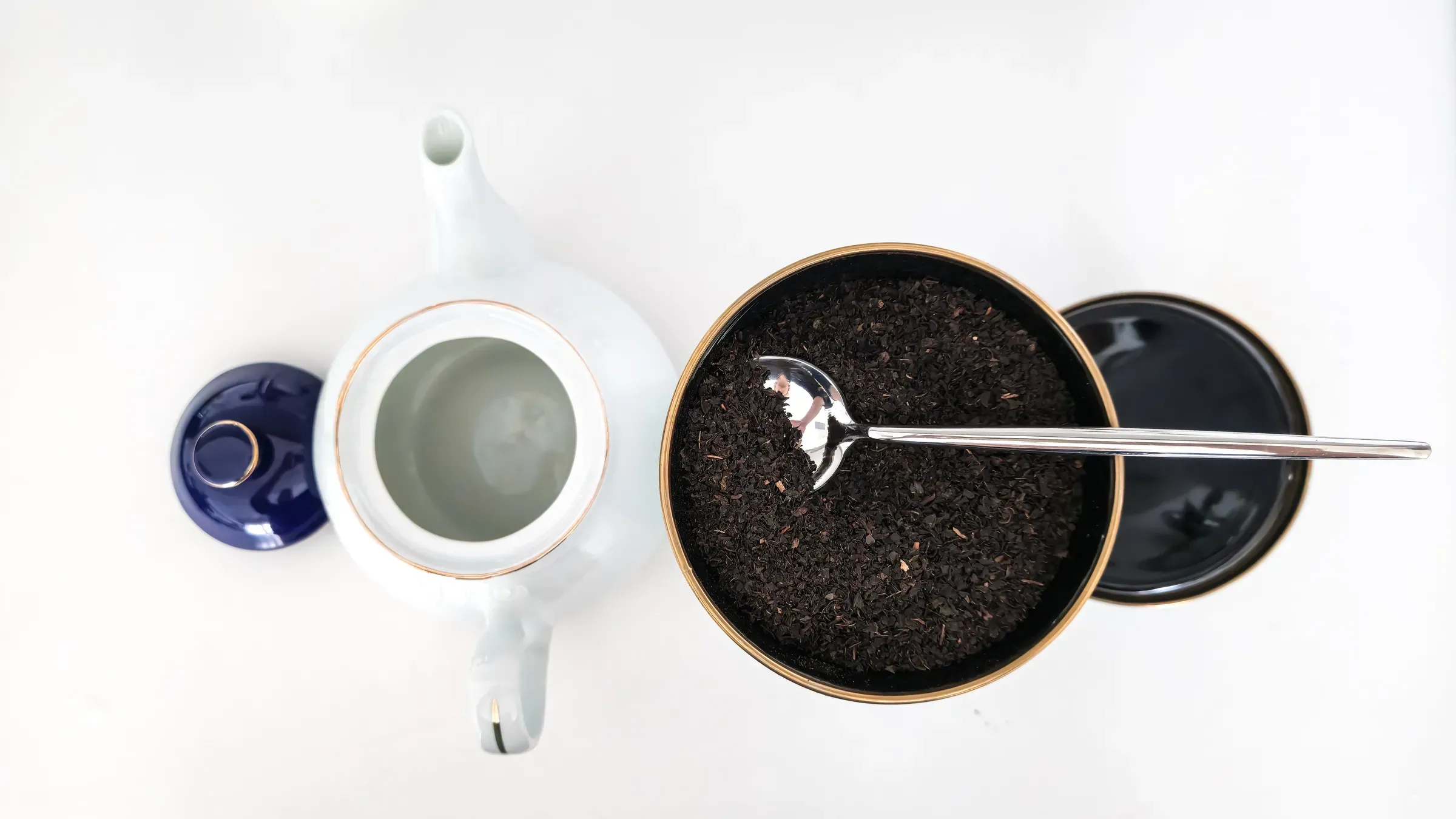
Preparing traditional loose leaf black tea in a white porcelain teapot, top view, tea ecommerce
TeaDaily drinkers looking for a better version of what they already brew, wellness-led shoppers searching by benefit, matcha and oolong enthusiasts who know grades and harvests, and gift buyers. They check origin, caffeine level, ingredients in a blend and brewing parameters before trusting a store.

How tea makes money

Four levers, and what limits each one here

Revenue is traffic times conversion rate times order value times purchase frequency. In this niche each lever has its own ceiling.

Traffic

Traffic: type, origin and need are three separate maps

Tea demand arrives along three axes that most stores collapse into one. Type queries (oolong, white tea, pu-erh, rooibos) want a page that explains the category and lists what you sell in it. Origin and grade queries (Darjeeling first flush, ceremonial grade matcha, Taiwanese high mountain oolong) want depth on harvest and processing. Need queries (tea for sleep, caffeine-free tea for the evening, tea to drink iced) want a curated answer. Each axis needs its own indexable collections with real copy, and the product pages have to link into all three. A store with one Loose Leaf collection and a blog about wellness leaves all of it to marketplaces and to large multi-brand retailers.

Conversion

Conversion: the sampler removes the only real risk

The risk in buying tea online is taste, and no description fully removes it. A sampler of four or five teas at a modest price is the best conversion device in the niche because it lets a nervous buyer try before committing to a full tin, and it gives the store a second-order signal about what they liked. The product page then has to do the remaining work: caffeine level stated plainly, water temperature and steep time in a scannable block, ingredients for blends with the flavour notes, how many cups a tin makes, and whether the leaf can be re-steeped. Stores that bury brewing instructions in a tab or describe every tea as smooth and delicious lose the buyer to a page that is specific.

Order value

Order value: teaware and the gift set

A single tin rarely justifies its own shipping, so order value comes from three places. Teaware sold beside the tea it suits (an infuser with loose leaf, a whisk and bowl with matcha) raises value without discounting, and it is what a new tea drinker needs anyway. Gift sets with a tin, an accessory and packaging that does not need wrapping carry higher prices and sell year round. Larger sizes with the per-100 g price visible move daily drinkers up from the 50 g tin. A free-shipping threshold placed just above two tins and shown as progress in the cart does more than any bundle discount.

Frequency

Frequency: slower than coffee, so the flow must be patient

A tin of tea lasts longer than a bag of coffee, which is why coffee-style subscriptions often underperform here. Frequency work in tea respects the slower clock: a replenishment reminder timed to the tin size and the number of cups it makes, a subscription pitched at every six to eight weeks rather than monthly, and a rotating discovery box for the drinker who wants variety more than a standing order. The sampler buyer is the key: the flow that asks which of the five they liked and offers the tin of that one converts far better than a generic second-order discount. Gift buyers are a separate frequency loop driven by the calendar.

Search visibility

Ranking for tea: category explainers, grade pages and need-led collections

Tea rewards stores that explain. The category queries (what is oolong tea, white tea versus green tea, is rooibos caffeine free) sit at the top of every buying journey, and a collection page that opens with a real explanation, then shows the teas you sell in that category, ranks for both the question and the purchase. We build those as collections with editorial copy inside the platform, not as blog posts that link to a bare grid, so the ranking page is also the buying page.

Grade and origin pages are where a specialist store beats a generalist. Ceremonial versus culinary matcha, first flush versus second flush Darjeeling, and named growing regions each deserve a page with harvest timing, processing and what the difference tastes like. Need-led collections (tea for sleep, teas without caffeine, teas to brew iced) are built the same way, written to describe the teas rather than promise an outcome, because the same page has to survive ad policy review when it becomes a landing page.

Product pages carry steep temperature, time, leaf quantity, caffeine level, ingredients and origin as text, plus Product structured data that validates. Tin sizes are variants under one URL. Sampler pages link out to every full-size tea they contain, which is how the sampler passes authority to the tins it sells later.

Queries that matter

  • ceremonial grade matcha canada
  • best loose leaf earl grey
  • caffeine free tea for evening
  • what is the difference between oolong and black tea
  • darjeeling first flush 2026
  • tea sampler gift set
  • loose leaf tea subscription

Category explainers that double as collection pages, grade and origin pages with harvest detail, and sampler pages with real descriptions rank in tea. Product pages that describe every tea as smooth and comforting, and benefit pages that promise sleep or detox, do not hold up in search or in ad review.

AI answers

Tea questions assistants answer, and what makes a store the source

Shoppers ask an assistant whether a tea has caffeine, how hot the water should be for a white tea, what makes matcha ceremonial grade, and which teas are safe to drink before bed. Stores get named when their pages state those facts in plain text: caffeine level per tea, brewing parameters as words rather than icons, grade and harvest for matcha and oolong, and ingredient lists for blends. Consistency matters too, because an assistant that finds one caffeine figure on the product page and another in the FAQ cites neither. We write category and product pages answer-first, align every stated fact across page, feed and markup, and confirm the assistant crawlers can read the pages without rendering scripts.

Does this rooibos blend contain any caffeine?
What water temperature should I use for a white tea?
What is the difference between ceremonial and culinary matcha?
Which loose leaf teas can I brew iced without bitterness?
How many cups does a 100 g tin of loose leaf make?

Questions shoppers put to assistants. A store gets named when its pages answer them in plain text.

Google Shopping and Merchant Center

Merchant Center for tea: sizes, blends and the benefit words that get flagged

Tea feeds need the type, the form and the size in the title, in that order: Jasmine green tea, loose leaf, 100 g tin. Tin sizes are variants sharing an item_group_id with unit pricing so a shopper can compare per 100 g. Blends should carry their ingredients in product_detail and their caffeine level in product_highlight, and google_product_category belongs at the Tea node rather than a general beverages parent. Own-brand tins usually have no manufacturer barcode, so identifier_exists is set to false; imported teas resold under a producer's barcode use the real GTIN. Samplers and gift sets are marked is_bundle so Google does not treat them as a single tea at a strange price.

The policy trap in tea is benefit language. Detox, weight loss, immunity and sleep in a title or description move the listing into health policy review and can bring misrepresentation flags to the whole account. We name teas by what they are and describe what they taste like, and keep any traditional-use language off the feed. Sale prices around gifting peaks need sale_price and sale_price_effective_date rather than a price edit, so the feed and the page never disagree during the busiest week.

Campaigns are structured by price band and role: everyday tins bid to margin, premium grades and matcha in their own campaign with higher targets, samplers and gift sets in an acquisition campaign that accepts a lower return, and free listings on across the catalog.

Feed attributes that decide eligibility

  • item_group_id for tin sizes
  • unit_pricing_base_measure for price per 100 g
  • product_detail for blend ingredients
  • product_highlight for caffeine level
  • is_bundle for samplers and gift sets
  • sale_price_effective_date around gifting peaks

Disapprovals we see in this niche

  • Health-related claims in titles such as detox, slimming or immune
  • Bundles listed without is_bundle and flagged for price or identifier problems
  • Price mismatch during a Mother's Day promotion edited on the page but not in the feed
  • Image quality flags on tins photographed with promotional text overlays

Meta and social ads

Meta for tea brands: ritual, colour and the words to leave out

Tea is visual in a way most pantry products are not: the colour of the liquor, leaves unfurling in a glass pot, matcha being whisked, a tin being opened. Creative that shows brewing in real light and names the tea on screen performs, and the sampler is the natural offer to put behind it. Founder or blender explaining what went into a blend and why builds the specificity that a mass-market brand cannot match. Gift creative needs the packaging in frame and a clear delivery cutoff, because the gifting buyer is deciding on timing as much as on product.

Audiences start with buyers and samplers for retention and lookalikes, then broad. Policy is the constraint on words rather than images: an ad that says helps you sleep, supports digestion or aids weight loss is a health claim and will be rejected or will restrict the account. Describe the tea, the ingredients and the moment; let the customer describe the effect in their own review, with rights secured.

  • The pour: liquor colour and leaf in a glass pot, tea named on screen
  • Matcha whisked from powder to foam with grade explained
  • The blender walking through one blend's ingredients
  • Sampler unboxing with the four teas named and one brewed
  • Gift set with the ship-by date for the occasion on screen

Policy line

No health or wellness outcome claims (sleep, detox, digestion, weight), no implied personal health conditions, and traditional-use language kept off ads; teas containing supplements such as added vitamins or herbs with medicinal reputations fall under supplement and health policies.

Conversion and the store

Tea product pages: the brewing block, the sampler and the gift path

A tea page converts when it answers taste, strength and method without scrolling. The brewing block (leaf per cup, water temperature, steep time, re-steeps) sits under the price. Caffeine level is stated in words. Flavour notes are specific, with a line on what the tea is like compared with a familiar one. Ingredients for blends are listed in full. The sampler is offered on every full-size page as the lower-risk option, and the full tin is offered on the sampler page as the next step. Tin sizes show the per-100 g price so the larger tin looks like the sensible choice.

The gift path is a separate template: sets with packaging shown, a gift note field in the cart, a ship-by date for the next occasion, and the option to send to a different address without creating an account. On mobile, the brewing block collapses to one line and expands, the size selector sits above the button, and the sticky add-to-cart shows the size selected. The collection card needs type, caffeine and a two-word flavour cue so shoppers can choose from the grid.

Objections the page must answer

  • “Will I actually like it, and what does it taste like compared with what I drink now”
  • “How much caffeine is in it”
  • “How do I brew it properly and can I re-steep the leaves”
  • “Is the matcha grade what it says it is”
  • “Will the gift arrive in time and look like a gift when it does”

Email, SMS and retention

Email and SMS for tea: sampler feedback, the tin clock and the gift calendar

The sampler is the start of every good tea flow. A first email arrives with delivery and gives brewing guidance for each tea in the box. Around day twelve a second asks which one they liked, with one-click answers, and the reply drives an offer for the full tin of that tea. That single flow does more for repeat rate than any welcome discount. For full-tin buyers, the replenishment reminder is timed to the tin size and cups per tin, and it offers a larger tin or a six-to-eight-week subscription rather than a monthly one the customer will pause.

Gift buyers are a separate list. They are reminded ahead of the occasion they bought for last time, with the ship-by date stated, and they are shown sets rather than tins. Seasonal releases (first flush, a winter blend, iced tea for summer) give the list a reason to open. SMS is kept for shipping, restocks of a sold-out grade and the ship-by cutoff reminder before a gifting peak.

  1. Sampler brewing guide

    On delivery of a sampler order

  2. Which one did you like

    Day ten to fourteen after a sampler order, with the full tin offered

  3. Tin clock replenishment

    Four to eight weeks after a full tin, by size and cups per tin

  4. Occasion reminder for gift buyers

    Three weeks before the occasion they bought for last year

  5. Harvest and seasonal release

    When first flush, new-harvest matcha or a seasonal blend lands

Where revenue leaks

The leaks we find in tea stores

The Growth Analysis ranks these against your own numbers and says which to close first.

Get a Growth Analysis for your tea brand
  • Benefit pages that rank and then get the ad account flagged

    A tea for sleep collection written with outcome promises earns organic traffic, then becomes a landing page and trips health policy in Meta and Merchant Center in the same week.

  • Sampler buyers who are never asked what they liked

    The sampler converts, the customer finds a favourite, and the store never asks which one, so the full tin is bought from a grocer who stocks something similar.

  • Monthly subscriptions sold to eight-week drinkers

    Cadence copied from coffee ships tins faster than they are used, the cupboard fills up and the subscription is cancelled at the second delivery.

  • Gift orders that arrive in a shipping box with an invoice

    Without a gift note, hidden pricing and a ship-by date, the gifting buyer, who is a large share of tea revenue, chooses a retailer that handles it.

Platform notes

Where the platform changes the work

Shopify

Caffeine level, brewing parameters, origin and grade live in metafields so they render in a consistent block and flow into product_detail. Tag-based collections make type, need and caffeine-free pages indexable. Gift note and ship-to-another-address are native to checkout; a bundling app builds samplers from full-size stock so inventory stays accurate.

WooCommerce

Global attributes for type, caffeine and origin power both the layered filters and the attribute archive pages, which can be set to index with their own copy. Samplers need a grouped or composite product setup so the component tins draw down stock, and the feed plugin must mark them as bundles.

BigCommerce

Custom fields carry brewing parameters and grade; faceted navigation needs canonical rules so caffeine and type filters do not create thousands of indexable URLs alongside the real collections.

Questions

Tea owners ask us

By CartKernel · Last reviewed

Can we advertise a tea that people buy for sleep or digestion?

You can advertise the tea. You cannot promise the outcome. The ad and the landing page describe the ingredients, the taste and the moment it suits (an evening blend without caffeine), and leave the effect unstated. We review copy against the current health and personal-attribute policies before launch and keep the same language on the collection page so organic and paid do not contradict each other.

Is a tea subscription worth building, or is it just a coffee idea?

It is worth building when the cadence respects how long a tin lasts. Six to eight weeks suits most daily drinkers; monthly suits matcha and heavy drinkers. A rotating discovery box works for people who want variety. What fails is a monthly default copied from coffee. We set the cadence from actual reorder gaps and report subscription retention separately.

How should a tea store organize its catalog for search?

By type, by origin and grade, and by need, as three sets of indexable collections that a product can belong to at once. A jasmine green sits in green tea, in Chinese teas and in teas to brew iced. Each collection carries an explanation at the top and the teas below. This structure is built from tags and metafields inside the platform, not from filter parameters.

What makes matcha and premium oolong pages rank against large retailers?

Specificity a generalist cannot supply: harvest date, grade with what it means in the cup, growing region, processing, and honest brewing guidance for that exact tea. A page that states those facts as text, with structured data that agrees, tends to outrank a large retailer's generic listing over a few months because it answers the question the shopper actually typed.

How do you handle gifting peaks for a tea brand?

With a gift template and a calendar. Sets get their own pages with packaging shown and a ship-by date for the next occasion, gift notes and a separate recipient address are built into checkout, ad budgets rise into Mother's Day and the holidays on a schedule, and last year's gift buyers get a reminder three weeks ahead. After the peak, sale pricing comes off the feed on the date it ends.

Should samplers be their own products or bundles of existing tins?

Bundles, built from the full-size stock so inventory draws down correctly and the sampler page can link to every tea it contains. In the feed they are marked as bundles with their own price. That linking is what lets the sampler pass authority to the tins and lets the follow-up flow know exactly which teas the customer tasted.

Grow your tea store.

A free Growth Analysis ranks what your store should fix first, by revenue at stake, in about a week.