Skip to content

Footwear · ecommerce growth

Boot brand marketing agency

Boot demand arrives with the first cold week and leaves by the end of winter, and in between the buyer wants to know three things: what the leather is, how the sole is attached and whether the pair will still be worth wearing in five years. We build boot stores around that curve and that question: material and construction pages that rank in September, feeds and campaigns that are ready before the weather turns, and a care, resole and warranty loop that keeps the customer for a decade rather than a season.

The buyer, in brief

Consideration
One to three weeks for a premium leather boot, days for a winter or rain boot bought when the weather changes
Purchase frequency
A new pair every one to three years, with care products, laces and resoles in between
Seasonality
Demand climbs from late August, peaks from October through December and drops sharply after the January sales
Price band
Wide, from budget winter boots to premium welted pairs; the premium end carries most of the content and care revenue
Return risk
Meaningful, mostly sizing: welted boots often run large and buyers order their sneaker size, and heavy pairs cost more to ship back
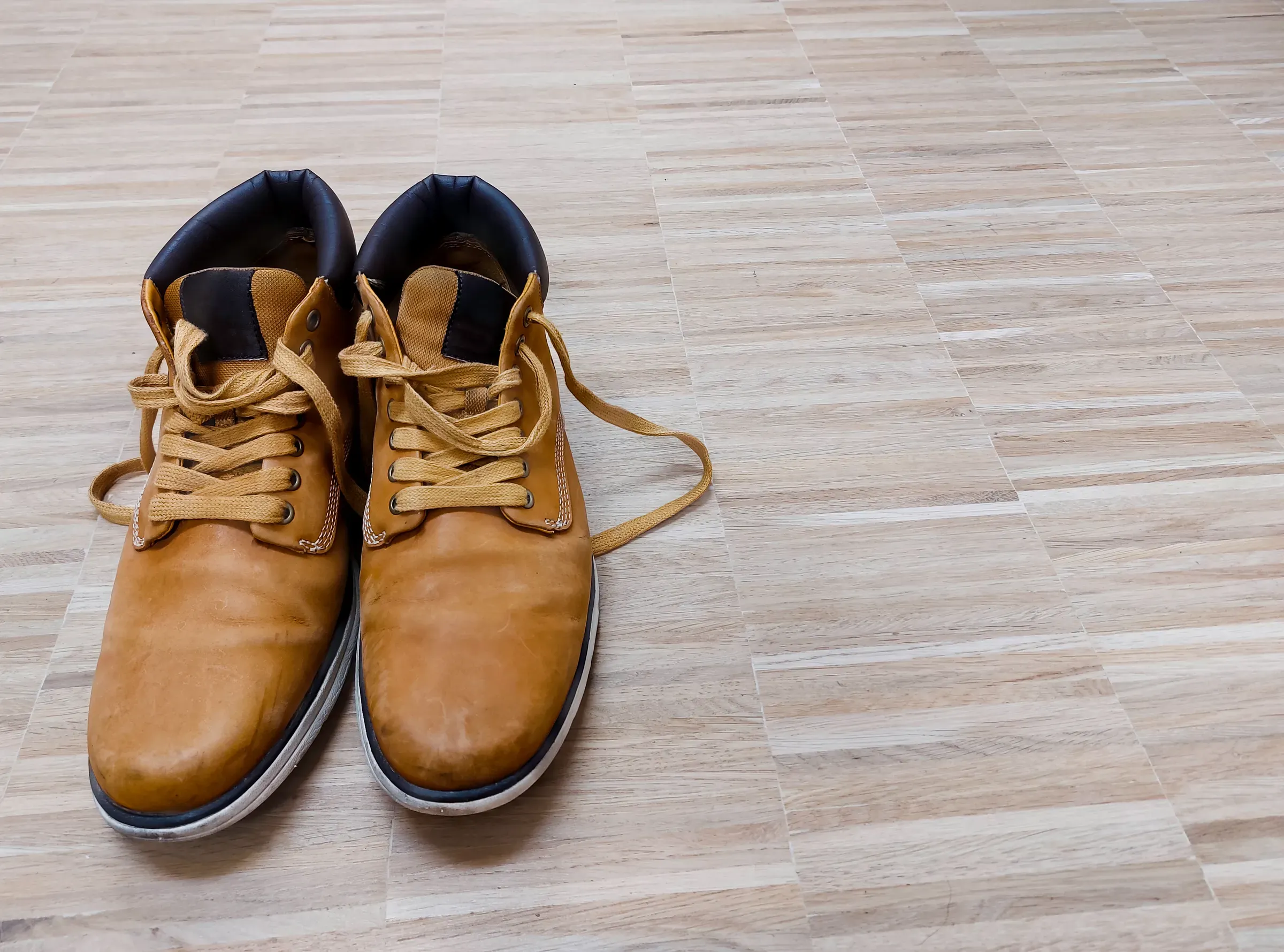
Pair of old light brown leather boots on wooden floor, boots ecommerce
BootsAdults buying a pair they expect to keep for years, who read about leather grades and welt construction, ask how the boot breaks in and check the resole and warranty terms before spending on a premium pair.

How boots makes money

Four levers, and what limits each one here

Revenue is traffic times conversion rate times order value times purchase frequency. In this niche each lever has its own ceiling.

Traffic

Traffic: leather, construction and the September curve

Boot searches carry material and construction words that most stores never build pages for: full-grain, suede, nubuck, roughout, Goodyear welt, cemented, resoleable. There is a second layer of use queries (winter boots for walking, waterproof leather boots, chelsea boots for wide feet) and a third layer of care queries (how to condition boots, how to waterproof suede) that peak just before purchase. The traffic lever is a catalog structured by material, construction and use, with a care library that links to the products it describes, published early enough to be indexed before the September curve. A collection page called Boots with a grid does not rank against retailers, but a page on Goodyear-welted leather boots that explains the construction and lists the pairs can.

Conversion

Conversion: break-in, sizing down and the resole promise

A boot shopper hesitates over sizing more than any other footwear buyer because welted boots often fit differently from sneakers and the shopper has read that somewhere. The product page has to say what size to order relative to a sneaker size, how the boot breaks in and how long that takes, what the leather is and how it ages, and whether the pair can be resoled and by whom. Warranty terms belong on the page in plain words. We build a fit block per last, a construction diagram, a leather description that reads like a person wrote it and a resole and repair section, and we make the exchange path easier than the refund path because an exchange keeps the sale.

Order value

Order value: care kits, boot trees and a second sole

The boot basket grows through the things a pair needs: conditioner matched to the leather, a brush, waterproofing for suede, spare laces, cedar boot trees and a resole booked at purchase. These attach naturally when the product page explains how to look after the leather it just described. A care kit bundled with the boot at a small saving lifts the average order without discounting the boot itself, and a pre-paid resole credit sells the durability the brand talks about. Insoles and thick socks belong in the cart drawer for winter pairs. None of it works if the accessories are hidden in a separate collection nobody reaches.

Frequency

Frequency: care reminders, resoles and the next leather

A boot customer may not need another pair for two years, so frequency in this niche is built from care and repair rather than replacement. A conditioning reminder timed to the season, a resole prompt when the pair is old enough to need one, and a note when the same last is released in a new leather keep the brand present for the whole life of the boot. Customers who resole through the brand come back for the second pair at a rate no discount reaches, because the resole proves the durability claim. Off-season, the list gets care content and the summer boot or shoe from the same last, not a coupon.

Search visibility

Search: material pages, construction pages and a care library

The queries that convert in boots are specific and seasonal. Material queries (suede chelsea boots, full-grain leather boots), construction queries (Goodyear welted boots, resoleable boots) and use queries (waterproof winter boots, hiking boots for wide feet) each want a collection with real copy, a grid filtered by that attribute and links from the products themselves. We map that demand to the catalog first, then build the collections inside the platform from tags and metafields so a filter like welted or waterproof becomes a page Google can index rather than a parameter it ignores.

The care library is the second layer and the one boot brands underuse. Pages on conditioning, waterproofing, storing, breaking in and resoling earn links, answer the questions people ask right before and right after buying, and feed authority back to the products. Each care page links to the boots and the products it applies to, and each product page links to the care page for its leather.

Technically, sizes and widths are variants of one product with one URL, each leather of the same last is its own product grouped under the last, and last season's colourway stays indexable with a sold-out state and a link to the current version.

Queries that matter

  • goodyear welted boots
  • suede chelsea boots men
  • waterproof leather winter boots
  • how to break in leather boots
  • do these boots run large
  • resoleable boots
  • how to condition full grain leather

Material and construction collections with substantial copy and a care library that links to products rank here. A Boots collection with a heading does not, and neither does a lookbook.

AI answers

AI answers: what leather, what welt, what size

Shoppers ask assistants whether a boot is Goodyear welted, whether it can be resoled, how much to size down from a sneaker size, how long the break-in takes and how to look after a particular leather. The stores that get cited state construction, leather, last and sizing in plain sentences on the product page, keep the warranty and resole terms on a page an engine can read, and describe care in steps rather than in a video only. We write the construction and fit facts answer-first, keep them consistent with the feed and structured data, and make the care library reachable as plain HTML.

Are these boots Goodyear welted and can they be resoled?
Should I size down from my sneaker size for these boots?
How long does it take to break in a pair of leather boots?
How do I waterproof suede boots without ruining them?
Which boots are best for wet winters and wide feet?

Questions shoppers put to assistants. A store gets named when its pages answer them in plain text.

Google Shopping and Merchant Center

Google Shopping and Merchant Center on a seasonal calendar

Boot feeds need the apparel attributes (colour, size, gender, age_group and size_system) and a material attribute that says leather, suede or rubber, because material is in the query. Titles carry the boot type, the leather, the construction and the colour in that order. Each last is one item_group_id with size and width variants; each leather of that last is a separate product. Care products, boot trees and laces go into the feed too, because they are searched on their own and they convert cheaply.

Timing is the discipline in this niche. New autumn lines need to be in Merchant Center, reviewed and serving before demand starts in late August, which means the feed work happens in July, not October. Availability is the other risk: a style that sells through by December and stays in the feed as in stock collects mismatches at the busiest moment. We keep availability live and set sale_price with the effective date attribute so the January clearance does not create a price mismatch.

Campaigns are structured by margin and season: premium welted pairs in a campaign bid to margin, winter and rain boots in a volume campaign that rises with the weather, care and accessories in a low-cost campaign that runs all year, and free listings monitored as their own line so the brand knows what Shopping delivers for nothing.

Feed attributes that decide eligibility

  • material
  • color, size, gender and age_group
  • size_system
  • item_group_id per last
  • sale_price and sale_price_effective_date
  • custom_label_1 for season

Disapprovals we see in this niche

  • Availability mismatch when a winter style sells through and the feed still says in stock
  • Price mismatch after a January clearance changes the page but not the feed
  • Missing material on listings whose titles promise leather
  • Image issues where the boot is shown on a model with text overlays

Meta and social ads

Meta and social ads: leather close up and the years-later shot

Boot creative sells time. The pair on day one beside the same pair after two winters, the leather conditioned in real light, a resole in progress, the welt stitched: these carry a durability argument better than any headline. Autumn prospecting runs on use (the first cold walk, the commute in rain) while retargeting runs on construction detail and the care kit. Customers describing how their pair has aged, with rights secured, are the most persuasive asset the category has.

Audiences start with buyers and site visitors, then broad prospecting from late August with strong creative, because interest targeting around boots is crowded and imprecise. Catalog ads work for retargeting when feed images show the boot cleanly on a plain ground. Policy limits are light in this niche; the constraints are honesty about materials (leather means leather) and about country of origin if it is claimed.

  • The same pair on day one and after two winters
  • Conditioning and waterproofing the leather, filmed in daylight
  • The welt being stitched or the sole being replaced
  • First cold morning of the season, the boot going on
  • Customer describing how their pair aged, with rights secured

Policy line

Material and origin claims must be true (leather, full-grain, made-in statements), durability claims must be described rather than promised, and any warranty language must match the page.

Conversion and the store

The store: a fit block per last and the resole section

The boot product page has to settle sizing before anything else, because the shopper has read that welted boots run large and does not know how much to trust that for this pair. A fit block per last states the recommendation relative to a sneaker size, the width options and the break-in expectation. Below it, the leather is described with how it ages and how to care for it, the construction is shown rather than named, and the resole and warranty terms are stated in plain words with who does the work. The care kit is offered where the leather is described, not in a separate collection.

Season-end pages need their own handling: a clearance state that is honest about remaining sizes, and a notify option for the next run. On mobile, the size selector with width, the shipping and returns line beside the price and a sticky add-to-cart decide more than a redesign, and heavy pairs need the return shipping cost stated clearly rather than discovered later.

Objections the page must answer

  • “What size do I order compared with my sneakers”
  • “How long is the break-in and will it hurt”
  • “Is this real full-grain leather or a corrected finish”
  • “Can it be resoled and who does it”
  • “What does the warranty actually cover”
  • “How much will it cost to send a heavy pair back”

Email, SMS and retention

Email and SMS: care season, resole prompts and the next leather

Boot flows follow the life of the pair rather than a monthly calendar. A break-in and care message arrives with the boots and covers wear-in, first conditioning and what a normal creasing pattern looks like, which prevents a share of returns from buyers who expected a sneaker feel. A conditioning reminder lands at the start and end of the wet season with the product for that leather. A resole prompt goes out when the pair is old enough to need one, and it is the message that separates a boot brand from a boot retailer.

Seasonal launches go to the list before they go to ads, sized to what each customer bought before. Off-season, the list gets care content and the lighter shoe on the same last. SMS is reserved for restocks of a sold-out size and for shipping in the December window. Win-back is triggered by a new leather on a last the customer already owns.

  1. Break-in and first care

    On delivery, before the first wear

  2. Conditioning reminder

    At the start and end of the wet season

  3. Resole prompt

    Around eighteen months after purchase for welted pairs, adjusted by model

  4. Autumn launch preview

    Late August, sized to previous purchases

  5. New leather on your last

    When a model the customer owns is released in a new material

Where revenue leaks

The leaks we find in boots stores

The Growth Analysis ranks these against your own numbers and says which to close first.

Get a Growth Analysis for your boot brand
  • Feeds that are ready in October

    The autumn line reaches Merchant Center after demand has started, spends its first weeks in review and learning, and the brand buys the peak at a premium or misses it.

  • Sneaker-size orders on a welted last

    The page never says to size down, the buyer orders their sneaker size, and a heavy pair goes back at the brand's expense with a creased vamp that cannot be resold as new.

  • Care products nobody can find

    Conditioner, brushes and boot trees live in an Accessories collection three clicks away, so the basket that should carry them leaves with the boot alone.

  • Resoles handled by someone else

    The customer sends the pair to a local cobbler because the brand never mentioned its own resole service, and the relationship that should have lasted a decade ends at the first sole.

Platform notes

Where the platform changes the work

Shopify

Leather, construction, last and fit notes live in metafields so they render on every product page and flow into the feed as material and product_detail. Collections built from tags make construction and material filters indexable, and a resole service sells as a product with its own flow.

WooCommerce

Global attributes for material, construction and width power both the filters and the attribute archives that can be set to index; seasonal availability needs a feed plugin that pushes stock changes promptly rather than on a daily schedule.

BigCommerce

Custom fields carry the last and construction data, and the faceted search needs canonical rules so material and size filter URLs do not multiply in the index during the season.

Questions

Boots owners ask us

By CartKernel · Last reviewed

When should a boot brand start its autumn campaigns?

Feeds, new product pages and creative should be finished by July and serving from late August, so that campaigns have passed learning and pages are indexed when the first cold week arrives. Starting in October means paying more for the peak and missing the early buyers who researched construction and leather in September.

How do you stop customers ordering the wrong size in welted boots?

With a fit block per last on the product page that states the recommendation relative to a sneaker size, the width options and what break-in feels like, plus a break-in email on delivery. We then watch exchange and refund reasons by model, and rewrite the fit note for any last that keeps coming back.

Does care and construction content actually sell boots?

Yes, in two ways. Pages on welts, leathers, conditioning and resoling rank for the questions people ask before and after buying, and they attach care products to the boot order. They also support the durability argument that justifies a premium price, because a brand that explains how to keep a pair for ten years is believed.

Should last season's boot colourways be removed from the site?

No. A sold-out page kept live with an honest availability state, structured data that says so and a link to the current version of the last keeps the rankings and links it earned. Removing it hands the query to a retailer, and the next season's version starts again from nothing.

Can a resole service be sold through the online store?

Yes. It runs as a product with its own checkout, a shipping label flow and status emails, and it can be offered at purchase as a credit or later as a prompt. Customers who resole through the brand tend to buy their second pair from it, so we report resole orders and the purchases that follow them as their own line.

How do you keep a boot store's ad spend from being wasted in summer?

By moving budget to what sells in the off-season: care products, lighter shoes on the same lasts and the brand's own name, while keeping evergreen construction pages working organically. Prospecting budget returns in late August. The list gets care content over summer so it is warm when the autumn preview lands.

Grow your boots store.

A free Growth Analysis ranks what your store should fix first, by revenue at stake, in about a week.