Skip to content

Footwear · ecommerce growth

Dance shoe brand marketing agency

Dance shoes are bought from a list. The teacher names the brand, the style and the colour, the parent or the dancer searches that exact phrase, and the order has to fit a foot that will be judged in a studio mirror. Sizing follows the discipline rather than the street: ballet flats run on their own scale, pointe shoes are fitted in person and reordered by model and width, character and ballroom shoes are chosen by heel height and sole. We build dance shoe stores around the list, the discipline and the term calendar, with studio and school ordering that turns a teacher's recommendation into a standing account.

The buyer, in brief

Consideration
Minutes for a reorder of a known model, days for a first purchase guided by a teacher's list
Purchase frequency
Several pairs a year for growing children, a few a year for adult dancers, and pointe shoes replaced far more often at advanced levels
Seasonality
Term starts in September and January, exam and recital season in spring, competition season through late winter and spring, and a December performance lift
Price band
Low to mid for ballet flats and jazz shoes, mid to premium for pointe, tap and ballroom shoes
Return risk
Moderate and sizing-driven, because discipline scales confuse first-time buyers; studio orders return in batches when a size run is wrong
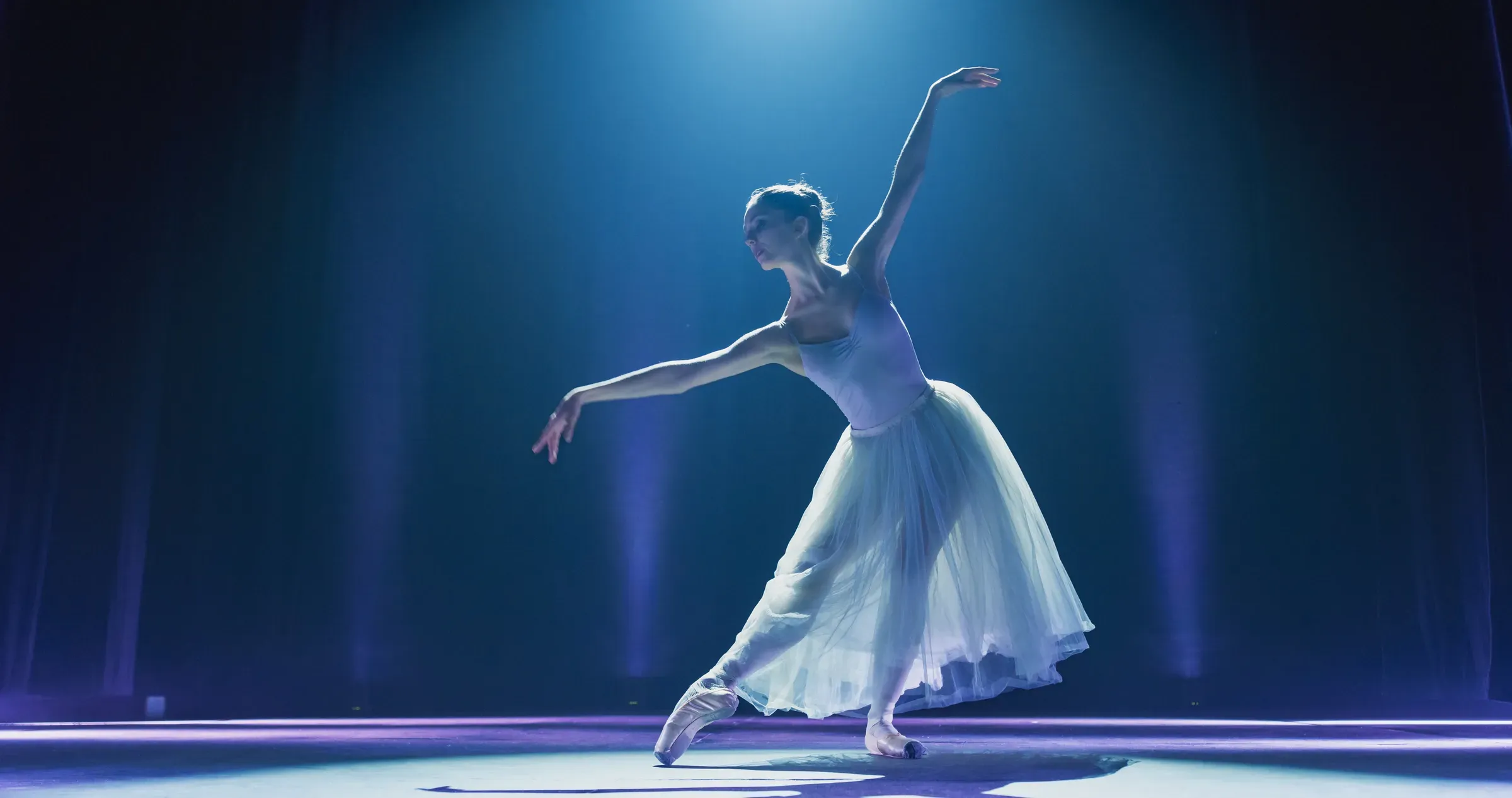
Cinematic Shot of Ballerina in Pointe Shoes and White Tutu Dancing and Rehearsing on Classic Theatre Stage, dance shoes ecommerce
Dance shoesParents of young dancers following a teacher's list, adult dancers reordering a known model, and studio owners and school uniform coordinators buying for a whole class, all of whom need the discipline's sizing explained and the exact style the syllabus asks for.

How dance shoes makes money

Four levers, and what limits each one here

Revenue is traffic times conversion rate times order value times purchase frequency. In this niche each lever has its own ceiling.

Traffic

Traffic: the teacher's phrase, the discipline scale and a long tail nobody else writes

Dance shoe demand is unusually literal. The parent types the phrase from the list (pink canvas split sole ballet shoes child), the adult types the discipline and the feature (ballroom practice shoes suede sole, character shoes two inch heel) and the first-timer types the sizing question (how to size ballet shoes from a street size). Outside a handful of large retailers the competition for those phrases is thin, and most dance brands still present a single Dance Shoes collection sorted by brand. The traffic lever is a hub per discipline, style pages that match the phrases teachers actually use, a sizing guide per discipline and pages for the exam and syllabus requirements that send hundreds of parents to search on the same week.

Conversion

Conversion: the discipline size chart and the studio-mirror test

A dance shoe converts when the shopper is sure it is the right shoe on the right scale. The product page has to say which discipline and level it is for, whether it is the exact model a syllabus names, how the size relates to a street size for this discipline, whether the sole is full or split and what the fit should look like when the dancer stands in it. For pointe shoes it has to be honest that a first pair should be fitted in person and that the store is the right place for the reorder once the model, size and width are known. We build the discipline chart into the size selector, add a fit-in-the-mirror note per style and make the exchange path fast, because the class starts on a date.

Order value

Order value: the class kit and the studio account

Dance baskets grow through the kit and the class. A ballet order naturally carries tights, a leotard in the syllabus colour, a bag and, for pointe, toe pads and ribbon; a tap order carries the taps if sold separately and a brush; a ballroom order carries a shoe brush and a bag. A kit built for a specific level at a small saving converts well at term start. The larger lever is the studio: a teacher who orders for a class of twenty wants one invoice, a size collection form for parents, a studio price and a reorder that remembers last term. A studio account turns a recommendation into a standing order that is worth more than any single family.

Frequency

Frequency: the term calendar and the pointe reorder

Dance purchase frequency follows the term and the level. Children move up a size every few months and move up a level each year, which changes the shoe; adult dancers reorder the same model when it wears; advanced pointe dancers reorder often and are loyal to a maker, model, size and width. Frequency is built from a term-start reminder in August and December, a size check for children every few months, a pointe reorder flow that keeps the model and width on file, an exam and recital kit message in spring and a studio renewal each term. The store that knows the discipline, the level and the last order gets the next one before the teacher's list is even reissued.

Search visibility

Search: discipline hubs, syllabus phrases and a sizing guide per discipline

Dance shoe search is organized by discipline, and the catalog should be too. A hub for ballet, tap, jazz, character, contemporary, ballroom and Latin, each with copy on what the discipline needs at each level, the styles it uses and a link to its own sizing guide. Beneath each hub, style pages that match the teacher's phrase: canvas split sole ballet shoes, leather full sole ballet shoes for beginners, tap shoes with fitted taps, character shoes by heel height, ballroom practice shoes by sole. We build these as real collections with copy inside the platform and let the filters for colour, sole and level sit inside them rather than multiply as parameter URLs.

The sizing guide per discipline is the authority content. Ballet and pointe scales, the street-size conversion, how to measure a child's foot and what a correct fit looks like in each discipline are questions parents ask every term, and a store that answers them in text with a table earns links from studios and forums. Exam and syllabus requirement pages capture the queries that spike when a list goes out.

Technically, sizes and widths are variants of one product with one URL, pointe shoe models carry width and shank strength as variants, and studio list pages can be indexable so a parent searching the studio's name plus shoes lands on the right list.

Queries that matter

  • pink canvas split sole ballet shoes child
  • how to size ballet shoes from street size
  • tap shoes for beginners adults
  • character shoes 2 inch heel exam
  • ballroom practice shoes suede sole
  • pointe shoe model width reorder
  • dance shoes for studios bulk order

Discipline hubs with their own sizing guides, style pages that match the teacher's phrase and syllabus requirement pages rank in this niche because the competition is thin. A single Dance Shoes collection sorted by brand does not.

AI answers

AI answers: which shoe the syllabus wants and what size on the dance scale

Parents and dancers ask assistants what size ballet shoe to buy for a child in a given street size, the difference between full sole and split sole, which character shoe heel height an exam requires, whether pointe shoes can be bought online safely and what a beginner needs for a first tap class. The stores that get cited publish the conversion table per discipline as text, describe each style's purpose and level in plain sentences, state the syllabus requirements they know to be current and are honest about when an in-person fitting is the right answer. We write the discipline guides answer-first and keep the sizing data consistent between the page, the size selector and the feed.

What size ballet shoes should I buy for a child in a street size 12?
What is the difference between full sole and split sole ballet shoes?
Which character shoe heel height is right for a grade exam?
Can pointe shoes be bought online safely for a reorder?
What does a beginner need for a first tap class?

Questions shoppers put to assistants. A store gets named when its pages answer them in plain text.

Google Shopping and Merchant Center

Google Shopping and Merchant Center on the discipline scale

Dance shoe feeds fail on size more than anything else. A ballet shoe sold on its own scale has to carry a size value the page explains, with size_system set to the scale the store uses, and age_group set to kids or adult so a child's ballet 3 is not read as an adult 3. product_type carries the discipline, product_detail carries the sole type, heel height, material and the syllabus it matches, and the colour attribute uses the plain colour while the syllabus name of the shade goes in the title. Each style is one item_group_id with size, width and colour variants. Pointe models carry width and shank as variants, not as separate products.

The calendar is the second risk. Term-start stock in the syllabus colour and the child sizes sells through in the first week of September, and a feed on a daily schedule keeps sending clicks to sizes that are gone. Studio prices never reach the feed; the feed shows the public price and studio accounts see their own.

Campaigns are structured by discipline and margin: pointe and ballroom in a campaign bid to margin, ballet flats and jazz shoes in a volume campaign that ramps before each term, kits and accessories in a low-cost campaign, and free listings on for every style, because in a thin niche free listings carry a real share of orders.

Feed attributes that decide eligibility

  • size on the discipline scale with size_system
  • age_group as kids or adult
  • product_type for discipline
  • product_detail for sole type, heel height and syllabus
  • item_group_id per style across width and shank
  • custom_label_0 for term-start lines

Disapprovals we see in this niche

  • Discipline-scale sizes submitted without size_system, so a ballet 3 reads as an adult 3
  • age_group left blank on children's ballet flats
  • Availability mismatch on child sizes in the syllabus colour at term start
  • Price mismatch when a studio discount applies on the page but the feed shows another price

Meta and social ads

Meta and social ads: at the barre, on the scale and in front of the teacher

Dance shoe creative works when it shows the shoe doing the discipline's job: a ballet flat on the barre in a studio, a tap shoe on a board with the sound, a character shoe in a turn, the sizing video that lays a street-size shoe beside the ballet scale and a teacher explaining what the list means. Parents describing the first class, with rights secured, reassure the parent who has never bought a dance shoe before. Catalog ads suit retargeting by discipline, with feed images that show the sole and the colour truthfully.

Audiences are parents of dancers and adult dancers, reached through dance interests that are still specific enough to work, and through the brand's own customers and studio lists. Studio owners are reached with lead ads and a short form. Policy limits are about children: images of young dancers need documented consent, and ads are aimed at parents because minors cannot be targeted.

  • A ballet flat on the barre in a working studio
  • A tap shoe on a board, with the sound
  • A street-size shoe laid beside the ballet scale
  • A teacher explaining what the list means
  • A parent describing the first class, with rights secured

Policy line

Images of young dancers require documented consent, ads are aimed at parents rather than minors, and any claim that a shoe meets a syllabus or exam requirement must be current and true.

Conversion and the store

The store: the discipline size selector, the syllabus match and the class order form

The dance shoe product page has to settle the two questions a parent has: is this the exact shoe on the list, and what size on this scale. The syllabus match is stated at the top in the words the list uses, the size selector carries the discipline conversion beside it, the sole type and level are stated plainly and a fit-in-the-mirror note describes what a correct fit looks like. Pointe pages are honest about the first fitting and make the reorder by model, size, width and shank effortless.

The studio page is a second template: a class order form that collects sizes from parents against a studio list, a studio price for logged-in accounts, one invoice and a reorder that remembers last term. On mobile, the size selector with the conversion visible and a sticky add-to-cart decide the family order, and the class form has to work on a teacher's phone between lessons.

Objections the page must answer

  • “Is this the exact shoe my teacher asked for”
  • “What size do I order on the ballet scale”
  • “Full sole or split sole for my child's level”
  • “Can our studio order a whole class on one invoice”
  • “What if the pointe model is wrong for my foot”
  • “Will it arrive before the first class”

Email, SMS and retention

Email and SMS: term start, the size-up check and the pointe reorder

Dance shoe flows run on the term calendar. A sizing and break-in note arrives with the shoes and says what a correct fit looks like and how to soften a new pair before class. A term-start reminder goes out in August and again in December, sized to each child from the last order and matched to the discipline, so the parent buys before the list is reissued. A size-up check for children lands every few months with the conversion chart and the same model in the next size.

Pointe dancers get a reorder flow that keeps the model, size, width and shank on file and asks nothing more than a click. Exam and recital season brings a kit message in spring. Studio accounts get a renewal message before each term with last term's class list ready to confirm. SMS is reserved for term-start restocks of a child's size in the syllabus colour.

  1. Sizing and break-in

    On delivery, before the first class

  2. Term-start reminder

    August and December, sized to each dancer

  3. Size-up check

    Every few months for children

  4. Pointe reorder

    Timed to level, with model, size, width and shank on file

  5. Exam and recital kit

    Spring, matched to discipline

  6. Studio renewal

    Before each term, with last term's list ready to confirm

Where revenue leaks

The leaks we find in dance shoes stores

The Growth Analysis ranks these against your own numbers and says which to close first.

Get a Growth Analysis for your dance shoe brand
  • Sizes shown on the street scale

    The selector shows a street size for a shoe sold on the ballet scale, the parent orders their child's usual number and the pair comes back two sizes out with the first class already missed.

  • Teacher lists handled by phone

    A studio that wants to order for a class gets a phone number and a spreadsheet, the sizes are collected by hand and the order goes to whichever retailer made it easy.

  • Pointe shoes sold to first-timers without a fitting path

    A beginner buys a first pointe pair unfitted, the shoe is wrong and the brand becomes the one the teacher warns about instead of the one the teacher recommends for reorders.

  • Term-start stock in the feed after it is gone

    Child sizes in the syllabus colour sell out in the first week of September, the daily feed still says in stock and paid clicks land on pages that cannot sell.

  • Studio pricing in the public feed

    A studio discount configured as a product price reaches Shopping, the public page shows a different number and the account collects price mismatches on its best sellers.

Platform notes

Where the platform changes the work

Shopify

Discipline, level, sole type and syllabus match live in metafields that render on the page and feed product_detail; width and shank are variant options for pointe models; studio accounts run through B2B on Plus or a wholesale app with a class order form built as a custom page.

WooCommerce

Variable products by size and width with a discipline taxonomy power the hubs and the indexable archives; a wholesale role handles studio pricing, and the feed plugin has to send size_system and age_group per product rather than a store default.

BigCommerce

Customer groups carry studio pricing, custom fields carry the discipline data and the variant allowance suits size-by-width-by-colour grids for ballet and pointe.

Questions

Dance shoes owners ask us

By CartKernel · Last reviewed

How should a dance shoe store show sizes that run on a different scale?

On the discipline's own scale, with the conversion from street size beside the selector and a sizing guide per discipline linked from every product. The feed carries the same scale with size_system declared and age_group set, so Shopping does not read a child's ballet size as an adult one. Showing a street size for a ballet shoe is the most common cause of returns in the niche.

Can we sell pointe shoes online responsibly?

Yes, for reorders. A first pointe pair should be fitted in person, and a store that says so earns the teacher's trust. Once the dancer knows the model, size, width and shank, the store keeps them on file and makes the reorder a click. That honesty is what makes the brand the one teachers recommend for the next ten pairs.

How do studios and schools order dance shoes through an online store?

Through a studio account: a class order form that collects sizes from parents against the studio's list, a studio price for logged-in accounts, one invoice and a reorder that remembers last term. On Shopify this runs through B2B on Plus or a wholesale app; on other platforms it is a customer group or wholesale role.

Is paid search worth it for a niche as small as dance shoes?

Yes, precisely because it is small. Syllabus phrases and beginner queries are cheap, the competition is thin and the parent typing the exact phrase from a list converts at once. Budgets ramp before each term start and fall between terms. Performance Max adds little here and can spend on the brand's own name without exclusions.

When do dance shoe campaigns and stock need to be ready?

Before the lists go out. Term-start demand lands in the last two weeks of August and the first week of September, with a second wave in early January, and exam and recital demand lands in spring. Pages, feed and stock in the syllabus colours need to be in place a month ahead of each, and the list gets its reminder before the ads start.

What do you report for a dance shoe brand each month?

Revenue by discipline and by term, family orders and studio orders as separate lines, brand and non-brand search separated, contribution after ad spend and returns, size-related return rate by discipline, pointe reorder rate and studio renewals. Everything reconciles to orders in the platform rather than to the ad platforms' numbers.

Grow your dance shoes store.

A free Growth Analysis ranks what your store should fix first, by revenue at stake, in about a week.