Skip to content

Footwear · ecommerce growth

Vegan footwear marketing agency

The vegan footwear buyer asks one question before anything else: what is it actually made of. Not the upper only, but the lining, the glue, the sole and the thread, because a shoe marketed as vegan with an animal-derived adhesive is the story they have already read. They search by material, they look for a certification mark and they weigh the durability claim against reviews from people who wore the pair for a year. We build vegan footwear stores that prove the material in text, in structured data and in the feed, reach values-led audiences without preaching and answer the durability doubt with evidence rather than adjectives.

The buyer, in brief

Consideration
A few days to two weeks, spent checking materials, certification and wear reviews across tabs
Purchase frequency
A pair or two a year, with a second style from the same brand once the first has held up through a season
Seasonality
Boots in autumn, sneakers and sandals in spring, a gifting lift in December and a lift in January around Veganuary
Price band
Mid to premium, with the price justified by material innovation and by not being a mass-market synthetic
Return risk
Average for footwear, with a niche-specific reason on top: the material felt different from what the page implied, which is a description problem the store can fix
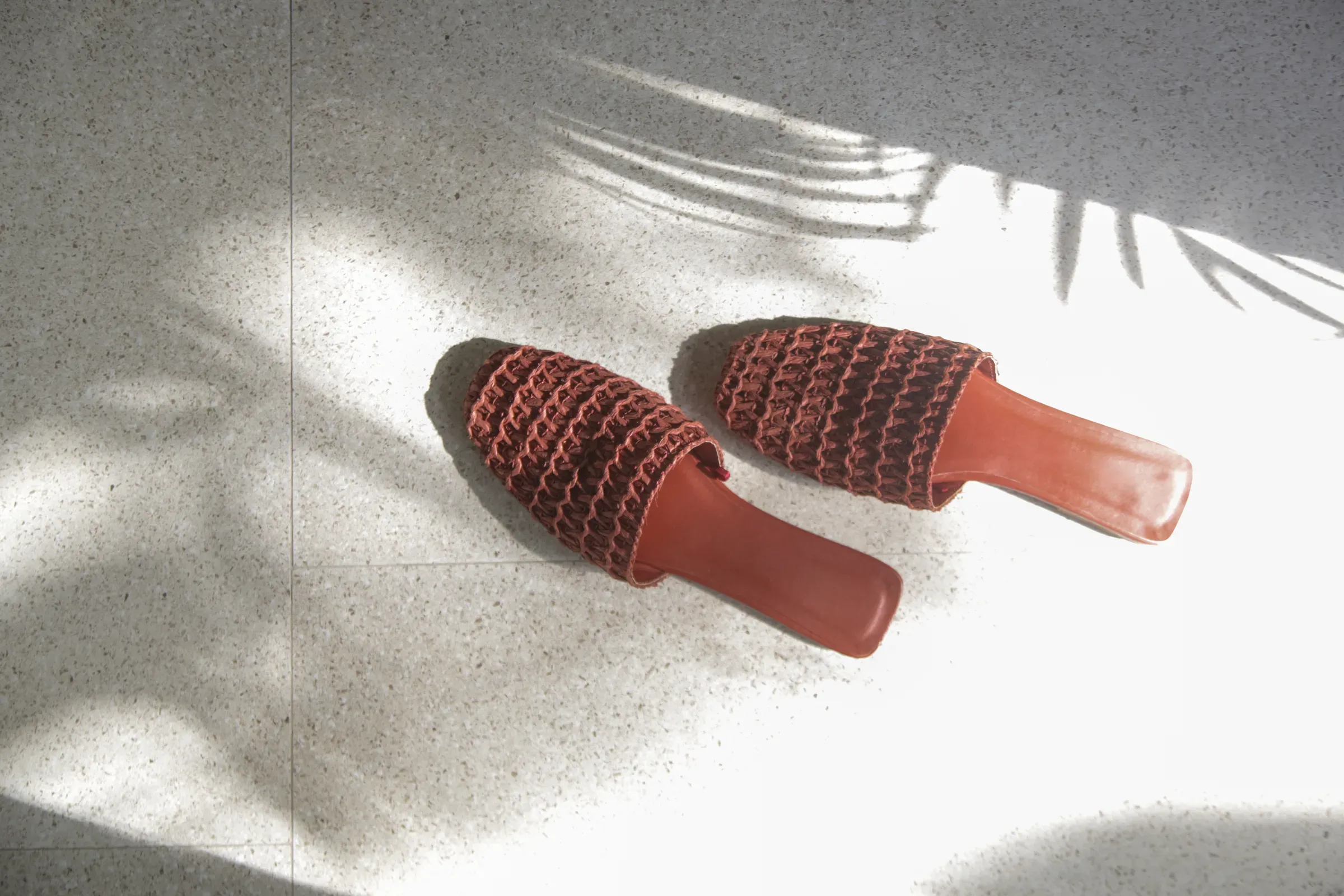
Handmade raffia mules. Sustainable ethically made pair of slippers.Responsibly sourced shoes with, vegan footwear ecommerce
Vegan footwearVegan and vegetarian shoppers, and a larger group who avoid leather for environmental or ethical reasons, who read the full material list, look for a PETA-Approved Vegan or Vegan Society mark and ask what the glue is before they trust the word vegan.

How vegan footwear makes money

Four levers, and what limits each one here

Revenue is traffic times conversion rate times order value times purchase frequency. In this niche each lever has its own ceiling.

Traffic

Traffic: material names and the is-it-really-vegan question

Vegan footwear demand is searched by category plus vegan (vegan chelsea boots, vegan leather sneakers), by material name (apple leather shoes, cactus leather boots, recycled plastic trainers) and by the doubt (are these shoes vegan including the glue, does vegan leather last). Most vegan brands have a Shop All page and an About page that says cruelty-free, which leaves all three demand types to marketplaces. The traffic lever is a catalog structured by style and by material, a page per material that explains what it is made from, how it wears and how to care for it, and honest answers to the durability and glue questions as indexable pages. Those are the pages this shopper opens before they will look at a product.

Conversion

Conversion: the full material list, glue included

A vegan shoe converts when the page lists every component: upper, lining, insole, outsole, laces, thread and adhesive, each with its material named in plain words rather than a brand term. The certification mark, if the brand holds one, sits beside the list with who issued it. The durability question is answered with the construction and with wear evidence rather than an adjective, and the breathability question is answered honestly because the shopper has read that synthetics can run warm. We rebuild the product page around a component table, add the care guidance for that material, put the certification where the shopper looks for it and write the size and fit note from returns data, because a material that stretches differently from leather changes how the shoe fits over time.

Order value

Order value: care for the material and the matching pieces

Vegan footwear baskets grow through the material rather than through generic add-ons. A care product formulated for the specific upper, a protector spray that is itself vegan, laces in a second colour and a belt or bag in the same material are natural additions that a shopper who chose the material for a reason will accept. A two-pair offer across a boot and a sneaker in the same material suits the buyer building a wardrobe around a decision. The pages that carry this are the material pages, where every product in that material is shown together, and the post-purchase care message, which arrives when the customer is most receptive to keeping the pair in good shape.

Frequency

Frequency: a wear check, then the next material

A vegan footwear customer comes back when the first pair proves the claim. Frequency is built on a wear check a month in that asks how the material is holding up and collects the answer, a care reminder at the change of season, a note when a new material or a new style in the customer's material launches and, where the brand offers it, an end-of-life take-back that closes the loop the customer cares about. Seasonal flows carry the boot in autumn and the sneaker in spring in the customer's size. The brand that keeps talking about materials after the sale is the one this shopper trusts with the second pair.

Search visibility

Search: material pages, style collections with vegan in the query and honest durability content

Vegan footwear ranks on two page types most brands do not build. Material pages come first: one page per material (apple leather, cactus leather, pineapple leaf fibre, recycled polyester, natural rubber, cork) that explains what it is made from, how it is produced in general terms the brand can support, how it wears and stretches, how to clean it and which of the store's products use it. They rank for the material queries, earn links from sustainability and vegan publications and feed authority to the products. Style collections come second: vegan chelsea boots, vegan leather sneakers, vegan sandals, each with real copy and a grid filtered by the vegan attribute across the whole catalog.

The third layer is the doubt content: whether vegan leather lasts, whether it breathes, what the glue is, what the certification marks mean and how to care for each material. Written honestly, including the limits, these pages are the most linked and the most quoted in the niche.

Technically, the component list lives as structured product data so it renders on the page, populates the Product markup's material property and flows into the feed; sizes and colours are variants of one product; and the certification page is a single canonical source every product links to.

Queries that matter

  • vegan leather chelsea boots women
  • apple leather sneakers
  • are these shoes vegan including the glue
  • does vegan leather last
  • PETA approved vegan shoe brands
  • how to clean vegan leather shoes
  • vegan waterproof boots

Material pages with a full component breakdown, style collections with vegan in the copy and honest durability and care content rank in this niche. A Shop All page and an About page that says cruelty-free do not rank for anything the buyer types.

AI answers

AI answers: what it is made of, whether it lasts and who certified it

Shoppers ask assistants whether a shoe is fully vegan including the adhesive, what apple or cactus leather is actually made from, how long vegan leather boots last, which brands hold a recognized vegan certification and how to clean a specific material. The brands that get cited list every component with its material on the product page, name the certifier and the scope of the certification, describe durability with construction and wear evidence rather than adjectives and keep the material data consistent between the page, the Product markup and the feed. We write the material and component content answer-first and make sure the certification page is plain HTML an assistant can quote.

Are these shoes fully vegan, including the glue and the thread?
What is apple leather made of and how long does it last?
Which vegan shoe brands are PETA-Approved or carry the Vegan Society mark?
How do I clean cactus leather boots without damaging them?

Questions shoppers put to assistants. A store gets named when its pages answer them in plain text.

Google Shopping and Merchant Center

Google Shopping and Merchant Center where the material is the claim

Vegan footwear feeds are decided by the material attribute and by what the title claims. The material value has to name the actual material (polyurethane, recycled polyester, natural rubber, a plant-based composite described accurately) rather than the words vegan leather on their own, because Google matches on material and a vague value serves the listing for fewer queries. The word vegan belongs in the title and in product_highlight, product_detail carries the component breakdown and the certification with its issuer, and the apparel attributes (colour, size, gender, age_group, size_system) are required as for any shoe. Each style is one item_group_id with size and colour variants.

Policy is about substantiation. Environmental words in titles and descriptions (sustainable, eco-friendly, biodegradable) fall under misrepresentation rules when the store cannot support them, and a certification mark shown in an image or claimed in text has to be one the brand holds. We keep the environmental language to what the brand can document, name the certifier exactly and describe the material rather than praising it.

Campaigns are structured by material and margin: innovative-material styles in a campaign bid to margin, core synthetic styles in a volume campaign, care products in a low-cost campaign, and free listings on for every material and style page.

Feed attributes that decide eligibility

  • material naming the actual material
  • product_detail for the component breakdown and certification
  • product_highlight
  • color, size, gender, age_group and size_system
  • item_group_id per style
  • custom_label_0 for material family

Disapprovals we see in this niche

  • Material values that say vegan leather without naming the material, or that name leather on a non-leather product
  • Environmental claims such as sustainable or biodegradable in titles without substantiation
  • Certification marks in images that the account cannot document
  • Price mismatch after a Veganuary or seasonal promotion changes the page

Meta and social ads

Meta and social ads: the cross-section and the year of wear

Vegan footwear creative works when it shows the material rather than the message. A cross-section of the shoe with every layer named, the raw material beside the finished upper, a pair after a year of daily wear next to a new one, the cleaning routine in real light and a customer explaining why they chose the material, with rights secured, persuade a sceptical audience that has seen too many claims. Catalog ads suit retargeting when the feed images show the texture of the material up close.

Audiences are one of the few places where interest targeting still earns its place, because vegan and plant-based interests are specific enough to be efficient, and the brand's own customers and material-page visitors sit above them. Creative should describe the brand's own choices and never disparage leather or other brands. Policy binds on environmental claims, which need substantiation, and on certification marks, which must be the ones the brand holds.

  • A cross-section of the shoe with every layer named
  • The raw material beside the finished upper
  • The same pair after a year of wear next to a new one
  • The cleaning routine for one material in real light
  • A customer explaining why they chose the material, with rights secured

Policy line

Environmental and material claims must be substantiated, certification marks must be ones the brand actually holds, and creative must describe the brand's own choices without disparaging leather or other brands.

Conversion and the store

The store: a component table, the certifier's name and the honest durability answer

The vegan footwear product page has to answer the shopper's list before the add-to-cart matters: what every component is made of, what the adhesive is, who certified it and what the certification covers, how long the material lasts and how it is cared for, whether it breathes and how the fit changes as the material wears in. A component table replaces the paragraph of adjectives, the certification mark sits beside it with the issuer named, and the durability answer states the construction and the care rather than a promise. The fit note is written from returns data, because a material that does not stretch like leather changes the size advice.

Material pages carry the second product in the same material, so the boot page links to the sneaker page and the care product. On mobile, the component table must scroll inside its own container, the size selector and the shipping and returns line sit beside the price and the certification is visible without a tap.

Objections the page must answer

  • “Is every component vegan, including the glue and the thread”
  • “Will it last like leather or crack in a year”
  • “Does the material breathe or will my feet sweat”
  • “Is vegan leather just plastic with a different name”
  • “Who certified it and what does the mark cover”

Email, SMS and retention

Email and SMS: care for the material, the wear check and the next material

Vegan footwear flows follow the material through its first year. A care message arrives with the parcel and explains how to clean and protect the specific upper, which reduces the returns that come from a material treated like leather. A wear check at a month asks how the pair is holding up, collects the answer and offers the care product if it has not been bought. A seasonal care reminder lands at the change of season for the materials that need it.

A material story series over the first weeks explains where the materials come from and what the brand has chosen not to use, which earns the right to keep sending. New-material launches and new styles in the customer's material go to the list before ads. Where the brand offers take-back or recycling, the end-of-life message closes the loop the customer cares about and opens the next pair. SMS is reserved for restocks in the customer's size and for the Veganuary launch.

  1. Care for your material

    On delivery

  2. Wear check

    One month after delivery

  3. Material story series

    Weekly for three weeks after the first order

  4. Seasonal care reminder

    At the change of season for materials that need protection

  5. New style in your material

    When a style launches in a material the customer owns

  6. End of life and take-back

    Around eighteen months after purchase, where the brand offers it

Where revenue leaks

The leaks we find in vegan footwear stores

The Growth Analysis ranks these against your own numbers and says which to close first.

Get a Growth Analysis for your vegan footwear brand
  • The vegan claim without the glue

    The page says vegan, the adhesive is never mentioned, a shopper asks in a review or a forum and the brand's silence becomes the answer that spreads.

  • Material called vegan leather and nothing else

    The feed and the page say vegan leather, Google cannot match the listing to material queries and the shopper who wanted to know what it actually is leaves for a brand that says.

  • Sustainability words that trip policy

    Titles carry eco-friendly and biodegradable without documentation, the offers are flagged for misrepresentation and the account spends a launch week in review.

  • The durability doubt left to reviews

    The one question that decides the order is answered only by a third-party review site, where the store neither controls the answer nor gets the click.

  • Values audiences preached at

    Creative built around what other shoes do wrong wins arguments and loses orders, and it puts the brand on the wrong side of platform rules about disparagement.

Platform notes

Where the platform changes the work

Shopify

Component materials, adhesive and certification live in metafields so they render as the component table, populate the Product JSON-LD material property and flow into the feed as material and product_detail; collections built from a vegan tag and from material tags make both the style and material pages indexable.

WooCommerce

Global attributes for material and certification power the filters and the indexable material archives, and the feed plugin needs to send the actual material name rather than the attribute label vegan leather.

BigCommerce

Custom fields carry the component breakdown and the certifier, the structured data needs the material property added to the theme's product markup, and faceted material filters need canonical rules.

Questions

Vegan footwear owners ask us

By CartKernel · Last reviewed

How should a vegan shoe brand prove its materials on the product page?

With a component table: upper, lining, insole, outsole, laces, thread and adhesive, each with the actual material named in plain words, the certification mark beside it with the issuer and scope, and a link to the material page that explains where it comes from and how it wears. The paragraph that says cruelty-free and nothing more is what the shopper has learned to distrust.

What should the material attribute say in Merchant Center for vegan leather?

The actual material: polyurethane, recycled polyester, a plant-based composite described accurately, natural rubber. The words vegan leather on their own tell Google little and match fewer queries. Vegan goes in the title and in product_highlight, the component breakdown goes in product_detail and the certification is named with its issuer.

Can vegan footwear ads use words like sustainable or eco-friendly?

Only where the brand can document them, because both Google and Meta treat unsubstantiated environmental claims as misrepresentation. It is safer and more persuasive to describe the material, its origin and what the brand chose not to use, and to keep any certification exactly as the certifier words it.

How do we answer the durability question without overpromising?

With construction, care and evidence. State how the material is built, how it wears and stretches compared with what the shopper expects, how to care for it and what a pair looks like after a year of wear, using real photographs. A wear check email a month in collects the customer's own answer and gives the page more to say next season.

Does interest targeting still work for vegan footwear on Meta?

Better than in most categories, because vegan and plant-based interests are specific enough to reach the right people efficiently. The brand's own customers and material-page visitors still come first, and the creative should show the material rather than argue a cause, since ads that disparage leather or other brands both perform worse and risk the account.

What does a vegan footwear brand see in monthly reporting?

Revenue by material and by style, brand and non-brand search separated, contribution after ad spend and returns, return reasons with material-expectation returns as their own line, wear check responses, care product attach rate and second-pair orders in the same material. Everything reconciles to orders in the platform.

Grow your vegan footwear store.

A free Growth Analysis ranks what your store should fix first, by revenue at stake, in about a week.