Skip to content

Garden & outdoor living · ecommerce growth

Hydroponics brand marketing agency

Indoor growers shop in units. They want photosynthetic photon flux at a stated height, efficacy in micromoles per joule, tent volume against extraction rate, and an electrical draw they can add to a bill before they commit. Vague product copy loses them in seconds, and the ad platforms apply their own scrutiny to this equipment, so the work is technical credibility on the page and disciplined language everywhere the account is reviewed.

The buyer, in brief

Consideration
Days to weeks for lighting and environment equipment, minutes for nutrients and media
Purchase frequency
Equipment occasionally, nutrients and media every crop cycle, filters and pumps as they wear
Seasonality
Steadier than any other garden category, with a lift as outdoor growing ends and another at seed starting
Price band
Low for nutrients and media, high for lighting, tents, controllers and complete systems
Return risk
Concentrated on lights that did not match the coverage claimed and on kits that did not fit the space available
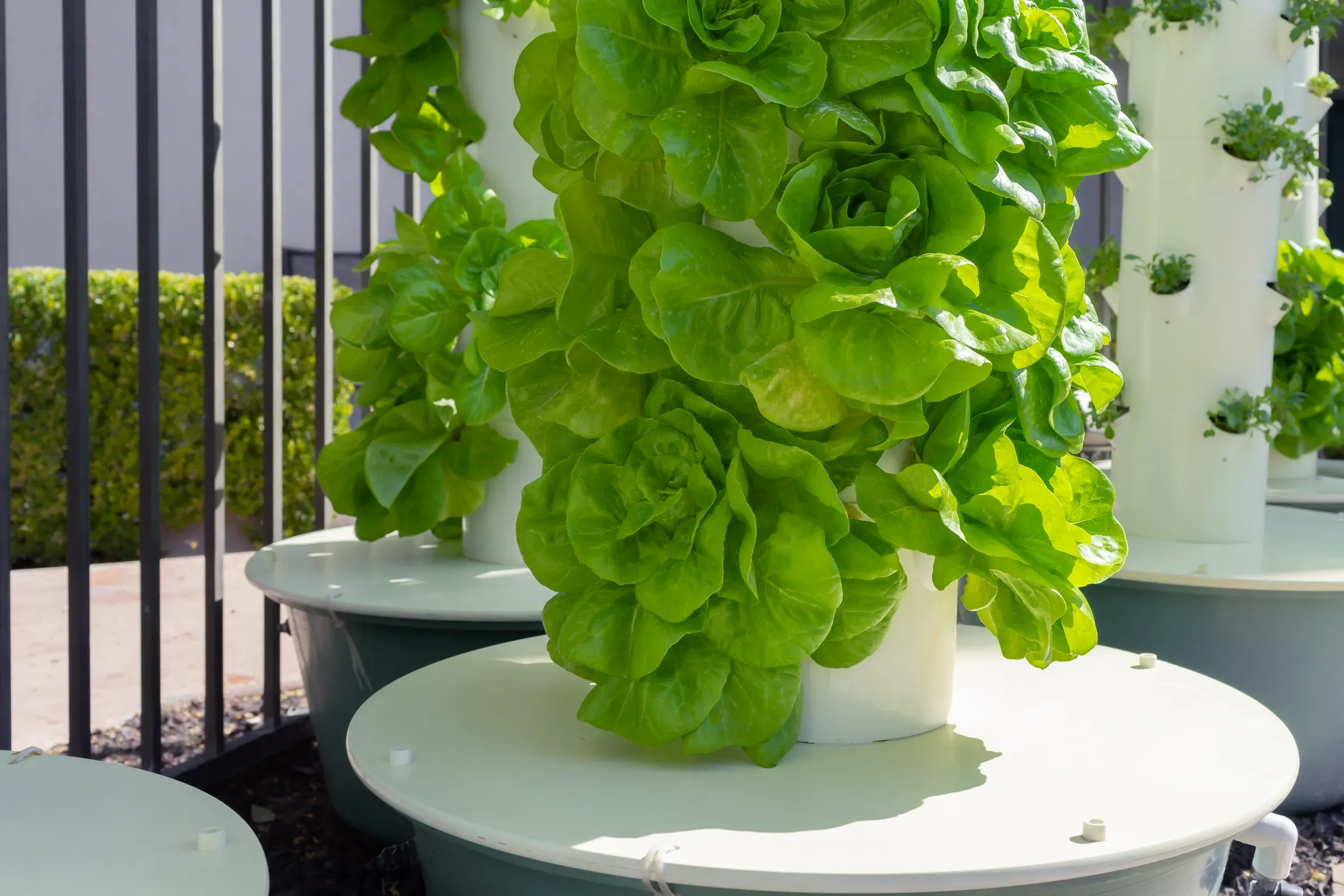
Green lettuce growing on a vertical hydroponic tower system, hydroponics & indoor growing ecommerce
Hydroponics & indoor growingHome growers and small commercial operators who read spectrum charts and coverage maps, size a light to a tent footprint, and want the electrical draw and heat output before they buy anything.

How hydroponics & indoor growing makes money

Four levers, and what limits each one here

Revenue is traffic times conversion rate times order value times purchase frequency. In this niche each lever has its own ceiling.

Traffic

Traffic: growers search in measurements

Search demand here is unusually technical and unusually well served by nobody. Coverage at a given height, efficacy figures, extraction rates against tent volume, nutrient strength by growth stage, target ranges for water conditioning: these are the queries, and they are almost always answered by forum threads rather than by retailers. The catalog structure that captures them puts a page behind every calculation a grower has to perform, with the arithmetic shown and the products that satisfy each answer linked underneath. Coverage collections organised by footprint rather than by wattage matter too, because a grower knows their tent size and does not necessarily know what wattage that implies, and translating between the two is exactly the help that earns the sale.

Conversion

Conversion: publish the numbers and the running cost

Trust in this category is technical. A lighting page that states coverage as a footprint with no height, or claims an equivalent wattage rather than an actual draw, reads as evasive to the audience that matters. The pages that convert publish the coverage map at stated heights, the efficacy figure, the actual power draw, the heat added to the space and where the data came from. Running cost is the other half and it is rarely addressed. A grower budgeting a cycle wants the monthly electricity implication, and a store that does the sum for them removes the largest hesitation on a high value purchase. Where a kit is sold, listing exactly what is in the box prevents the most common disappointment, which is discovering the extraction system was separate.

Order value

Order value: a tent is a system with six parts

Nobody grows indoors with one item. A working setup needs the tent, a light matched to the footprint, extraction sized to the volume with a carbon filter, circulation, environment monitoring and often a controller, plus media, nutrients and pots. Selling those separately guarantees an incomplete first purchase and a frustrated first crop. Kits assembled by footprint, with each component explained and the sizing logic visible, raise order value substantially and produce a setup that works. The upgrade path matters as much: a grower who started with a small tent buys a second, then a bigger light, then a controller, and a store that maps that progression keeps the customer through every step of it.

Frequency

Frequency: every cycle consumes something

The equipment is durable and the consumables are not, which makes the repeat economics excellent when they are worked properly. Base nutrients, supplements, water conditioners, growing media, net pots, filters and reservoir cleaner are all used up on a cycle that the customer's own crop schedule determines. Capturing the system type and the reservoir volume once turns replenishment from a guess into an estimate, and the crop cycle length gives the timing. Carbon filters and pumps have known service lives and prompt naturally. This is also a community driven category, so the customers who buy consistently are the ones who talk publicly about their setups, which makes retention and advocacy the same programme.

Search visibility

Technical reference content is the whole organic strategy

This niche rewards genuine expertise more than almost any other in the garden industry, because the audience can tell the difference immediately. The content that ranks and converts is calculation led: how to work out daily light integral from a coverage figure, how to size extraction to a tent volume and the air changes a grow needs, target nutrient strength and water conditioning by growth stage and crop, how far to hang a light and how that changes coverage. Each of these ends at a product decision, which is why the technical content pays rather than just attracting readers.

The second layer is diagnostic. Leaf symptoms, lockout, algae in a reservoir, humidity that will not come down, a crop stalling in early growth. These are searched at the moment somebody needs to buy something today, and they are almost entirely served by forums, which leaves the space open.

The third is comparison: lighting technologies, media types, system designs such as deep water culture against drip or ebb and flow. Technically, wattage variants belong on one page grouped as variants, coverage data belongs in text rather than inside a supplied image, and any manufacturer specification quoted should be attributed so the page reads as verifiable rather than promotional.

Queries that matter

  • how to size an extraction fan for a grow tent
  • ppfd coverage at 18 inches
  • deep water culture vs drip system
  • led grow light efficacy umol per joule
  • nutrient strength for leafy greens by stage
  • how much does a grow light cost to run per month
  • carbon filter replacement interval

Calculation guides, diagnostic pages and honest equipment comparisons rank here. Product pages that claim an equivalent wattage instead of publishing real coverage and draw figures are dismissed by the audience and by the search results alike.

AI answers

Assistants are asked to do the sizing arithmetic

Almost every question in this category is a calculation: what size light for a given tent, what extraction rate for a given volume, what nutrient strength at a given stage, what a setup costs to run each month. Those have correct answers, which makes them ideal for assistants and ideal for citation. Stores get named when the working is published rather than just the conclusion, when coverage and efficacy figures appear as text at stated distances, and when the source of a specification is identified. We build the calculation pages so each answer stands alone, keep technical data out of images, and make the kit contents explicit so a recommendation can be made accurately.

What size grow light do I need for a four by four tent?
How do I calculate the extraction rate for my tent volume?
What does it cost to run a grow tent for a month?
Which nutrients do I need for a first hydroponic crop?
How often should a carbon filter be replaced?

Questions shoppers put to assistants. A store gets named when its pages answer them in plain text.

Google Shopping and Merchant Center

Feed discipline in a category the platforms review closely

Policy comes first here because everything else depends on the account staying healthy. Indoor growing equipment is legitimate horticultural product, but the advertising and shopping policies of the major platforms restrict promotion of controlled substances and related equipment, and reviewers assess titles, descriptions, images and landing pages together. Copy that ties equipment to a restricted crop, imagery of restricted plants, and category names that imply a particular use are the things that put a feed or an account into review. Keeping the catalog framed around herbs, salad crops, peppers, propagation and season extension is both accurate for most of the audience and far safer.

With that settled, the ordinary work applies. Branded lights, fans and controllers have barcodes, so identifiers should be complete, while own blended nutrients declare identifier_exists as false. Product details should carry coverage, efficacy, draw and airflow, since those are the comparison points. Wattage and size options belong grouped as variants rather than as separate listings.

Heavy items such as media and liquid nutrients need weight based shipping, and campaign structure should separate durable equipment from consumables so the repeat value of the consumable customer is visible rather than buried in equipment averages.

Feed attributes that decide eligibility

  • product_detail for coverage, efficacy, power draw and airflow
  • item_group_id grouping wattage and size options
  • gtin and brand for branded equipment
  • identifier_exists false for own blended nutrients
  • product_type separating lighting, environment, nutrients and media
  • shipping by weight for liquids and growing media

Disapprovals we see in this niche

  • Restricted substance policy triggered by copy, imagery or landing page context
  • Equivalent wattage claims that conflict with the actual specification
  • Duplicate listings created by wattage variants submitted separately
  • Shipping cost mismatch on heavy liquid nutrients and media

Meta and social ads

Social built on demonstrations rather than claims

The creative that performs is measurement made visible. A meter reading taken across a tent at two heights proves a coverage claim in a way a chart never will. A tent build shown end to end, with the extraction sized on camera, converts because it removes the fear of assembling an incomplete system. Nutrient mixing, reservoir maintenance and a crop taken from propagation to harvest all work, and they all sell consumables rather than only equipment.

Audience building runs on the technical content, because the people who read a sizing guide are the people who buy lights. The policy constraint is the same one that governs the feed: the major platforms restrict advertising for controlled substances and associated equipment, so imagery, captions and the destination page all need to stay within general horticulture. Framing everything around herbs, salad crops, chillies and propagation is accurate for most customers and keeps the account out of review, which matters far more than any single campaign.

  • A light meter walked across a tent at two hanging heights
  • A full tent build with each component sized on camera
  • One leafy crop from propagation to harvest in a short series
  • Reservoir maintenance and nutrient mixing done properly
  • A side by side of two media types under identical conditions

Policy line

The major platforms restrict advertising for controlled substances and associated equipment, and they review copy, imagery and landing page together, so keep everything framed around herbs, salad crops, chillies and propagation.

Conversion and the store

Specification transparency is the conversion work

In most categories the product page persuades. Here it verifies. The buyer wants coverage at stated heights rather than a footprint claim, actual power draw rather than an equivalence, efficacy expressed properly, airflow in real units against the tent volume it suits, and noise figures for anything with a fan, because a lot of these setups live in a spare room. Publishing all of it, including the unflattering numbers, converts better than selective claims, because this audience checks.

The second conversion job is completeness. Kit contents listed item by item, a sizing tool that takes a tent footprint and returns the light, fan and filter that suit it, and a clear note on what still has to be bought separately. Running cost estimated from local electricity rates turns an abstract purchase into a budget decision. On mobile, the specification block and the coverage chart need to be readable without pinching, since comparing two lights on a phone is exactly what this buyer is doing.

Objections the page must answer

  • “What coverage does this give at the height I can hang it”
  • “What is the actual power draw and the monthly running cost”
  • “How much heat will this add to a small room”
  • “Does this kit include extraction and a filter or not”
  • “How loud is the fan going to be”
  • “Which nutrients does this system need and how much per cycle”

Email, SMS and retention

Messaging that follows the crop cycle

The onboarding sequence decides whether a first time grower becomes a consumable customer. It covers setting the tent up, hanging height, getting the environment stable, mixing the first nutrient solution and what the first two weeks should look like, which is where most people either succeed or quietly give up. Getting somebody to a successful first harvest is worth more than any promotion, because the second cycle starts immediately and it starts with an order.

After that the crop cycle drives everything. Nutrient and media replenishment timed to the cycle length and the reservoir volume, filter and pump service reminders at their known intervals, and an upgrade path introduced once a grower has run a few cycles successfully. Seasonal timing still applies at the margins: indoor growing picks up as outdoor growing ends and again at propagation time. SMS is worth reserving for restock alerts on popular lights and for order dispatch, since this audience researches on a desktop and is not looking for promotional messages on a phone.

  1. Setup and first cycle support

    The first three weeks after an equipment order

  2. Nutrient and media replenishment

    Timed to cycle length and reservoir volume from the first order

  3. Filter and pump service

    At the service interval for the components purchased

  4. Upgrade path

    After several successful cycles, from tent to controller

  5. Season change prompt

    As outdoor growing ends and propagation season begins

Where revenue leaks

The leaks we find in hydroponics & indoor growing stores

The Growth Analysis ranks these against your own numbers and says which to close first.

Get a Growth Analysis for your indoor growing store
  • Coverage data supplied only as a manufacturer image

    The single most compared figure in the category sits inside a graphic, invisible to search and to assistants, so the store never appears in the comparison it would win.

  • Kits that quietly omit extraction

    A first time grower buys what looks like a complete system, discovers the fan and filter were separate, and either returns it or blames the store for a failed first crop.

  • Language that puts the ad account under review

    Copy or imagery associating equipment with a restricted crop can pause the account during a peak, and the traffic it attracts rarely converts better than the horticultural framing would have.

  • Consumables sold once, never scheduled

    Nutrients and media run out on a cycle the store could calculate, but without the system type and reservoir volume on file every reminder is generic and most of the reorders leave.

  • Running cost left for the customer to work out

    Electricity is the biggest ongoing cost of indoor growing and the biggest hesitation before a purchase, and silence on it sends the buyer to a forum thread that recommends someone else.

Platform notes

Where the platform changes the work

Shopify

Metafields carry coverage, draw, airflow and noise figures into both the page and the feed, wattage options stay as variants on one product, and bundles assemble tent, light, extraction and filter as a single sized kit.

WooCommerce

Attributes for footprint, wattage and airflow drive filtering and indexable archives, while grouped products handle kits and shipping classes keep heavy liquids and media priced correctly.

BigCommerce

Price lists support small commercial and reseller pricing alongside retail, and custom fields carry manufacturer specification data into the feed for the technical filters shoppers use.

Questions

Hydroponics & indoor growing owners ask us

By CartKernel · Last reviewed

Can indoor growing equipment be advertised on the major platforms?

Generally yes, when the catalog and the copy stay within general horticulture. The platforms restrict promotion of controlled substances and associated equipment, and they review titles, descriptions, images and landing pages together. Framing the range around herbs, salad crops, chillies, propagation and season extension is accurate for most customers and keeps the account stable.

How should lighting specifications be presented credibly?

Publish coverage at stated hanging heights rather than a bare footprint, give actual power draw instead of an equivalent wattage, include the efficacy figure and say where the data came from. This audience checks specifications against independent sources, so selective claims cost more credibility than the honest numbers ever cost sales.

Should complete kits be sold instead of individual components?

Both, with kits assembled by tent footprint and every component listed explicitly. Kits raise order value and produce setups that actually work, which matters because a failed first crop ends the customer relationship. Components stay available for growers who are upgrading one part of an existing system.

How do you make nutrient reordering predictable?

Capture the system type and reservoir volume once, then time replenishment to the crop cycle rather than to the calendar. Order history refines the estimate, and growers running continuous cycles are strong subscription candidates. Media, filters and net pots follow the same cycle and belong in the same reminder.

Is indoor growing demand seasonal?

Less than any other part of the garden industry, which makes it useful for a store that also sells outdoor products. There is a lift as the outdoor season ends and another at propagation time in late winter, but the base demand runs all year because the whole point of the category is independence from the weather.

What kind of content actually ranks for indoor growing?

Calculation and diagnosis. Sizing extraction to a tent volume, working out coverage at a hanging height, estimating running cost, diagnosing a stalled crop or a reservoir problem. These queries are asked constantly, they are mostly answered by forums, and a retailer that publishes the working properly takes both the ranking and the sale that follows.

Grow your hydroponics & indoor growing store.

A free Growth Analysis ranks what your store should fix first, by revenue at stake, in about a week.