Skip to content

Health & wellness · ecommerce growth

Recovery device marketing agency

Nobody buys a massage gun without comparing three. The recovery device shopper reads spec tables, watches a demo, checks the warranty length and the return window, and then waits for a sale. It is a high-ticket, low-frequency purchase where the comparison page is the category page and trust is built by policy rather than by promise. We build the store to win the comparison, hold the price through brand protection, convert with warranty and trial terms, and earn the second order through attachments, accessories and the next device.

The buyer, in brief

Consideration
One to four weeks, with a shortlist of two or three devices and a sale being waited for
Purchase frequency
Years between devices, with attachments, cases, charging accessories and a second product type in between
Seasonality
Black Friday and December gifting, Father's Day, the January fitness reset, and spring and autumn race seasons for endurance buyers
Price band
Mid to high per device, with compression systems and bundles at the top of the wellness price range
Return risk
Moderate, driven by noise, weight and expectation rather than defects; a clear trial window reduces them, and refurbished resale recovers most of the value
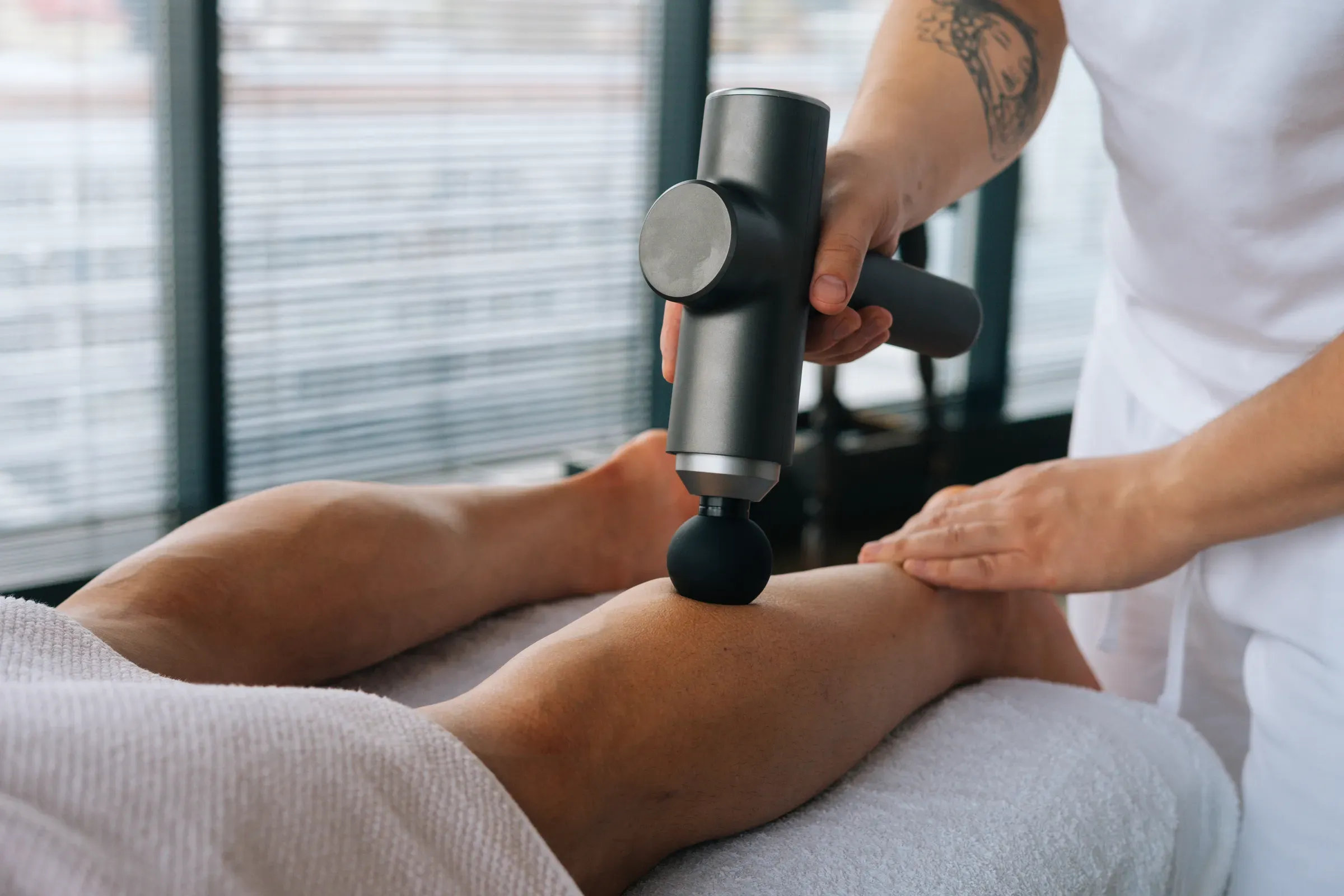
Close-up of unrecognizable professional male masseur massaging leg calf muscles using massage gun percussion, recovery & mobility devices ecommerce
Recovery & mobility devicesRunners, lifters, physiotherapy clients and people with desk jobs who compare stall force, amplitude, battery life, noise and warranty across brands, watch a demo before they trust the claims, and want to know the return window before they pay a three-figure price.

How recovery & mobility devices makes money

Four levers, and what limits each one here

Revenue is traffic times conversion rate times order value times purchase frequency. In this niche each lever has its own ceiling.

Traffic

Traffic: the comparison query is the category query

The searches that decide this niche are comparative: best massage gun under a price, brand versus brand, compression boots versus a foam roller, quietest percussion massager, massage gun for plantar fasciitis. A store with product pages alone is invisible to that demand because the shopper is not yet asking for a product, they are asking for a shortlist. The traffic lever is a guide and comparison layer that answers those queries honestly, with spec tables, and links to the products, alongside product-type collections built for the specification terms. Video demos embedded with transcripts extend the same pages into YouTube and assistant results.

Conversion

Conversion: warranty length, battery life and the return window

The device page converts when the three trust questions are answered before the price: how long the warranty runs and what it covers, how the battery performs in real use, and how many days the shopper has to return it if it is louder or heavier than expected. Then the spec table in text, a demo video, the attachments included, and reviews that mention the use case. Financing at checkout matters at this price band and belongs on the product page rather than as a surprise at the payment step. We restructure the page around those answers and put the comparison to the shopper's shortlist on the page itself.

Order value

Order value: attachments, the second device and the bundle

Order value grows through what goes in the box and what goes with it: attachment sets, a carrying case, a charging dock, a second device for a partner, or a recovery bundle that pairs a percussion device with a compression sleeve or a roller. Bundle pages need their own search demand mapped, since searches for massage gun bundle and recovery kit exist. Financing raises the basket for the shopper choosing between the base model and the one they wanted. Free shipping is expected at this price and should be presented as included rather than as a threshold.

Frequency

Frequency: a device buyer comes back for the next device

Purchase frequency is low and the cycle is long, so the frequency lever is the relationship between devices. A massage gun customer is the best prospect for compression boots, a mobility tool or a heated wrap, and an accessory customer is a warm audience for the next launch. The work is a post-purchase program that onboards use, registers the warranty, offers attachments at the right moment, and introduces the next product type when the customer has had time to value the first. Referral programs do more here than replenishment flows, and launch sequences to existing customers carry a large share of new-product revenue.

Search visibility

SEO for recovery devices: spec tables, comparison pages and the guide library

Category queries are product-type and specification terms: massage gun, percussion massager quiet, compression boots for runners, foam roller vibrating, mobility tools for hips. Each is a collection with specification copy explaining what the numbers mean, plus a filtered grid and internal links from the products. Product pages carry the spec table as text, the warranty and return terms, the attachments included, a demo video with a transcript, and Product markup that validates with the offer price and availability.

Comparison and guide pages carry most of the non-brand demand. Brand-versus-brand pages must be neutral, accurate and fair to the other product, describing what each is best for, because a comparison page that disparages does not rank well and exposes the brand. Guides cover how to use a percussion device on a body area, how to choose amplitude and stall force, and recovery routines for specific sports, without medical claims.

Technically, colour and attachment-set variants resolve to one URL, refurbished units get their own page with condition stated, discontinued models redirect to the successor, and the comparison pages are updated when a spec changes so the tables never go stale.

Queries that matter

  • best massage gun under 200
  • quietest percussion massager
  • compression boots for runners
  • massage gun for plantar fasciitis
  • massage gun comparison by stall force
  • how to use a massage gun on lower back
  • refurbished massage gun

Honest comparison pages with spec tables, product-type collections with explanatory copy, and product pages with transcripts and full specs rank. Product pages alone, and comparison pages that run down the other brand, do not.

AI answers

AI assistants shortlist recovery devices by spec

Shoppers ask assistants which massage gun is quietest, whether compression boots are worth it for a weekly runner, what amplitude means, and which brands offer the longest warranty. Assistants build shortlists from pages that state specs as data, warranty and return terms plainly, and use cases without medical promises. The store that gets named has a spec table in text on every product, a warranty page an assistant can quote, comparison pages that are fair, and Product markup consistent with the feed. We write those pages answer-first and check the numbers agree everywhere they appear.

Which massage gun is the quietest?
Are compression boots worth it for a recreational runner?
What does amplitude mean on a massage gun?
Which recovery device brands have the longest warranty?

Questions shoppers put to assistants. A store gets named when its pages answer them in plain text.

Google Shopping and Merchant Center

Shopping for massage guns and compression boots: GTIN, condition and the refurbished line

Devices carry barcodes, so GTINs are required and each colour or attachment-set variant has its own. The condition attribute separates new from refurbished, and refurbished units need their own offers with condition set correctly and the warranty for that condition stated on the landing page. Titles carry the product type, the brand, the model, the key spec and the colour; product_detail carries stall force, amplitude, battery and noise; product_highlight carries the warranty, the attachments included and the trial window. The category sits at the massage or fitness node that matches the device.

Policy is lighter than for supplements but not absent. Descriptions that claim to treat an injury or a condition move the listing under healthcare policy; descriptions that say what the device does mechanically do not. Price and availability must match the page exactly, which matters during sale periods when this niche does most of its volume.

Campaigns are structured by price band and role: flagship devices bid to contribution margin with the shipping included, bundles and accessories in a campaign that accepts a lower return to raise the basket, refurbished units in a campaign of their own, and free listings switched on and reported separately.

Feed attributes that decide eligibility

  • gtin per variant
  • condition for new versus refurbished
  • product_detail for stall force, amplitude, battery and noise
  • product_highlight for warranty and included attachments
  • google_product_category at the matching massage or fitness node
  • sale_price with effective dates for peak periods

Disapprovals we see in this niche

  • Price mismatch during sale periods when the page updates before the feed
  • Healthcare policy flags on injury or condition language
  • Condition mismatch when refurbished units are listed as new
  • Missing GTIN on devices that carry a retail barcode

Meta and social ads

Meta ads for recovery devices: the demo, the athlete and the pain policy

Recovery devices are lightly restricted on Meta, with one rule that catches most rejections: the personal-attributes policy means an ad cannot imply the viewer has back pain, an injury or a condition. Creative built on the demonstration avoids it: the device on a calf after a run, the noise level shown next to a phone's decibel meter, the attachment swap, the battery lasting a week of sessions, the athlete's own routine with rights secured and no medical claim. Before-and-after imagery is not the issue here, but implied treatment is.

Audiences begin with site visitors, engaged video viewers and customers, then broad prospecting with demo creative, since the visual product carries its own targeting. Catalog ads retarget the shortlist stage well when feed images are clean. UGC from athletes and physiotherapists needs rights and a claims check, because a professional saying the device fixes an injury has made a claim the brand owns. Launch sequences to existing customers run as their own campaign.

  • Noise test: the device beside a decibel meter in a quiet room
  • Attachment swap and which one for which muscle group
  • A week of sessions on one charge, filmed as a diary
  • An athlete's recovery routine in their own words, rights secured
  • Unboxing what is in the case, with the warranty length on screen

Policy line

No implied pain, injury or condition in the viewer, no treatment claims from creators or the brand, and no medical framing for devices sold as general wellness products.

Conversion and the store

High-ticket device pages: financing, comparison and the trial period

The product page has to close a considered purchase. Warranty length and coverage, the trial or return window, financing terms and free shipping sit near the price. The spec table in text, the demo video, the attachments included and the case come next, then reviews sorted by use case. A comparison module against the brand's own models helps the shopper choose the right one; a comparison against other brands lives on the comparison pages, not the product page.

On mobile the sticky bar shows the price, the financing line and the add-to-cart, and the trial window is one tap away. Checkout should show financing as an option rather than a surprise, and the warranty registration should be part of the order confirmation. During sale periods, the page must show the sale price and the end date consistently with the feed and the ads, because the mismatch is the most common disapproval in this niche.

Objections the page must answer

  • “How long does the warranty last and what does it cover”
  • “Can I return it if it is too loud or too heavy”
  • “Is the battery going to last a real week”
  • “Which model do I actually need”
  • “Can I pay in instalments”

Email, SMS and retention

Email for recovery devices: onboarding, warranty and the accessory cycle

The post-purchase program does the work that replenishment does elsewhere. A setup email on delivery covers charging, attachment use and a first routine, and asks for warranty registration. A day-ten check-in answers the common questions and invites a review sorted by use case. Attachment and accessory offers arrive after the first month, when the customer knows which muscle groups they use the device on. The next-product introduction comes later and is timed to the customer's stated sport or use.

Launch sequences to existing customers are the largest email revenue events in the niche and are planned with early access for past buyers. Seasonal sends follow Black Friday, gifting and the January reset. SMS is used for shipping on high-value parcels, restocks and launch-day access. Win-back for a device customer is a new product or an accessory, never a discount on the device they already own.

  1. Setup, first routine and warranty registration

    On delivery

  2. Day ten check-in and review request

    Ten days after delivery

  3. Attachment and accessory offer

    Five to six weeks after delivery

  4. Next product introduction

    Three to four months after delivery, by stated use

  5. Launch early access

    Ahead of each new product, to past buyers first

Where revenue leaks

The leaks we find in recovery & mobility devices stores

The Growth Analysis ranks these against your own numbers and says which to close first.

Get a Growth Analysis for your recovery device brand
  • Brand clicks bought back from resellers

    Resellers and rival brands bid on the brand name, the store has no brand campaign, and its own demand is paid for at a rival's price or lost entirely.

  • Comparison demand with no page

    The shopper asks which device to buy and the store only has pages that assume they already know, so the shortlist is built on a publisher's site.

  • A sale price the feed learns about tomorrow

    The page drops to the Black Friday price at midnight, the feed still carries the old price, and the flagship device is disapproved for the two days that matter most.

  • Warranty terms buried in a footer link

    The one thing the shopper wants to know before paying a three-figure price is three clicks away, and the comparison tab wins.

Platform notes

Where the platform changes the work

Shopify

Colour and attachment-set variants sit on one product with per-variant GTINs; specs, warranty and trial terms live in metafields that render on the page and map to product_detail and product_highlight; refurbished units are separate products with condition set for the channel; and financing is enabled at checkout and surfaced on the product page.

WooCommerce

Variable products carry colour and bundle options, custom fields hold the spec table and warranty terms, and the feed plugin maps condition and per-variation GTINs; scheduled sale prices need the feed fetch aligned to the price change.

BigCommerce

Product options and custom fields carry specs and warranty, and the native faceted navigation needs canonical rules so specification filters do not create duplicate collection URLs.

Questions

Recovery & mobility devices owners ask us

By CartKernel · Last reviewed

Can we say our massage gun helps with recovery or muscle soreness in ads?

Describing what the device does mechanically and how athletes use it is fine on every channel. Claiming it treats an injury or a medical condition moves it under healthcare policy on Google and, on Meta, into personal-attributes territory if the ad implies the viewer has the problem. We write the creative around use, spec and routine, and keep any stronger statement off the ads and off the page unless the device is cleared for it.

Is it worth writing comparison pages that mention other brands?

Yes, if they are honest and useful to the shopper. A fair comparison that gives each device its best use case ranks, gets cited by assistants and helps your shortlist position. One that disparages a rival ranks poorly and creates risk. We write them as neutral fit guides, keep the spec tables current, and update them whenever a model changes.

How do we defend our brand name in Google Ads without wasting money?

With a dedicated brand campaign, exact and phrase match on the brand and model names, ad copy that leads with warranty and trial terms, and a bid strategy that holds position without paying for clicks you would have received organically. We report brand spend and revenue separately so the defence cost is visible rather than hidden inside one return figure.

Should we sell refurbished devices on the same store?

Usually yes, as their own products with condition and warranty stated clearly, their own Shopping offers with the condition attribute set, and a page that explains the refurbishment process. Refurbished units recover most of the value of returns, reach a price-sensitive shopper without discounting the new device, and rank for the refurbished queries that exist in every device category.

What should our retention program look like when customers only buy every few years?

It should be built on the relationship between products rather than on replenishment. Onboarding, warranty registration, accessory offers at the right moment, an introduction to the next product type, early access to launches and a referral program. We measure accessory attach rate, second-device rate and launch revenue from existing customers, because those are the frequency numbers in this niche.

How do you handle Black Friday for a device brand?

By preparing the feed, the page and the ads so the sale price appears everywhere at the same minute, with sale_price and effective dates set in advance rather than edited at midnight. Brand defence bids are raised for the period, remarketing lists from the consideration window are activated, and past customers receive early access. Then the reconciliation after the event shows margin after returns, not just revenue.

Grow your recovery & mobility devices store.

A free Growth Analysis ranks what your store should fix first, by revenue at stake, in about a week.