Skip to content

Health & wellness · ecommerce growth

Supplement marketing agency

Supplement shoppers arrive with a goal and an ingredient already in mind, and they decide on the label: the dose per serving, the form, the other ingredients, the third-party seal and whether the bottle looks like it will last a month. The brand, meanwhile, is allowed to describe what the product supports and forbidden to say what it treats. We build growth inside that gap: goal and ingredient pages that rank, feeds and ads that stay eligible under the healthcare policies, product pages that show the panel, and a subscribe-and-save program that is still active in month six.

The buyer, in brief

Consideration
A few days for a single ingredient, longer for a multi-ingredient formula the shopper wants to understand
Purchase frequency
Monthly for a 30-count bottle, every two to three months for larger counts and subscription cadences
Seasonality
January and September peaks, an immune-season lift in autumn, and gifting almost nonexistent
Price band
Low to mid per bottle, with bundles and 90-day supplies moving the first order upward
Return risk
Low by volume, since opened consumables are rarely returnable, but chargebacks and cancellations rise when subscriptions are sold before the product has worked
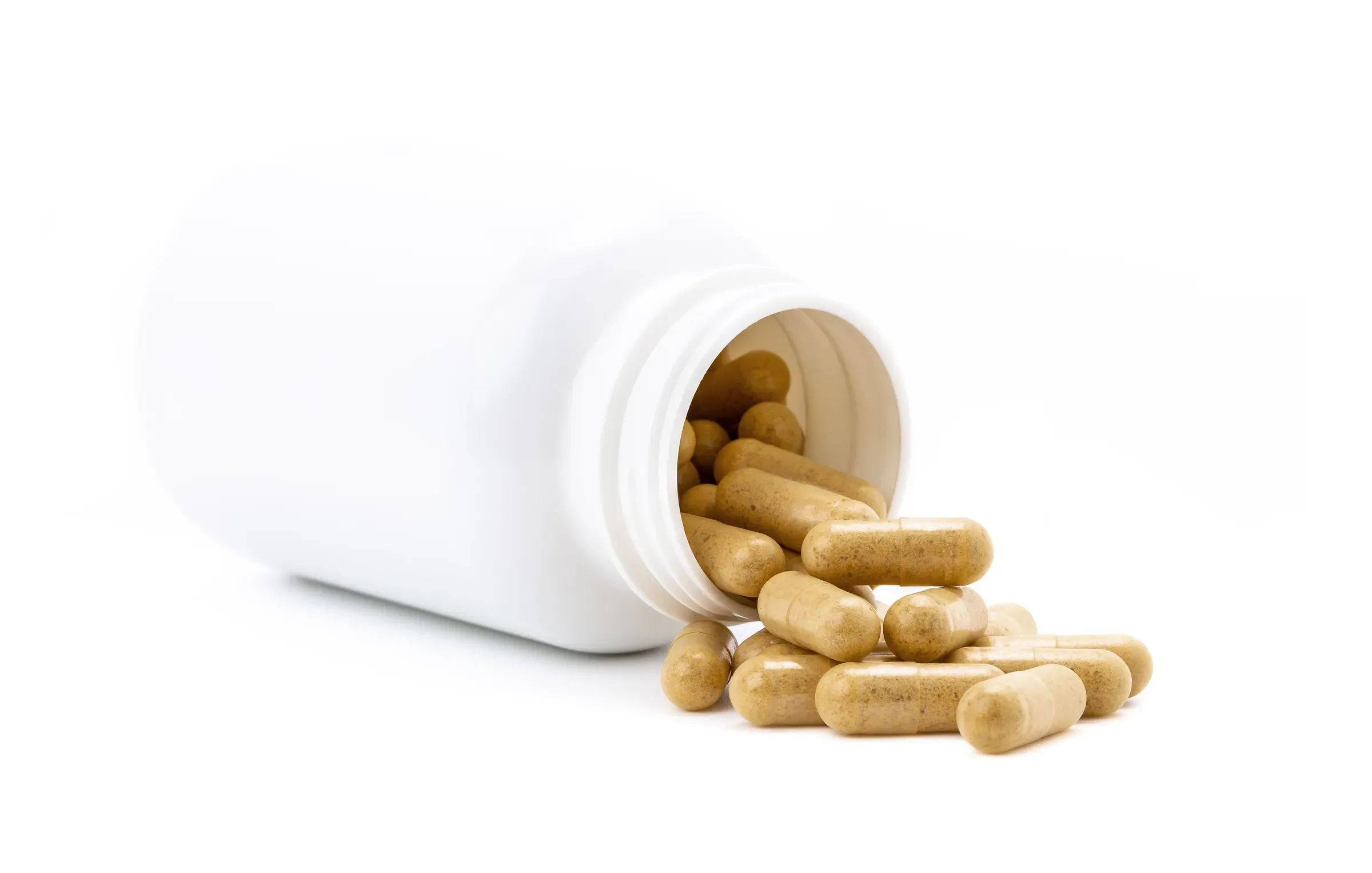
Brown herbal supplement capsules pour out from white opened plastic bottle, supplements ecommerce
SupplementsGoal-driven adults who have read about an ingredient before they searched for it, and who check the Supplement Facts panel, the dose per serving, the third-party testing seal and the recent reviews before they trust a brand they have not seen in a store.

How supplements makes money

Four levers, and what limits each one here

Revenue is traffic times conversion rate times order value times purchase frequency. In this niche each lever has its own ceiling.

Traffic

Traffic: the goal and the ingredient are searched together

Supplement search demand is shaped like goal plus ingredient plus form: magnesium for sleep, ashwagandha capsules, creatine gummies, electrolyte powder without sugar. A store with a single Supplements collection and a benefits blog ranks for its own name and little else, because the goal pages and the ingredient pages do not exist as indexable URLs. The traffic lever is building both layers inside the platform, with the product grid filtered by the ingredient or the goal and real copy on the page that explains dose, form and who the product suits, then carrying the same attributes into the Shopping feed so the listing shows for the same queries.

Conversion

Conversion: the panel, the seal and the lot number

A supplement page converts when the shopper can verify it without leaving. That means the full Supplement Facts panel as text, the other ingredients list, the serving size and servings per container, the third-party testing seal with a link to the certificate, and the manufacturing standard the brand can honestly state. In Canada the Natural Product Number belongs on the page, since shoppers there know to look for it. Most templates show a lifestyle photo, a benefits paragraph and the price, and hide the panel in an image. We move the proof into the first screen and keep the benefits language inside what the label allows.

Order value

Order value: protocols, 90-day supplies and the honest bundle

Average order value in supplements rises when the store sells the routine the shopper is actually following. A morning stack, a sleep protocol or a training-day pairing presented as a bundle with a small saving lifts the basket without discounting the brand. The 90-day supply does the same job for a single product and suits a shopper who has already decided. What does not work is a bundle that pairs products with no reason to be taken together; the shopper notices, and the return or the cancellation follows. We build bundle pages with their own search demand, because protocol queries exist and rarely have a good page to land on.

Frequency

Frequency: subscribe-and-save that survives month three

The subscription is where supplement brands make or lose their margin. Sold on the first visit, with a discount that makes the one-time price look wrong, it collects cancellations in month two and three from customers who never formed the habit. Sold after the first bottle, inside a flow that has already checked in on how the product is going, it retains. The frequency work is timing that offer, aligning the subscription interval to the real count in the bottle, making the pause and skip controls obvious, and reporting churn by cohort month so you can see exactly where customers leave and fix that point.

Search visibility

Search demand for supplements: goal, ingredient, form and dose

Supplement SEO is mostly an information architecture problem. The queries fall into goal terms (supplements for joint support, energy without caffeine), ingredient terms (magnesium glycinate, berberine, omega-3), form terms (gummies, liquid, powder) and dose terms (vitamin D 5000 IU, 500 mg magnesium). Each cluster needs an indexable collection with real copy, a filtered product grid and internal links from the products that qualify, built inside the platform rather than as filter parameters.

Ingredient pages are the second layer and carry the informational demand. A page for each ingredient that explains what it is, common forms, typical dose ranges as published by recognized bodies, what it should not be combined with, and which of your products contain it earns links and ranks where product pages cannot. Product pages themselves need the panel as text, structured data that validates, and copy that stays inside structure and function language.

Technically, count and flavour variants must resolve to one URL per product, bundles need their own pages that link to the components, and discontinued formulas should redirect to the successor rather than to the homepage. Google's quality signals for health content also mean the About page, the manufacturing statement and the testing policy are ranking assets rather than legal afterthoughts.

Queries that matter

  • magnesium glycinate for sleep
  • best creatine gummies
  • electrolyte powder without sugar
  • berberine 500 mg capsules
  • supplements for joint support
  • third party tested ashwagandha
  • what is the difference between magnesium citrate and glycinate

Ingredient and goal collections with substantial copy, ingredient explainer pages and testing-transparency pages rank here. Pages that lean on a disease claim tend to fall under the quality bar for health content rather than rise with it.

AI answers

AI assistants and supplement questions: what gets quoted

Shoppers ask assistants which form of magnesium to take, whether two supplements can be combined, what a third-party seal means and which brands test every batch. The stores that get named have ingredient pages that answer those questions in plain text, a testing page that says which lab and which standard, Product markup that agrees with the feed, and no claim on any page that an assistant would flag as medical. We write the ingredient and testing content answer-first, keep dose and form data consistent between the page, the feed and the markup, and confirm the assistant crawlers can read the pages without rendering scripts.

Which form of magnesium is best for sleep?
Can I take ashwagandha and magnesium together?
What does third party tested mean on a supplement label?
Which supplement brands publish their certificates of analysis?

Questions shoppers put to assistants. A store gets named when its pages answer them in plain text.

Google Shopping and Merchant Center

Merchant Center for supplements: eligibility before optimization

Supplements are allowed in Shopping ads and free listings, with two conditions that decide eligibility. The product must not contain or be marketed with anything on Google's list of unapproved pharmaceuticals and supplements, which covers specific stimulants, hormones and substances marketed for weight loss or sexual enhancement, and the listing must not make claims that fall under the healthcare policy. A title that says supports joint comfort is a supplement; a title that says treats arthritis is a healthcare claim, and the listing goes down.

Attributes decide which queries the listing shows for. Titles carry the ingredient, the form, the dose, the count and the goal in the order shoppers type them. The GTIN is required where the product has a barcode; own-brand products without one set identifier_exists to false. Product_detail carries serving size, servings per container and the testing standard; product_highlight carries the three things a shopper would say about the product. The category sits at the vitamins and supplements node rather than at Health and Beauty.

Campaigns split by role: single ingredients with strong search demand bid to margin, bundles and 90-day supplies in a campaign that accepts a lower first-order return because it acquires subscribers, and free listings monitored as their own line.

Feed attributes that decide eligibility

  • gtin or identifier_exists
  • product_detail for serving size and testing standard
  • product_highlight
  • google_product_category at the vitamins and supplements node
  • unit_pricing_measure for per-serving comparison
  • custom_label for subscription-eligible products

Disapprovals we see in this niche

  • Healthcare policy flags on titles or descriptions that name a condition
  • Unapproved substance disapprovals when an ingredient on Google's list appears in the feed
  • Misrepresentation when a page shows a subscription price the feed does not
  • Missing GTIN on products that carry a retail barcode

Meta and social ads

Meta ads for supplements: describing the product, not the person

Meta's health and wellness rules decide the creative before the brand does. Ads cannot imply the viewer has a condition, cannot show before-and-after results, and cannot promise an outcome the label is not allowed to state. Weight management products carry an additional adult-only targeting requirement. Creative that works inside those rules shows the panel, explains the form and dose, walks through when and how to take the product, and lets a customer describe their own routine in their own words with rights secured and claims checked.

Audiences start with customers and site visitors, then broad prospecting, because interest targeting in supplements is crowded and expensive. The tracking constraint is specific to this industry: if Meta classifies the domain as health and wellness, lower-funnel events may be restricted, so we check the classification in Events Manager before planning optimization and build around the events Meta allows the account to share.

  • The Supplement Facts panel read aloud, one ingredient at a time
  • How and when to take it: the routine, not the result
  • The testing story: which lab, which standard, which batch
  • A customer's own words about their morning routine, rights secured
  • One formulation decision explained by the person who made it

Policy line

No before-and-after, no implied condition or personal attribute, no treatment or cure claims, adult-only targeting for weight management products, and lower-funnel event sharing may be restricted for health-classified domains.

Conversion and the store

Supplement product pages: what the label has to prove

The product page has to answer four things before the price matters: what is in it and at what dose, how it is tested and by whom, how to take it and for how long before judging it, and what happens if it does not suit. The panel must be readable text, the third-party seal must link to something, the disclaimer must be present without swallowing the page, and the subscription option must be visible without being the default. In Canada, the licence number belongs near the panel.

The template that carries revenue is the product page with a bundle module beneath it, then the goal collection. On mobile the sticky add-to-cart with the one-time and subscribe prices side by side, the count selector, and the shipping and returns lines within a thumb of the button decide more than any redesign. A short quiz that maps a goal to a product works when it ends on a real product with a real price.

Objections the page must answer

  • “What is the dose per serving and does it match what I read about”
  • “Who tested it and can I see the certificate”
  • “How long before I should expect to notice anything”
  • “Can I cancel the subscription easily”
  • “Is it safe alongside what I already take”

Email, SMS and retention

Email and SMS for supplements: the 30-day bottle and the reorder

The flows that pay follow the bottle. A first-use email on delivery covers how and when to take the product and what a normal first two weeks looks like, which prevents most early cancellations. A check-in around day fourteen asks how it is going and answers the questions that come in. The subscription offer arrives around day twenty for a 30-count bottle, when the customer has formed an opinion and still has product left, and the replenishment reminder for one-time buyers lands a week before the bottle runs out.

Subscribers get their own cadence: an upcoming-order notice with skip and swap controls, a month-three message that adds value rather than a discount, and a churn-save flow triggered by cancellation that offers a pause first. SMS is reserved for shipping, the reorder nudge and restocks. Win-back flows should name the product and the goal the customer bought it for, not a generic offer.

  1. First-use guidance

    On delivery

  2. Day fourteen check-in

    Two weeks after delivery

  3. Subscription offer

    Around day twenty for a 30-count bottle, later for larger counts

  4. Replenishment reminder

    One week before the bottle runs out, by count and serving

  5. Churn save

    On cancellation, with pause offered before discount

Where revenue leaks

The leaks we find in supplements stores

The Growth Analysis ranks these against your own numbers and says which to close first.

Get a Growth Analysis for your supplement brand
  • Subscriptions sold before the product has worked

    The first-visit subscription discount collects sign-ups who cancel in month two. The acquisition cost was paid for a customer who never became one.

  • A claim in a feed title that takes down the account

    One product description that names a condition trips the healthcare policy in Merchant Center, and the whole account can sit in review while the January peak passes.

  • Ingredient demand with no page to land on

    The store ranks for its own name while magnesium glycinate, berberine and electrolyte queries land on a marketplace, because the ingredient pages exist only as filters.

  • The Supplement Facts panel as an image

    Google cannot read it, assistants cannot quote it, and the shopper who wants the dose per serving opens another tab and often buys there.

Platform notes

Where the platform changes the work

Shopify

Ingredients, dose, serving data, testing seals and licence numbers live in metafields so they render on every product page and map into product_detail in the feed. Selling plans handle subscribe-and-save; the cadence must match the real count in the bottle, and pause and skip need to be one tap in the customer account.

WooCommerce

Global attributes for ingredient, goal and form power the filters and the attribute archives that can be set to index. A subscription extension handles recurring orders, and the feed plugin has to carry the attributes into product_detail rather than dropping them.

BigCommerce

Custom fields hold the panel data and the testing statement, and canonical rules on faceted URLs keep the ingredient filters from multiplying in the index.

Questions

Supplements owners ask us

By CartKernel · Last reviewed

Can a supplement brand say its product supports immune health in an ad?

In the United States, a structure and function statement such as supports immune health is permitted on the label with the FDA disclaimer and in most ad contexts, provided the brand holds substantiation. What is not permitted is naming a disease or promising prevention. Google and Meta apply their own reading on top, so we check each ad against the current policy text and keep the wording identical across the page, the feed and the ad.

What does the Natural Product Number change for a supplement store selling in Canada?

A product sold in Canada as a natural health product needs a licence and a Natural Product Number before it is sold, and the permitted claims are the ones in the licence. We put the number on the product page, keep Canadian copy within the licensed claims, and separate the Canadian and US versions of a page where the allowed wording differs.

Will subscribe-and-save reduce our one-time sales?

It moves some of them, which is the point, but it should not be the default option or the only visible price. We show one-time and subscription side by side, offer the subscription inside the post-purchase flow once the customer has formed an opinion, and report both revenue lines with churn by cohort so you can see whether the program is adding customers or just discounting existing ones.

Which third-party testing seals matter to supplement shoppers?

The ones the shopper can verify. Programs run by recognized certifiers publish a searchable list of certified products, and the seal on your page should link to your entry. Certified for Sport programs matter to athletes who are drug tested; a general purity and potency seal matters to everyone else. A seal without a lookup behind it does little.

How do you handle Shopping ads for a supplement that contains an ingredient Google restricts?

We remove the product from the feed rather than risk the account. Repeated violations of Google's unapproved substances policy put the whole Merchant Center at risk, and a single listing can trigger the first warning. The product can still sell through organic search, email and the site; the rest of the catalog keeps its Shopping eligibility.

How much of a supplement brand's growth usually comes from repeat orders?

That depends on the brand, and we do not quote an industry figure. What we do is measure it for you: repeat rate by first product, subscription retention by cohort month and replenishment rate for one-time buyers. Those numbers tell you whether acquisition spend is building a customer base or renting one, and they decide where the next dollar goes.

Grow your supplements store.

A free Growth Analysis ranks what your store should fix first, by revenue at stake, in about a week.