Skip to content

Home & furniture · ecommerce growth

Lighting brand marketing agency

Nobody buys a pendant without asking how many lumens it puts out, what bulb it takes, whether it can be dimmed and whether it is rated for a bathroom. Lighting is bought by room and by spec, by homeowners mid-renovation and by designers ordering for a client under a trade account, and the fixture has to be listed for the wiring it will meet. We build the growth system for that: spec attributes that search and Shopping can read, room-led collections with the electrical facts in text, a feed that carries the listing marks, and a trade program that treats designers as the repeat customers they are.

The buyer, in brief

Consideration
One to four weeks per room, tied to the electrician's schedule and the renovation timeline
Purchase frequency
Several fixtures per project across a few months, then long gaps for homeowners and steady reorders for trade accounts
Seasonality
Spring and fall renovation cycles, a fall lift as evenings darken, and a holiday gifting peak for portable and decorative lamps
Price band
Wide, from budget plug-in lamps to premium hardwired fixtures, with trade pricing on a separate tier
Return risk
Glass broken in transit, a fixture that did not suit the ceiling height or the dimmer, and bulbs with the wrong base
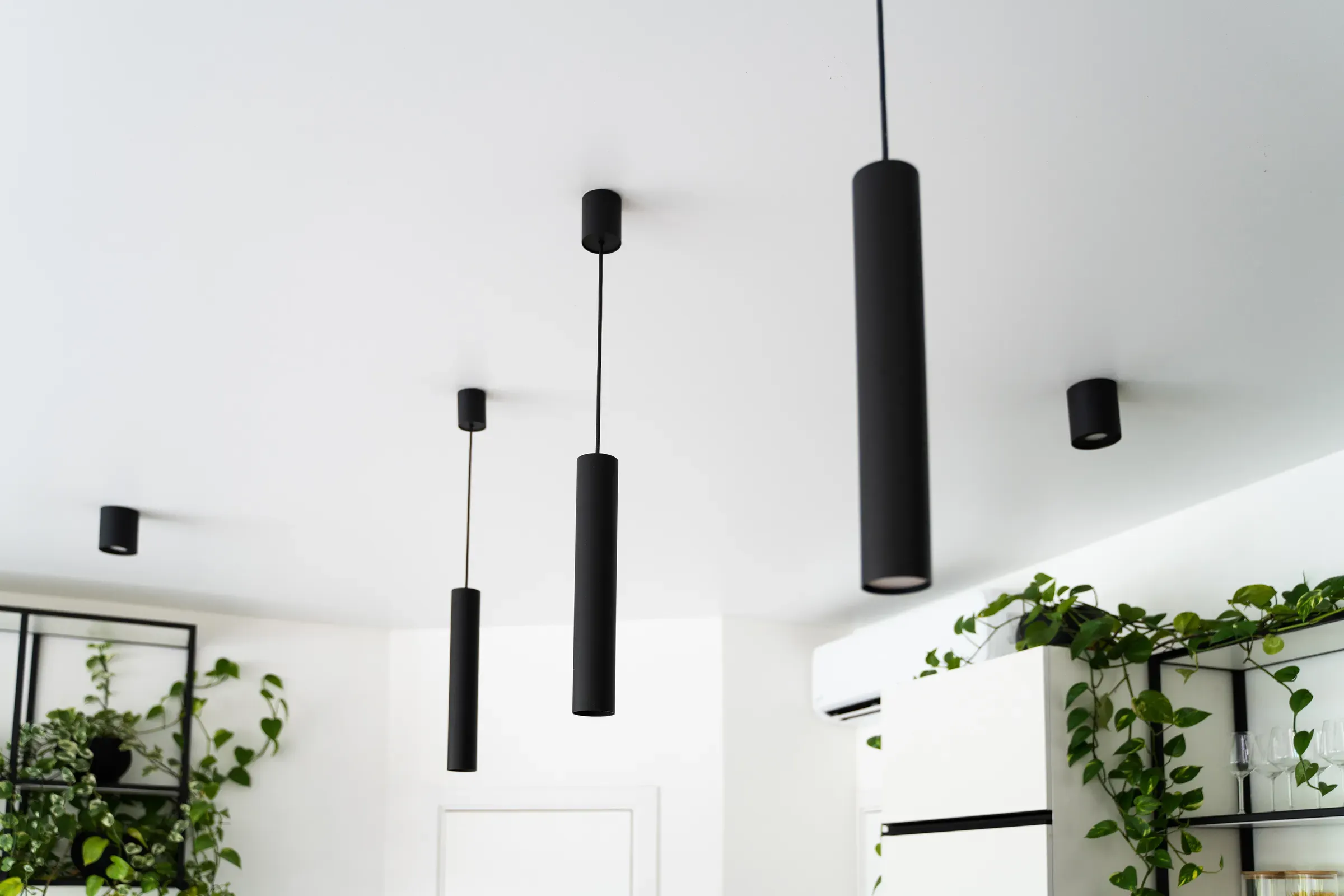
Contemporary interior with modern black pendant lamps on white ceiling, lighting ecommerce
LightingHomeowners in a renovation or a new build choosing fixtures room by room, and designers and contractors buying for clients, who check lumens, color temperature, bulb base, dimmer compatibility, the location rating and the safety listing before they trust a fixture.

How lighting makes money

Four levers, and what limits each one here

Revenue is traffic times conversion rate times order value times purchase frequency. In this niche each lever has its own ceiling.

Traffic

Traffic: spec and room queries that live in a PDF today

Lighting queries carry a spec or a room: pendant light for kitchen island, dimmable LED vanity light for bathroom, E26 sconce, 3000K flush mount for a low ceiling, damp rated outdoor wall light. Most lighting stores keep those facts in a downloadable spec sheet and a Ceiling Lights collection, which leaves the query to retailers whose pages state lumens, Kelvin, base type and location rating in text. The traffic lever is a catalog where every spec is an attribute the platform holds, room and fixture-type collections built from those attributes with copy, and product pages that put the electrical facts on the page rather than in an attachment. Guides on lumens per room, color temperature and layering earn the informational visits that precede a renovation order.

Conversion

Conversion: the electrical facts the electrician will ask about

A lighting sale stalls on the questions an electrician will ask on install day: what bulb does it take, is it dimmable and with which dimmer, is it hardwired or plug-in, how far does it hang, is it rated for a damp or wet location, and is it listed. The product page has to answer each in text, with the listing mark named, the adjustable drop range stated, the bulb included or not, and the ceiling height the fixture suits. We add a spec block that reads like a checklist, a ceiling-height and drop calculator for pendants and chandeliers, a compatible-dimmer note where the brand has tested one, and a bulb finder for fixtures that ship without one, so the order includes the right bulb rather than the wrong one and a return.

Order value

Order value: the room, the bulbs and the set of three

Lighting orders grow when the store sells the layout rather than the fixture. Three pendants over an island, matched sconces either side of a mirror, a chandelier with the coordinating flush mounts for the hallway: these are how rooms are actually lit, and a product page that shows the set of three with a quantity preset and a coordinating-finish block gets the whole room. Bulbs are the second lever, because a fixture without its bulb is an incomplete order and a shopper who buys the bulb elsewhere may buy the wrong base. Trade accounts raise order value on their own when the checkout supports quotes, project lists and net terms, so a designer can order a whole floor at once.

Frequency

Frequency: the next room for homeowners, the next project for the trade

Homeowners light a house room by room across a renovation, so the frequency lever is being present when the next room comes up: a post-install check-in, a coordinating-finish sequence for the rooms not yet done, and a reminder when a project list still has fixtures unordered. Trade customers are the true repeat buyers in lighting, and their frequency depends on how easy the reorder is: a project list saved to the account, trade pricing visible on login, quote requests answered inside a day and new collection previews sent to designers first. Bulb replenishment fits a later flow for fixtures with replaceable lamps. We report homeowner and trade revenue as separate lines, because they compound at different speeds.

Search visibility

Search: turning lumens, Kelvin and base type into pages that rank

Lighting demand splits by fixture type, room, spec and style, and the winning pages combine them. Pendant lights for kitchen islands, dimmable vanity lights for bathrooms, black flush mounts for low ceilings, outdoor wall lights rated for wet locations: each needs a collection with copy that explains the choice, a grid filtered by the attribute, and internal links from qualifying products. We map the demand first, then build the collections inside the platform from the spec attributes, so a dimmable filter is an indexable page rather than a parameter.

Product pages rank when the spec is text: lumens, color temperature in Kelvin, CRI where stated, bulb base and count, wattage and whether the LED is integrated or replaceable, dimmer compatibility, mounting type, adjustable drop range, dimensions, finish, location rating and the safety listing such as UL, ETL or CSA. Product and Offer markup must validate and match the feed. Guides on how many lumens a room needs, what color temperature suits a kitchen versus a bedroom, and how to size a chandelier for a dining table earn links and rank for the questions people ask before choosing.

Technically, finish variants stay as variants under one URL, spec sheets remain as downloads but never as the only place the spec exists, and image weight needs handling because fixture galleries are heavy and Core Web Vitals decide mobile rankings.

Queries that matter

  • pendant lights for kitchen island
  • dimmable led vanity light bathroom
  • flush mount ceiling light for low ceilings
  • how many lumens for a living room
  • 3000k vs 4000k for kitchen
  • damp rated outdoor wall sconce
  • chandelier size for dining table

Fixture-type and room collections with spec-led copy, product pages with the electrical facts in text, and lumen, Kelvin and sizing guides rank in this niche. A Ceiling Lights collection and a product page whose spec lives in a PDF do not.

AI answers

AI answers: the lighting questions assistants get asked mid-renovation

People ask an assistant how many lumens a kitchen needs, whether 2700K or 3000K suits a living room, how high to hang a pendant over an island, and whether a given fixture works with a specific dimmer or is rated for a shower. The stores that get named state those facts in text on the product page, publish sizing and lumen guides written as direct answers, name the safety listing and the location rating plainly, and keep Product markup consistent with the Merchant Center feed. We write the guides answer-first, make sure every spec that appears in the PDF also appears in the HTML, and check that the crawlers behind the assistants can reach the product pages without executing scripts.

How many lumens do I need for a kitchen island?
Is 2700K or 3000K better for a living room?
How high should a pendant hang over a kitchen island?
Can this fixture be used in a bathroom with a shower?
Which dimmer switch works with an integrated LED fixture?

Questions shoppers put to assistants. A store gets named when its pages answer them in plain text.

Google Shopping and Merchant Center

Google Shopping and Merchant Center for fixtures with a spec sheet

Lighting feeds win on attributes because the query is a spec. Titles carry fixture type, room, finish and the spec a shopper would type, such as dimmable or 3-light. product_detail carries lumens, color temperature, bulb base, bulb count, wattage, dimmability, mounting type and the location rating; product_highlight carries the three things a shopper would say about the fixture; material and color carry the finish and body. Fixtures sold with a manufacturer barcode need the GTIN, and own-brand fixtures without one set identifier_exists to false. Finish variants share an item_group_id, and multi-packs of the same sconce use multipack rather than a separate product. google_product_category sits at the specific fixture node, not at Home and Garden.

Policy is quieter here than in health categories, but two things recur: energy and safety claims. Energy Star and safety listing claims are welcome when the product actually carries the mark and the page shows it; a claim without the mark is a misrepresentation issue. Fragile fixtures need shipping_weight and box dimensions so the rate is right, and free shipping can be stated only where true.

Campaigns split by price band and fixture type: hardwired fixtures bid to contribution after breakage and returns, portable lamps and bulbs in a lower-value campaign, trade-only items excluded, and free listings tracked on their own.

Feed attributes that decide eligibility

  • product_detail for lumens, Kelvin, base, wattage and dimmability
  • product_highlight
  • gtin or identifier_exists
  • item_group_id for finish variants
  • multipack for sets of the same fixture
  • material and color for finish
  • google_product_category at the fixture node

Disapprovals we see in this niche

  • Energy or safety claims without the mark on the page
  • Missing GTIN on fixtures that carry a manufacturer barcode
  • Price mismatch after trade pricing leaks into the feed
  • Image policy issues from lifestyle shots with text overlays

Meta and social ads

Meta ads: the fixture switched on, the drop measured and the finish in daylight

Lighting creative earns attention when the fixture is on. A pendant lit at dusk over a real island, a sconce pair flanking a mirror with the color temperature named on screen, a dimming sweep from full to low, and a finish shown in daylight and under warm light are the angles that answer what the shopper cannot judge from a white-background image. Install clips with the electrician's time on screen turn the hardwiring objection into content, and a scale shot with a person under the fixture answers the ceiling-height question.

Policy is light here; the constraints are accuracy and rights. Claims about energy savings or safety need the mark and the page to back them, and a lifestyle image from a customer or a designer needs written permission. Audiences start with site visitors who used the lumen or sizing guide, then designers and contractors as a separate prospecting audience with trade creative, then broad prospecting with strong video. Catalog ads for retargeting need the fixture lit and the room visible.

  • The pendant lit at dusk over a real kitchen island
  • A dimming sweep from full brightness to low with the Kelvin on screen
  • The same finish in daylight and under warm light
  • An electrician's install with the time on screen
  • A designer's project with every fixture from one collection

Policy line

Energy and safety claims need the mark on the product; no implied promises about electrical compatibility, and designer or customer project photos need written rights before they run.

Conversion and the store

The store: a lighting page that passes the electrician's checklist

The lighting product page has to satisfy two readers, the homeowner choosing the look and the electrician installing it, and most templates serve neither. We build a spec block that reads as a checklist: bulb base and count, included or not, lumens, Kelvin, dimmable and with what, integrated or replaceable LED, hardwired or plug-in, mounting type, drop range, dimensions, weight, location rating and the safety listing. A ceiling-height guide beside the drop range and a room-fit block, such as how many pendants an island of a given length needs, answer the sizing question in place. Finish swatches show the finish in daylight.

The second template is the room collection, where shoppers assemble a scheme. Filters for finish, Kelvin, dimmable and mounting, a coordinating-finish block, and a quantity preset for sets of two or three move the whole room into the cart. For trade buyers, a visible trade program link, a quote request and a project list in the account matter more than any layout change. On mobile, the spec block must be readable without a tap and the bulb finder must work with the thumb.

Objections the page must answer

  • “What bulb does it take and is one included”
  • “Can I dim it and which dimmer works”
  • “Will it hang too low for my ceiling”
  • “Is it safe in my bathroom or outside”
  • “Does the finish match the fixtures I already have”

Email, SMS and retention

Email and SMS: install day, the next room and the trade reorder

Lighting email is built around the install and the project. The post-purchase sequence covers what arrives in the box, the bulb the fixture needs if it ships without one, and an install guide with the dimmer note, because a fixture that sits in its box for a month is the one that gets returned. SMS carries the delivery notice for fragile fixtures, which need someone to check the glass on arrival. A post-install check-in a week after delivery asks whether the fixture is up and how it looks lit, and routes any problem to support before it becomes a return.

The next-room sequence starts two to three weeks after install and shows coordinating finishes for the rooms a renovation usually reaches next. Guides on layering and color temperature earn the right to keep sending through the gaps. Trade accounts get their own track: new collection previews before the public launch, project-list reminders for fixtures saved but not ordered, and a quarterly note on lead times. Bulb replenishment runs for fixtures with replaceable lamps, timed to the rated life the manufacturer states.

  1. Pre-install

    On dispatch, with the bulb and dimmer notes and SMS on delivery

  2. Post-install check-in

    Seven to ten days after delivery

  3. Next room

    Two to three weeks after install, by coordinating finish

  4. Trade previews and project lists

    Before each launch, and monthly for saved lists

  5. Bulb replenishment

    Timed to the rated lamp life for replaceable-bulb fixtures

Where revenue leaks

The leaks we find in lighting stores

The Growth Analysis ranks these against your own numbers and says which to close first.

Get a Growth Analysis for your lighting brand
  • Specs that exist only in a PDF

    Lumens, base type and the location rating sit in a downloadable sheet, so the spec queries the fixture would win go to a retailer whose page says them in text, and the assistant never names the brand.

  • Fixtures sold without the bulb they need

    The pendant arrives, the shopper buys a bulb with the wrong base at a hardware store, the fixture looks wrong lit, and the return is blamed on the fixture.

  • Trade applications that wait a week

    A designer applies for a trade account mid-project, hears nothing for days, and orders the whole floor from a supplier who approved them the same afternoon.

  • Breakage priced out of the bids

    A glass chandelier with a high transit-damage rate is bid like everything else, and the Shopping campaign reports a return on spend that the replacement shipments quietly erase.

  • Room collections that are really a fixture-type list

    The Kitchen page is every pendant the store sells, with no guidance on island length, drop height or how many, so the visitor who wanted a scheme leaves with a headache.

Platform notes

Where the platform changes the work

Shopify

Spec attributes live in metafields with a defined type so they render in the template, drive the filters through Search and Discovery and flow into the feed as product_detail. Trade accounts run through B2B on Shopify Plus with company profiles, price lists and net terms, or through a wholesale app on standard plans.

WooCommerce

Global attributes for base, Kelvin, lumens, dimmability and location rating power the filters and the indexable attribute archives; a role-based pricing plugin carries trade pricing, and the feed plugin must never send trade prices to Merchant Center.

BigCommerce

Customer groups handle trade pricing natively, custom fields carry the spec, and the faceted search needs canonical rules so only the spec combinations with demand are indexed.

Questions

Lighting owners ask us

By CartKernel · Last reviewed

How should a lighting store handle product specs for search?

Every spec becomes a structured attribute in the platform, so it renders in text on the product page, powers indexable filters and flows into the Shopping feed. The spec sheet stays as a download, but it is never the only place lumens, Kelvin, base type or the location rating live. Guides on lumens per room and color temperature sit on top of that structure.

Can you set up a trade program for designers inside our store?

Yes. On Shopify Plus we use the native B2B features for company accounts, price lists and terms; on standard Shopify, WooCommerce or BigCommerce we use customer groups or a wholesale app. The application, the approval, the trade pricing on login and the project list are built inside the store, with a flow that answers applications quickly, because speed decides which supplier gets the project.

Do we need GTINs to list our fixtures in Google Shopping?

If the fixture carries a manufacturer barcode, yes, and the GTIN must be the real one. Own-brand fixtures made for you without a barcode set identifier_exists to false rather than borrowing a code from a similar product. The attributes that actually win lighting queries are the spec fields, which we map into product_detail and the title.

How do you reduce returns on fixtures sold online?

By answering the install-day questions on the page: bulb base and inclusion, dimmer compatibility, drop range against ceiling height, location rating and the listing mark. A bulb finder that adds the right lamp to the order, a pre-install email with the dimmer note, and a check-in after delivery catch most of the rest. Breakage is handled by tracking damage by carrier and packaging.

Which lighting queries are worth paying for?

Fixture-and-room terms such as pendant lights for kitchen island, spec terms such as dimmable flush mount 3000K, and trade terms that lead to an account application. Broad terms like lamps or lights are research traffic competing with national retailers, so they get tested with caps. Brand terms are protected and reported separately so growth is real.

What is different about marketing lighting to homeowners versus the trade?

Homeowners buy room by room during a renovation and respond to sizing guides, lit imagery and coordinating-finish suggestions. Trade buyers reorder for years and respond to fast approval, visible trade pricing, project lists, quotes and early access to new collections. We run them as separate audiences, separate flows and separate lines in the report, because they compound at different speeds.

Grow your lighting store.

A free Growth Analysis ranks what your store should fix first, by revenue at stake, in about a week.