Skip to content

Jewelry · ecommerce growth

Bracelet brand marketing agency

A bracelet brand built around charms sells one product twice: the bracelet that begins a collection, and every piece added to it for years afterward. The base is bought once and the additions arrive at birthdays, holidays and milestones, but only if the shopper can tell which charms fit, how many the bracelet will carry and what size to order once it is full. We build for that: compatibility answered on the page, attach rate treated as the number that matters, sizing that accounts for a loaded bracelet, and an occasion calendar that does the reordering.

The buyer, in brief

Consideration
Minutes for a charm added to a bracelet already owned, considerably longer for the first bracelet or starter set
Purchase frequency
Several times a year, tied to occasions and milestones rather than to how often the piece is worn
Seasonality
December and Mother's Day dominate, with Valentine's Day, birthdays and graduations spread through the year and a steady tail of new baby and travel pieces
Price band
Accessible per charm with a larger first order for the bracelet and starter set, and a lifetime value far above any single purchase
Return risk
Low but pointed; charms that do not fit a bracelet the customer already owns, and bracelets that will not close once loaded, are the two causes
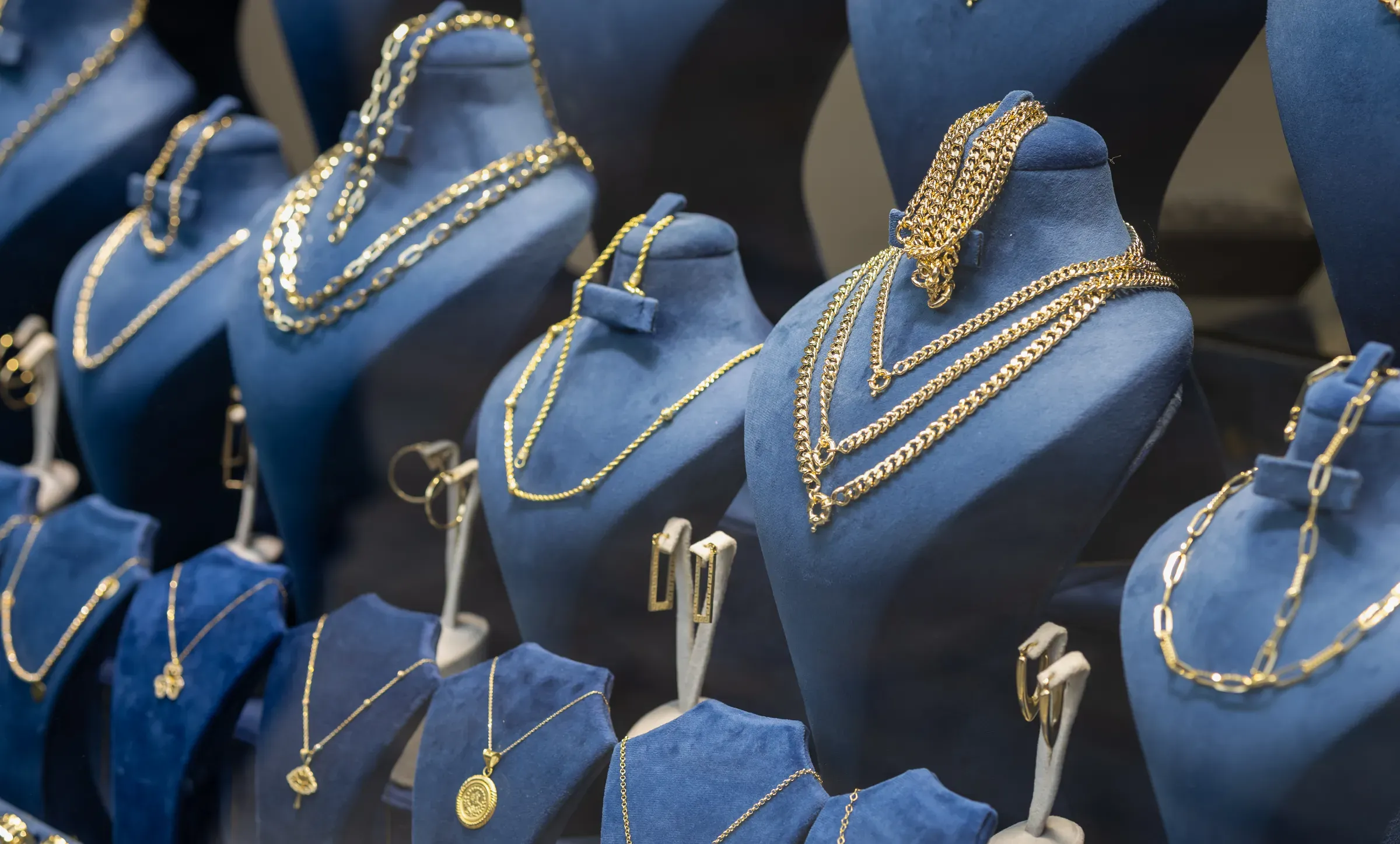
Luxurious display of elegant gold necklaces and jewelry on blue velvet busts in a high-end boutique window, charm & bracelet brands ecommerce
Charm & bracelet brandsWomen buying for themselves and, more often, partners, parents and friends buying a single charm for an occasion, who need to know which bracelet system a charm fits, what wrist size to order once the bracelet is loaded, and whether the piece will still be sold next year.

How charm & bracelet brands makes money

Four levers, and what limits each one here

Revenue is traffic times conversion rate times order value times purchase frequency. In this niche each lever has its own ceiling.

Traffic

Traffic: compatibility, occasions and the bracelet itself

Three kinds of search bring people here and only one of them is about the brand. The first is compatibility, phrased as whether a charm will fit a bracelet the shopper already owns, and it is asked constantly because most people cannot name the system they have. The second is the occasion, where somebody wants a piece to mark a new baby, a graduation, a trip or a loss, and the query names the event rather than the product. The third is the bracelet, usually paired with a metal or a length. A catalog organized as one enormous Charms collection answers none of them. Pages built around fitting, around occasions and around each bracelet style answer all three and catch the demand where it is.

Conversion

Conversion: will it fit my bracelet and will it fit my wrist

Two fit questions decide this order and stores answer neither well. The first is whether the charm attaches to what the customer owns, which is a matter of core diameter, chain type and clip stations, and it needs a measurement on the page rather than a reassurance. Photographs showing the opening of the charm against a chain settle it faster than a paragraph. The second is bracelet length, and the standard advice is wrong here because a bracelet filled with charms wears shorter and tighter than an empty one. A sizing guide that explains how much to add for a loaded bracelet, with a printable measuring strip, prevents the most common return in the niche and is trivial to build.

Order value

Order value: attach rate, the starter set and somewhere to keep them

The metric this business lives on is how many charms leave with a bracelet, and it is rarely measured. A bracelet sold alone is a customer who may never return; a bracelet sold with two charms is a collection that has started. Starter sets do this deliberately, pairing a base with a small group of pieces at a set price, and they work best when the charms are chosen to suggest a theme the customer can continue. Beyond that, safety chains, clips and spacers are small additions that genuinely improve the product, and a storage box sells to anyone whose collection has outgrown a dish on the dresser. None of it needs discounting, only a product page that understands the system.

Frequency

Frequency: an occasion calendar that belongs to the customer

Repeat purchase here is entirely predictable and almost entirely unexploited. A charm is bought to mark something, and the things people mark repeat annually. Asking a customer for two or three dates that matter, in a way that feels like a service rather than a form, gives the brand a reminder to send every year with a relevant suggestion attached. The second driver is capacity, because a bracelet has a finite number of stations and a customer approaching that number is either buying a second bracelet or stopping. Knowing which pieces someone owns lets the brand meet that moment. Both beat a monthly promotional email by a wide margin.

Search visibility

Search: fitting guides, occasion pages and a bracelet page per style

Start with fitting, because it is the highest volume question and the least well answered. A page that explains the different bracelet systems in plain terms, gives the measurements that determine whether a charm fits, and shows photographs of each fitting type will attract people who own a bracelet from anywhere and want to add to it. Keep it factual and neutral about other makers, describe what the measurements are, and let the reader work out what they own.

Occasion pages are the second build and they are where the commercial demand sits. New baby, graduation, a first home, travel, remembrance, an anniversary. Each deserves a page that says something about choosing a piece for that moment and then shows the charms that suit it. These pages rank because the queries are specific and because most competitors have only a giant grid sorted by newest.

The third is the bracelet itself, one page per style and metal with genuine information about capacity, clasp type and how it wears. Technically, the challenge is a catalog of hundreds of small items, so pagination and internal linking need to be deliberate, collections need real copy, and retired pieces need a plan so their pages either redirect to a successor or explain honestly that the design has been discontinued.

Queries that matter

  • will this charm fit my bracelet
  • silver charm bracelet starter set
  • new baby charm sterling silver
  • how many charms fit on a bracelet
  • what size charm bracelet should i order
  • travel charm for a bracelet
  • charm bracelet gift for mom

Fitting guides with actual measurements, occasion and milestone pages that help someone choose, and bracelet style pages that explain capacity and clasp rank in this niche. One Charms collection holding hundreds of items with no explanation of what fits what does not.

AI answers

AI answers: fit, capacity and care

The assistant questions in this category are mechanical and specific: which charms fit which chain, how many a bracelet holds, what size to order, whether pieces from different makers can share a bracelet, how to clean silver that has darkened. A brand becomes the answer by publishing measurements rather than assurances, by describing fitting types in neutral terms that let a reader identify their own, and by keeping the capacity and sizing information on a page rather than inside a chat widget. Care content matters more than it looks, because a tarnished bracelet is the moment a customer either revives the collection or abandons it.

Which charms fit a snake chain bracelet?
How many charms can one bracelet hold?
What size charm bracelet should I order?
Can charms from different makers go on the same bracelet?
How do you clean a sterling silver charm bracelet?

Questions shoppers put to assistants. A store gets named when its pages answer them in plain text.

Google Shopping and Merchant Center

Google Shopping for a catalog of hundreds of small items

The feed problem here is volume and sameness. Hundreds of charms at similar prices with similar images compete against each other unless the data distinguishes them. Titles should lead with what the charm depicts and the occasion it serves rather than with an internal design name, because that is how it is searched. Product_detail carries the fitting type and core measurement, which is the attribute that actually decides a purchase. Bracelets need size and size system, and lengths belong in one item group so a single design does not appear as six listings.

Policy issues are mostly about material and compatibility. Plated pieces described with solid metal wording draw misrepresentation attention, and it is an easy mistake to make when a range mixes sterling, plated and gold. Compatibility statements about other makers' bracelets should only be made where the measurement genuinely supports them, worded factually rather than comparatively. Buy-more-save-more promotions common in this category must move in the feed at the same time as on the site.

Campaign structure follows purpose. Bracelets and starter sets acquire customers and can accept a thinner return because the collection follows. Individual charms are repeat purchases and should be bid to margin. Occasion custom labels let seasonal pieces rise and fall with their moment instead of averaging out across the year.

Feed attributes that decide eligibility

  • product_detail for fitting type and core measurement
  • material stated accurately for sterling, plated and gold
  • size and size_system for bracelet lengths
  • item_group_id across bracelet lengths and finishes
  • custom_label separating bracelets, starter sets and charms
  • custom_label by occasion for seasonal bidding

Disapprovals we see in this niche

  • Compatibility claims about other makers' bracelets the page cannot support
  • Sterling or gold wording used for plated pieces
  • Price mismatch during a buy-more-save-more charm promotion
  • Bracelet lengths submitted with no size attribute

Meta and social ads

Meta and social ads: a bracelet filling up over time

The story that sells here is accumulation, so the strongest creative shows a bracelet at several points in its life rather than a product on white. A year condensed into thirty seconds, each charm added with a single line about what it marked, communicates the whole proposition without explaining it. Practical films do the rest of the work: a wrist being measured with a paper strip, the core of a charm held against a chain so the fit is obvious, a storage box opened to show a collection built across a decade.

Policy constraints are modest but real. Compatibility with other makers' bracelets can only be stated where the measurement supports it and should be phrased as fact rather than comparison. Plating has to be described accurately in the ad and not only in the specification. Gifting creative should avoid copy that assigns the viewer a family role, since addressing someone as a mother or a grandmother runs into personal attribute rules on Meta. Customer collections used in ads need written permission, and they are worth asking for because they outperform studio work in this category.

  • A bracelet filled one charm at a time across a year, each with its reason
  • A wrist measured with a paper strip, then the length chosen
  • The core of a charm held against a chain so the fit is obvious
  • A storage box opened to show a collection built over a decade
  • One occasion charm explained in a single sentence by the designer

Policy line

Compatibility with other makers' bracelets claimed only where the measurement supports it and worded neutrally, plating described accurately rather than as solid metal, and gifting copy kept clear of personal attributes that assign the viewer a family role.

Conversion and the store

The store: fit, capacity and what happens when a design retires

Put the fitting information on every charm page as a specification rather than a paragraph, with the measurement stated and a photograph that shows the opening. Put capacity on every bracelet page, expressed as an approximate number of charms rather than as a length alone, and pair it with sizing guidance that adds allowance for a loaded bracelet. Those two changes address the majority of pre-purchase questions and the majority of returns at the same time.

The second job is the collection view. A customer who owns eleven charms is a different shopper from a first-time buyer, and a store that lets someone record what they own, or simply remembers their order history usefully, can recommend the next piece rather than the newest one. The third is honesty about retirement. Limited and seasonal designs disappear, and a customer building a themed collection needs to know that before they plan around a piece. Saying it plainly creates urgency without a countdown timer and prevents the disappointment that ends a collection.

Objections the page must answer

  • “Will this charm fit the bracelet I already own”
  • “What length do I need once the bracelet is full”
  • “Is this sterling all the way through or plated”
  • “Will this design still be available next year”
  • “How many of these will fit before it stops closing”

Email, SMS and retention

Email and SMS: the first addition, then the dates that repeat

The most valuable message in this program goes out two or three weeks after a bracelet is bought, when the customer has worn it and the collection instinct has taken hold. It suggests a first addition with a reason attached rather than a discount, and it converts at a rate that makes the rest of the calendar look ordinary. Attach rate should be measured against that flow specifically, because it is the moment a one-off purchase becomes a collection.

After that the customer's own calendar runs the program. Asking for two or three meaningful dates in the welcome sequence, framed as a reminder service, produces annual triggers with the right suggestion already attached. Capacity messages reach people whose bracelet is filling up. Retirement notices go out before a design disappears rather than after, which is both fair and effective. Care messages arrive when silver typically starts to darken. SMS is worth reserving for order-by dates around Mother's Day and December, where the deadline is real.

  1. First addition

    Two to three weeks after a bracelet or starter set

  2. Occasion capture

    In the welcome sequence, asking for two or three dates

  3. Occasion reminder

    Three weeks before each saved date, every year

  4. Running out of room

    When the pieces owned approach bracelet capacity

  5. Retiring soon

    Four weeks before a design leaves the range

  6. Care and polish

    Ten to twelve weeks after the first silver purchase

Where revenue leaks

The leaks we find in charm & bracelet brands stores

The Growth Analysis ranks these against your own numbers and says which to close first.

Get a Growth Analysis for your bracelet brand
  • Compatibility left for the customer to guess

    No measurement appears anywhere on the charm page, so a shopper who owns a bracelet from somewhere else cannot tell whether the piece will fit and buys nothing rather than risk it.

  • Sizing advice written for an empty bracelet

    The guide measures a wrist and adds a standard allowance, which is fine until fifteen charms are attached and the bracelet will no longer close. The return is recorded as a fit problem when it was an advice problem.

  • Bracelets and charms sold from one undifferentiated grid

    The base and the additions are bid, merchandised and measured together, so nobody can see attach rate and the campaigns that acquire collectors get judged like the ones that sell a single piece.

  • Occasion dates never asked for

    The most predictable repeat purchase in jewelry is left entirely to the customer's memory, and the store sends a generic promotion in the same week it could have sent the right suggestion.

  • Retiring designs announced after they sell out

    A customer planning a themed collection finds out the piece is gone when they come to buy it, and the collection they were building quietly stops there.

Platform notes

Where the platform changes the work

Shopify

Fitting type and core measurement belong in metafields so they render on every charm page, reach product_detail in the feed and can drive a compatibility filter. Occasion tagging drives both the collections and the seasonal campaign labels, and order history is the natural source for capacity and next-piece recommendations.

WooCommerce

Global attributes for fitting type, occasion and metal build the filters and the indexable attribute archives that become occasion pages. With hundreds of low-priced variations, category pagination and internal linking need attention or the deeper pages never get crawled regularly enough to rank.

BigCommerce

Customer groups suit loyalty tiers in a brand where a small share of customers buy repeatedly, and faceted search needs canonical rules so occasion and metal combinations do not fill the index with near-duplicate pages.

Questions

Charm & bracelet brands owners ask us

By CartKernel · Last reviewed

How should compatibility with other makers' bracelets be handled?

Factually and neutrally. Publish the measurements that determine fit, show the opening of the charm against a chain in a photograph, and describe the fitting types in general terms so a reader can identify what they own. Avoid comparative claims about other brands, and only state that a piece fits a system where the measurement genuinely supports it.

What is attach rate and how do you improve it?

It is how many charms leave with a bracelet, and it predicts whether a customer starts a collection or buys once. It improves through starter sets built around a theme, charm suggestions on the bracelet page rather than in the cart, and a first-addition email two or three weeks later. Measuring it separately from average order value is the part most brands skip.

How do you size a bracelet that will end up full of charms?

By adding allowance for the charms, not just for the wrist. A loaded bracelet wears tighter and shorter than an empty one, so the guide should say how much to add and at what point a customer should size up. Include a printable measuring strip and photographs of the same wrist in two lengths, and the most common return in the category largely disappears.

Should retired and seasonal designs keep their pages?

Keep them and be honest on them. A page that says a design has been discontinued, and points to the closest current piece, serves a customer searching for it and holds the search value that page built. Deleting it loses both. Announcing retirement in advance also gives collectors a fair chance to complete a set.

How should a brand with hundreds of low-priced items structure Shopping?

By purpose rather than by category. Bracelets and starter sets acquire customers and can accept a thinner return because the collection follows them. Individual charms are repeat purchases bid to margin. Occasion labels let seasonal pieces rise and fall with their moment instead of being averaged across a year of data that hides them.

What does the retention program look like for a charm brand?

It runs on the customer's calendar rather than the store's. Capture two or three dates that matter to them, send a relevant suggestion three weeks before each one, and add capacity and retirement messages based on what they already own. That combination produces repeat revenue without discounting, which matters in a category where margins on small pieces are thin.

Grow your charm & bracelet brands store.

A free Growth Analysis ranks what your store should fix first, by revenue at stake, in about a week.