Skip to content

Jewelry · ecommerce growth

Demi-fine jewelry marketing agency

Demi-fine jewelry is bought by someone who wants gold they can shower in and wear every day, at a price they do not have to think about for long. They find it on a creator's feed, they ask whether it will tarnish, and if the first piece holds up they come back for the next drop to layer with it. We build the growth system for that loop: material pages that answer the tarnish question, creator-led acquisition that reconciles to real orders, layering and stacking order value, and a drop cadence that keeps the customer returning.

The buyer, in brief

Consideration
Minutes to a few days, often completed from a creator's link or a saved post
Purchase frequency
Several times a year, driven by new drops, layering with earlier pieces and small gifts to friends
Seasonality
Steady through the year with lifts at the December holidays, Valentine's Day and graduation, and a spring and summer rise for lighter chains and anklets
Price band
Accessible to mid, low enough for impulse but high enough that material claims are checked
Return risk
Moderate; tarnish and plating complaints, ring sizing and earring back issues are the usual causes, and honest material pages prevent most of the first group
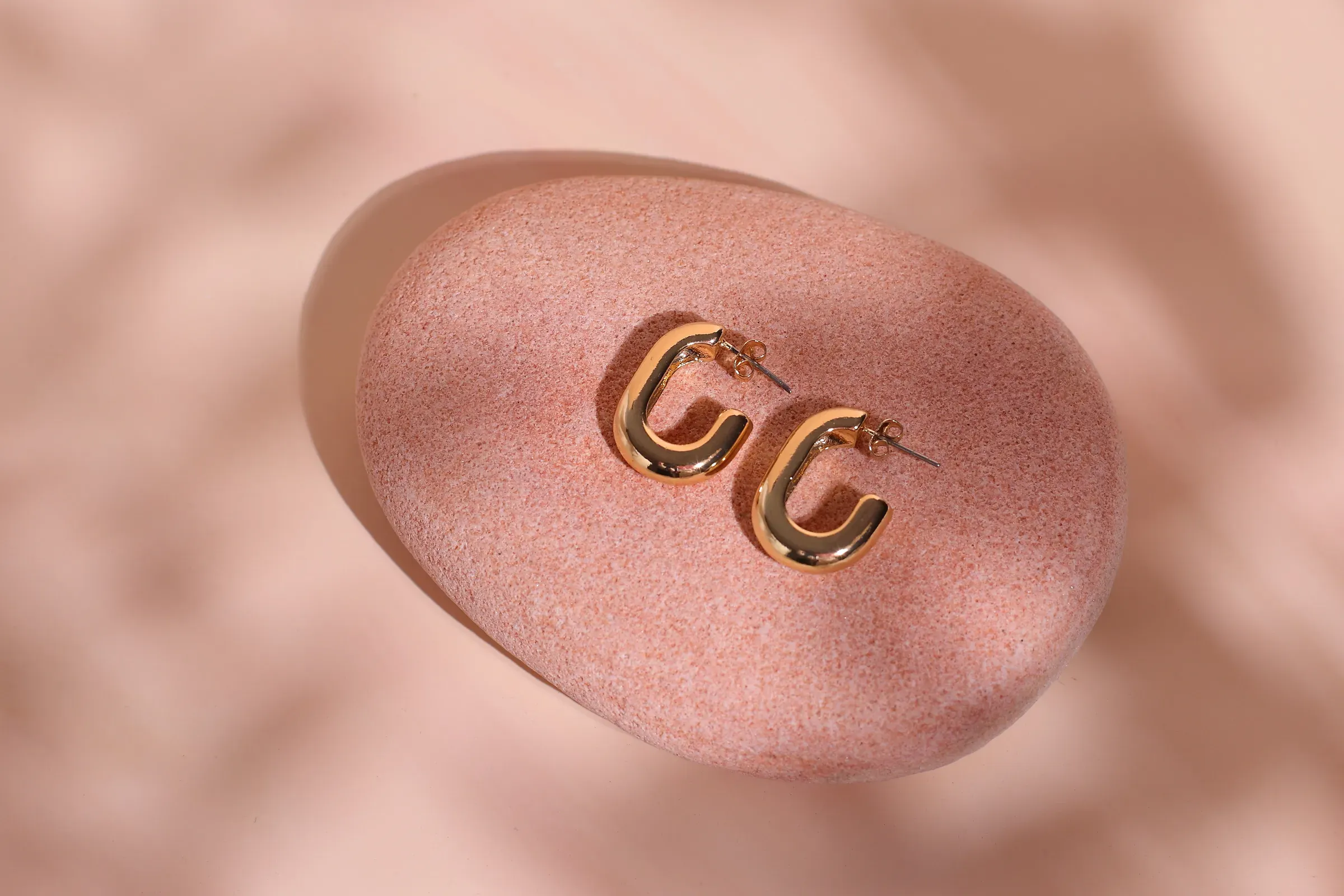
Golden luxury earrings on black stone, trendy jewelry, demi-fine jewelry ecommerce
Demi-fine jewelryWomen in their twenties and thirties buying for themselves, discovered through creators and friends, who check what the metal actually is, whether it tarnishes or turns skin green, the warranty and the price before a quick decision.

How demi-fine jewelry makes money

Four levers, and what limits each one here

Revenue is traffic times conversion rate times order value times purchase frequency. In this niche each lever has its own ceiling.

Traffic

Traffic: material questions and layering styles, not the word demi-fine

Almost nobody searches for demi-fine. They search for the material and the worry: gold vermeil vs gold plated, does gold filled tarnish, waterproof gold necklace, hypoallergenic hoops, and for the style: layered gold necklaces, stacking rings, huggie hoops, paperclip chain. Most brands have collections by product type and a FAQ that says the jewelry is high quality. We build material pages that explain vermeil, gold-filled, PVD-coated stainless steel and sterling silver honestly, style pages for layering and stacking with real combinations from the catalog, and product pages that state the base metal, the plating thickness and the care rules as text, because those answers are what the traffic is looking for.

Conversion

Conversion: the tarnish answer, the warranty and the size chart

The demi-fine shopper is close to buying when they land and is stopped by three doubts: will it tarnish, will it turn my skin green, and will it fit. The product page answers the first two with the material stated precisely (18k gold vermeil over 925 sterling silver, 14k gold-filled, PVD-coated stainless steel), the plating thickness where the brand knows it, the care rules, and a warranty stated in plain words. The third is answered by a ring sizer, chain lengths on a neck and hoop diameters on an ear. Reviews are worth more here than in most niches because they answer the durability question in the customer's own words, and photos from customers wearing the piece for months carry the sale.

Order value

Order value: the stack, the layer and the set

Demi-fine order value grows through combination. A necklace page that shows the same chain layered with two others at their lengths, a ring page that shows the stack, and a curated set with a small saving for buying the combination turns one piece into three. Because the price band is accessible, the shopper adds pieces readily when the store suggests the ones that work together and shows them worn as a set. Complete-the-look modules built from real styling rather than from an algorithm, a metal-matched suggestion (gold with gold), and a gift-wrap and card option at checkout do the work. Free shipping thresholds set just above the average single-item order lift the basket without cutting margin.

Frequency

Frequency: the next drop and the piece that goes with the last one

Repeat purchase in demi-fine is built on newness and on layering. Customers return for a drop when the store tells them one is coming, and they return sooner when the new piece is shown with the one they already own. Frequency work is a release calendar the customer can see, an early-access list that gets the drop first, and flows that recommend by what was bought: the huggie hoop to match the necklace, the second ring for the stack. Care and warranty follow-ups at a few weeks keep the piece in use, which keeps the customer buying. A refer-a-friend program suits the niche because the jewelry is seen and asked about, and the price allows a small reward on both sides.

Search visibility

Search: material honesty, layering pages and product pages that name the metal

This niche ranks on answering the durability question better than anyone else. Material pages that explain what gold vermeil is and how it differs from gold plating, what gold-filled means and why it lasts, why PVD-coated steel resists tarnish and what it cannot do, and how sterling silver behaves in water earn links and rank for the comparison and worry queries that precede most purchases. They are written to the definitions regulators use for vermeil and gold-filled so that the claims are defensible.

Style pages carry the discovery demand: layered necklace sets, stacking rings, huggie hoops, paperclip chains, anklets, ear stacks. Each shows combinations from the catalog with lengths and sizes, links to the products in the look, and is refreshed as drops change the range. New-arrivals and drop pages are worth indexing when they carry a stable URL and real copy.

Product pages state the base metal, the plating, the thickness, the weight, the length or size and the care rules as text and in Product structured data. Variants by length and size share one URL; color (gold, silver, rose) is a variant too unless the demand for a specific color and style is large enough to justify its own collection.

Queries that matter

  • gold vermeil vs gold plated
  • does gold filled jewelry tarnish
  • waterproof gold necklace
  • hypoallergenic gold hoops for sensitive ears
  • layered gold necklace set
  • stacking rings gold
  • paperclip chain necklace

Material explanation pages written to the actual definitions, layering and stacking style pages with catalog combinations, and product pages that state base metal and plating rank here. A collection called Necklaces with a grid, and a FAQ that promises quality without saying what the metal is, do not.

AI answers

AI answers: will it tarnish, can I shower in it, is it real gold

Assistants are asked whether gold vermeil tarnishes, whether a particular brand's jewelry is waterproof, what the difference is between gold-filled and gold-plated, whether a piece is safe for sensitive ears, and how to clean it. The stores that get named define their materials in plain text on a page an engine can quote, state the base metal and plating on every product, describe care honestly rather than promising that the piece is indestructible, and keep the warranty in HTML. We write the material glossary answer-first, keep the definitions consistent with the regulatory ones, and make sure the care and warranty pages can be read without opening an accordion.

Does gold vermeil tarnish and can I shower in it?
What is the difference between gold-filled and gold-plated jewelry?
Is this brand's jewelry safe for sensitive ears?
How do I clean gold vermeil earrings?

Questions shoppers put to assistants. A store gets named when its pages answer them in plain text.

Google Shopping and Merchant Center

Google Shopping for accessible gold: material accuracy and price buckets

In Shopping, demi-fine competes on the material attribute and on price. The material attribute must say what the piece is (gold vermeil, gold-filled, sterling silver, stainless steel), not gold, because a plated piece listed as gold is a misrepresentation issue and a disappointed customer. Titles carry the product type, the material, the style and the length or size. Color carries gold, silver or rose so variants group correctly under one item_group_id. Own-brand pieces set identifier_exists to false; product_detail carries plating thickness and base metal; product_highlight carries the three things a customer would say about it, such as tarnish-resistant, hypoallergenic where true, and the warranty length.

Policy risk in this niche is mostly claims: waterproof, will never tarnish, hypoallergenic and real gold need to be true as stated and consistent with the page. Sale pricing is the other risk, because drops and creator codes create frequent price changes and the feed has to follow them the same day.

Campaigns are structured by price bucket and by margin: hero pieces and sets bid to acquire, low-price add-ons kept in a campaign that supports rather than leads, new drops given their own label for the first weeks, and free listings on, since accessible jewelry earns a large share of clicks from free listings.

Feed attributes that decide eligibility

  • material stated as vermeil, gold-filled, sterling or steel
  • color for gold, silver and rose variants
  • item_group_id
  • product_detail for base metal and plating thickness
  • product_highlight
  • custom_label by price bucket and drop

Disapprovals we see in this niche

  • Material listed as gold on a plated piece
  • Claims such as waterproof or never tarnishes that the page does not support
  • Price mismatch after a creator code or drop promotion
  • Missing color attribute so variants list as separate products

Meta and social ads

Meta and social ads: creators, the shower test and the stack

Demi-fine is discovered on Meta and TikTok before it is searched, and the creative that works is the creative that already works organically: a creator putting on the stack, a piece worn for a month with the date on screen, the shower and the gym as the test, the drop being unboxed. Studio imagery supports retargeting but rarely wins prospecting. Ads that show three price points and three pieces in one frame help the impulse buyer choose without leaving the feed.

Audiences begin with customers and site visitors, then broad prospecting driven by creator content in the brand's own account, because whitelisted creator posts often outperform brand-produced ads in this niche. Creator content used in ads needs written usage rights and a check that no claim in the video (waterproof, real gold, never tarnishes) goes beyond what the material page supports, since the brand is responsible for it. Catalog ads retarget with the exact chain viewed and the pieces that layer with it.

  • A creator's daily stack put on in one take, prices on screen
  • The same piece on day one and day thirty, worn through showers and workouts
  • What gold vermeil is, explained in fifteen seconds by the founder
  • The drop unboxed with the layering combination shown
  • Three necklaces, three lengths, one neck

Policy line

No durability claims in creator content beyond what the material page states, usage rights in writing for every creator asset, and no discount codes in ads that differ from the price the feed carries.

Conversion and the store

The store: answering the tarnish question before the price

The product page in demi-fine has to say what the piece is made of before it says how much it costs, because the shopper decides on the material. We put the material and plating statement beside the title, the care rules and the warranty beside the add-to-cart, the length or size selector with a worn image for each option, and the layering suggestions below with one-tap add. Reviews with customer photos are pulled up rather than left at the bottom, sorted to show wear over time. The ring sizer and the hoop diameter guide open inline so the shopper does not leave.

On mobile, which carries the large majority of this traffic, the cart drawer with a free-shipping progress line and the layering suggestions inside it does more for order value than any product page module. Checkout has to accept the wallets this shopper uses and the creator code they arrived with, and the code has to apply without a hunt for the field.

Objections the page must answer

  • “Will it tarnish or turn my skin green”
  • “Is this real gold or plated, and how thick is the plating”
  • “Can I wear it in the shower and at the gym”
  • “What length is this chain on someone my height”
  • “What happens if the plating wears off”

Email, SMS and retention

Email and SMS: care in week one, the match in week four, the drop when it lands

The flows follow the piece into daily wear. A welcome flow explains the materials and the care rules and sets expectations for how the piece will age, which reduces complaints and returns. A care check-in at two to three weeks asks how the piece is holding up and links to the warranty, which turns a potential complaint into a support conversation. A layering flow at four to six weeks recommends the piece that goes with the one bought, shown worn together.

Drops drive the campaign calendar: a teaser to the full list, early access to customers and the SMS list, then the general release. Segmenting by metal color and by what was bought keeps the emails relevant. SMS is used for early access and restocks, where speed is the point, and for shipping. Win-back flows reference the specific piece and offer the new drop rather than a discount on the old one.

  1. Welcome and care

    On first order, then at delivery

  2. Care check-in

    Two to three weeks after delivery

  3. Layer it with

    Four to six weeks after the first order

  4. Drop early access

    Forty-eight hours before each release

  5. Win-back

    Two drops after the last order

Where revenue leaks

The leaks we find in demi-fine jewelry stores

The Growth Analysis ranks these against your own numbers and says which to close first.

Get a Growth Analysis for your demi-fine jewelry brand
  • Waterproof in the ad, hand wash on the care card

    A creator says waterproof, the care page says avoid water, the ad is reported and the customer is refunded.

  • Creator codes counted as growth

    A code searched after a post is attributed to Performance Max or to brand search, the creator looks unprofitable, the paid campaign looks efficient, and both decisions go the wrong way.

  • The material stated nowhere

    The page says 18k gold and the piece is vermeil, the shopper asks in a comment, and the answer arrives after they bought elsewhere.

  • No ring sizer, so rings come back

    Rings sell well and return often because the size chart is a link to a PDF, and every return is a piece that cannot be resold as new.

Platform notes

Where the platform changes the work

Shopify

Material, plating thickness, base metal and care live in metafields that render on the product page and flow into the feed's product_detail and material; color and length are variants under one product; creator codes are tracked as discount codes with reporting by code so attribution reconciles to orders.

WooCommerce

Global attributes for material and color power indexable archives and filters; variable products carry length and size; the feed plugin must send material as the attribute value rather than the product title, and coupon reports need exporting so creator codes are reconciled to orders.

BigCommerce

Custom fields carry material and care, product options handle color and length on one URL, and the native faceted search needs canonical rules so material and color filters do not multiply in the index.

Questions

Demi-fine jewelry owners ask us

By CartKernel · Last reviewed

How should we describe gold vermeil and gold-filled pieces without overclaiming?

Using the definitions the regulators use: vermeil is a gold layer of a minimum thickness over sterling silver, gold-filled is a bonded gold layer of a minimum proportion over a base metal. We state the base metal, the plating and the thickness the brand can verify, describe care honestly, and avoid absolute words such as waterproof or never tarnishes unless the material genuinely supports them.

Are creator partnerships better than paid ads for demi-fine jewelry?

They are different jobs. Creators drive discovery and supply the content that makes paid ads work; paid ads scale the content that has already proven itself. We track creator codes and links as their own channel, reconcile them to orders, reuse the strongest creator content in the brand's ad account with rights, and report creator, paid and organic as separate lines.

Can we rank for gold necklace or gold hoops against large retailers?

Rarely for the two-word head terms, and they are not where the revenue is. Material and style queries (gold vermeil necklace, huggie hoops for sensitive ears, layered necklace set) are more specific, less contested and closer to purchase. We build the pages for those and measure organic revenue by page rather than by position on a head term.

Should new arrivals and drops have indexable pages?

Yes, when the URL is stable and the page carries copy about the drop rather than a bare grid. A new-arrivals page that keeps its URL and changes its contents accumulates authority over time; a new URL for every drop starts from nothing. Individual drop pages are worth indexing when the drop has a name people will search.

How do drops change email and SMS?

They give the calendar a rhythm. Each drop gets a teaser, early access for customers and the SMS list, and a release send, segmented by metal color and by what the customer already owns so the new piece is shown with the old one. Between drops, the flows do the work: care check-ins, layering recommendations and restock alerts.

How do you structure Shopping for a catalog with many low-price items?

By price bucket and role. Hero pieces and sets are bid to acquire new customers, low-price add-ons are kept in a supporting campaign so the algorithm does not spend the budget on the cheapest clicks, and new drops get a label for their first weeks. Free listings are on for everything and reported separately, because they carry real volume for accessible jewelry.

Grow your demi-fine jewelry store.

A free Growth Analysis ranks what your store should fix first, by revenue at stake, in about a week.