Skip to content

Jewelry · ecommerce growth

Fine jewelry marketing agency

Fine jewelry is bought by people who turn the piece over to find the stamp. They want to know the karat, the purity, the carat weight and who graded the stone, and they want to spread the cost without feeling that they are borrowing for a luxury. We build the store around that scrutiny: pages that state metal and stone facts as data, a feed that carries the same facts into Shopping, financing that appears before checkout, and flows that return for the next anniversary.

The buyer, in brief

Consideration
Two to eight weeks for a first purchase, shorter for a repeat customer buying a known brand
Purchase frequency
Occasion-driven: an anniversary, a birthday, a promotion, a birth, with roughly one purchase a year from a loyal customer
Seasonality
The December holidays carry the largest share, with Valentine's Day, Mother's Day and graduation as secondary peaks and steady anniversary demand between
Price band
Premium, with installments and financing changing what a buyer will consider
Return risk
Low in volume, high in value; sizing on rings and second thoughts on gifts are the usual causes, and a clear resizing offer prevents many
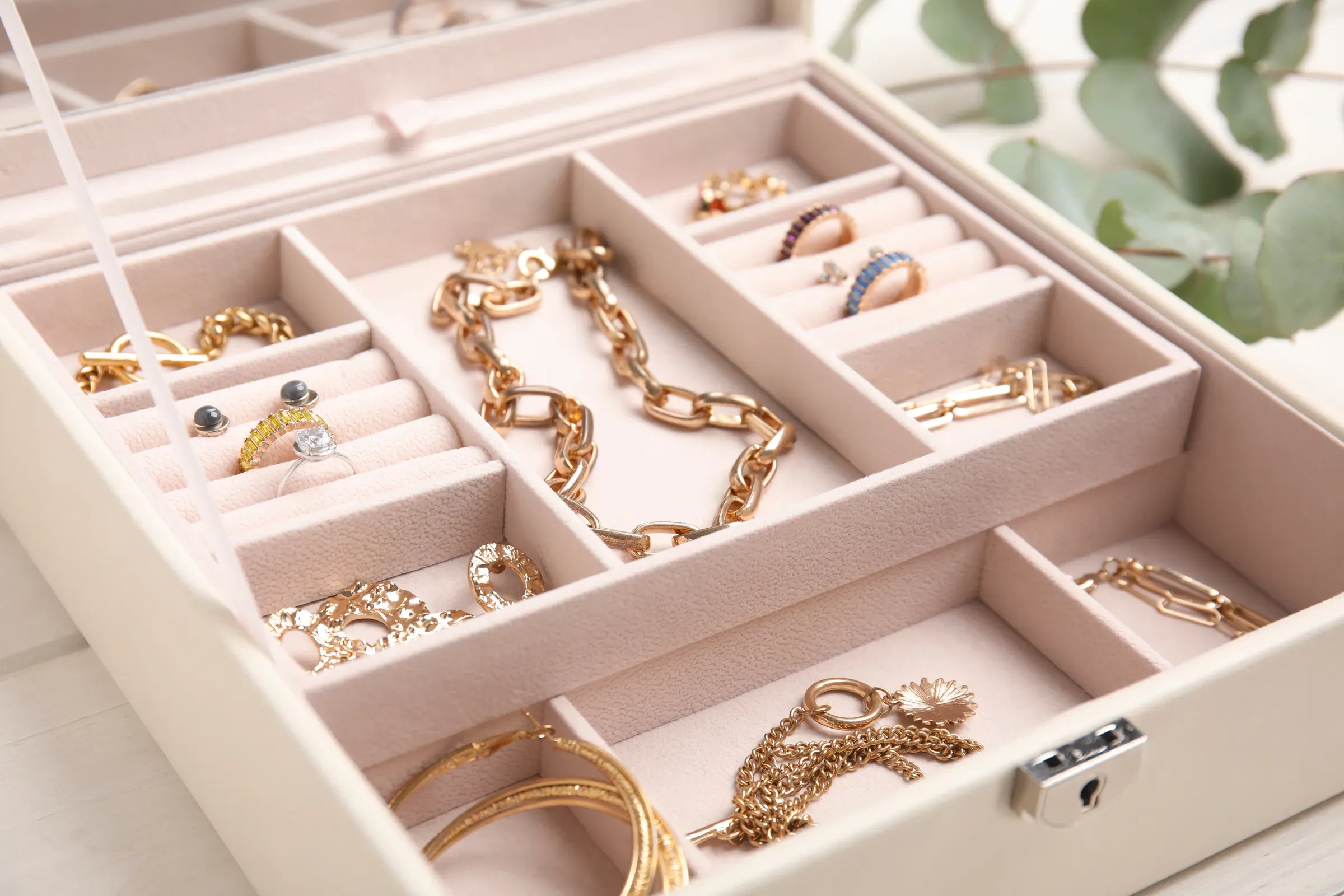
Jewelry box with stylish golden bijouterie on white wooden table, closeup, fine jewelry ecommerce
Fine jewelryAdults buying for a milestone, their own or someone else's, who check the karat stamp, the stone report and the returns window before they trust a price, and who often want a payment plan shown up front.

How fine jewelry makes money

Four levers, and what limits each one here

Revenue is traffic times conversion rate times order value times purchase frequency. In this niche each lever has its own ceiling.

Traffic

Traffic: metal, stone and occasion searches that name a fact

The searches that convert in fine jewelry contain a fact: 14k gold hoop earrings, 18k white gold tennis bracelet, 1 carat diamond stud earrings, platinum eternity band. Most fine jewelry stores organize by product type only, so a search that includes the metal or the carat weight lands on a generic collection and then on a marketplace. The traffic work is a catalog structure that gives each metal, purity, stone and occasion its own indexable page with real copy, plus Shopping listings whose titles and attributes carry the same facts. Occasion collections for anniversaries by year and for milestones earn the gifting searches that arrive without a product in mind.

Conversion

Conversion: proof of what the piece is made of

A fine jewelry buyer will not add to cart until they can see the metal purity, the stone weight and grade, the grading laboratory, the dimensions in millimeters and a photograph that shows scale on a hand or a neck. Most templates put these in a tab and the certificate in a PDF nobody can find. We put the specifications above the fold, link the grading report by its number, show the piece worn, and state the appraisal, resizing and returns terms in the same block. Financing belongs on the product page as a monthly figure the store's provider actually offers, because a buyer who only meets the installment option at checkout has already decided the price is too high.

Order value

Order value: the set, the upgrade and the second stone

Average order value in fine jewelry rises through the pieces that belong together rather than through discounts. Matching earrings on a pendant page, the bracelet that completes a set, a larger carat option on the same setting, and an engraving or gift box that adds a small amount to a large order. The ladder of stone sizes is the strongest lever: a setting page that shows the same design at three carat weights with the price of each lets the buyer choose up rather than out. We build these as native product relationships in the platform, so they appear in the feed and in the cart, not as a pop-up app.

Frequency

Frequency: the anniversary is the reorder date

Fine jewelry customers come back for occasions, and the occasion is knowable. A customer who bought an anniversary gift in April will buy another next April; a customer who bought a push present will buy a first birthday piece. Frequency work here is capturing the occasion and the recipient at checkout, then building flows that arrive four to six weeks before the date with the pieces that suit the milestone. Service touchpoints keep the relationship alive between occasions: a prong check reminder at twelve months, a cleaning kit, a resizing offer. None of this needs a monthly newsletter, which a fine jewelry buyer rarely reads.

Search visibility

Search: karat, carat and occasion pages for a fine jewelry catalog

Fine jewelry ranks on specificity. Category queries name the product type with a metal (14k gold hoop earrings, platinum stud earrings), a stone fact (1 carat diamond pendant, sapphire and diamond ring) or an occasion (25th anniversary gift, push present jewelry). Each of those needs a collection page with substantive copy, a filtered grid and internal links from the products that qualify, built inside the platform so that the metal and stone facets become real pages rather than parameter URLs.

Product pages carry the second layer. Every product needs the metal type and purity, the total carat weight, the stone cut, color and clarity where a report exists, the laboratory that issued it, the dimensions and the weight, all as text and as Product structured data with material and offers that validate. A guide to karat and purity, a guide to reading a grading report and a page on how to insure fine jewelry earn links and rank for the informational searches that precede a purchase.

Technically, one design sold in three metals and two carat weights is one product with variants and one canonical URL, not six pages. One-of-a-kind pieces that sell should stay live with a sold notice and links to similar pieces, because deleting them throws away the rankings they earned.

Queries that matter

  • 14k gold hoop earrings
  • 1 carat diamond stud earrings
  • platinum eternity band
  • 18k gold tennis bracelet
  • 25th anniversary jewelry gift
  • how to read a diamond grading report
  • fine jewelry financing

Metal and stone collections with real copy, occasion guides and educational pages about purity and grading reports rank in fine jewelry. Product pages with a lifestyle image, a price and no specifications do not, and neither do collections that exist only as filters.

AI answers

AI answers: the questions a shopper asks before spending on gold

Assistants get asked whether 14k or 18k is better for daily wear, what a VS1 clarity grade means, whether a store's diamonds come with a grading report and what its resizing and returns terms are. The stores that get named state those facts in plain text on the product and guide pages, keep the same metal and stone data in their Merchant Center feed and their Product markup, and say on the About page who makes the pieces and where. We write the purity, grading and care pages answer-first, keep certification wording identical everywhere, and check that assistant crawlers can read the specifications without rendering a tab.

Is 14k or 18k gold better for a ring worn every day?
What does VS1 clarity mean on a diamond report?
Does this store offer financing on fine jewelry?
Can a platinum ring be resized after purchase?

Questions shoppers put to assistants. A store gets named when its pages answer them in plain text.

Google Shopping and Merchant Center

Google Shopping and Merchant Center for fine jewelry

Jewelry feeds compete with marketplaces on attributes. Most fine jewelry has no manufacturer barcode, so identifier_exists must be false for own-brand pieces rather than a borrowed or invented GTIN, which is the fastest route to a disapproval. Titles should lead with the product type, then the metal and purity, then the stone and its weight, then the size, because those are the words the query contains. The material attribute carries the metal, product_detail carries purity, carat weight, clarity, color and the grading laboratory, and google_product_category should sit at the specific jewelry node such as rings, necklaces or earrings.

Policy issues in this niche come from misrepresentation and from money claims. A certification that cannot be verified, a diamond without its origin stated, a strikethrough price that was never the real price, or a financing line that promises terms the checkout does not offer will each trigger a review. Metal prices move, promotions end, and the feed has to follow the page the same day.

Campaigns are structured by price band and margin: pieces under a threshold that acquire new customers in one campaign, high-ticket pieces bid to margin with a longer conversion window in another, and free listings monitored as their own line because they carry a real share of jewelry clicks.

Feed attributes that decide eligibility

  • identifier_exists
  • material
  • product_detail for purity and stone grades
  • size and size_system for rings
  • google_product_category at the jewelry node
  • custom_label by price band

Disapprovals we see in this niche

  • Invalid or borrowed GTIN on own-brand pieces
  • Misrepresentation for unverifiable certification claims
  • Price mismatch after a metal price or promotion change
  • Financing terms in the title or description that differ from checkout

Meta and social ads

Meta and social ads: scale, craftsmanship and the gift moment

Fine jewelry creative has to solve the problem the medium creates: on a phone, a small gold piece looks like every other small gold piece. The ads that work show the piece on a body with scale, show the making (setting a stone, polishing, stamping the hallmark), and show the unboxing that a giver is buying as much as the jewelry. Prices in the creative filter for buyers who can afford the piece and reduce wasted clicks, and a financing line has to state terms as the provider requires.

Audiences start with past purchasers and site visitors, then broad prospecting timed to the gifting peaks, because interest targeting on jewelry is crowded and imprecise. Catalog ads retarget browsers with the exact piece they viewed. UGC works when the customer describes the occasion, not the discount, and rights need to be in writing. Meta's policies are lighter here than in beauty, but financing claims and comparison prices still have to be true and complete.

  • The piece on a hand or neck, filmed in daylight, with the metal named on screen
  • A stone being set at the bench, thirty seconds, no music required
  • The unboxing as the giver will see it
  • One design at three carat weights with the price of each
  • The reason a customer chose this piece for that anniversary, in their words

Policy line

No financing offers that omit the terms, no strikethrough prices that were never charged, no claims about investment value, and creative that keeps any certification claim exactly as the laboratory states it.

Conversion and the store

The store: what a fine jewelry product page must prove

The product page has to answer the questions a jeweler would answer across a counter: what metal and purity, what stone and what grade, who graded it, how big is it on a hand, what happens if it does not fit, and how much per month. We rebuild the specification block so those facts sit beside the price, embed the grading report by number, add a scale photograph and a millimeter ruler image, and put resizing, returns and appraisal terms in the same view. Financing appears as a monthly figure on the page and again in the cart.

The templates that carry revenue are the product page and the ring size guide, followed by the occasion gift guide. On mobile, the image gallery must open to the worn shot, the variant selector for metal and size must not reset the gallery, and the sticky add-to-cart bar must show the installment figure. A phone number and a video appointment link near the price recover buyers who want to ask one question before spending this much.

Objections the page must answer

  • “Is this real gold and what purity is it”
  • “Who graded the stone and can I see the report”
  • “How big is it on an actual hand”
  • “What if the ring does not fit or she does not like it”
  • “Can I pay monthly and what does that cost”

Email, SMS and retention

Email and SMS: care, the occasion, and the year ahead

Flows in fine jewelry follow the piece into its owner's life. The delivery email covers care, the insurance appraisal and how to get the piece resized. The occasion flow, built from the recipient and date captured at checkout, arrives four to six weeks before the same date next year with a curated selection at a price band that matches the first order. A service reminder at twelve months (prong check, professional cleaning, a re-plating offer for white gold) keeps the store in mind between purchases.

Gifting campaigns run to the cut-off dates for delivery in time for Valentine's Day, Mother's Day and the December holidays, with a shift toward gift cards and in-stock pieces after the cut-off. SMS is reserved for order status, delivery signatures and the last shipping date, which are the messages a jewelry buyer actually wants. Win-back flows should reference the metal and style the customer chose, not offer a discount that cheapens the brand.

  1. Delivery and care

    With the shipping confirmation and again on delivery

  2. Occasion anniversary

    Four to six weeks before the captured date, every year

  3. Twelve-month service

    One year after purchase

  4. Gifting cut-off

    Ten days, five days and two days before the shipping deadline

  5. Win-back

    Eighteen months after the last order

Where revenue leaks

The leaks we find in fine jewelry stores

The Growth Analysis ranks these against your own numbers and says which to close first.

Get a Growth Analysis for your fine jewelry brand
  • Financing that appears only at checkout

    The shopper decides the price is too high on the product page and leaves before the installment option they would have accepted is ever shown.

  • Grading reports nobody can open

    The certificate exists as a scan in an email folder. The product page says certified, the buyer cannot verify it, and the sale goes to a store that links the report by number.

  • One design published as six products

    Each metal and carat weight gets its own URL, the index fills with near duplicates, and the ranking signal splits six ways.

  • The anniversary date thrown away

    The occasion is known at checkout and never recorded, so next year's purchase goes to whoever sends the right email in the right week.

Platform notes

Where the platform changes the work

Shopify

Metal purity, carat weight, grading laboratory and report number live in metafields so they render in the specification block, feed product_detail and power collections by metal. Shop Pay Installments or a financing app shows the monthly figure on the product page where the buyer needs it.

WooCommerce

Global attributes for metal, purity, stone and carat weight drive both filters and indexable attribute archives; the feed plugin must map them to material and product_detail rather than flattening them into the description.

BigCommerce

Custom fields carry the stone and report data, and product options handle metal and size on one URL; faceted search needs canonical rules so metal filters do not spawn indexable duplicates.

Questions

Fine jewelry owners ask us

By CartKernel · Last reviewed

Do we need a grading report for every stone we sell online?

For center stones above the size at which laboratories routinely grade, yes, because the buyer will ask and the report is the substitute for holding the piece. For melee and small accent stones, a stated total carat weight and quality range is normal practice. Whatever you state, the wording must match the report and appear in the feed and on the page identically.

Should a fine jewelry store offer installment financing?

Usually, when the provider's terms are shown on the product page rather than discovered at checkout. Financing changes the price a buyer considers, but the claim has to state the terms the provider requires. We test the monthly figure against the full price on the page and report the effect on order value and conversion separately.

How do you set identifiers for one-of-a-kind and own-brand pieces in Merchant Center?

With identifier_exists set to false and no GTIN, brand set to your brand and MPN set to your internal SKU. Using a barcode that belongs to another product, or a made-up number, is a common cause of disapproval in jewelry. Where you resell branded pieces that carry a manufacturer barcode, the real GTIN goes in.

How long is the conversion window for fine jewelry ads?

Long enough to cover the consideration of a milestone purchase, which is commonly several weeks. We set conversion windows and attribution to match, report revenue by order date in the platform rather than by click date in the ad account, and read week-to-week results with the lag in mind so a slow week is not mistaken for a failing campaign.

Can you photograph fine jewelry in a way that works for feeds and ads?

We advise on it and specify what each channel needs. Shopping requires a clean product image without overlays; ads need the piece worn with scale; the product page needs both plus a millimeter reference. Consistent white-background images across the feed avoid image disapprovals, and the worn shots carry the click in Meta and Performance Max.

What do you report monthly for a fine jewelry brand?

Revenue by channel with brand and non-brand separated, contribution margin after ad spend, returns and financing fees, revenue per session on the product and size-guide templates, new versus returning revenue, and the occasion flow's contribution. Everything reconciles to orders in the platform, not to the ad platforms' own attribution.

Grow your fine jewelry store.

A free Growth Analysis ranks what your store should fix first, by revenue at stake, in about a week.