Skip to content

Pets · ecommerce growth

Dog accessories brand marketing agency

A collar is bought for a named dog with a measured neck, and often it is a gift or has that name stitched into it. Shoppers search by breed and by material, compare width and hardware against how hard the dog pulls, and want to see the engraving before they pay for something that cannot come back. We build accessory brands around measurement, personalization and the matched set: size guides that work by neck and chest rather than by breed guess, product pages that preview the personalization, feeds that handle color and size variants cleanly, and gift timing that lands before the puppy does.

The buyer, in brief

Consideration
Minutes for a replacement collar, days for a matched set or a personalized piece, with gift purchases clustered before holidays and new-puppy dates
Purchase frequency
A puppy outgrows two or three collars in the first year; adults replace every one to three years, with leashes, tags and seasonal colors bought in between
Seasonality
Peaks before the December holidays, spring puppy season and Mother's Day and Father's Day gifting, with color drops tied to seasons
Price band
Mid to premium for leather, biothane and personalized pieces; value for basic nylon, with matched sets lifting the average
Return risk
Sizing is the main reason and personalized items cannot come back, so the size guide and the engraving preview carry the return rate
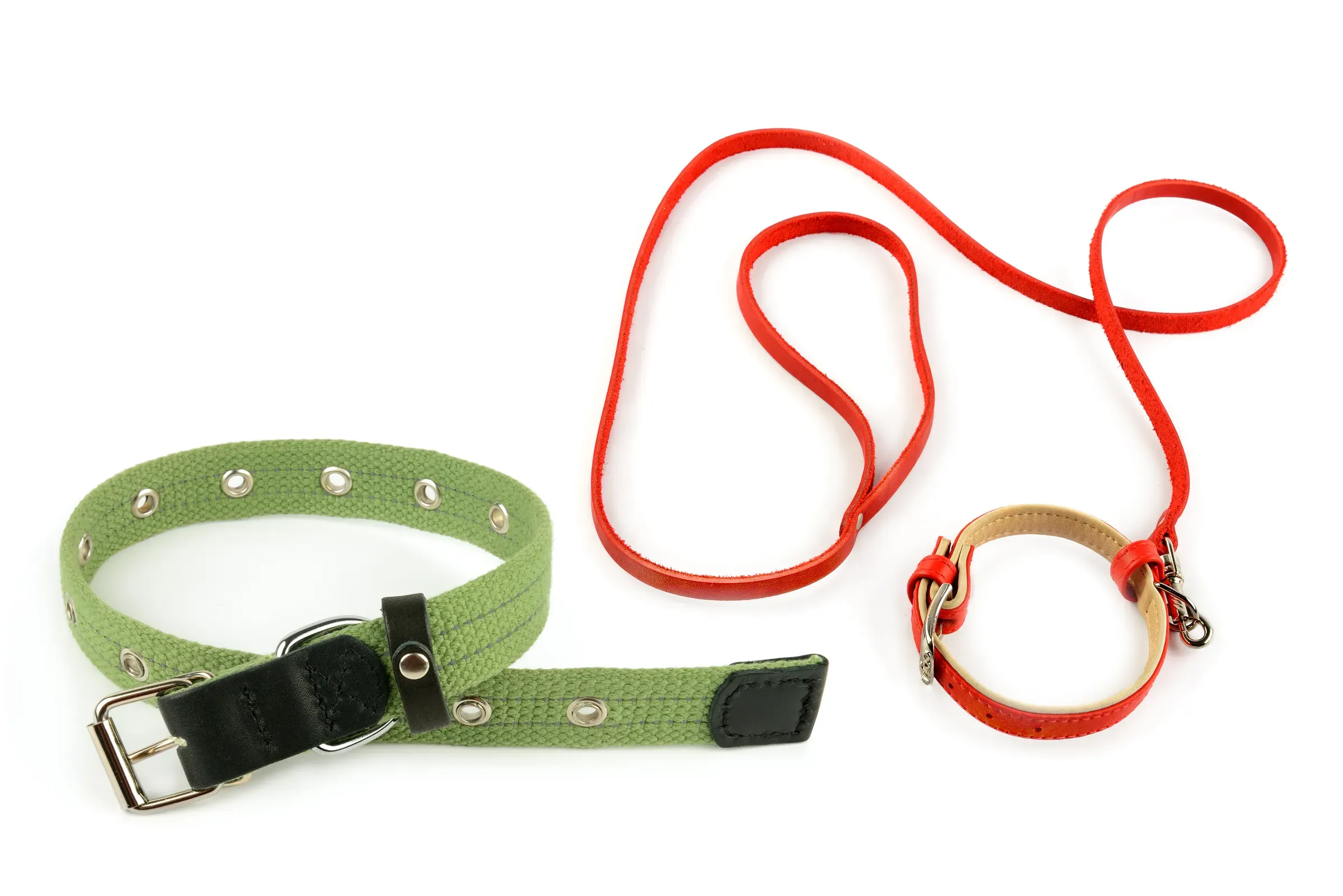
Durable green textile dog collar with metal buckle next to a bright red leather leash and matching small, dog accessories & collars ecommerce
Dog accessories & collarsOwners buying for a specific dog with a tape measure in hand, and gift buyers who know the breed but not the neck size, both of whom check the size chart, the hardware, the material and the returns rule on personalized items before a collar goes in the cart.

How dog accessories & collars makes money

Four levers, and what limits each one here

Revenue is traffic times conversion rate times order value times purchase frequency. In this niche each lever has its own ceiling.

Traffic

Traffic: breed shape, material and the dog that slips its collar

Collar and harness searches are precise: martingale collar for a greyhound, harness for a French bulldog, leather collar with a nameplate, waterproof biothane collar, escape-proof harness, collar for a puppy that keeps growing. Each of those is a shopper who knows what they need and is choosing where to buy it. A store with a Collars collection and a Leashes collection cannot rank for any of them. The traffic work is a catalog organized by breed shape (sighthound, flat-faced, deep-chested), by material and by function, a measuring guide with video that earns links from breed clubs, gift guides built weeks before each peak, and feed titles that carry the material, the width and the neck range.

Conversion

Conversion: the tape measure and the engraving preview

Two things stop the sale: uncertainty about fit and uncertainty about what the personalization will look like. A size chart that says medium fits most dogs solves neither. We build the size guide around neck and chest measurements with a how-to-measure video, list the breed as a reference rather than a size, show hardware and width close up, and render a live preview of the engraved name or the embroidered collar so the shopper approves it before paying. The rule on personalized returns sits beside the add-to-cart button rather than in a policy page, and non-personalized pieces carry a plain exchange promise that removes the remaining fit risk.

Order value

Order value: the matched set and the tag on the same page

A collar sold alone is a missed set. The leash, the harness and the ID tag in the same color and hardware belong on the collar page as a set with a small saving, and the tag engraving should be offered in the same flow as the collar personalization so the shopper does it once. Gift wrap and a handwritten note option raise the order in the weeks before holidays, and a bundle by breed size (collar, leash and a treat pouch for a small dog) sells well to new-puppy gift buyers who do not want to choose pieces. Poop bag holders and matching human accessories are low-friction add-ons once the set is in the cart.

Frequency

Frequency: puppy growth, seasonal colors and the second dog

Accessories are not consumables, so frequency comes from three events the store can predict. A puppy bought a collar at three months will need a larger one around eight months and again at a year, and a reminder timed to that with the next size pre-selected sells the second collar. Seasonal color drops give existing customers a reason to return without discounting the core line. The dog's birthday, captured at checkout, is the one date owners will act on every year. Multi-dog households buy matched sets in two sizes, and a loyalty scheme built around color drops keeps them ahead of the calendar rather than behind it.

Search visibility

Search for dog accessories: breed-shape collections, material pages and the measuring guide

The queries that convert in this niche name a breed, a material or a problem. Breed-shape collections (collars for sighthounds, harnesses for flat-faced breeds, collars for dogs with thick necks) need real fit copy about why that shape needs a particular width, style or clip position, and a grid of the products that fit. Material pages (leather, biothane, rope, nylon) explain care, durability in water and mud, and which hardware they carry. Function pages (martingale, escape-proof, no-pull, reflective) answer the problem before showing the product.

The measuring guide is the page that earns links: how to measure neck and chest, what the two-finger rule means, how to size a growing puppy and when to move up. Gift guides for new puppy owners and for the holidays are built well ahead of the peak so they are indexed when the searches arrive. Product pages state widths, neck ranges per size, hardware type and material as text, with structured data that treats every color and size as a variant of one product.

Technically, a collar in twelve colors is one URL with variants, not twelve pages, and personalization options are line item properties rather than separate products, so the index holds one page per design.

Queries that matter

  • martingale collar for greyhounds
  • harness for French bulldog
  • personalized leather dog collar with name
  • biothane dog collar waterproof
  • escape proof dog harness
  • how to measure a dog for a collar
  • matching dog collar and leash set

Breed-shape and material collections with fit copy, a measuring guide with video, and product pages that state widths, neck ranges and hardware rank in this niche. A collar in twelve colors published as twelve URLs, or a chart that says medium fits most dogs, does not.

AI answers

AI answers: what size collar for this breed, and which harness stops the pulling

Owners ask assistants what size collar a six-month-old Labrador needs, which harness suits a dog that pulls, whether biothane holds up better than leather for a dog that swims, and whether a personalized collar can be returned. The stores that get named publish the neck range per size as text, include a how-to-measure explanation on the product page itself, describe materials in terms of water, mud and chewing rather than in adjectives, and state the personalization return rule plainly. Product markup that carries size and color variants correctly and agrees with the Merchant Center feed, plus a measuring guide an engine can quote, are what put a small accessories brand into an answer.

What size collar does a six-month-old Labrador need?
Which harness is best for a dog that pulls on the leash?
Is biothane better than leather for a dog that swims?
Can I return a personalized collar if it does not fit?

Questions shoppers put to assistants. A store gets named when its pages answer them in plain text.

Google Shopping and Merchant Center

Shopping for collars and harnesses: variants, personalization and the size that matches the page

Accessory feeds are variant feeds. Every color and size of a collar shares an item_group_id so Shopping treats them as one product with options, and the size attribute should carry the neck range the page shows rather than a letter that means something different on every site. Color, material and pattern are populated for every item because those are the words in the query. Own-brand pieces without a barcode set identifier_exists to false rather than borrowing a code from a similar product.

Personalization is where accessory feeds break. Merchant Center cannot take custom text at the ad level, so the feed price has to match what the page charges before any engraving fee, and the personalization surcharge must be shown as an option rather than folded into a price the ad never displayed. Images that show a sample name can read as promotional text, so the main image should be the plain product and the engraved example a later image. Sizes that exist on the page but not in the feed, or feed sizes that do not match the page's neck ranges, produce mismatches that accumulate.

Campaigns split by margin: basic nylon in a campaign with a modest return target, leather and personalized pieces bid to their higher margin, and a gift campaign that opens in early November and again before spring puppy season with its own budget and its own reporting line.

Feed attributes that decide eligibility

  • item_group_id for color and size
  • size as a neck range matching the page
  • color, material and pattern
  • identifier_exists for own-brand pieces
  • custom_label for personalized versus standard
  • google_product_category at the collar, harness or leash node

Disapprovals we see in this niche

  • Feed price excludes the personalization fee the page adds at checkout
  • Size values that do not match the neck ranges on the page
  • Twelve colors submitted as twelve products with no item group
  • A sample engraved name on the main image read as promotional text

Meta and social ads

Meta ads for dog accessories: the fitting, the engraving and the unboxing as a gift

Accessory creative works when it shows the thing the shopper cannot do through a screen: the fit. A collar fitted on camera with two fingers under the band and the tag hanging right, the engraving being cut and then read on the dog, a matched set laid out flat and then worn on a walk, and the same collar after a year of swims and mud all answer a question the product page can only describe. Gift creative shows a new-puppy box being opened with the size guide mentioned, which reaches the buyer who knows the breed but not the neck.

Policy in this niche is about welfare rather than health. Ads for prong, choke and shock devices are reviewed under animal welfare rules and are often refused, so a brand that sells them keeps those items out of the ad account and the synced catalog. Audiences start with past buyers for color drops and set completion, then broad prospecting with strong creative. Catalog ads retarget with clean product images where the variant title reads naturally. Owner-submitted clips need written rights before they run.

  • Fitting the collar on camera: two fingers under the band and the tag hanging right
  • The engraving being cut, then the name read on the dog
  • A matched set laid out flat, then worn on a walk
  • A new-puppy gift being opened, with the size guide mentioned
  • The same collar after a year of swims and mud

Policy line

Ads for prong, choke and shock devices are reviewed under animal welfare rules and often refused, no imagery of a dog in distress or harshly restrained, and any durability or safety claim has to be one the brand can document.

Conversion and the store

The store: measure, preview, then commit

The collar page has to resolve fit and personalization before it sells style. We put the neck-range table for the product in the first screen with the how-to-measure video beside it, show the breed list as a reference and not as a size, and render the engraving or embroidery preview inline so the shopper sees exactly what will be made. The personalized-items return rule sits beside the button, and non-personalized pieces carry an exchange promise in the same place. Hardware, width and material get a specification block rather than adjectives.

The matched set is offered on the collar page with the same color pre-selected, and the tag engraving flows from the collar personalization rather than being a separate product. Gift buyers get a gift option with a note field and a shipping cut-off date shown before the cart. On mobile, the size selector, the preview and the cut-off date carry the page; a long carousel of lifestyle shots does not.

Objections the page must answer

  • “Will it fit my dog's neck and can I exchange it if not”
  • “Can I see the engraving before I pay”
  • “Will it hold a dog that pulls or slips out of collars”
  • “Does the leash match and is the hardware metal”
  • “Will it arrive before the puppy comes home”

Email, SMS and retention

Email and SMS for collars: the fit check, the puppy resize and the gift cut-off

The first email after delivery is a fit check: the two-finger rule, a photo of a correct fit, and the exchange link if the size is wrong. It turns a silent return into a quick exchange and captures the dog's name and birthday if checkout did not. Ten days later the set-completion email offers the matching leash and tag in the same color for anyone who bought the collar alone.

Puppy buyers get a resize reminder at four and eight months with the next size pre-selected. Every customer with a birthday on file gets a note two weeks ahead with the seasonal color for that month. In the run-up to holidays, the personalization cut-off date goes out by SMS to anyone who has engraved before, because that is the one deadline a gift buyer cannot miss. New color drops go first to buyers of the previous drop.

  1. Fit check

    Three days after delivery, with the two-finger rule and the exchange link

  2. Complete the set

    Ten days after a collar-only order

  3. Puppy resize reminder

    Four and eight months after a puppy-size order

  4. Dog birthday

    Two weeks before a birthday captured at checkout or in the fit check

  5. Personalization cut-off SMS

    Ten days before each holiday engraving deadline

  6. Color drop

    At each release, first to buyers of the previous drop

Where revenue leaks

The leaks we find in dog accessories & collars stores

The Growth Analysis ranks these against your own numbers and says which to close first.

Get a Growth Analysis for your dog accessories brand
  • A size chart that says medium fits most breeds

    The shopper guesses, the collar arrives a size out, and the exchange costs the margin on the order. Repeat that across a gift season and the return rate is the marketing budget.

  • Engraving with no preview

    The shopper types a name into a box and cannot see the font, the size or where it sits. Half of them leave, and some who stay complain when the finished tag does not match what they imagined.

  • The personalization deadline announced too late

    The cut-off for engraved holiday orders is posted on a banner the week it passes. Gift buyers who would have ordered in November find out in December and buy something unpersonalized elsewhere.

  • Twelve colors, twelve product pages

    Each color of the same collar has its own URL with the same copy. Google indexes one and ignores the rest, the feed has no item group, and the color the shopper wanted is the one that never shows.

Platform notes

Where the platform changes the work

Shopify

Color and size are variants of one product, personalization is captured as line item properties or through a personalization app, the engraving preview needs a small custom script on the product template, and neck ranges live in metafields so they render in the size table and map to the feed's size attribute.

WooCommerce

Variable products carry color and size, a product add-ons plugin handles the engraving field and surcharge, and the feed plugin must be configured to send item_group_id and the neck-range size values rather than the raw attribute slugs.

Headless

The preview renders client-side from the font files, but the personalization price has to resolve server-side so the feed, the page and checkout agree on what an engraved collar costs.

Questions

Dog accessories & collars owners ask us

By CartKernel · Last reviewed

How do you cut sizing returns on collars and harnesses?

By replacing breed-based sizing with measurement-based sizing. The product page shows the neck range and chest range per size, a short video shows how to measure, the breed appears only as a reference, and a fit-check email three days after delivery offers an exchange before the return. Puppy buyers get resize reminders so the next collar is a planned purchase rather than a complaint.

Can personalized collars be advertised in Google Shopping if the price changes with the engraving?

Yes, when the feed price matches the base price the page shows and the engraving is a clearly separate option with its own fee at checkout. The main image should be the plain product, with the engraved example as a secondary image. We set the feed and the page up that way and label personalized items with a custom label so they can be bid to their higher margin.

Should each collar color be its own product page?

No. One product page with color and size variants is what both Google and shoppers expect, and it concentrates the ranking signals on one URL. The exceptions are genuinely different designs that people search for by name. We consolidate color pages that already exist, redirect the old URLs, and make sure the feed uses one item group per design.

What should a dog accessories brand do for the holiday gifting season?

Build the gift guide and the new-puppy bundle pages in early autumn so they are indexed by November, set the personalization cut-off dates and show them on every product page, run a gift campaign in Search and Performance Max with its own budget, send the cut-off date to past engravers by SMS, and stock the popular sizes in the popular colors before the first cold week rather than reordering mid-season.

Are breed-specific collection pages worth building for collars?

Breed-shape pages are; a page for every breed is not. Sighthounds, flat-faced breeds, deep-chested dogs and dogs with thick necks each have real fit needs and real search demand, and a collection with fit copy and the right products ranks. A hundred thin pages that swap the breed name in the same template rank for nothing and dilute the site.

Is a size finder or fit quiz worth building for dog collars?

Only if it asks for measurements. A finder that takes neck and chest in centimeters or inches and returns the size, then pre-selects it on the product page, reduces exchanges. One that asks for the breed and guesses reproduces the problem. We test the finder against a well-built size table and keep whichever produces more orders with fewer exchanges.

Grow your dog accessories & collars store.

A free Growth Analysis ranks what your store should fix first, by revenue at stake, in about a week.