Skip to content

Pets · ecommerce growth

Pet apparel marketing agency

Dog coats and sweaters are discovered on a phone, on a dog that is not the shopper's, in someone else's feed. The owner then has to translate that picture into a chest girth and a back length for a dog shaped nothing like the one in the video, and the return comes back when they guess. We build apparel brands around that gap: social creative that sells the look, a measuring guide that sells the fit, a seasonal calendar that has stock landing before the first cold week, and feeds that keep dozens of size and color variants from turning into disapprovals.

The buyer, in brief

Consideration
Impulse for a costume or a novelty piece; a few days for a winter coat where the measurements are checked and fit reviews read
Purchase frequency
One or two weather pieces a year, a costume in October, and a growing puppy or a new season color in between
Seasonality
Sharp: coats and sweaters from the first cold snap through February, raincoats in spring and autumn, cooling vests in summer, costumes in the six weeks before Halloween
Price band
Value to mid for novelty and basics, mid to premium for insulated and waterproof coats with reflective trim and harness openings
Return risk
The highest in the pet industry, driven by fit across breed shapes, so measurement guides, shape-specific photos and easy exchanges are the returns policy
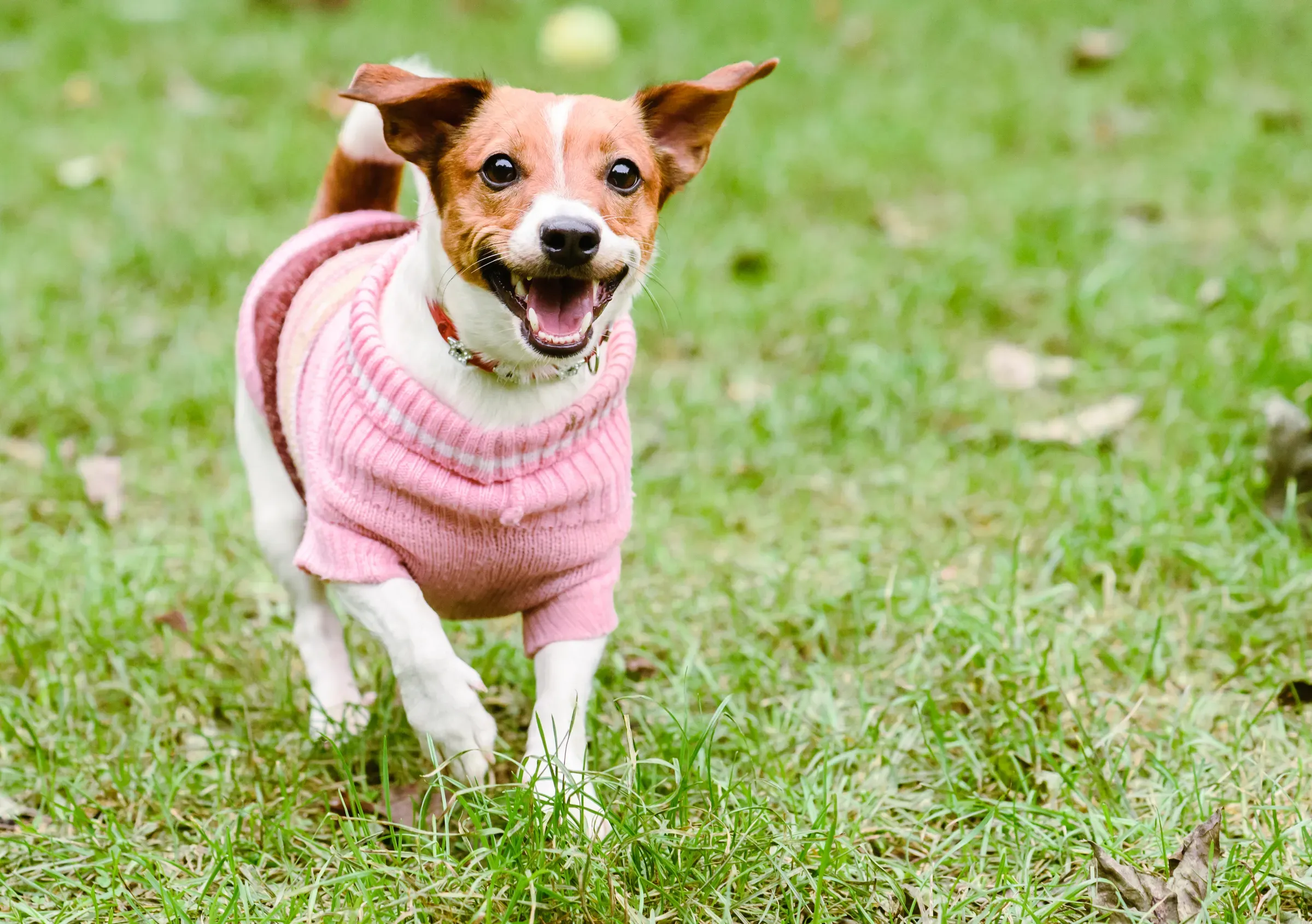
Happy dog wearing pink warm knitted sweater playing at fine fall (autumn) day, pet apparel ecommerce
Pet apparelOwners who dress their dog for weather or for fun, often after seeing a breed like theirs in a video, who check the size chart against their dog's chest and back measurements, look for a photo of a similar body shape and read the exchange rule before ordering.

How pet apparel makes money

Four levers, and what limits each one here

Revenue is traffic times conversion rate times order value times purchase frequency. In this niche each lever has its own ceiling.

Traffic

Traffic: weather, body shape and the six costume weeks

Apparel queries combine a weather need with a body shape: winter coat for a dachshund, raincoat for a French bulldog, sweater for a greyhound, cooling vest for a husky, Halloween costume for a small dog. The shape matters because a long-bodied dog and a barrel-chested dog cannot share a pattern, and the shopper knows it. Most apparel stores organize by product type and lose that traffic to marketplaces. We build collections by weather function and by body shape, a measuring guide that breed clubs link to, and seasonal landing pages created months early so they are indexed when the first cold week or the costume search spike arrives. Feed titles carry the function, the shape fit and the size range.

Conversion

Conversion: a size chart with a tape measure, not a breed name

The shopper saw a coat on a dog in a video and needs to know if it fits theirs. A chart that lists breeds per size loses that person or, worse, sells them the wrong size. Conversion work here is a chart built on chest girth, back length and neck, a video showing how to take those three measurements, photos of the same size on several body shapes with the measurements of each dog printed under the image, fit notes from reviews sorted by breed, and the exchange rule shown beside the button. A short clip of the garment going on and the harness clip coming through closes the last objection for weather pieces.

Order value

Order value: the coat, the booties and the matching human piece

A coat is the start of an outfit. Booties, a snood and a matching leash sleeve belong on the coat page as a cold-weather set, and the matching human sweater or scarf is an add-on that owners buy for themselves and as gifts. Layering pieces (a base sweater under a shell) raise the order for cold-climate customers when the page explains the system. Multi-dog households want the same design in two sizes and should be able to add both from one page. Seasonal capsules, released as a set with a small saving, sell the look the social creative created rather than one piece of it.

Frequency

Frequency: the season returns every year, and the puppy grows between them

Apparel frequency is seasonal and predictable. The customer who bought a winter coat last November is the best prospect for a raincoat in March, a cooling vest in June, a costume in October and a new colorway the following winter, and each of those is a scheduled message rather than a newsletter. Puppy buyers outgrow the first size within months and need a resize prompt. Owners who post their dog in the garment will do it again if asked, which turns a customer into a creative source. A season-start alert timed to the weather in the customer's region beats a calendar send because the trigger is the same one that sends them searching.

Search visibility

SEO for pet apparel: shape-led collections, weather pages and the measuring guide

Apparel demand ranks on two axes and the catalog needs both. Weather and function collections (waterproof dog coats, insulated winter coats, cooling vests, raincoats with a harness opening) explain the feature set, the temperature range the brand is comfortable stating, and how the garment fastens. Body-shape collections (coats for long-bodied dogs, sweaters for deep-chested sighthounds, jackets for flat-faced breeds) explain why the pattern differs and which products use it, and they are the pages breed communities link to.

The measuring guide is the authority page: how to measure chest girth, back length and neck, where the tape sits, how to size a puppy that is still growing, and what to do when a dog falls between sizes. Costume and holiday pages are built in late summer and refreshed each year rather than recreated, so they carry age and links into the next season. Product pages list the three measurements per size as a table in text, name the body shapes the pattern suits, and carry structured data with every size and color as a variant of one product.

Technically, size and color grids must not become separate URLs, seasonal pages should stay live and canonical out of season rather than being deleted, and sold-out sizes should remain on the page with a restock signup rather than dropping out of the index.

Queries that matter

  • winter coat for dachshund
  • dog raincoat for French bulldog
  • dog sweater for greyhound
  • dog cooling vest for summer
  • dog Halloween costume small dog
  • how to measure a dog for a coat
  • dog coat with harness hole

Body-shape and weather collections with fit copy and shape photos, a measuring guide, and product pages listing chest, neck and back measurements per size rank in this niche. Product pages that give sizes as XS to XL with no measurements, and seasonal pages created the week the season starts, do not.

AI answers

AI answers: will this coat fit a long-bodied dog, and what size for this breed

Owners ask assistants what size coat a miniature dachshund wears, whether a short-coated dog needs a sweater in winter, which raincoats work with a harness underneath, and how to measure a dog for a sweater. The brands that get cited publish the measurement table per size as text on the product page, state which body shapes the pattern suits and which it does not, explain the harness opening and the fastening, and keep the measuring guide as a page an engine can quote step by step. Product markup with correct size and color variants that matches the feed, and honest notes on fit between sizes, are what get an apparel brand named for a shape-specific question.

What size dog coat does a miniature dachshund wear?
Do dogs with short coats need a sweater in winter?
Which dog raincoat works with a harness underneath?
How do I measure my dog for a sweater?

Questions shoppers put to assistants. A store gets named when its pages answer them in plain text.

Google Shopping and Merchant Center

Shopping for dog apparel: sizes, colors, seasons and the variant feed

Apparel feeds are the largest in the pet industry by item count, because every design multiplies by size and color. Each combination is a variant under one item_group_id, the size attribute carries the measurement-based label the page uses, and color, pattern and material are populated so the variant the shopper searched for is the one that shows. Availability per variant has to be accurate at the height of the season, because a sold-out size marked in stock is the most common disapproval in this niche and it arrives when the traffic is highest.

Seasonal pricing is the second risk. A sale that ends on the page at midnight but runs in the feed until the next fetch produces price mismatches across the whole line. Sale_price with effective dates, and a feed schedule that fetches around promotion boundaries, keep the two in step. Preorders for a winter drop need availability_date so the listing is honest about shipping. Lifestyle images on a dog are accepted for apparel, but text overlays and badges on those images are flagged.

Campaigns follow the calendar: winter coats and sweaters ramp in October, the costume campaign runs six weeks and stops, raincoats and cooling vests get spring and summer windows, and evergreen basics run all year at a modest return target. Free listings are switched on and monitored for the same availability and price issues.

Feed attributes that decide eligibility

  • item_group_id for size and color
  • size with measurement-based labels
  • color, pattern and material
  • availability per variant and availability_date for preorders
  • sale_price with effective dates
  • custom_label for season

Disapprovals we see in this niche

  • Sold-out sizes still marked in stock at the height of the season
  • Sale price ending on the page before it ends in the feed
  • Text overlays and badges on lifestyle images
  • Sizes labeled by breed on the page and by letter in the feed

Meta and social ads

Meta ads for pet apparel: the video is the product page

Apparel is the most social-native niche in pets. The creative that works is the same coat on four different body shapes with the sizes named on screen, the garment going on in ten seconds with the harness clip shown, first snow with the dog in the coat and the owner in the matching one, and a stream of owner-submitted clips sorted by breed so a viewer sees a dog like theirs. Costume try-ons in the week before Halloween sell on impulse and need the shipping cut-off in the caption.

Policy is lighter here than in food or supplements, but not empty: no imagery of a dog in visible distress or overheating, no claims that a coat prevents illness, and creator content needs written rights before it runs in the brand's account. Audiences begin with last season's buyers for the new drop, then broad prospecting, because the creative does the targeting. Catalog ads retarget with the variant the shopper viewed, which only works if the feed's size and color data is accurate.

  • The same coat on four body shapes, with the size and the dog's measurements on screen
  • Putting it on in ten seconds, with the harness clip coming through
  • First snow: the dog in the coat and the owner in the matching one
  • Owner-submitted clips sorted by breed
  • Costume try-on the week before Halloween, with the shipping cut-off in the caption

Policy line

No imagery of a dog in visible distress or overheating, no claims that a garment prevents illness or hypothermia, and creator content needs written rights before it runs in the brand account.

Conversion and the store

The store: sell the look, then make the size decision easy

The product page inherits a shopper who has already seen the look and now needs to be sure of the size. We keep the video from the ad at the top, then put the measurement table for this product directly beneath it with the three measurements per size, a how-to-measure clip, and photos of the same size on several body shapes with each dog's measurements printed. Fit notes from reviews are sorted by breed so a whippet owner reads whippet owners. The exchange rule sits beside the button. The harness opening and the fastening get their own images because they are the questions weather buyers ask.

Sold-out sizes stay visible with a restock signup rather than disappearing. The cold-weather set is offered on the coat page in the same color, and the matching human piece is one tap. On mobile, the size selector must show the measurements inline rather than linking to a chart page, because that link is where the session ends.

Objections the page must answer

  • “Which size fits a dog with a deep chest and a thin waist”
  • “Can I exchange it if the size is wrong”
  • “Does it work with a harness underneath”
  • “Is it actually warm or actually waterproof”
  • “Will it arrive before the cold weather or before the party”

Email, SMS and retention

Email and SMS for pet apparel: the season alert, the fit check and the costume deadline

The fit check goes out two days after delivery with the exchange link and a request for a photo, which turns a possible return into an exchange and a possible photo into a creative asset with rights attached. The season alert is the flow that pays: a first-cold-week message triggered by the customer's region, a raincoat note in spring, a cooling vest note before the first heatwave, and a costume message six weeks before Halloween with the shipping cut-off stated.

Puppy buyers get a resize prompt six months after a puppy-size order. New drops go first to buyers of the same size last season, because they are the customers whose fit is already known. The costume deadline goes by SMS to anyone who bought a costume the previous year, since that is the one date an impulse buyer will miss. Win-back after a missed season names the piece and the dog rather than the discount.

  1. Fit check and photo request

    Two days after delivery, with the exchange link

  2. First-cold-week alert

    Triggered by the customer's region, or a fixed date by zone

  3. Costume deadline SMS

    Two weeks before the Halloween shipping cut-off, to last year's costume buyers

  4. Puppy resize

    Six months after a puppy-size order

  5. New season drop

    At launch, first to buyers of the same size last season

  6. Missed-season win-back

    After a customer skips a season they bought in the year before

Where revenue leaks

The leaks we find in pet apparel stores

The Growth Analysis ranks these against your own numbers and says which to close first.

Get a Growth Analysis for your pet apparel brand
  • Sizes named after breeds

    The chart says medium is for beagles. The beagle is long for its weight, the coat arrives short, and the return ships back with a note that the sizing is wrong.

  • Stock landing after the first cold week

    The winter line is ordered for November delivery. The first cold snap comes in late October, the searches spike, and the campaign spends on sizes that are not in the warehouse yet.

  • A video that sells a fit the size table cannot deliver

    The ad shows the coat on a greyhound and the product page has one pattern that was cut for a barrel-chested dog. The click converts and the return follows.

  • Creator clips with no rights on file

    The best-performing ad is an owner's video reposted from a tag. The owner asks for it to come down mid-season and the account loses its top creative with no replacement ready.

Platform notes

Where the platform changes the work

Shopify

Size and color grids on large designs can run into variant limits on older themes, so the catalog structure is checked before the season. Measurements per size live in a metafield table that renders inline on the product page and maps to the feed's size attribute, and restock signups per variant replace the sold-out dead end.

WooCommerce

Variable products carry size and color, a size guide plugin or a custom block shows measurements inline, and stock sync per variation has to be reliable at peak because the feed reads availability from it.

BigCommerce

Product options handle the size and color grid without variant limits, custom fields hold the measurement table, and the channel feed needs checking so option labels match the measurement-based sizes on the page.

Questions

Pet apparel owners ask us

By CartKernel · Last reviewed

How do you bring down returns on dog coats and sweaters?

By making the size decision a measurement rather than a guess. The page shows chest girth, back length and neck per size in a table, a clip shows how to measure, photos show the same size on different body shapes with each dog's numbers, and reviews are sorted by breed. A fit-check email two days after delivery turns most returns into exchanges. Body-shape collections stop the wrong pattern being bought in the first place.

When should a pet apparel brand start its winter and Halloween campaigns?

Winter pages and stock need to be ready before the first cold week in the coldest region you serve, which is usually October rather than November, and the campaign ramps on the weather rather than on a date. Costume pages are built in late summer, refreshed each year, and the campaign opens about six weeks before Halloween with the shipping cut-off shown on every page.

Should we photograph the product on dogs or flat?

Both, with a job for each. Flat images with the garment's measurements are the feed's main image and the specification the shopper checks. On-dog images are where the sale happens, and they work best when several body shapes wear the same size and each dog's measurements are printed under the photo. Video of the garment going on answers the harness and fastening questions faster than any still.

Can a small apparel brand compete with marketplaces on dog clothes searches?

Not on the broad terms, and it does not need to. Marketplaces rank for dog clothes; a brand ranks for a winter coat for a dachshund or a raincoat with a harness opening for a French bulldog, because it can write the fit copy and show the shape photos that a marketplace listing cannot. We build the shape and function collections that carry those queries and leave the broad terms alone.

How do you use customer videos without getting into rights trouble?

By asking, in writing, every time. The fit-check email requests a clip and links to a short rights form; approved clips are logged with the customer, the date and the permitted uses. Nothing is reposted from a tag without that record. The library that results is sorted by breed and body shape so creative can be assembled by shape without hunting.

Does a size finder work for dogs the way it does for people?

It works when it takes measurements and knows the pattern. A finder that asks for chest girth, back length and neck, then returns a size for this specific garment and pre-selects it, cuts exchanges. One that asks for the breed and weight is guessing and reproduces the return problem. We test the finder against the inline size table and keep whichever produces more orders with fewer exchanges.

Grow your pet apparel store.

A free Growth Analysis ranks what your store should fix first, by revenue at stake, in about a week.