Skip to content

Pets · ecommerce growth

Cat brand marketing agency

Cat litter is the heaviest thing most pet stores sell, and the cat rather than the owner decides whether it stays. Owners search for odor control, low dust and the texture their cat will tolerate, then stall at the shipping line on a forty-pound order. We build cat stores around that reality: a shipping and subscription model that makes heavy repeat orders pay, litter and food pages that rank for the odor, dust and multi-cat questions people actually type, and creative that respects how careful this buyer is.

The buyer, in brief

Consideration
Short for food and treats, longer for a litter switch because the cat has to approve it
Purchase frequency
Litter every two to five weeks depending on cat count and box count; wet food weekly to monthly by case size
Seasonality
Steady all year, with a lift when windows close in autumn and odor becomes noticeable, and around adoption peaks in spring and after the holidays
Price band
Value to mid on litter with the margin in subscriptions; mid to premium on furniture, fountains and automatic boxes
Return risk
Opened litter and food are rarely returnable; the practical risk is rejection by the cat, handled with a transition guide and a smaller first bag
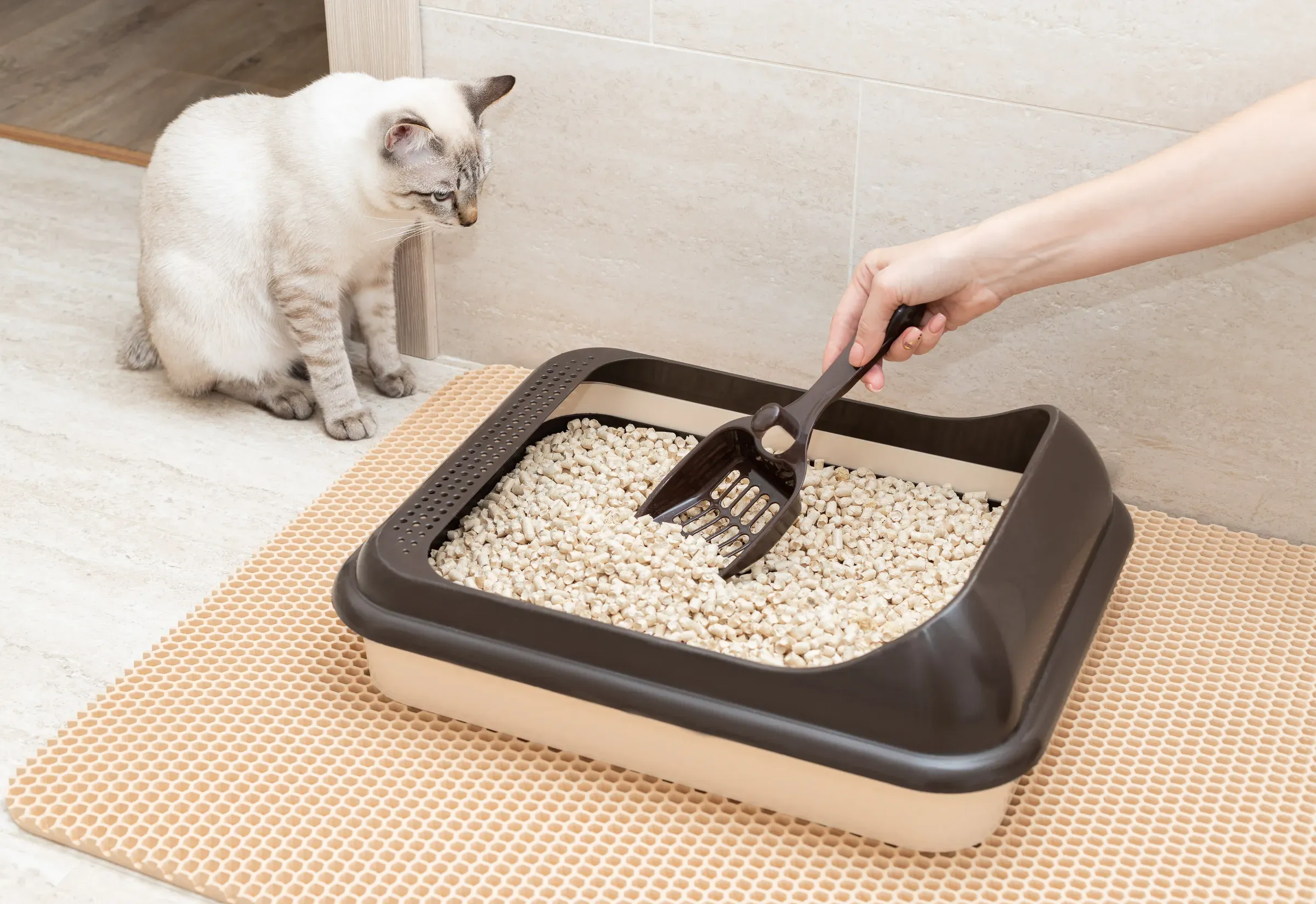
Female hand cleaning cat litter box with shovel, cat products & litter ecommerce
Cat products & litterOwners of one to three cats, often in apartments, who check dust and tracking claims, scented versus unscented, clumping strength and the delivered price per bag before anything else, and who change litter only after the cat has accepted a mixed transition.

How cat products & litter makes money

Four levers, and what limits each one here

Revenue is traffic times conversion rate times order value times purchase frequency. In this niche each lever has its own ceiling.

Traffic

Traffic: odor, dust, tracking and the multi-cat household

Cat owners search for a problem and a material, not a brand: best litter for odor control, low dust clumping litter, litter for three cats, tofu litter versus clay, unscented that is actually unscented. Food queries follow the same pattern with senior cats, indoor cats and picky eaters. A store with one Litter collection and one Food collection cannot rank for any of it. The traffic work is a catalog organized by material and by problem, comparison pages that weigh clay, silica, tofu, wood and paper honestly, furniture pages for the enclosure and fountain queries that have grown as cats moved into small apartments, and feed titles that carry the material, the scent status and the bag weight.

Conversion

Conversion: the shipping line on an eighteen-kilogram bag

The cat store loses most of its sessions at the point where shipping appears. A shopper who accepted the price of the bag sees the cost of moving it and leaves. Conversion work here begins with the shipping model: a delivered price shown on the product page, a threshold set against the real carrier cost of the heaviest bag rather than a round number, and subscription pricing that makes the delivered cost per month obvious. After that come the questions the page must answer: will my cat use it, how much dust, does it track, is unscented really unscented. A transition guide and a smaller first bag answer the first and reduce the wasted order that follows a rejection.

Order value

Order value: the litter, the mat, the liner and the second box

Order value grows through attach rate rather than through bigger bags alone, because a bag has a shipping ceiling. A litter order that adds a mat, liners and a scoop costs almost nothing more to ship, and a multi-cat household should be offered a two-bag or three-bag set with a box-count rule that explains why. Fountains and automatic litter boxes carry filters and waste liners that belong on the same page as the hardware. Case sizes on wet food are the other lever: showing the price per can beside the price per case turns a trial purchase into a monthly order without a discount.

Frequency

Frequency: litter runs out by box count, not by calendar month

A household with two cats and two boxes uses litter at a rate you can estimate and the subscription interval should be set from cat count and box count rather than from a default of thirty days. The same applies to fountain filters, which have a stated replacement cycle, and to the consumables that automatic litter boxes depend on. Frequency work is a subscription flow that asks those two questions at signup, a reminder timed to the computed run-out, a restock alert for the litter a cat has accepted, and reporting that shows how often subscribers change the interval, because a wrong default is the first cause of a pause.

Search visibility

What ranks for cat brands: material pages, problem pages and honest comparisons

Cat search demand splits into material, problem and hardware. Material queries (tofu cat litter, silica crystal litter, pine pellet litter) need a collection per material with copy on how it clumps, how it handles odor, how much it weighs and which cats tend to accept it. Problem queries (litter for odor control, low tracking litter, litter for kittens) need their own collections that draw from several materials and explain the trade-off rather than pushing one bag.

Comparison pages carry the mid-funnel: clay versus tofu, clumping versus non-clumping, scented versus unscented, open box versus enclosure. Written neutrally with a buying rule at the end, they earn links from cat forums and shelters and pass authority to the product pages. Food pages need the guaranteed analysis, the life-stage statement and the case size as text, and furniture pages need dimensions, entry size and a note on which cat sizes fit.

Technically, bag sizes and multipacks should be variants of one product rather than separate URLs, filtered material and scent pages should be indexable collections rather than parameters, and heavy-item shipping information belongs in the page copy so it can rank for the delivery queries people add to litter searches.

Queries that matter

  • best cat litter for odor control
  • low dust clumping cat litter
  • cat litter for multiple cats
  • tofu cat litter vs clay
  • cat litter subscription delivery
  • unscented cat litter that actually works
  • litter box enclosure furniture

Material and problem collections with real copy, neutral comparison pages and furniture pages with full dimensions rank in this niche. Product pages that repeat the bag's marketing line and a single Litter collection do not.

AI answers

AI answers: which litter for this cat, and why the cat stopped using the box

Owners ask assistants which litter is safest for a kitten, whether tofu litter really controls odor, how many boxes a home with three cats needs, and what to do when a cat stops using the box. The stores that get named state material, scent status, dust level and clumping behavior as plain facts on the page, give a cats-per-bag or days-per-bag figure, explain the box-count rule, and answer the behavior question carefully with a note to see a vet if it persists. Product markup that matches the Merchant Center feed and a comparison page that engines can quote line by line are what put a cat brand into an answer.

Which cat litter is safest for a kitten?
Does tofu litter control odor as well as clay?
How many litter boxes do three cats need?
How do I switch my cat to a new litter?

Questions shoppers put to assistants. A store gets named when its pages answer them in plain text.

Google Shopping and Merchant Center

Merchant Center for heavy cat goods: weight, rates and the delivered price

Cat feeds fail on shipping before they fail on anything else. A litter bag needs shipping_weight in the feed and a weight-based rate table in Merchant Center that matches checkout to the cent, because a shopper who clicks on a low shipping estimate and meets a higher one at the cart generates a shipping mismatch that eventually becomes a misrepresentation issue. Free-shipping claims in the feed must be true for that bag weight and that region. Unit pricing lets Shopping show the price per kilogram, which is how litter is compared.

Titles carry the material, the scent status, the clumping behavior and the bag weight. Product_detail carries dust level and tracking claims. Multipacks use the multipack attribute rather than a separate product, and case sizes of wet food use it the same way. Food descriptions that promise urinary or kidney benefits move the listing under healthcare rules, so the language stays nutritional. Images of the bag with promotional overlays are a frequent image policy flag.

Campaigns follow margin and weight. Litter runs in a campaign with a return target that accounts for shipping cost, food and treats in another, furniture and hardware in a third bid to their higher margin, and free listings monitored as their own line because heavy goods often draw clicks there that never convert.

Feed attributes that decide eligibility

  • shipping_weight with weight-based rates in Merchant Center
  • unit_pricing_measure and unit_pricing_base_measure for litter weight
  • multipack for bag sets and food cases
  • product_detail for material, scent status and dust level
  • google_product_category at the cat litter or cat food node
  • custom_label for weight band

Disapprovals we see in this niche

  • Shipping cost in the feed lower than the weight-based rate at checkout
  • Free shipping claimed on bags that carry a surcharge in some regions
  • Urinary or kidney benefit language on food listings
  • Promotional text overlaid on bag images

Meta and social ads

Meta ads for cat brands: the clump, the dust test and the delivered stack

Cat creative works when it shows the product doing the thing the owner doubts. A clump lifted clean from the box, a scoop of litter poured through a beam of light to show the dust, a month of litter stacked by the door on delivery day, a three-cat household at breakfast, an enclosure sitting in a real living room. These are demonstrations, not claims, and they pass review where odor-free and vet-approved language does not.

Policy in this niche is milder than in supplements but not absent: food ads cannot promise to prevent urinary or kidney conditions, ads cannot imply the viewer's home smells, and images of distressed animals are refused. Audiences start with subscribers and site visitors, then broad prospecting, because cat-owner interest targeting is oversubscribed. Catalog retargeting works for hardware; for litter, a subscription offer that states the delivered monthly cost outperforms a product carousel. UGC from owners filming the switch needs written rights.

  • The clump lifted clean, filmed once with no cuts
  • A dust test: litter poured through a beam of light beside a common alternative
  • Delivery day: a month of litter stacked by the door
  • Three cats, two boxes, one subscription, with the monthly cost on screen
  • The enclosure in a real apartment, with the cat using it

Policy line

No claims that a food or litter prevents or treats urinary, kidney or digestive conditions, no implication that the viewer's home smells, no odor-free or vet-approved language without documentation, and no imagery of distressed animals.

Conversion and the store

The cat store: a product page that shows the delivered price first

The litter page has to answer the shipping question before the shopper reaches the cart. A delivered price, or a free-shipping threshold that this bag already meets, belongs beside the price. After that the page answers the cat's questions: material and texture, dust, tracking, scent status, clumping strength, how many cats a bag serves for how long. Most templates show a bag image and a paragraph of marketing copy. We add a specification block, a days-per-bag figure by cat count, and the transition guide as a short visible section rather than a link.

Subscription placement matters. A subscribe option that shows the delivered monthly cost and the interval set by cat count converts better than a percentage off, and a smaller first bag should sit on every full-size page for owners whose cat has not yet approved the litter. On mobile, the bag-size selector, the shipping message and the subscribe toggle carry more than the imagery.

Objections the page must answer

  • “What will shipping cost on a bag this heavy”
  • “Will my cat actually use it”
  • “How much dust and how much tracking”
  • “Is unscented really unscented”
  • “How many bags do two cats need in a month”

Email, SMS and retention

Email and SMS for cat brands: the transition, the box count and the filter

The first email after a litter order is a transition guide: mix a third new with two-thirds old, increase over a week, and what to do if the cat protests. It prevents the wasted order and the one-star review that follows a cold switch. The second email confirms cat count and box count and sets the reorder interval from them, so the subscription arrives a few days before the last box runs dry rather than on the thirtieth day.

Hardware buyers get their own track. Fountain and automatic-box owners receive a filter or liner reminder on the stated replacement cycle, which is where the recurring margin on hardware lives. Multi-cat households are offered the bundle after the second order, when the pattern is visible. Restock SMS is reserved for a litter that a customer's cat has accepted, because a substitution is not a solution in this niche. Win-back names the litter, not the discount.

  1. Litter transition guide

    Delivery day, before the first box change

  2. Reorder by box count

    Five days before the run-out computed from cat count and box count

  3. Filter and liner replacement

    Every four to eight weeks for fountains and automatic boxes, by product

  4. Multi-cat bundle offer

    After the second litter order

  5. Restock SMS

    When the customer's accepted litter returns to stock

  6. Win-back

    One missed cycle after the last expected reorder

Where revenue leaks

The leaks we find in cat products & litter stores

The Growth Analysis ranks these against your own numbers and says which to close first.

Get a Growth Analysis for your cat brand
  • A free-shipping threshold that loses money on litter

    The threshold was set for the whole store and the heaviest bag clears it at a loss, so the best-selling product costs the business money on every subscription cycle.

  • Weight-based rates missing from Merchant Center

    Checkout charges by weight but the feed carries one flat estimate, and every litter click that meets a higher cost at the cart adds to a shipping mismatch that ends in a suspension.

  • One bag size, one cat

    The subscription assumes a single cat on a thirty-day cycle. Two-cat households run out early, pause the subscription and buy litter with the groceries instead.

  • Fountain filters sold once

    The fountain ships with one filter and no reminder. The filter clogs, the cat stops drinking from it, and the recurring revenue the hardware was supposed to create never starts.

Platform notes

Where the platform changes the work

Shopify

Weight-based shipping profiles carry the litter rates, selling plans handle the box-count interval, a bundle app builds the multi-cat sets, and metafields hold material, scent status and dust level so they render on the page and map to product_detail. Shopify Markets needs its own rates for cross-border heavy goods.

WooCommerce

Shipping classes by weight band and a table-rate shipping plugin make the delivered price true, WooCommerce Subscriptions carries the interval, and the feed plugin must send shipping_weight and multipack rather than dropping them.

BigCommerce

Real-time carrier rates handle heavy bags accurately, product options carry bag size as one product, and the native subscription options usually need a third-party app to support cat-count intervals.

Questions

Cat products & litter owners ask us

By CartKernel · Last reviewed

How can a litter brand offer free shipping on a heavy product without losing money on every order?

By setting the threshold from the carrier cost of the heaviest bag to the farthest common zone rather than from a round number, and by moving the margin into the subscription where the delivered monthly cost is what the shopper compares. Where a region is genuinely uneconomic, a stated surcharge on the product page loses fewer sales than a surprise at checkout. We model this from your rate tables before touching the storefront.

Which litter pages should a cat store build for SEO?

One collection per material with real copy, one per problem (odor, dust, tracking, multi-cat, kittens), neutral comparison pages between materials and between scented and unscented, and product pages that state weight, days per cat and clumping behavior as text. Furniture and fountain pages need full dimensions. These are built inside the platform as indexable collections, not as filter parameters.

Can urinary or hairball cat food be advertised on Google and Meta?

Yes when the language stays nutritional. Describing the fiber content, the moisture level and the life stage is fine; promising to prevent crystals or treat a condition moves the listing and the ad under healthcare rules. We write the page and the feed around what the food contains and who it is for, keep any documentation on the page, and check the wording against the current policy text before launch.

How do you set up a subscription for a household with several cats?

The signup asks for cat count and box count, the interval and the bag quantity are computed from those, and the confirmation email states the run-out estimate so the customer can correct it. Multi-bag sets ship together to keep the delivered cost down. We report interval changes and pauses by household size so the defaults improve rather than stay fixed.

Is it worth selling automatic litter boxes alongside litter?

Usually, because the hardware carries higher margin and brings a stream of liners, filters and compatible litter with it. The catch is support: the page has to state cat size and weight limits, litter compatibility and app requirements plainly, and the post-purchase flow has to carry the setup guide and the consumable reminders. Without those, returns and one-star reviews cancel the margin.

What do you do about cats that reject a new litter?

Reduce the chance of it and absorb the cost when it happens. A smaller first bag on every product page, a transition guide sent on delivery day, and honest texture descriptions all lower the rejection rate. For the cases that remain, a clear rule on what the store will do keeps the customer for a second try with a different material rather than losing them altogether.

Grow your cat products & litter store.

A free Growth Analysis ranks what your store should fix first, by revenue at stake, in about a week.