Skip to content

Pets · ecommerce growth

Pet subscription box marketing agency

A pet box lives or dies on what is inside it and on how well the business knows the animal it is going to. A toy that survives four minutes with a determined chewer, or a treat containing the one protein a dog reacts to, ends a subscription faster than any price increase. We build around that: a profile at signup detailed enough to be useful, a box calendar that keeps the surprise without risking the fit, creative built on the unboxing customers already film, and retention work aimed at the specific months where boxes get cancelled.

The buyer, in brief

Consideration
Minutes to a couple of days, usually completed from a social video or a friend's recommendation
Purchase frequency
Monthly by design, with the real measure being how many boxes a household receives before it stops
Seasonality
Signups rise after the December and spring adoption waves and around gifting periods, while cancellations concentrate in January and after summer travel
Price band
Accessible monthly pricing where the contents have to feel worth more than the charge on every single delivery
Return risk
Rare as returns and common as complaints, since a destroyed toy or an unsuitable treat becomes a support ticket first and a cancellation shortly after
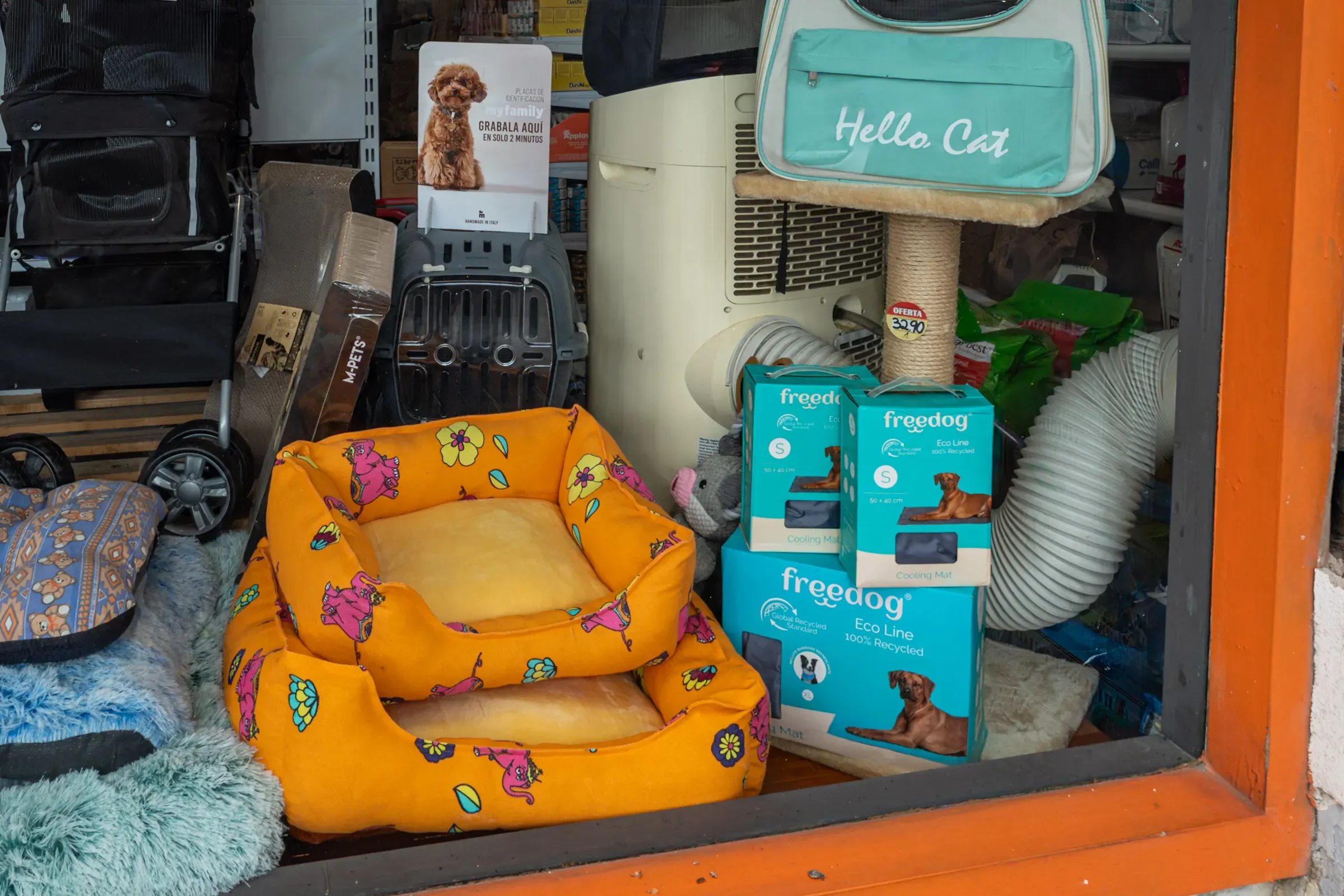
Pet shop window with dog beds and cat supplies, pet subscription boxes ecommerce
Pet subscription boxesOwners who want something arriving for the animal rather than for themselves, plus gift buyers marking a new puppy or an adoption, who check what a typical box contains, whether toys survive a strong chewer, whether allergens can be excluded and how easily a box can be skipped before they hand over a card.

How pet subscription boxes makes money

Four levers, and what limits each one here

Revenue is traffic times conversion rate times order value times purchase frequency. In this niche each lever has its own ceiling.

Traffic

Traffic: the chewer problem, the allergy and the gift

Search demand splits three ways and none of it is the word subscription. The largest group is owners of dogs that destroy everything, who search specifically for boxes that survive heavy chewing and who have usually been disappointed before. The second is dietary, where an owner needs particular proteins left out and will not risk a surprise box until somebody tells them that is possible. The third is gifting, aimed at a new puppy or a newly adopted dog, and it is seasonal and generous. Each of those deserves its own page with its own argument, and a business running a single signup page with lifestyle photography catches almost none of them.

Conversion

Conversion: what is in it, and what happens when it does not survive

Two things convert here and both feel counterintuitive. The first is publishing past boxes with their contents listed, which businesses resist because surprise is the product. In practice a prospect who cannot see what arrives assumes the worst, and showing six previous boxes proves the value while the next one stays unknown. The second is stating what happens when a toy is destroyed immediately. A published policy, whether that is a replacement, a swap or a credit, removes the objection that stops the strongest chewer households from ever signing up, and those households are also the ones most likely to stay if the box actually works for them.

Order value

Order value: the profile is what justifies a bigger box

Tiers work in this category when they are tied to something concrete about the animal rather than to adjectives. A larger dog genuinely needs bigger, tougher toys and more treats, so a size-based tier is easy to explain and easy to accept. Multi-pet households are the clearest upgrade of all, since a second animal in the same delivery costs little to fulfil and is obviously worth paying for. Add-ons work when they solve a known problem, an extra durable toy for a destroyer or a supplementary treat pack that respects the same allergen exclusions. All of it depends on the profile, which is why collecting it properly is a revenue decision rather than an onboarding formality.

Frequency

Frequency: the months where boxes actually stop

Cancellation in this category clusters, usually once the novelty has passed and the household has accumulated more toys than the animal uses. Knowing exactly where that point sits, by looking at each signup group separately rather than at one averaged figure, is what makes retention work possible at all. Once the point is visible, the interventions are concrete: change what goes in the box just before it, offer a longer interval rather than a cancellation for households drowning in toys, and use the feedback already collected to make the next box obviously better than the last. A discount at the moment of cancellation is the weakest of the available options and the one most businesses reach for first.

Search visibility

SEO for pet boxes: what is inside, the chewer question and the gift version

Publish the boxes. A page holding several past boxes with every item named, photographed and valued does more for organic performance and for conversion than any amount of copy about curation. It ranks for the query people actually type, which is what is in a dog subscription box, and it settles the doubt that stops signups. Keeping the upcoming box secret is entirely compatible with showing the last six.

The second build is the qualifying pages. A page for heavy chewers that is honest about what any toy can survive. A page for dietary exclusions that explains exactly which proteins can be left out and how the packing process handles it. A page for cats, which is a different product with a different buyer and should not be a filter on a dog page. Each is a distinct search with distinct intent.

The third is gifting, which is seasonal and needs real logistics on the page: when the first box ships, what the recipient receives on the day, how a gift term ends and whether it rolls into a paid subscription. Technically, the plan and gift pages must sit outside any account area so they can be indexed, the profile quiz needs a crawlable entry point, and cancellation instructions should be public rather than buried in a help desk, because people search for them and because a business that hides them earns distrust it does not need.

Queries that matter

  • dog subscription box for heavy chewers
  • cat subscription box with treats
  • puppy subscription box gift
  • what is in a dog subscription box
  • dog box without chicken or beef
  • monthly toy box for a large dog
  • how to skip a pet subscription box

Pages showing real past boxes with contents listed, honest chewer and allergen pages, and gift pages with genuine delivery timing rank here. A signup page carrying lifestyle photography and no list of what arrives does not.

AI answers

AI answers: what arrives, what survives, and how to stop it

The questions assistants handle in this category are about contents, durability, dietary exclusions and how to get out. Answering them publicly and specifically is what earns a mention, because an engine comparing options has nothing to work with when a business keeps its contents, its policies and its cancellation process behind a signup. Publishing past box contents, the replacement policy for destroyed toys, the list of proteins that can be excluded and a plain description of how to skip or cancel gives an engine exactly the material it needs, and each of those facts is also the thing that converts a hesitant prospect on the page.

What is usually in a dog subscription box?
Are there subscription boxes for dogs with food sensitivities?
Do subscription box toys survive heavy chewers?
How do I skip or cancel a pet subscription box?
Is a pet subscription box worth it compared with buying toys?

Questions shoppers put to assistants. A store gets named when its pages answer them in plain text.

Google Shopping and Merchant Center

Merchant Center for a box with a pet profile behind it

The listing has to represent the whole arrangement rather than the first delivery. Show the amount charged for the first box as the price and put the ongoing charge, the interval and the cancellation method on the landing page where a reviewer will find them immediately. This category attracts scrutiny of introductory offers, and a low advertised figure with an undisclosed continuing charge is the pattern that draws it.

Content attributes should describe the box rather than gesture at it. Product_detail carrying what a typical box holds, the size tiers available and the delivery frequency makes the listing far more useful than a name and a photograph. Custom labels separate species, tier and gift terms, which matters because a gift term and an open-ended subscription behave completely differently and should never be optimized against one another.

The treats inside a box carry the same claim rules as treats sold on their own, so descriptions cannot promise health outcomes just because the item is part of a bundle. And any dietary exclusion advertised has to be one the fulfilment process genuinely supports, since a promise the packing line cannot keep is both a policy problem and, more seriously, a welfare one for the animal it reaches.

Feed attributes that decide eligibility

  • price shown as the amount charged for the first box
  • product_detail listing typical contents and delivery frequency
  • custom_label for species, size tier and gift term
  • identifier_exists on the subscription product
  • google_product_category at the pet supplies node
  • availability reflecting whether new signups are open

Disapprovals we see in this niche

  • A first box price advertised while the continuing charge is not disclosed
  • Treat contents described with health or condition claims
  • Skip and cancellation controls described but not available in the account
  • Dietary exclusions promised more broadly than fulfilment can support

Meta and social ads

Meta ads for pet boxes: the animal opens it, and the toy gets tested

The native creative of this category is footage customers already produce. A dog opening the box itself, filmed once with no cuts, outperforms studio work because it is exactly what the buyer is imagining. The stronger and less common format is the honest durability test: the same toy shown after a week with a powerful chewer, including when it did not survive, followed by what the business does about that. Prospects in this category have been let down before and reward candor more than polish. Six months of boxes laid out in order sells the subscription rather than the box.

Policy has two parts. The recurring charge, interval and cancellation method need to be stated in the creative or immediately visible on the landing page, since introductory pricing draws attention here. And the animal welfare rules apply as they do across pets: nothing showing an animal in distress, nothing showing a dog left unsupervised with a chew, and treats inside the box cannot carry health claims. Customer and creator footage needs written rights on file, which matters more here than usual because so much of the creative comes from members.

  • A dog opening the box itself, filmed once with no cuts
  • The same toy after a week with a powerful chewer, shown honestly
  • Six months of boxes laid out in order to show the variety
  • The profile questions answered on screen, then the box that resulted
  • A cat ignoring one toy and stealing another, left unedited

Policy line

Recurring charge, interval and cancellation method stated in creative or immediately on the landing page, no health or condition claims for treats inside the box, no footage of an animal in distress or left unsupervised with a chew, and written rights on file for member and creator content.

Conversion and the store

The store: a profile worth filling in, and an exit that offers something first

The profile is the product. Ask for species, weight, chew strength, age and the proteins to avoid, and explain beside each question exactly what the business will do with the answer, because an owner will happily spend two minutes if it means the box fits their animal. A form that collects a name and a size and then sends the same box to everyone is worse than no form, since it sets an expectation the fulfilment cannot meet.

On the way out, offer something before the cancel button rather than obstruction. A longer interval solves the most common reason for leaving, which is a house already full of toys. A tier change, a swap to a treat-heavier box or a pause covers most of the rest. Make the actual cancellation genuinely available and record the reason in a structured way, because reason data is the only thing that tells you whether to fix the toys, the treats, the price or the frequency. On mobile, the past boxes and the durability policy belong above the fold, since those are the two facts a prospect is looking for.

Objections the page must answer

  • “What is actually in a box”
  • “Will the toys survive my dog”
  • “Can you leave out the proteins my dog reacts to”
  • “Can I skip a month or cancel without emailing anyone”
  • “Is this suitable for a puppy or an older animal”

Email, SMS and retention

Email and SMS for pet boxes: profile, reveal, and did it survive

Start by finishing the profile. A signup that captured only the basics should be followed immediately by a short message asking for chew strength and dietary exclusions, framed as making the first box fit rather than as data collection. Completing that profile before the first delivery is the single highest-leverage action in the whole lifecycle, because the first box sets whether there is a second.

On delivery, a short message covering what is inside, how to introduce a new chew and what supervision it needs turns the unboxing into a good experience rather than a pile of unfamiliar items. A week later, ask whether anything survived. That question is unusual, honest and enormously useful: it catches disappointment before it becomes a cancellation, it gathers durability data the buying team needs, and it produces the customer footage the ads run on. Win-back messages should keep the profile intact so a returning member does not have to start again, and SMS suits delivery notifications rather than promotions.

  1. Complete the profile

    Immediately after signup, before the first box is packed

  2. Box reveal and supervision notes

    On delivery day

  3. Did anything survive

    Seven to ten days after each delivery

  4. Longer interval instead of leaving

    Triggered at the cancellation page

  5. Add the second animal

    Six to eight weeks after the first box

  6. Win-back with the profile kept

    Six to ten weeks after cancellation

Where revenue leaks

The leaks we find in pet subscription boxes stores

The Growth Analysis ranks these against your own numbers and says which to close first.

Get a Growth Analysis for your pet box
  • A profile that asks for a size and stops

    Chew strength and dietary exclusions are never collected, so the first box contains a toy that lasts minutes or a treat the animal reacts to, and the household leaves before the second delivery.

  • Contents kept secret from prospects as well as members

    Surprise is the product for existing members and a barrier for new ones. Without published past boxes a prospect assumes the value is lower than it is and never signs up to find out.

  • Destroyed toys handled one ticket at a time

    There is no published policy, so every case is negotiated individually, the answers differ, and the households with the strongest chewers never join in the first place.

  • Cancellation available only by email

    It generates complaints, disputes and platform attention, and it retains almost nobody who would not have been retained by a pause option offered honestly.

  • Box cost drifting while the price stays still

    Supplier prices and shipping move quietly, margin per delivery erodes, and the business only notices when a cohort that looked profitable turns out not to have been.

Platform notes

Where the platform changes the work

Shopify

Subscription tooling has to carry the pet profile alongside the plan, since chew strength and excluded proteins must reach the packing line rather than sitting in a marketing platform. Skip, interval change and self-service cancellation belong in the customer portal, and the signup pages need to stay indexable outside the account area.

WooCommerce

A subscriptions extension handles the billing, and the work that matters is the member account: next delivery date, the profile in an editable form, a working skip and a cancellation flow that offers alternatives first. Failed payment retries need a schedule, because involuntary churn is a large and quiet share of losses.

Headless

Usually chosen when the profile has to drive fulfilment directly, matching animals to toy durability grades and allergen-safe treats at the pick stage. The requirement most often missed is keeping the marketing site, the past box archive and the gift pages fast and indexable outside the member application.

Questions

Pet subscription boxes owners ask us

By CartKernel · Last reviewed

How detailed should the pet profile be?

Detailed enough to change what goes in the box. Species, weight, age, chew strength and proteins to avoid are the minimum, and each question should say what it is used for. Owners will spend the time if the payoff is a box that suits their animal. A profile that is collected and then ignored is worse than none, because it promises a fit the fulfilment cannot deliver.

Should past boxes be published if surprise is the point?

Yes, and it does not spoil the surprise. Showing several previous boxes with contents and values listed proves the offer to someone who cannot otherwise judge it, while the next box remains unknown. It also ranks for the most common search in the category, which is people asking what is actually inside one of these.

How should destroyed toys be handled?

With a published policy rather than case by case. Whether it is a replacement, a swap in the next delivery or a credit, saying so plainly removes the objection that keeps heavy chewer households from joining. Those households are a large share of the market and, when the box works for them, they are among the longest-staying members you will have.

Can treats inside a box carry health claims?

No more than treats sold on their own. Being part of a bundle changes nothing about the claim rules, so wording about joints, digestion, calming or dental benefits needs the same substantiation it would need on a standalone product page. This is one of the most common ways an otherwise clean box business ends up with a listing under review.

What is the right way to handle skipping and cancellation?

Make both genuinely available in the account, and put alternatives in front of the cancel button rather than obstacles. A longer interval addresses the most common reason people leave, which is having more toys than the animal uses. Record the reason in a structured field, because that data is what tells you whether to change the contents, the frequency or the price.

How do you keep box economics working as costs move?

By tracking contribution per delivery rather than revenue, and by reviewing it against each signup group separately. Supplier costs and shipping drift upward quietly, and a business watching only top-line growth can run for months on deliveries that no longer pay. Reviewing contents cost, fulfilment and shipping monthly is unglamorous and it is what keeps the model viable.

Grow your pet subscription boxes store.

A free Growth Analysis ranks what your store should fix first, by revenue at stake, in about a week.