Skip to content

Sports & outdoors · ecommerce growth

E-bike marketing agency

Nobody buys a bike that costs as much as a used car after one visit. An e-bike shopper reads the class, the motor and battery figures, the real-world range, the certification and the financing terms, then checks whether anyone nearby can service it. We build e-bike stores to hold that shopper through weeks of research: class and range pages that rank, feeds that survive the shipping and price checks on a high-ticket item, financing presented honestly, and a follow-up sequence that turns one sale into years of parts and service.

The buyer, in brief

Consideration
Weeks to months, with financing and a test ride or a generous trial policy shortening it
Purchase frequency
One bike every several years; batteries, tires, brake pads, racks, bags, locks and child seats in between
Seasonality
Spring is the peak, with a second lift around tax refunds and rebate programs where a city or province runs one; winter is quiet except for gifting
Price band
High. A first order is usually the bike, an accessory bundle and sometimes a second battery, financed over months
Return risk
Rare but expensive: a bike returned by freight costs more than most accessories earn, so the trial policy, the sizing and the class explanation have to be right before the order
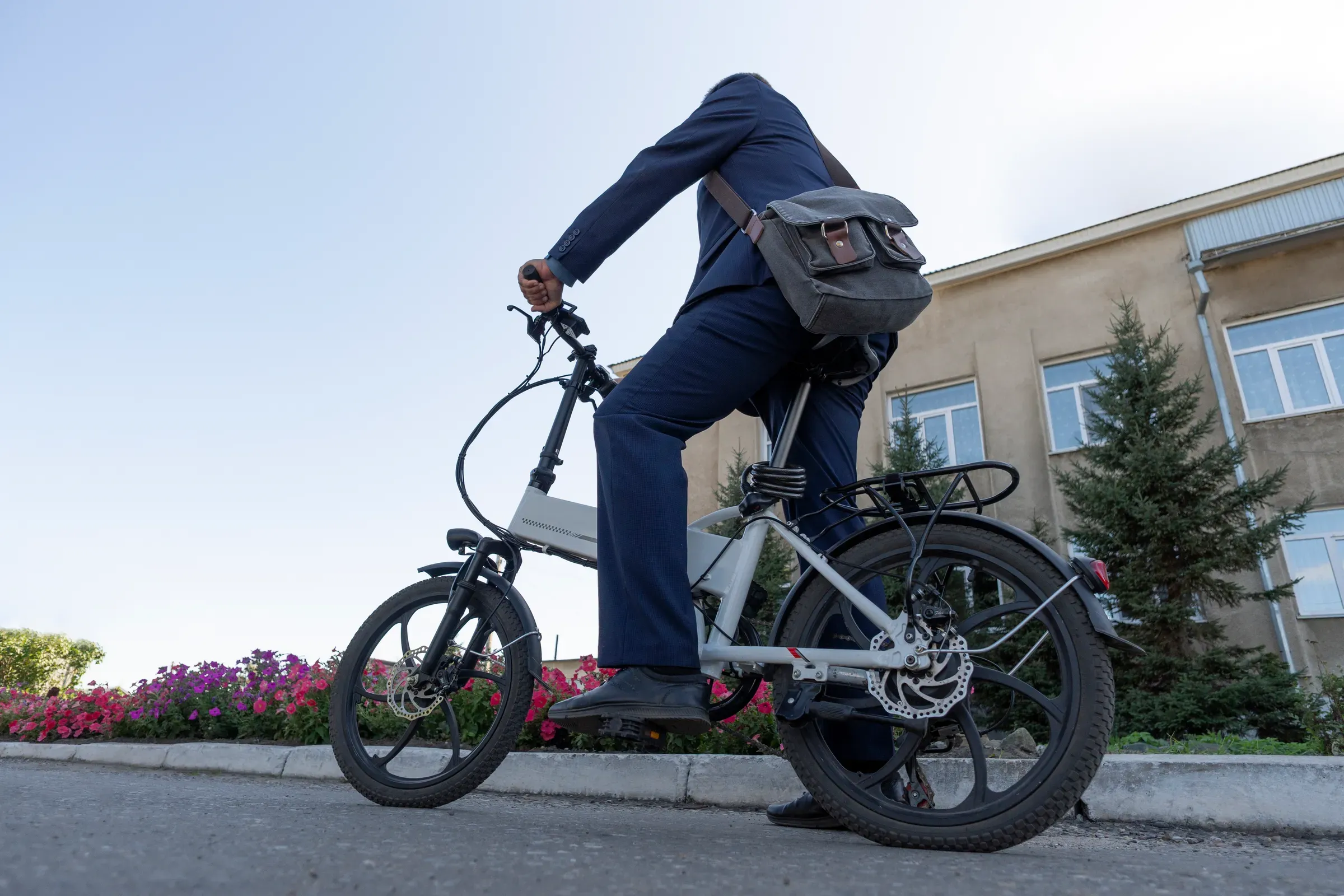
A new modern alternative mode of transport. Eco-friendly electric bike. Hipster businessman commuter with, e-bikes ecommerce
E-bikesCommuters replacing a car trip, riders returning to cycling with a hill in the way, and cargo-bike families, most of them buying their first e-bike. They check the class, the motor position, the battery watt-hours, the certification and whether the store or a local shop will service it.

How e-bikes makes money

Four levers, and what limits each one here

Revenue is traffic times conversion rate times order value times purchase frequency. In this niche each lever has its own ceiling.

Traffic

Traffic: class, range and use-case queries

E-bike demand is searched by use and by rule. Class 3 commuter e-bike, cargo e-bike for two kids, e-bike allowed on trails near me, mid-drive versus hub motor, how far does a 500 watt-hour battery go. Most e-bike stores rank for their own brand and nothing else, because every bike sits on one collection page and the explanations live in a blog nobody links to. The traffic work is a set of indexable pages by class, by use (commuting, cargo, folding, step-through), by motor type and by region rules, each with real copy and the bikes that qualify, plus comparison pages between the store's own models, which is where the high-intent research traffic actually lands.

Conversion

Conversion: the test ride objection, answered on the page

The e-bike shopper's fear is buying the wrong bike without riding it. The page has to answer sizing by rider height, the difference between classes in plain words, real range under stated conditions rather than the best case, the weight with the battery, the certification of the electrical system, and what happens if the bike arrives and does not suit. Financing needs to appear as a monthly figure beside the price, with the terms visible. A trial period, a local dealer map or a demo day calendar removes the last objection. Assembly is the quiet one: say how much arrives assembled and what tools the last steps need.

Order value

Order value: the second battery and the commuter kit

The bike is the order, but the margin often lives beside it. A second battery for a long commute, fenders, a rack, panniers, lights, a lock rated for an expensive bike, a child seat or a cargo box. Order value grows when these are presented as a fitted bundle for that model, priced as a set, at the moment the shopper has already decided on the bike. Extended warranty and a service plan sit in the same place. The other lever is the model ladder: a clear comparison between the base bike and the model with the larger battery or the better brakes, because a shopper who understands the difference frequently chooses up.

Frequency

Frequency: years of parts, a battery in the middle

An e-bike customer is not a one-time customer if the store stays in touch. Tires wear faster under motor torque, brake pads go quicker on a heavy bike, chains stretch, and the battery has a life measured in charge cycles. A store that records the model sold can send tire and pad reminders on a realistic schedule, a battery health note at the right year, firmware and recall notices, and seasonal storage guidance for winter. Referral is the second frequency engine, because e-bike owners get asked about their bike every week; a referral offer with a real benefit for both sides turns those conversations into orders.

Search visibility

Search: class pages, range explainers and the rules by region

E-bike search splits into three groups. Rule queries (what class is allowed on a bike path, e-bike laws in a specific province or state, the federal power limit in Canada) need explainer pages that are accurate, dated and updated when a rule changes. Use queries (commuter, cargo, folding, step-through, fat tire) need collection pages with real copy and the bikes that fit that use. Spec queries (mid-drive versus hub, torque sensor versus cadence sensor, watt-hours to kilometers) need comparison content that explains the trade-off without promising a range figure the store cannot document.

Product pages carry the spec table as text: class, motor position and torque, battery capacity in watt-hours, charge time, rider height range, weight limit, certification of the electrical system, and what is in the box. Structured data needs the price, the availability and the shipping details right, because the rich result is often the first thing a shopper sees on a high-ticket item.

Technical notes: the store's own model comparisons deserve indexable pages, previous model years keep their page with a link to the current one, and financing and rebate pages need to be crawlable rather than rendered from a payment provider's script.

Queries that matter

  • class 3 electric bike for commuting
  • cargo e-bike for two kids
  • e-bike laws ontario 500w
  • mid drive vs hub motor e-bike
  • how far can a 720wh e-bike battery go
  • ul 2849 certified e-bike
  • e-bike financing canada

Rule explainers that are current, use-case collections with substance and honest spec comparisons rank for e-bikes. A single collection of bikes with lifestyle photography and no text does not, and neither do range claims without conditions.

AI answers

AI answers: the shopper who asks which class they need

Shoppers ask assistants which class is legal where they live, whether a mid-drive is worth the extra cost, how many kilometers a given battery delivers on hills, and which bikes carry a recognized electrical certification. Stores get cited when the class, the certification and the range conditions are stated as plain sentences on the product page and the explainer, when the Product markup matches the Merchant Center feed on price and availability, and when the About page says who the company is and where it ships and services bikes. We write the rule and spec pages so each answer can be lifted in one sentence, and we date them so an assistant can tell the information is current.

Which e-bike class is legal on bike paths in my city?
Is a mid-drive motor worth it for hills?
How far will a 500 Wh battery go with pedal assist?
Which e-bikes are UL 2849 certified?
Can I take an e-bike battery on a plane?

Questions shoppers put to assistants. A store gets named when its pages answer them in plain text.

Google Shopping and Merchant Center

Shopping and Merchant Center for a high-ticket bike with a battery

An e-bike listing is judged on price, shipping and availability more strictly than a cheap accessory, because the shopper compares the ad price against the page to the dollar, and a freight charge that appears only at checkout is a shipping mismatch as well as a lost sale. Shipping has to be set per product or per weight class so a bike and a bell do not share a rate, and any free-shipping threshold or regional surcharge in Merchant Center has to match what checkout actually charges. Financing text belongs on the page, not in the feed title.

Identifiers are usually straightforward for branded bikes with GTINs, and own-brand bikes without a barcode set identifier_exists to false. The product_detail attribute carries class, motor, battery watt-hours and certification, which lets Shopping match the spec queries. Titles read best as brand, model, class, motor type and battery size. Batteries sold separately are eligible but ship as dangerous goods, so the shipping attribute has to reflect ground-only service where the carrier requires it.

Campaigns split by intent and margin: complete bikes in a campaign bid to contribution margin with a long conversion window, accessories and batteries in a campaign that accepts a lower return, and free listings on for the whole catalog because model-name searches convert well without a bid.

Feed attributes that decide eligibility

  • shipping per product or weight class
  • product_detail for class, motor, battery and certification
  • gtin or identifier_exists
  • availability with preorder and availability_date
  • custom_label for bike versus accessory
  • price and sale_price aligned with rebate pages

Disapprovals we see in this niche

  • Shipping cost mismatch when freight appears only at checkout
  • Price mismatch after a rebate or promotional change
  • Availability mismatch on models on backorder from the factory
  • Misrepresentation flags for range or speed claims stated as facts

Meta and social ads

Meta and social: showing the commute, not the bike

The creative that moves e-bikes shows the ride the shopper wants: the hill they dread, the school run without the car, the commute in work clothes without sweating, the cargo bike loaded with groceries and a child. Spec creative works for retargeting once the shopper is comparing models, and a founder walking through the difference between the two models they sell most is worth more than a studio shot. Financing creative should show the monthly figure with the terms readable, and range creative should state the conditions in the video, not in the caption.

Policy is mostly about accuracy: speed and range claims are reviewed under misrepresentation rules, so the creative says what the bike does under stated conditions and nothing more. Audiences start with site visitors and financing-page visitors, then broad prospecting by region where the store ships and services bikes. UGC from customers who commute daily needs rights and a check that helmets and lights appear where the law expects them.

  • The hill, with and without assist, filmed on a real commute
  • Cargo bike doing the school run and the grocery run in one clip
  • Founder comparing the two bestselling models honestly
  • Monthly financing figure with the terms on screen
  • Owner at one year: what wore out and what did not

Policy line

Range and speed claims must be stated with conditions or not at all, financing ads must show the terms, no implication that the viewer is unfit or too old to ride, and no imagery that shows the bike used in ways local rules prohibit.

Conversion and the store

The store: the page that replaces a test ride

An e-bike product page has to do the job of a showroom. Rider height and sizing first, then class and where it can be ridden, then the spec table as text with range stated under conditions, then certification, then what arrives in the box and how much assembly remains. Financing as a monthly figure beside the price, with an application that does not leave the page. The trial or return policy in full view, because that is what replaces the ride. A dealer or service locator answers the last objection.

Comparison pages between the store's own models carry more revenue than most product pages, and they need to be honest about who each bike suits. On mobile, the spec table has to be readable without a horizontal scroll, the financing button has to sit beside add-to-cart, and the shipping cost and delivery window have to appear before checkout. Cart drawers with the fitted accessory bundle for that model raise the order without slowing the sale.

Objections the page must answer

  • “Will it fit me and can I ride it legally where I live”
  • “How far does it really go on hills with my weight”
  • “What happens if it arrives and I do not like it”
  • “Who fixes it when something breaks”
  • “What does the monthly payment actually cost me”

Email, SMS and retention

Email and SMS: from financing approval to the first battery replacement

The flows in this niche mirror a long purchase and a long ownership. The research flow starts when a shopper views a comparison page or opens a financing application and does not order: a sizing guide, the class explainer, an owner's story, then the trial policy, spaced over two or three weeks. The pre-delivery flow covers what arrives assembled, the tools needed, first charge instructions and where to register the bike. The first-month flow covers tire pressure, battery care, lock and insurance guidance, and the accessory bundle for that model.

Ownership flows run for years: tire and pad reminders on a schedule that reflects motor torque and rider weight, a battery health check note in year two or three, winter storage guidance every fall, recall and firmware notices as they happen, and a referral offer once the owner has ridden long enough to recommend the bike. SMS is limited to delivery scheduling, freight tracking and back-in-stock alerts for models on backorder.

  1. Research follow-up

    Two to three weeks after a comparison or financing page visit without an order

  2. Pre-delivery

    Between order and freight delivery

  3. First month

    Weekly for four weeks after delivery

  4. Wear reminders

    Every four to six months, for tires and pads

  5. Battery health

    Around the second and third year of ownership

  6. Referral

    After the first season of riding

Where revenue leaks

The leaks we find in e-bikes stores

The Growth Analysis ranks these against your own numbers and says which to close first.

Get a Growth Analysis for your e-bike brand
  • Freight that appears at checkout

    The ad and the page show one price, checkout adds a freight charge, the shopper leaves, and Merchant Center logs a shipping mismatch on the same product.

  • Range stated as a single number

    A page promises the best-case range, the owner gets half of it on hills in winter, and the return, the review and the chargeback all arrive together.

  • Research traffic sent to a product page

    The shopper who searched mid-drive versus hub motor lands on a bike, does not understand the difference and leaves, so the store pays for the click and the education happens on another site.

  • A sale with no ownership sequence

    The bike ships, the store goes quiet, and the tires, pads, second battery and referral go to a local shop that stayed in touch.

Platform notes

Where the platform changes the work

Shopify

Shipping profiles keep the bike on freight rates and accessories on parcel rates, metafields carry class, motor, battery and certification for the page and the feed, and installment options appear as a monthly figure on the product page where the provider supports your country. Local pickup and a dealer locator app cover the test ride objection.

WooCommerce

Freight rates need a shipping plugin that handles dimensional weight and regional surcharges, and the spec table should come from attributes so the comparison pages can be generated from data rather than rewritten by hand.

Headless

Financing widgets and dealer maps need server rendering or a static fallback so the pages that answer the shopper's questions are crawlable and fast on mobile.

Questions

E-bikes owners ask us

By CartKernel · Last reviewed

How do you market an e-bike that costs several thousand dollars online?

By treating the purchase as weeks of research rather than a click. We build the pages the shopper needs during that research (sizing, class, range under conditions, certification and financing), run ads that land on those pages, and follow up by email until the trial policy and the monthly payment make the decision easy. Attribution windows and reporting are set to match the cycle.

Can you advertise e-bikes on Google Shopping and Meta?

Yes. E-bikes are not a restricted category on either platform. The issues that stop e-bike ads are accuracy issues: range or speed claims stated as facts, prices that differ after a rebate, and freight that appears only at checkout. We write the feed and the creative to what the bike does under stated conditions and keep shipping settings matched to checkout.

How should e-bike batteries be handled in shipping and in the feed?

Batteries ship as dangerous goods with carrier-specific rules, which usually means ground service and specific packaging. In the store that means a shipping profile of their own and a delivery estimate that reflects ground transit. In the feed the shipping attribute has to match, and any regions the carrier will not serve have to be excluded so the ad does not promise what cannot be delivered.

What do you do about e-bike rules that differ between provinces and states?

We write rule explainers by region that are dated, sourced to the relevant authority and updated when a rule changes, and we present the bikes that comply on the same page. The product pages state the class plainly. That earns the rule searches, and it protects the store from selling a class 3 bike to a rider whose local rules do not allow it.

Is financing worth adding to an e-bike store?

In most cases, yes. A monthly figure beside the price changes the decision for a shopper comparing the bike to a transit pass or a car payment. We place the installment option on the product page and in the cart, show the terms plainly, and track financing applications as a conversion step so the ad and email reporting reflects how people actually buy.

How do you turn a one-time e-bike buyer into a repeat customer?

By staying with the owner through the years they ride. Wear parts on a realistic schedule, a battery health note at the right year, winter storage guidance, recall notices, the fitted accessory bundle, and a referral offer once the owner has something to recommend. We report accessory revenue per bike sold and referral orders as their own lines.

Grow your e-bikes store.

A free Growth Analysis ranks what your store should fix first, by revenue at stake, in about a week.