Skip to content

Sports & outdoors · ecommerce growth

Water sports brand marketing agency

A kayak is a piece of furniture that has to be delivered, transported and stored, and most of the year's revenue arrives in about twelve weeks. Buyers compare inflatable against hard shell, work out whether a board will carry them and a dog, ask how it gets to the water on a small car, and check that the flotation device is actually approved where they paddle. We build water sports stores around those realities: honest comparison content that ranks, capacity and sizing answered plainly, freight priced before the cart, and a summer that is planned in February.

The buyer, in brief

Consideration
Two to six weeks for a hull, minutes for accessories once the boat or board is chosen
Purchase frequency
A hull every several years, with paddles, flotation devices, wetsuits, leashes and repair supplies bought far more often
Seasonality
Compressed and weather-led. Interest builds in early spring, peaks from late spring through midsummer, and falls away quickly once cooler weather arrives
Price band
Wide, from a leash to a composite hull, with accessories carrying much better margin than the boats do
Return risk
Rare in volume and severe in cost, since reverse freight on a hull can exceed the margin on the sale entirely
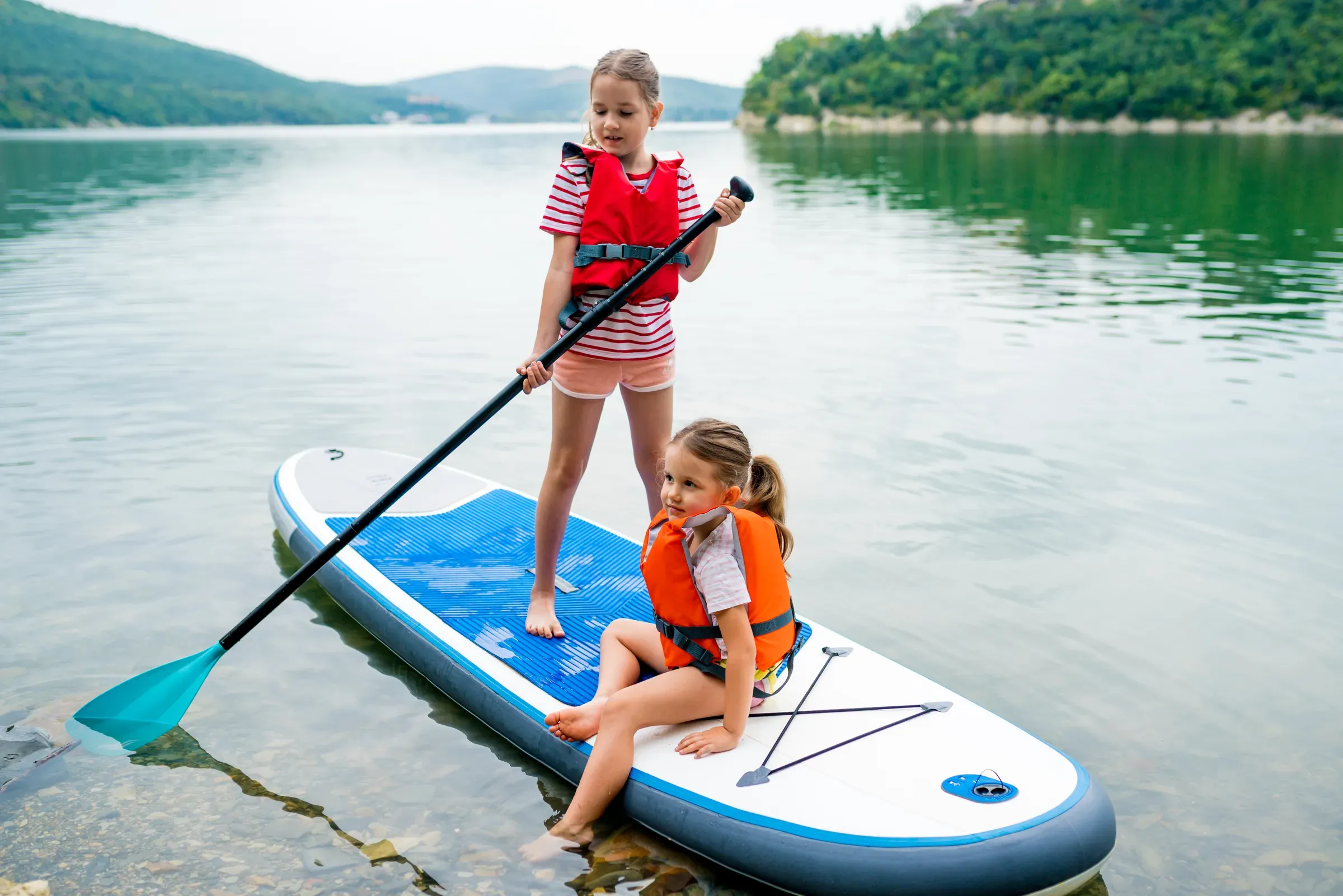
Girls padding on stand up paddle boarding on lake district. Children in swim life vest learning, water sports ecommerce
Water sportsFirst-time and returning paddlers who compare inflatable against hard shell before they compare brands, check weight capacity against their own weight plus gear and often a dog or a child, ask how a hull is transported and stored, and want to know that a flotation device meets the approval required where they paddle.

How water sports makes money

Four levers, and what limits each one here

Revenue is traffic times conversion rate times order value times purchase frequency. In this niche each lever has its own ceiling.

Traffic

Traffic: inflatable against hard, and whether it will carry me

Almost every paddling purchase begins with the same comparison. Inflatable or hard shell, and what each really costs in performance, durability, storage and setup time. That question is asked far more often than any brand name and it is answered mostly by video creators and forums. The second search cluster is capacity, phrased as whether a board or boat will carry a person of a given weight with gear, a child or a dog. The third is transport and storage, because a buyer in an apartment without a roof rack is genuinely deciding whether the sport is possible for them. A store that answers all three properly wins the customer before any product comparison starts.

Conversion

Conversion: capacity, transport, and the approval on the flotation device

Three facts settle this purchase. Weight capacity, stated as the usable figure rather than a maximum that would put the deck underwater, and explained so a buyer can add themselves, a cooler and a dog. Transport and storage, answered concretely for a small car and a small apartment, including the weight one person can actually lift onto a roof. And the flotation device, which must state the approval it holds for the waters the customer paddles, because that is a legal requirement rather than a preference in most places. Add the freight cost before the cart and the largest sources of abandonment are gone.

Order value

Order value: the paddle, the flotation device and everything the hull needs

The boat is often the worst margin in the order and the accessories are the best, which makes attachment the whole game. Nobody paddles a hull alone: it needs a paddle sized to the person and the craft, an approved flotation device, a leash where the discipline requires it, a pump for an inflatable, a repair kit, and something to carry or store it. Selling that as a complete package on the product page, sized to the buyer, both raises the order and prevents the first outing going badly. For wetsuits and thermal layers, a water temperature guide sells the right thickness rather than the cheapest, which is better for the customer and better for the margin.

Frequency

Frequency: hulls last, everything else does not

A hull might be replaced once a decade, so repeat revenue has to come from the parts of the sport that wear out, get lost or get outgrown. Paddles break and get upgraded. Flotation devices age and need replacing. Leashes fray, fins snap, repair kits get used, dry bags leak, and children grow out of everything every year. Beyond that, the strongest repeat driver is the second craft, since households that paddle together buy a second board or boat within a season or two. Recording what a customer already owns, and where they paddle, is what makes those messages relevant rather than generic summer promotions.

Search visibility

Search: the comparison page, capacity guides and the transport question

The comparison between inflatable and hard shell is the single most valuable page this catalog can hold, and it has to be genuinely balanced to work. Set out how each performs, how long each takes to get on the water, what storage and transport each demands, how repairs differ and where the price difference actually sits. A page that argues for whichever the store has most of gets ignored, because the reader has already watched three videos saying otherwise.

Capacity and sizing content is the second build. How to calculate usable capacity with a paddler, gear and a passenger. How board volume relates to rider weight. How to size a paddle to a person and a craft. How to choose wetsuit thickness by water temperature rather than by air temperature, which is the mistake that ruins a first cold-water outing.

The third is transport, storage and access, which nobody builds and everybody searches. Getting a hull onto a small car, storing a board in an apartment, carrying a boat to the water alone. Add location content for the waters your customers use and the seasonal calendar writes itself. Technically, freight items need shipping surfaced on the page, inflatable and hard versions of the same model should not compete as duplicates, and out-of-season pages should stay live and be refreshed rather than removed.

Queries that matter

  • inflatable vs hard shell kayak
  • paddle board weight capacity with a dog
  • how to transport a kayak on a small car
  • wetsuit thickness for cold lake water
  • coast guard approved life jacket for kayaking
  • how to store a paddle board in an apartment
  • paddle length for my height and board width

Balanced comparison content, capacity and sizing guides that show the calculation, and transport and storage pages rank here. A Kayaks collection sorted by price, with a specification table and no explanation of what the numbers mean, does not.

AI answers

AI answers: will it hold me, how do I move it, is the vest approved

The questions assistants field here are practical and consequential: whether a board will support a rider and a passenger, how a hull can be transported without a rack, what wetsuit thickness suits a given water temperature, and which flotation devices are approved for use in a particular country. The approval question in particular has a factual answer that a store can state precisely, and doing so is both useful and a genuine safety matter. Stores earn citations by publishing calculations rather than conclusions, naming the approving authority exactly, and being clear about where local regulations decide the answer rather than the manufacturer.

Will this paddle board hold my weight plus a dog?
Is an inflatable kayak durable enough for rocky rivers?
What wetsuit thickness do I need for water around fifteen degrees?
Which life jackets are approved for paddling in Canada?
How do I carry a kayak on a car with no roof rack?

Questions shoppers put to assistants. A store gets named when its pages answer them in plain text.

Google Shopping and Merchant Center

Merchant Center when the product will not fit in a van

Freight decides whether this catalog is profitable. Hard hulls, long boards and rigid paddles ship by carriers that price on dimensions and often need a delivery appointment, and none of that is expressible in a flat parcel rate. Shipping has to be configured per item with freight and residential delivery options reflected, and the delivered figure the shopper sees has to match what checkout charges, or the store collects both abandoned carts and shipping mismatches.

The attribute work is about the decisions buyers make. Product_detail should carry weight capacity, hull or board length, the item's own weight, and whether the product is inflatable or rigid, because that last field is how the whole category is filtered mentally. Flotation devices need their approval named in the data, not implied. Sizes for wetsuits and vests need a size system that matches the chart on the page.

Seasonality shapes the rest. Stock is ordered months ahead and sells within a narrow window, so availability accuracy in June matters more than at any other point in the year. Custom labels separating freight hulls from parcel accessories are what allow the two to be bid apart, which is essential given that a boat may carry thin margin while a paddle and a vest carry most of the profit in the same order.

Feed attributes that decide eligibility

  • shipping configured per item with freight and residential delivery
  • product_detail for weight capacity, length and product weight
  • product_detail stating inflatable or rigid construction
  • product_detail naming the flotation device approval held
  • size and size_system for wetsuits and vests
  • custom_label separating freight hulls from parcel accessories
  • gtin for branded hardgoods

Disapprovals we see in this niche

  • Parcel rates on hulls that ship by freight with a delivery appointment
  • Free shipping claimed on items that carry an oversize surcharge
  • Flotation approval stated more broadly than the certification supports
  • Availability mismatch on seasonal stock during the summer peak

Meta and social ads

Meta and social: the car roof, the pump and the first outing

The creative that sells here answers the anxieties nobody puts in a specification table. One person loading a hull onto a small car, filmed once, without cuts. An inflatable taken from the bag to the water with the time on screen. A board holding a rider and a dog, which is the capacity question answered visually. A wetsuit thickness explained against actual water temperature. These are unglamorous and they convert, because they show the buyer whether the sport is possible in their life.

Policy attention here is mostly about safety. Creative should show flotation devices being worn, because footage of paddlers without them is both irresponsible and a reliable source of criticism that outlives any campaign. Approval claims for flotation devices must match the certification exactly and must not be generalized across countries. Any footage on moving water or in surf should reflect the conditions the product is actually rated for, and customer footage needs written rights before it appears in the brand account.

  • One person loading a hull onto a small car, filmed in a single take
  • An inflatable taken from the bag to the water with the clock running
  • A board carrying a rider and a dog to answer the capacity question
  • Wetsuit thickness compared against real water temperature readings
  • The full kit for a first outing laid out and explained piece by piece

Policy line

Flotation devices shown being worn in all on-water creative, approval claims stated exactly as certified and never generalized across countries, conditions in footage matched to what the product is rated for, and written rights secured for customer content.

Conversion and the store

The store: freight before the cart, capacity in plain numbers

Put the delivered cost on the product page. A shopper who has spent three weeks choosing a kayak and meets an unexpected freight charge at the final step does not return, and this is the most common single point of loss in the category. Offer a postal code estimate or a clearly stated freight band, and where local pickup exists, make it visible early because it removes the cost entirely for nearby buyers.

Then make capacity honest. Publish the usable figure alongside the maximum, and show a worked example with a paddler, a cooler and a dog, so nobody has to guess. Add the item's own weight and the length, since those decide whether a person can lift and store it. State the flotation approval explicitly. Finally, sell the outfit rather than the hull, with a paddle sized to the buyer and an approved vest presented as part of the decision, because a first outing that goes badly for want of a fifty dollar accessory costs the store the entire relationship.

Objections the page must answer

  • “Will it carry me plus gear and a passenger”
  • “How do I get it home and where do I store it”
  • “What does freight actually cost to my address”
  • “Is this life jacket approved where I paddle”
  • “Inflatable or hard, which is right for how I will use it”

Email, SMS and retention

Email and SMS: plan in March, outfit in May, store it in September

The list has to be worked well before the water warms. Early spring is for comparison content and for planning, when a household is deciding whether this is the summer they buy a kayak. That is also when pre-season pricing and reservation offers land best, because the buyer has time and nobody else is competing for attention yet.

Once a hull is bought, the follow-up matters more than in most categories. A first-outing message covering transport, launching, capacity and safety turns an intimidating purchase into a good day, which is what produces the accessory orders and the second craft later. Through summer, the messages that work are outing-driven rather than promotional: what to add for a longer trip, what to carry for a child or a dog, what to do about a puncture. In autumn, storage and winterizing content keeps the relationship alive across the eight months when nobody is paddling, and it is the natural place to capture where a customer paddles for next year's planning.

  1. Spring planning series

    Early spring, well before the water warms

  2. First outing guide

    On delivery, covering transport, launching and safety

  3. Complete the outfit

    Ten days after a hull purchase

  4. Longer trip additions

    Six to eight weeks into the paddling season

  5. Storage and winterizing

    As the local season closes

  6. Second craft for the household

    Early in the following spring

Where revenue leaks

The leaks we find in water sports stores

The Growth Analysis ranks these against your own numbers and says which to close first.

Get a Growth Analysis for your water sports brand
  • Freight revealed in the cart

    Weeks of research end at a shipping figure the shopper never saw coming, and the abandonment happens on the most valuable cart the store will build that month.

  • Maximum capacity published as if it were usable

    The number on the page is the point at which the craft is unusable rather than the load it performs with, so the customer's first outing is a disappointment they blame on the product.

  • Hulls sold without the paddle and the vest

    The lowest margin item in the catalog goes out alone while the accessories that carry the profit, and that make the outing work, are bought somewhere else or not at all.

  • Advertising that starts when the weather does

    The comparison searches ran in March and were cheap. By the time the store begins spending in June, every competitor is bidding on the same twelve weeks.

  • Seasonal pages taken down each autumn

    Collections and guides are unpublished at the end of summer and rebuilt the following spring, so nothing accumulates ranking history and every season begins from a standing start.

Platform notes

Where the platform changes the work

Shopify

Freight items need their own shipping profiles with dimension-based rates and exclusion from any free shipping threshold, and a postal code estimator on the product page prevents most of the cart loss. Capacity, length and product weight belong in metafields so they appear on the page, in the structured data and in product_detail together.

WooCommerce

Table rate shipping built on dimensions rather than weight is the work that decides whether hull orders are profitable. Global attributes for construction type, capacity band and craft type drive the filters and the indexable archives, and local pickup needs to be surfaced early rather than appearing as a checkout option.

BigCommerce

Shipping zones with per-item freight surcharges keep a paddle and a kayak from being quoted from the same rule, and customer groups suit clubs, camps and rental operations that buy several hulls at once and need different pricing and delivery arrangements.

Questions

Water sports owners ask us

By CartKernel · Last reviewed

How should freight on kayaks and hard boards be handled?

Priced per item on dimensions and shown before the cart, ideally as a postal code estimate on the product page. Hulls ship by carriers that charge on size and often need a delivery appointment, so a flat parcel rate is wrong in both directions. Surfacing local pickup early also matters, because it removes the cost entirely for nearby buyers and often decides the sale.

How do you write the inflatable versus hard shell comparison fairly?

By covering performance, setup time, durability, repair, storage and transport for both, and by saying plainly which suits which circumstances. Readers have usually watched several videos already and will spot a page that argues for whatever the store has in stock. A balanced page ranks better, converts better and tends to sell the more expensive option more often, not less.

What should a product page say about weight capacity?

Publish the usable figure as well as the maximum, and show a worked example adding a paddler, gear and a passenger or a dog. Maximum capacity is the point at which a craft stops performing, not a target, and treating the two as the same thing is the most common reason a first outing disappoints and a return is requested.

How should flotation devices be described?

With the approval named exactly and tied to the country it applies to, because wearing an approved device is a legal requirement in most places rather than a recommendation. Never generalize an approval across borders, and state the size and fit requirements clearly, since a device that does not fit correctly does not perform as certified.

When should a water sports store begin its season campaigns?

In early spring, while the water is still cold. The comparison and planning searches happen weeks before the buying does, they cost far less then, and the households running them are the ones who buy in May. Starting when the weather turns means paying peak prices for a twelve-week window with no time to recover from a cool start to the summer.

How do you get repeat orders when a kayak lasts ten years?

By selling the parts of the sport that do not last: paddles, flotation devices that age out, leashes, fins, pumps, repair kits, dry bags and thermal layers, plus children's sizes that change every year. The other reliable driver is the second craft, since households that paddle together usually buy again within two seasons. Recording what someone owns is what makes those messages land.

Grow your water sports store.

A free Growth Analysis ranks what your store should fix first, by revenue at stake, in about a week.