Skip to content

Sports & outdoors · ecommerce growth

Fishing tackle marketing agency

A walleye angler in May is not looking for fishing tackle. They want a jig in a specific weight and color that worked last season, a line in a specific test, and they want it before the opener in their region. Tackle catalogs run deep, with one lure sold in dozens of colors and sizes, and demand moves with species, technique and the date a season opens. We build tackle stores that rank for species and technique, keep a catalog of thousands of variants indexable and feed-clean, ship rods without losing money, and bring anglers back as each season opens.

The buyer, in brief

Consideration
Minutes for a known lure or line, days for a rod and reel combo, weeks for a high-end reel or an electronics unit
Purchase frequency
Line, hooks, soft plastics, weights and terminal tackle several times a season; rods and reels every few years
Seasonality
Openers by species and region set the peaks: spring for walleye and trout, summer for bass, fall for salmon and steelhead, winter for ice fishing in the north
Price band
Mostly small tickets in the tens of dollars, with rods, reels and electronics carrying the high end and most orders mixing both
Return risk
Low, mostly wrong size or color and rods damaged in transit; the bigger cost is the order that arrives after the opener
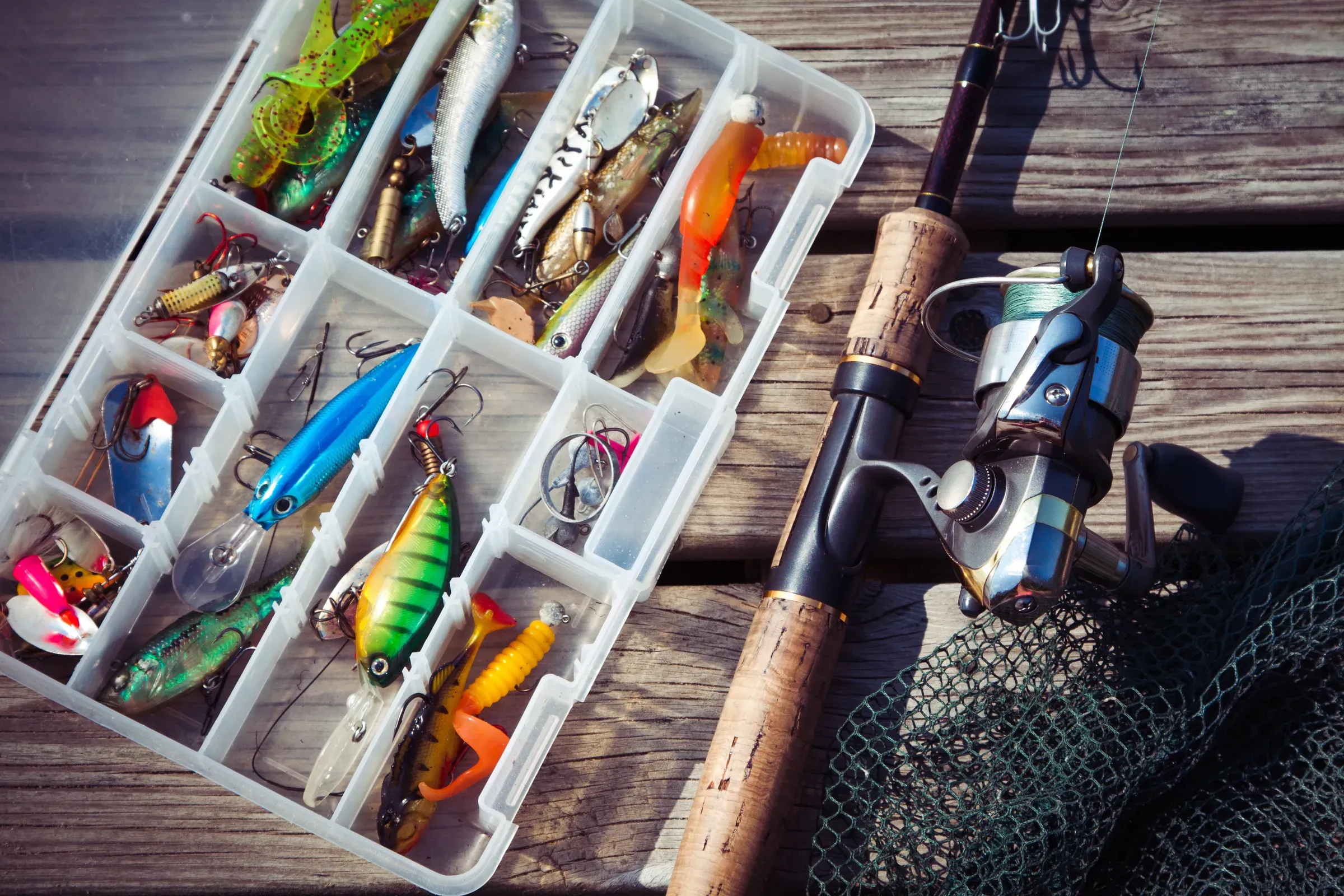
Fishing Lures in tackle boxes with spinning rod and net, fishing tackle ecommerce
Fishing tackleAnglers who shop by species, technique and water: walleye jigs, bass swimbaits, steelhead floats, ice jigs. They know the brand and the color name, they check that the exact size and color is in stock, and they want it before the opener or the trip, not after.

How fishing tackle makes money

Four levers, and what limits each one here

Revenue is traffic times conversion rate times order value times purchase frequency. In this niche each lever has its own ceiling.

Traffic

Traffic: species, technique and the color name

Tackle search is species first, technique second, brand and color third. Walleye jigs for river current, bass chatterbait trailers, steelhead float rods, ice fishing jigs for perch, and then the brand, the size and the color name anglers use in forums. A store organized by product type (Lures, Rods, Line) captures little of that. The traffic work is a matrix of species and technique collections with real copy about when and where each works, product pages that carry every size and color as text and as variants, and regional season content that ranks in the weeks before an opener. The catalog is deep, so the index has to be shaped rather than left to the filter layer.

Conversion

Conversion: the exact color, in stock, before the opener

An angler converts on three things: the exact size and color is in stock, the price is fair against the big retailers, and it will arrive before the trip. Product pages need a color and size grid that shows stock per variant, not a dropdown that reveals a sold-out only after the click. Delivery dates need to be stated as dates in the weeks before openers. Rods need a clear note on how they ship, in a tube or in sections, and what happens if one arrives damaged. Technique notes (how to rig it, what rod and line it pairs with) do more for conversion than lifestyle photography, and forum-style reviews from anglers on named waters do the rest.

Order value

Order value: the rig, not the lure

A jig is never bought alone by an angler who knows what they are doing; it needs a trailer, a leader, hooks and often a specific line. Order value grows when the store presents the rig for a technique as a set: the drop shot kit with weights, hooks and plastics, the float fishing setup with floats, shot, leaders and hooks, the ice fishing starter with jigs, line and a rod. Free shipping thresholds set just above the typical basket move anglers to add the line or the pack of hooks they were going to need anyway. Rod and reel combos with the line already spooled sell to the angler who does not want to assemble the setup.

Frequency

Frequency: a reminder before every opener

Tackle has the most predictable calendar in outdoor retail. Openers are set by region and species, and anglers restock in the two weeks before each one. A store that records the species and the region a customer shops can send a walleye opener list to walleye anglers in that province or state, a bass note in early summer, a salmon and steelhead list in the fall, an ice list when the lakes freeze. Consumables (line, hooks, plastics, weights) go on that rhythm rather than on a monthly newsletter. The second engine is the color or size that sold out last season: a back-in-stock alert for the exact variant an angler wanted is the highest-converting email in the niche.

Search visibility

Search: species and technique collections for a catalog with thousands of variants

Tackle demand is searched as a species and a technique, then a brand and a color. The catalog has to be shaped around that. Species and technique collections (walleye jigs, bass swimbaits, steelhead floats, ice jigs for perch) are built as real pages with copy about seasons, water and presentation, and each product page lists every size and color as text so the color-name searches anglers actually type can match. Regional season content (when a named species opens in a named province or state, what to fish in the first two weeks) ranks in the window when demand spikes and links to the collections.

Product pages carry brand, model, size, weight, color name, hook size, line test and the techniques the lure suits, plus Product markup that validates per variant with price and availability. Manufacturer descriptions copied across retailers do not rank; a paragraph on how to rig it and where it works does.

Technical notes are the heart of this niche. A lure in forty colors and five sizes is one product with variants and one indexable URL, not two hundred. Color and size filters must not enter the index, collection pages need pagination that crawls, and the thousands of thin product pages for terminal tackle need enough text and internal links to be indexed at all rather than sitting in discovered but not indexed.

Queries that matter

  • best walleye jigs for river fishing
  • bass swimbait for clear water
  • steelhead float rod 13 ft
  • ice fishing jigs for perch
  • fluorocarbon leader for pike
  • walleye opener ontario 2026
  • fishing tackle online canada free shipping

Species and technique collections with real presentation notes, regional opener content and product pages with rigging guidance rank in tackle. Two hundred thin variant URLs for one lure and a blog of catch photos do not.

AI answers

AI answers: what to throw for a species on a named water

Anglers ask assistants what to use for walleye in a river in May, which line test suits a given rod, how to rig a specific bait, and when a season opens in their region. Stores get cited when the technique notes are written as plain sentences on the collection and the product page, when the opener content is dated and sourced to the regulator, when the product markup agrees with the feed on price and per-variant availability, and when the About page names the store and where it ships. We write species and technique pages so each rigging or seasonal answer can be lifted whole, and we make sure assistant crawlers get the variant list as text rather than as a script-rendered grid.

What jig weight should I use for walleye in current?
What line test for a medium spinning rod for bass?
How do I rig a drop shot for smallmouth?
When does walleye season open in Manitoba?

Questions shoppers put to assistants. A store gets named when its pages answer them in plain text.

Google Shopping and Merchant Center

Shopping for a deep tackle catalog: variants, item groups and the opener calendar

A tackle feed is a variant problem at scale. Each size and color of a lure is an item in one item group, with its own GTIN where the manufacturer assigned one, its own image showing the actual color, and a title that reads brand, model, size, color name and species. Feeds that send one item per lure with a generic image lose the color-name searches; feeds that send every variant with the same image get image and identifier flags. Product_detail carries hook size, weight and the techniques, and color carries the manufacturer's color name so the query matches.

Policy issues are few. Lead sinkers and jigs are restricted in some jurisdictions (Canadian national parks and several states restrict lead tackle under certain weights), which is a compliance and shipping question rather than an ad policy one, but the product page should say where the item can be used. Knives sold in the tackle catalog can be flagged under dangerous products. The operational issue is availability: variants sell out in the weeks before an opener faster than a daily feed updates, so the feed needs a frequent schedule.

Campaigns are built by margin and season: consumables and terminal tackle in a campaign that accepts a lower return, rods, reels and electronics bid to margin, seasonal budgets that rise before each opener, and free listings on for every variant because color-name searches convert from unpaid placements.

Feed attributes that decide eligibility

  • item_group_id per lure with a variant per size and color
  • color with the manufacturer's color name
  • gtin per variant
  • product_detail for weight, hook size and technique
  • shipping for rods that ship in tubes
  • custom_label for species or season

Disapprovals we see in this niche

  • Identical image across color variants
  • Availability mismatch on variants that sold out before the opener
  • Missing GTIN on branded lures that carry a barcode
  • Shipping mismatch on rods with a length surcharge

Meta and social ads

Meta and social: the color that worked and the opener countdown

Tackle creative works when it looks like a fishing report. The color that worked on a named water last weekend, a rigging clip for a technique, a tackle box packed for the opener, a reel being spooled. Anglers save and share technique content in local groups, and the opener countdown (what to have before the date in your region) performs because it is useful and timed. Catalog ads retargeting the exact color and size a visitor viewed convert well, because an angler who looked at a jig still needs that jig.

Policy is light. Knives in the catalog and any fishing gear shown with a firearm in frame are rejection risks, and live bait and fish handling imagery is fine. Audiences start with customers and site visitors, then interest in named species and techniques rather than fishing in general, then a lookalike of rod and reel buyers. UGC from anglers holding fish needs rights and a note on where and when, because a named water and date reads as real to the audience.

  • The color that worked on a named lake last weekend
  • Rigging a technique in under a minute
  • The tackle box packed for the opener in your region
  • Spooling a reel with the line that matches the rod
  • Founder on why the store stocks the colors it stocks

Policy line

No knives promoted as anything but tools, no firearms in frame, and any claim about catch results stated as one angler's experience rather than as a promise.

Conversion and the store

The store: forty colors, stock per variant and a date before the opener

The tackle product page has one job: show the exact size and color, in stock, with a date. A color and size grid with stock per cell beats a dropdown every time, and the manufacturer's color name has to appear as text beside the swatch. Rigging notes and the rod and line the lure pairs with belong above the reviews. Rods need a shipping note (tube or sections, length surcharge, what happens if it arrives damaged) on the page. Delivery dates stated as dates in the weeks before openers reduce both abandonment and the support ticket.

Collection pages need the technique explained in a paragraph, then a grid that shows the price range and the color count without a click. Rig kits and combos with the line spooled need their own pages. On mobile, the variant grid has to work with a thumb, the sticky add-to-cart has to show the chosen variant, and the free shipping threshold has to be visible in the cart so the pack of hooks gets added. Search on site has to understand color names and species, because that is how anglers type.

Objections the page must answer

  • “Is this exact size and color actually in stock”
  • “Will it arrive before the opener or my trip”
  • “What rod, line and trailer does it pair with”
  • “How does a rod ship and what if it arrives broken”
  • “Is the price fair against the big retailers”

Email, SMS and retention

Email and SMS: opener lists by region and the back-in-stock color

Tackle email runs on the opener calendar. The store records the species and the region each customer shops, then sends the walleye list to walleye anglers in that province or state two weeks before their opener, the bass note before summer, the salmon and steelhead list in the fall, the ice list when the lakes freeze. Each list is buyable in one click and carries a shipping cut-off date. Consumable reminders for line, hooks, plastics and weights run on that same rhythm.

The back-in-stock alert is the highest-converting message in the niche, because anglers wait for a specific color and size, so it goes by SMS to anyone who asked for it. Post-purchase flows cover rigging and pairing for the technique bought. Regulation notes (lead tackle limits, size limits, license reminders) earn attention when they are accurate and regional. Win-back mentions the species the customer fishes and the opener that is coming.

  1. Opener list by region

    Two weeks before each opener in the customer's province or state

  2. Back in stock by variant

    Immediately by SMS when the requested color and size returns

  3. Rig and pair

    Two days after a lure, line or rod purchase

  4. Consumable restock

    Before each seasonal opener the customer fishes

  5. Ice season

    When lakes freeze in the customer's region

  6. License reminder

    Before the license renewal date in the customer's region

Where revenue leaks

The leaks we find in fishing tackle stores

The Growth Analysis ranks these against your own numbers and says which to close first.

Get a Growth Analysis for your tackle store
  • One URL per color

    The platform or a plugin created a page for every color and size, so the index holds hundreds of near-duplicates per lure and none of them rank.

  • Sold out discovered after the click

    The dropdown lists every color and reveals the empty ones only on selection, so the angler leaves for a store with a stock grid.

  • Openers treated as one national date

    The email goes to everyone the week one province opens, so anglers in a region that opens later get a list too early and the ones who opened earlier already bought elsewhere.

  • Rods shipped at a parcel rate that loses money

    Length surcharges are not in the shipping rules, so every rod order ships below cost or gets cancelled when the real rate appears.

Platform notes

Where the platform changes the work

Shopify

A lure with more size and color combinations than the variant limit needs the catalog split by size with color as the variant, or a combined listing app, and the feed has to send item groups either way. Metafields carry species, technique and rigging notes for the page and the feed. Shipping profiles keep rod tubes on a length-surcharge rate.

WooCommerce

Variable products handle deep color and size grids, attributes for species and technique power indexable archives, and the feed plugin must send each variation as its own item with its own image. A shipping plugin with dimensional rules is needed for rods.

BigCommerce

Variant limits are generous, which suits deep color grids, but faceted search URLs need canonical rules and the thin terminal tackle pages need enough text and links to be indexed.

Questions

Fishing tackle owners ask us

By CartKernel · Last reviewed

How do you get thousands of tackle variants indexed without duplicate pages?

By keeping one URL per lure with every size and color as a variant on that page, in text and in the markup, and by keeping color and size filters out of the index. The thin pages for terminal tackle need enough real text and internal links from the species and technique collections to earn indexing rather than sitting in discovered but not indexed.

What does the fishing opener calendar mean for ad spend?

It means budgets are paced by region and species rather than set once. Walleye opens on different dates across provinces and states, bass follows in summer, salmon and steelhead in fall, ice fishing in winter where it applies. We raise budgets in the two weeks before each opener for the regions the store ships to and hold them through the first weeks of the season.

How should a tackle store handle lead sinker regulations?

The product page should say where the item can and cannot be used, because Canadian national parks and several states restrict lead tackle under certain weights, and the store should carry the alternatives in the same collection. It is a compliance and customer-trust question more than an ad policy one, and getting it right earns the regional queries anglers type when they check the rules.

Why do rods lose money on shipping and how do you fix it?

Rod tubes carry length surcharges that most shipping setups ignore, so the store quotes a parcel rate and pays the real one. We put rods in their own shipping profile with the surcharge built in, show the rate on the product page, and use the shipping attribute in the feed so Merchant Center does not flag a mismatch.

Can a small tackle store compete with the large fishing retailers on price?

The store does not have to win on price to win the order. Anglers pay a fair price for the exact size and color in stock with a delivery date before the opener. We make stock visible per variant, state delivery as a date, add rig kits that raise the basket, and let the large retailers keep the lowest-price search while the store keeps the anglers who wanted that specific color.

How do you bring anglers back season after season?

By recording the species and the region each customer fishes and sending the right opener list to the right people two weeks before their date, with consumables and a cut-off date. Back-in-stock alerts by variant go out the moment a wanted color returns. We report repeat rate by species and by opener rather than as one blended number.

Grow your fishing tackle store.

A free Growth Analysis ranks what your store should fix first, by revenue at stake, in about a week.