Skip to content

Sports & outdoors · ecommerce growth

Hunting gear marketing agency

The hunter shopping in July for a September opener has a draw result, a list, and a budget shaped by the tag they got. They buy by season, by species and by the regulations of the unit they hunt, and they trust a store that knows the difference. Advertising in this niche runs inside policy lines most stores never face: Google and Meta exclude firearms, ammunition and gun-mounted accessories from ads and treat much of the rest as adult-only. We build hunting stores so the eligible catalog carries the paid channels, search and email carry the rest, and the customer comes back before every season.

The buyer, in brief

Consideration
Weeks for optics, blinds, tree stands and boots, often after a draw result; days for calls, scent control, clothing layers and small items
Purchase frequency
Every season for consumables and clothing, with optics, packs and stands lasting years; a draw result or a new species resets the list
Seasonality
Draw results in spring and early summer start the buying, archery openers in late summer peak it, rifle seasons in fall carry it, turkey and gifting fill the winter and spring gaps
Price band
From a call or a scent product in the tens of dollars to optics, stands and clothing systems in the hundreds and thousands, with most orders mixing both
Return risk
Low, mostly clothing and boot sizing; the bigger risk is an order that misses the opener or a product that cannot be used under local rules
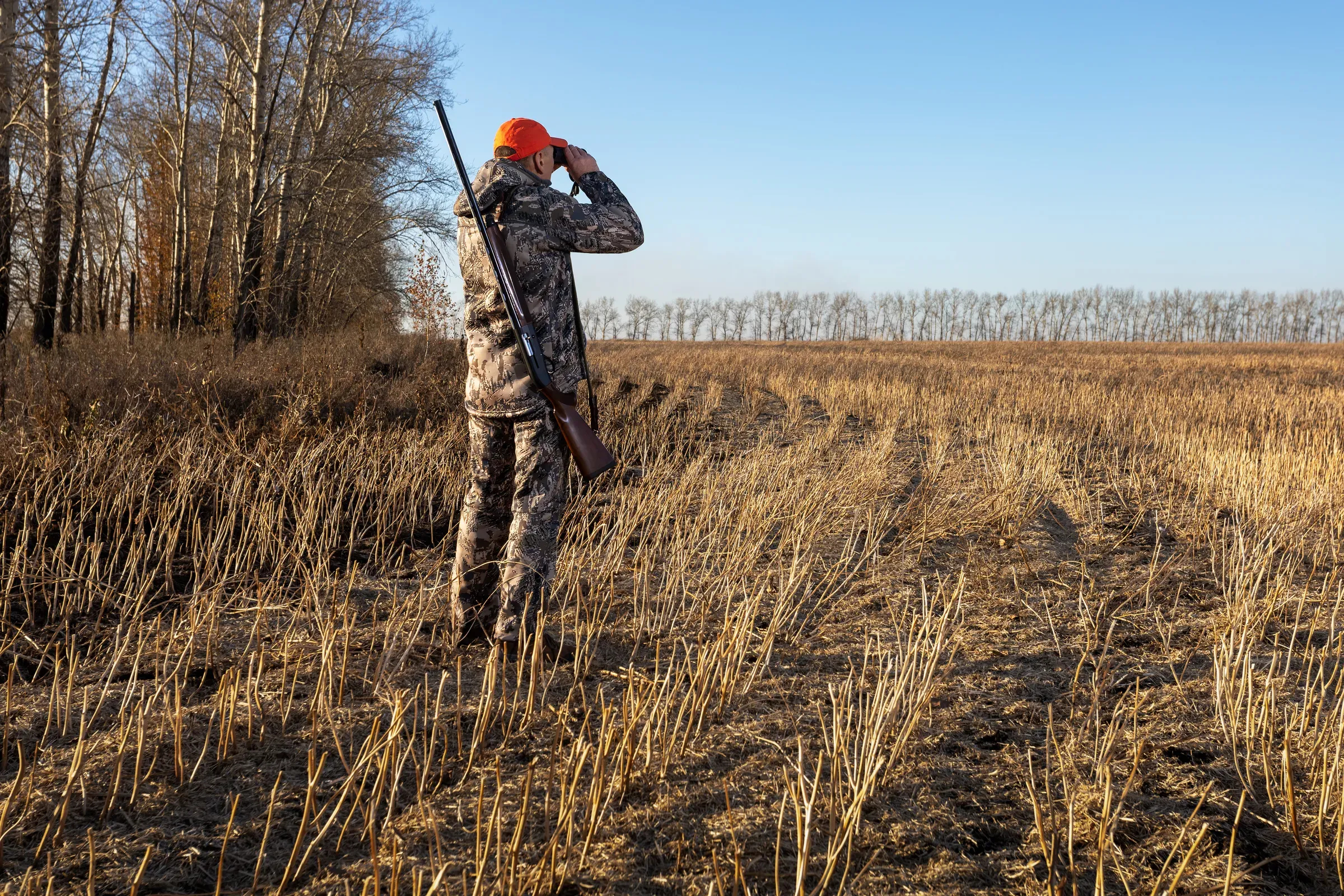
Hunter in a camouflage suit looks through binoculars on the hunt at autumn season hunting, hunting gear ecommerce
Hunting gearHunters buying for a specific season, species and unit: archery in September, rifle in November, waterfowl through the fall, turkey in spring. They check regulations before gear, they want the item before the opener, and they trust stores that know the rules where they hunt.

How hunting gear makes money

Four levers, and what limits each one here

Revenue is traffic times conversion rate times order value times purchase frequency. In this niche each lever has its own ceiling.

Traffic

Traffic: season, species and unit, and the catalog ads cannot carry

Hunting search is organized by season and species: archery elk gear list, waterfowl layout blind, tree stand safety harness, best rangefinder for bow hunting, blaze orange requirements in a named state. Some of that demand is for products that cannot be advertised, so organic search is not a nice-to-have here; it is the only channel for a real share of the catalog. The traffic work is a set of season and species collections with real copy, regulation content by region that is dated and sourced, gear lists by hunt type, and product pages that state what the item is for and where it is legal. The pages that cover the restricted lines have to be the best on the site, because nothing else will drive that traffic.

Conversion

Conversion: legal where I hunt, here before the opener

A hunter converts when the page removes two doubts: that the product is legal and appropriate where they hunt, and that it will arrive before the season. Product pages need the use case stated, the certification where it applies (tree stands and harnesses to the industry standard, blaze orange to the regulation of the state or province), sizing for clothing systems by layer, and a delivery date stated as a date in the weeks before openers. Payment matters here too: some gateways do not cover every hunting category, so checkout has to work for the whole catalog without surprising the customer. Reviews from hunters on named hunts do more than star ratings.

Order value

Order value: the season's system, not the single item

Hunters build systems. A tree stand needs a harness, a lifeline and a haul rope. A layout blind needs decoys, a call and a blind bag. A clothing system is a base layer, a mid layer and a shell in the same camo pattern. Order value grows when the store presents the system for the hunt: a tree stand safety bundle, a waterfowl spread, a layering kit by temperature. Gear lists by hunt type double as bundle pages when each item is buyable in one click. Trail cameras carry a subscription for cellular plans where the store offers one, and optics carry mounts and covers that belong on the page.

Frequency

Frequency: the calendar is written by the regulator

Hunting has a calendar set by draw dates, opener dates and season lengths that differ by region and species. A store that records the species, the region and the weapon type a customer hunts can send a draw-result note in spring, an archery list in late summer, a rifle season list in fall, a waterfowl note when migration starts, and a turkey list in spring. Consumables (scent control, batteries for trail cameras, hand warmers, game bags) go on that rhythm. The second engine is the tag: a customer who drew a new species this year has a new list, and a short survey after the draw window is the most useful email the store can send.

Search visibility

Search: season and species pages, regulation content and the products only search can carry

Hunting search demand splits into gear lists, regulation questions and product queries, and each needs its own page. Gear lists by hunt (archery elk, waterfowl, whitetail from a tree stand, spring turkey) are built as real pages with the items linked and the reasoning explained. Regulation content by region (blaze orange rules, baiting rules, tree stand rules on public land, what a unit allows) has to be dated, sourced to the regulator and updated every season, because a wrong answer costs a hunter a fine and costs the store its trust. Product queries land on season and species collections built from product data with copy that explains use.

Product pages carry the use case, the camo pattern, the temperature range for clothing, the weight and the certification for stands and harnesses, and the sizing for boots and layers. Product markup validates with price and availability. Manufacturer copy shared across every retailer does not rank; a paragraph on the hunt the item suits does.

Technical notes: the products that cannot be advertised still need indexable pages and internal links, so their collections are built with the same care as the eligible ones. Regulation pages carry a visible review date. Camo pattern and size filters stay out of the index.

Queries that matter

  • archery elk hunting gear list
  • best rangefinder for bow hunting
  • tree stand safety harness
  • layout blind for waterfowl
  • blaze orange requirements ontario rifle season
  • scent control clothing for whitetail
  • cellular trail camera without subscription

Gear lists by hunt with the reasoning written out, regulation content that is dated and sourced, and season and species collections with real copy rank in hunting. A brand grid, a camo filter and a blog of trophy photos do not.

AI answers

AI answers: hunters asking what is legal and what to bring

Hunters ask assistants what is required in blaze orange for a named state, whether a tree stand can be left on public land, what a first archery kit should include, and which rangefinder suits bow ranges. Stores get cited when the regulation content is dated and sourced to the regulator, when gear lists are written as plain sentences with the reasoning, when product pages state the use case and the certification, and when the About page names the store and where it ships. We write the regulation and gear list pages so each answer stands alone with a date, keep certification claims exactly as the standard words them, and make sure the assistant crawlers can reach the pages for the restricted lines that ads cannot carry.

How much blaze orange do I need in Pennsylvania during rifle season?
What should a first archery elk kit include?
Can I leave a tree stand on public land overnight?
Which rangefinder works best at bow ranges?

Questions shoppers put to assistants. A store gets named when its pages answer them in plain text.

Google Shopping and Merchant Center

Shopping and Merchant Center: the eligible catalog and the excluded_destination line

Hunting feeds start with a policy sort. Google's dangerous products policy excludes firearms, ammunition, and parts or accessories that attach to a gun, which includes scopes and sights, and several archery and knife categories sit close enough to the line that they need checking against the current policy text before they enter the feed. Those products stay in the catalog and out of Shopping through the excluded_destination attribute rather than through deletion, so the pages keep ranking and the feed does not trigger an account-level review. Everything else (clothing, boots, packs, blinds, decoys, calls, trail cameras, binoculars, rangefinders, stands, harnesses, scent control) is eligible and carries the paid channel.

For the eligible lines, titles read brand, product, camo pattern, size and season. Product_detail carries temperature range, weight and certification. Size, gender and age_group are required for apparel in the US feed. Availability has to be accurate in the weeks before openers when clothing and stands sell out faster than a daily feed updates.

Campaigns split by margin and season: optics, stands and clothing systems bid to contribution margin, calls, scent control and consumables in a campaign that accepts a lower return, seasonal budgets that rise before each opener, and free listings on for the eligible catalog only.

Feed attributes that decide eligibility

  • excluded_destination for restricted products
  • product_detail for temperature range and certification
  • size, gender and age_group for apparel
  • color for camo pattern
  • gtin
  • custom_label for season and species

Disapprovals we see in this niche

  • Dangerous products flags on gun-mounted optics, ammunition and some knives
  • Account-level warnings when a restricted item enters the feed
  • Availability mismatch on clothing and stands before an opener
  • Violence or adult flags on imagery with a firearm or a harvested animal

Meta and social ads

Meta and social: the hunt without the weapon in frame

Hunting creative on Meta has to be built for the policy before the audience. Ads cannot promote firearms, ammunition or weapon parts, weapon accessories such as safes and holsters need adult-only targeting under Meta's own rules, and imagery with a firearm in frame or a harvested animal in the foreground is a common rejection even when the product advertised is a jacket. The creative that works shows the hunt around the weapon: the pre-dawn walk in the clothing system, the blind set up in the marsh, the tree stand hung safely with the harness on, the trail camera pull, the pack loaded for the week.

Audiences start with customers and site visitors, then interest in named species and hunt types, then lookalikes of clothing and optics buyers. Founder and guide voice explaining one decision (why this layer for this temperature) earns trust. UGC from hunters on named hunts needs rights, a policy check on what is in frame, and a check that any regulation shown is right for the region.

  • The clothing system tested on a real November sit, temperature on screen
  • Hanging a stand safely with the harness on, start to finish
  • The waterfowl spread set up before first light
  • Trail camera pull: what showed up this week
  • Guide explaining one gear decision for a named hunt

Policy line

No firearms, ammunition or weapon parts in ads, adult-only targeting for weapon accessories, no firearms or harvested animals in frame, and standard commerce policies for the rest.

Conversion and the store

The store: legal where I hunt, in stock before the opener, paid without surprises

A hunting product page has to state the use case and the rule it satisfies. Blaze orange products need the regulation they meet, stands and harnesses need the standard they are certified to, clothing needs the temperature range and the layer it belongs in, optics need the magnification and the ranges they suit. Sizing for boots and layers by measurement, with a return policy that says a wrong size can come back. Delivery stated as a date in the weeks before openers. A regional rules link on every page for the categories rules affect.

Checkout is where this niche differs: some payment gateways do not cover every hunting category, so the store has to have a gateway that does, and checkout should not fail on a knife or an archery item after the customer has entered a card. Gear lists by hunt with one-click add belong in the navigation. On mobile, the size selector for layers, the camo pattern picker and the delivery date decide more than the design, and the store search has to understand species and season names.

Objections the page must answer

  • “Is this legal and appropriate where I hunt”
  • “Will it arrive before my opener”
  • “Is the stand or harness certified and to what”
  • “Will the layers fit and what if the size is wrong”
  • “Will checkout actually go through for everything in my cart”

Email, SMS and retention

Email and SMS: draw results, openers and the products ads cannot carry

Hunting email carries the whole catalog, including the lines that paid channels cannot, so it does more work here than in most niches. The calendar is set by the regulator: a draw-result note in spring asking what the customer drew, an archery list in late summer, a rifle season list in fall, a waterfowl note as migration starts, a turkey list in spring, each built for the species and region the customer hunts and each buyable in one click with a cut-off date. Consumable reminders for scent control, trail camera batteries, hand warmers and game bags run on the same rhythm.

Post-purchase flows cover setup and safety: a stand purchase gets the harness and lifeline instructions, a trail camera purchase gets the placement and plan guide, a clothing system purchase gets the layering guide by temperature. Regulation updates by region earn attention when they are accurate. SMS is used for opener cut-offs and back-in-stock alerts on clothing sizes. Win-back mentions the species and the season that is coming.

  1. Draw result survey

    When draw results publish in the customer's region

  2. Season list

    Three weeks before each opener the customer hunts

  3. Setup and safety

    Immediately after a stand, harness, camera or clothing system order

  4. Consumable restock

    Before each season, by species

  5. Regulation update

    When a rule changes in the customer's region

  6. Back in stock by size

    Immediately by SMS when a clothing size returns

Where revenue leaks

The leaks we find in hunting gear stores

The Growth Analysis ranks these against your own numbers and says which to close first.

Get a Growth Analysis for your hunting store
  • A restricted product in the feed

    A scope or a box of ammunition slips into the Shopping feed, the account gets a policy warning, and every eligible listing sits in review in the weeks before the opener.

  • Regulation content that is a year out of date

    The blaze orange page still shows last season's rule, a hunter trusts it, and the store loses the customer and the ranking together.

  • Checkout that fails on part of the cart

    The gateway declines the knife or the archery item after the card is entered, and the customer abandons the jacket and the boots with it.

  • One list for every hunter

    The archery elk list goes to the waterfowl hunter in a different region, so open rates fall and the right customers stop reading before their season.

Platform notes

Where the platform changes the work

Shopify

The default gateway excludes some hunting categories, so the store needs a compatible third-party gateway configured before launch and tested against the whole catalog. Metafields carry use case, certification, temperature range and regulation notes for the page and the feed, and the feed app has to support excluded_destination per product so restricted lines stay in the catalog and out of Shopping.

WooCommerce

Gateway choice is flexible, which suits the catalog, and attributes for species, season and camo pattern power indexable archives. The feed plugin must map excluded_destination per product or by category, and regulation pages need a visible review date field.

BigCommerce

Gateway options cover most categories, custom fields carry certification and use case, and the faceted URLs need canonical rules so pattern and size combinations stay out of the index.

Questions

Hunting gear owners ask us

By CartKernel · Last reviewed

Which hunting products can and cannot be advertised on Google and Meta?

Firearms, ammunition and parts or accessories that attach to a gun, including scopes and sights, are excluded from Google ads under the dangerous products policy, and Meta prohibits weapons and ammunition ads outright with adult-only targeting for accessories such as safes and holsters. Clothing, boots, packs, blinds, decoys, calls, trail cameras, binoculars, rangefinders, stands and harnesses are eligible. We check every borderline product against the current policy text.

How do you sell the hunting products that cannot be advertised?

Through search, email and the store itself. Those categories get the best collection and product pages on the site, regulation and gear list content that ranks for the queries hunters type, and season emails that carry the whole catalog to the customers who hunt that species and region. The eligible catalog carries the paid channels and pays for the traffic the rest shares.

Do you keep hunting regulation content accurate across provinces and states?

Yes, with a review date on every regulation page and a schedule to check each region before its season opens. The content is sourced to the regulator, states what changed, and links to the products that satisfy the rule. A hunter who finds a wrong rule on the site does not come back, so accuracy is treated as a revenue task rather than a content chore.

What is the right payment setup for a hunting store?

A gateway that covers every category in the catalog, tested before launch against a cart containing the borderline items. Some default gateways exclude certain hunting products, and a checkout that fails on one item loses the whole cart. We audit the catalog against the gateway's terms and configure a compatible processor where the default one does not fit.

How do you time hunting email and ads to the season?

By recording the species, region and weapon type each customer hunts, then following the regulator's calendar for that region: draw results, archery, rifle, waterfowl and turkey each get a list three weeks before the opener with a cut-off date. Ad budgets rise before each opener for the regions the store ships to and hold through the first weeks of the season.

Can trail cameras and optics be sold with a subscription or a plan?

Cellular trail cameras often come with data plans, and where the store offers one the plan sits on the product page as a clear monthly figure with the terms. Binoculars and rangefinders are eligible for ads and sell with harnesses and covers as a bundle. Rifle scopes are eligible for the catalog and for email but not for Google ads, and Meta treats gun-mounted accessories under its weapons policy, so they are sold through search and the customer list.

Grow your hunting gear store.

A free Growth Analysis ranks what your store should fix first, by revenue at stake, in about a week.